
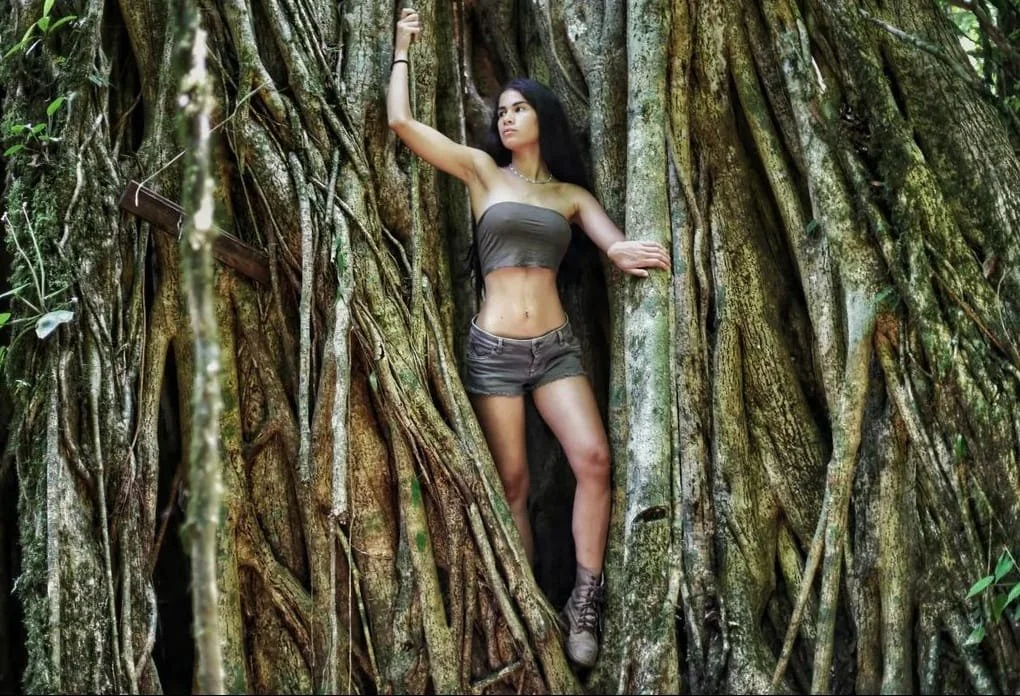
Travelers searching for Panama waterfall hikes often picture postcard beaches or roadside cascades, yet the country’s most compelling water spectacles are born in high, vapor-soaked forests where moisture is not an event but a condition. Lost and Found Hostel occupies precisely that ecological sweet spot, suspended in cloud forest where water is perpetually assembling itself.
This is not merely accommodation with a view; it is a hydrological front row. The hostel sits within a living catchment where drifting cloud condenses on leaves, trickles into rivulets, and gathers momentum on its unhurried descent toward the Caribbean. You are dwelling at the source, not visiting the outcome.
For those mapping a Panama adventure itinerary, the property functions as a strategic hinge between highland cool and lowland humidity. It is an altitude-tempered refuge that primes the senses for deeper jungle exploration across the Bocas mainland.
The phrase “waterfall destination” often gets diluted by overuse, but here it regains its literal force. Everything in this environment conspires toward falling water: saturated air, epiphyte-laden branches, and soils that drink slowly and release steadily.
Guests wake inside a microclimate where mist braids through trees and light arrives filtered, almost ecclesiastical. The atmosphere is not decorative; it is generative, a quiet workshop where streams are continuously being born.
That origin story matters when you set out for Klosay Waterfall, a cascade whose charisma lies in its seclusion. Klosay is not an attraction so much as a revelation, disclosed gradually by trail, sound, and the cool geometry of shade.
Approaching Klosay feels like entering a sentence mid-phrase, the forest already speaking in water. The trail is less a corridor than a conversation between rock, root, and humidity, punctuated by the steady percussion of a distant fall.
Staying at Lost and Found changes the semantics of the journey. Rather than commuting to nature, you are already grammatically inside it, your day beginning where cloud becomes stream and stream becomes descent.
This continuity amplifies perception. The waterfall is no longer a discrete spectacle but the inevitable flourish of processes you have been witnessing since morning coffee in the mist.
SEO-minded travelers often search for “best waterfall hikes Panama” or “Bocas mainland nature tours,” yet the distinguishing advantage here is contextual immersion. You are not sampling highlights; you are inhabiting the conditions that produce them.
The mainland of Bocas retains a reputation for quiet mysteries, a cartography of green where paths feel provisional and discoveries feel unadvertised. It is a terrain that rewards attentiveness rather than speed.
From the hostel’s vantage, excursions unfold with a sense of narrative cohesion. The day’s arc follows water’s own trajectory, from condensation to cascade, from suspended vapor to kinetic plunge.
Even the air rehearses the theme. Cool currents carry the faint mineral tang of wet stone and leaf tannins, a scent profile that prefaces the presence of moving water long before it appears.
For photographers and fieldwork enthusiasts, the environment offers a chromatic palette seldom found in drier forests: velvety greens, obsidian bark, and silver threads of runoff catching fugitive light.
Logistically, the location is a paragon of convenience without surrendering remoteness. Access routes connect you fluidly to onward travel while preserving the sensation of being tucked inside a living watershed.
Travelers arriving from busier nodes often experience a recalibration of tempo. The forest enforces a gentler cadence, one that privileges listening, lingering, and the small astonishments of microhabitat life.
Waterfalls on the Bocas mainland are not choreographed for crowds. Their allure derives from scale, resonance, and the tactile cool that rises from shaded basins.
Lost and Found functions as an interpretive key to this landscape. By situating you within the generative climate, it deciphers how geology, elevation, and moisture collaborate.
The result is a rare form of coherence across a travel day. Departure, approach, and arrival all belong to the same ecological sentence.
For those crafting a Panama cloud forest experience with substance, the pairing of this base with Klosay offers a narrative arc that feels inevitable rather than assembled.
The hostel’s cloud forest envelope also confers practical benefits: moderated temperatures, persistent shade, and an ambience that softens fatigue while sharpening curiosity.
Hikers often remark on the acoustic texture of the trails, where dripping water and subdued wind create a continuous, low-register soundtrack that steadies the mind.
By the time you stand before Klosay’s plunge, the scene resonates with familiarity. You recognize the water’s lineage because you have walked with its beginnings.
Return to the hostel and the cycle continues, mist reweaving itself among branches, the forest quietly replenishing the streams that will become tomorrow’s discoveries.
In a travel landscape crowded with superlatives, Lost and Found earns distinction through integration. It does not point at wilderness; it composes you within it.
For seekers of hidden waterfalls in Panama and explorers of the Bocas mainland’s understory secrets, this is not merely the best place to stay. It is the place where the landscape’s logic becomes legible.
And that legibility—this lucid alignment between environment, movement, and revelation—is what transforms a trip into a felt understanding of how water, forest, and elevation conspire to create wonder.