
At the far southwestern edge of Panama, where the land narrows into a rugged peninsula before blending into the border of Costa Rica, lies one of the least visited and most mysterious places in the entire country: Punta Burica. This remote corner of Panama feels like the edge of the map, a place where the modern travel circuit fades away and raw nature takes over. While travelers flock to more famous destinations like Bocas del Toro, the cloud forests around Boquete, or the skyscrapers and nightlife of Panama City, Punta Burica remains almost entirely off the tourist radar. Visiting the Burica Peninsula is not about luxury hotels or carefully curated tours—it is about adventure, isolation, and discovering a wild Pacific coastline that few travelers ever see. For those interested in remote destinations in Panama, off-the-beaten-path travel in Central America, and hidden beaches in Panama, Punta Burica represents one of the last true frontiers.
Reaching Punta Burica is part of the adventure, and the journey itself reveals just how far removed this region is from the typical tourist routes. Most travelers begin in the regional hub of David, the largest city in western Panama and the transportation gateway to much of the province. From David, buses or shared taxis travel south through farmland and banana-growing regions toward the Pacific coastal town of Puerto Armuelles, which historically served as a major port during the era of the international banana trade. During the 20th century, companies such as Chiquita Brands International operated massive plantations across this region, shipping bananas to markets around the world. Although those days have largely passed, Puerto Armuelles remains the last substantial town before the wilderness of the Burica Peninsula begins. Beyond this point, paved highways gradually disappear, replaced by narrow rural roads, gravel tracks, and sometimes muddy paths that wind through cattle ranches, small farms, and pockets of dense tropical vegetation.
As travelers continue deeper into the Burica Peninsula, the sense of isolation becomes unmistakable. Villages grow smaller, traffic disappears, and the rhythm of life slows dramatically. Pickup trucks bounce along uneven dirt roads, motorcycles weave past grazing cattle, and occasionally the road seems to dissolve into a path that leads toward the sea. The farther you travel toward Punta Burica, the more the landscape feels untouched by large-scale development. Rolling green hills stretch toward the horizon, dotted with palm trees and simple wooden homes. The air carries the salty scent of the Pacific Ocean mixed with the earthy aroma of farmland and tropical forest. Unlike many coastal destinations in Panama where resorts and tourism infrastructure dominate the scenery, Punta Burica retains a rugged authenticity that feels increasingly rare in modern travel.
When the road finally reaches the coastline near Punta Burica, the scenery reveals one of the most dramatic and untamed coastal landscapes in the country. The peninsula faces directly into the vast Pacific Ocean, and the beaches here are shaped by powerful swells, shifting tides, and volcanic geology. Instead of the calm turquoise waters often associated with Caribbean destinations like Bocas del Toro, Punta Burica’s shoreline is defined by long stretches of dark volcanic sand, rugged cliffs, and waves that crash against rocky headlands. Standing on these remote beaches, travelers are often struck by the profound silence and emptiness of the environment. Hours can pass without seeing another person, leaving only the sounds of wind, surf, and seabirds echoing across the coastline. It is the kind of place where you realize how small human presence can be in comparison to the power of nature.
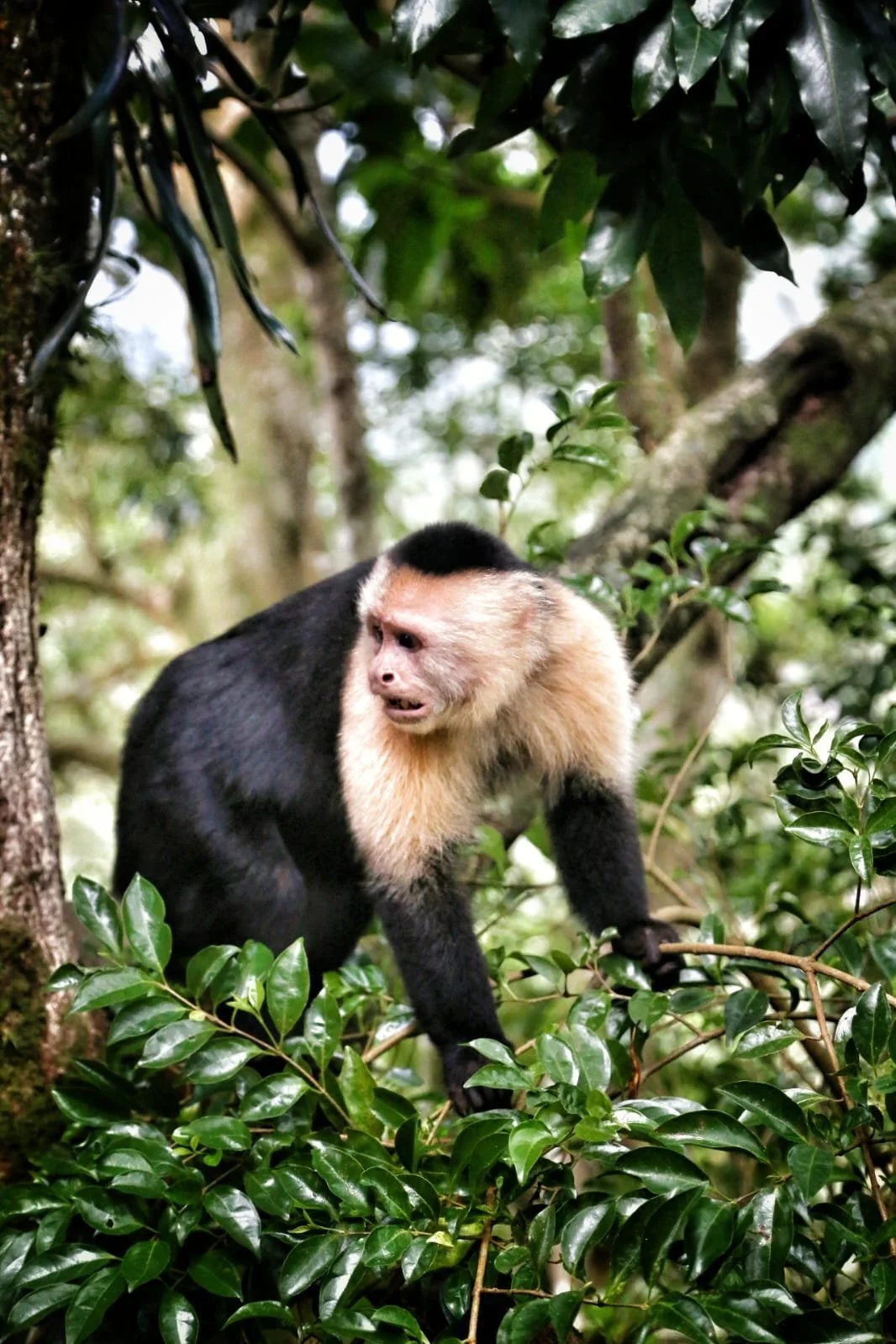
The natural environment around Punta Burica is also incredibly rich in wildlife, making it an exciting destination for those interested in nature travel in Panama and wildlife watching in Central America. The forests and coastal ecosystems along the Burica Peninsula provide habitat for monkeys, tropical birds, reptiles, and countless smaller creatures hidden among the trees. Scarlet parrots and other colorful birds occasionally sweep across the sky, while seabirds glide above the waves searching for fish in the deep Pacific waters. Offshore, the ocean itself is part of a larger marine migration corridor used by whales and dolphins traveling along the Pacific coast of Panama. During certain seasons, humpback whales moving between feeding and breeding grounds can sometimes be spotted from the shoreline or from small fishing boats. The lack of industrial development and mass tourism means the ecosystems here remain relatively undisturbed, creating an environment that still feels raw, natural, and alive.
Human life on the Burica Peninsula revolves largely around fishing, cattle ranching, and small-scale agriculture. The villages scattered along the coast are modest communities where daily routines are closely tied to the rhythms of the ocean and the land. Wooden houses sit near the beach, brightly painted fishing boats rest on the sand, and fishermen often rise before sunrise to prepare their nets and head out onto the water. In the afternoon, villagers gather in the shade to repair equipment, share stories, and watch the tide roll in. For visitors interested in authentic rural culture in Panama, spending time in these communities provides a glimpse into a slower, more traditional way of life that has largely disappeared from heavily developed tourist regions.
Adventure seekers who make the journey to Punta Burica often come for the sense of discovery that defines the region. Surfers searching for uncrowded surf spots in Panama sometimes explore the peninsula’s remote beaches, where Pacific swells can produce powerful waves rolling across empty shorelines. Because access is difficult and the region remains largely unknown, it is entirely possible to surf here without another surfer in sight. Fishing enthusiasts are also drawn to the peninsula, as the surrounding waters are rich with marine life and provide excellent opportunities for catching species such as tuna, snapper, and other Pacific fish. Fresh seafood is a central part of the local diet, and visitors lucky enough to share a meal with fishermen in the area may experience some of the freshest fish imaginable, often caught just hours earlier.
Beyond the coast, the interior of the Burica Peninsula offers its own quiet beauty. Trails wind through farmland and jungle-covered hills where travelers can explore on foot, by horseback, or occasionally by motorcycle. The terrain rises and falls in gentle slopes that reveal sweeping views of the Pacific Ocean on one side and distant mountains on the other. Sunsets in this region can be spectacular, as the sky turns shades of deep orange and purple while the sun sinks slowly into the vast Pacific horizon. With little light pollution and minimal development, the nights that follow are equally impressive, revealing star-filled skies rarely seen in busier parts of the world.
Compared with the well-known tourist attractions of Panama, Punta Burica remains a place for travelers who genuinely enjoy going beyond the ordinary. While iconic sites like the Panama Canal draw millions of visitors each year and destinations like Boquete offer organized tours, coffee farms, and comfortable lodges, Punta Burica offers something entirely different. There are few hotels, limited services, and very little tourism infrastructure. Yet for adventurous travelers interested in hidden destinations in Panama, remote Pacific beaches, and authentic travel experiences in Central America, the rewards of visiting this remote peninsula are immense.
Standing at the tip of Punta Burica, with the endless Pacific Ocean stretching to the horizon and the rugged coastline fading into the distance, it becomes clear why places like this continue to capture the imagination of explorers. In a world where so many destinations have been transformed by tourism and development, Punta Burica remains stubbornly wild and wonderfully untouched. For those willing to make the journey, it offers something increasingly rare in modern travel: the feeling of discovering a place that still belongs more to nature than to the rest of the world. 🌊🌴