
Tucked into the cool, fertile highlands of western Panama, the town of Volcán is one of those rare places that quietly reshapes your expectations of the country. Sitting on the western slopes of Volcán Barú, this region feels like a different world compared to the tropical coastlines and humid lowlands most travelers associate with Panama. Here, the air is crisp, mornings are often wrapped in mist, and the landscape stretches out in rolling hills, farmland, and cloud forest that feels almost endless.
Getting to Volcán is part of the transition. From David, the closest major city and transport hub, the journey takes roughly 1.5 to 2 hours by car depending on your route. Buses are also available, though they tend to be slower and require a bit of patience. As you leave David’s hot, low elevation climate behind and begin climbing into the highlands, the temperature drops, the vegetation changes, and the entire atmosphere shifts. It feels like entering a new version of Panama that many visitors never see.
Volcán itself is not a polished tourist town. It is local, agricultural, and understated. That is exactly why it works so well as a base. It gives you access to some of the most diverse landscapes in the country without the crowds or commercialization of more famous destinations. But what makes Volcán truly special is not just what it is, it is everything around it.
Cerro Punta, Panama’s Alpine Corner
Just beyond Volcán lies Cerro Punta, the highest village in Panama and one of the most visually striking regions in the country. The drive itself is worth doing slowly. The road winds through valleys and ridgelines, revealing a patchwork of farms, greenhouses, and forests that seem to stretch endlessly into the mountains.
Cerro Punta is known as the agricultural heart of Panama’s highlands. This is where much of the country’s vegetables, strawberries, and flowers are grown. The climate is cooler, sometimes surprisingly so, and the landscape can feel more like Costa Rica’s highlands or even parts of rural Europe than Central America.
But the real magic of Cerro Punta is not just in the farming, it is in the access it provides to nature. This area borders La Amistad International Park, one of the largest and most biodiverse protected areas in Central America. Hiking here is not a casual stroll, it is a deep immersion into cloud forest ecosystems filled with rare birds, dense vegetation, and a sense of isolation that is becoming harder to find in the modern world.
If you are the type of traveler who enjoys long hikes, quiet landscapes, and the feeling of being far removed from everything, Cerro Punta is not just a side trip, it is a destination in its own right.
Sitio Barriles, The Hidden History Beneath Your Feet
One of the most overlooked yet fascinating experiences near Volcán is a visit to Sitio Barriles. This archaeological site offers a rare and somewhat mysterious window into pre Columbian life in western Panama.
Unlike the grand ruins you might find in other parts of Latin America, Sitio Barriles is subtle. It does not overwhelm you with scale, instead it invites you to look closer. Scattered throughout the site are carved stone sculptures, ceremonial artifacts, and remnants of a civilization that once thrived here over a thousand years ago. Some of the carvings depict human figures interacting with animals in ways that are still being interpreted today.
What makes this place so compelling is how little is fully understood. Archaeologists continue to study the site, but many aspects of the culture that created it remain a mystery. Walking through Sitio Barriles, you get the sense that you are only seeing part of the story, and that feeling adds a layer of intrigue that stays with you long after you leave.
Waterfalls, Rivers, and the Art of Getting Lost
One of the defining features of the Volcán region is how much of it is still unexplored in a formal sense. There are waterfalls, rivers, and trails scattered throughout the area that rarely appear on maps or in guidebooks.
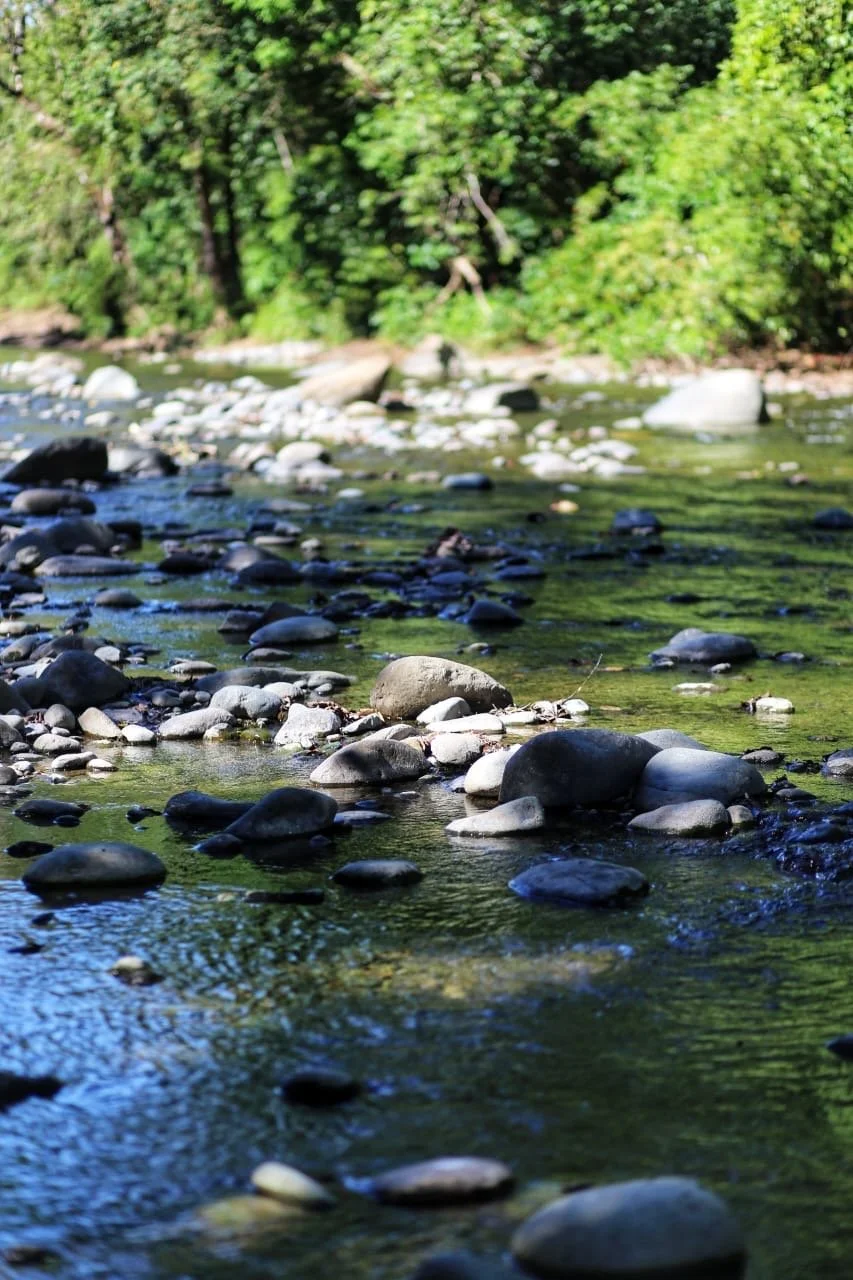
This is where Volcán becomes an explorer’s playground. A simple dirt road might lead to a hidden river, a conversation with a local might point you toward a waterfall, and a random turn could reveal a viewpoint you would never have planned for. The rivers here are often cold, clear, and perfect for a swim after a hike, especially on warmer afternoons.
To really unlock this side of Volcán, it helps to do a bit of research ahead of time. Use Google Maps, search for lesser known trails, or even ask AI to help you identify hidden spots in the region. The more you dig, the more you find. And often, the best places are the ones that require a little effort to reach.
Coffee, Farms, and Life Close to the Land
Volcán is deeply connected to agriculture, and that shapes much of the experience here. Unlike more commercialized destinations, the farms in this region feel personal and authentic.
Coffee is a major highlight. While Boquete is more famous for coffee tourism, Volcán offers a quieter and often more genuine version of the same experience. Visiting a local coffee farm here might mean walking through the fields with the farmer, seeing how the beans are grown and processed, and tasting coffee that was harvested just steps away.
Beyond coffee, the region produces an incredible variety of crops. Roadside stands selling fresh strawberries, vegetables, and local products are common, and stopping at them is part of the experience. It is a reminder that this region is not built for tourism, it is built for life.
Volcán Barú, The Giant Above It All
Dominating the entire region is Volcán Barú, the tallest peak in Panama. While many travelers choose to hike it from Boquete, the Volcán side offers a quieter, more rugged approach that feels far less crowded.
Climbing Volcán Barú is not easy. It is a physically demanding hike, often done overnight to reach the summit at sunrise. But the reward is one of the most unique views in the region. On a clear day, you can see both the Pacific Ocean and the Caribbean Sea from the same point, a rare phenomenon in the world.
Even if you do not attempt the full climb, exploring the surrounding slopes and trails gives you a sense of the volcano’s scale and presence. It is a constant reminder of the natural forces that shaped this landscape.
Breaking Up the Journey, A Stop at Lost and Found
If you are traveling between Volcán and Bocas del Toro, there is one place that deserves special attention, Lost and Found Hostel. The journey from Volcán to Bocas is not short. By the time you factor in buses, transfers, and the boat ride, it can take 6 to 7 hours or more.
That is where Lost and Found comes in. Located in the cloud forest between these destinations, it offers the perfect place to break up the trip. If you enjoy fresh air, jungle surroundings, and a social atmosphere that feels natural rather than forced, this place might be exactly what you are looking for.
You hike in through the forest, leaving the road behind, and suddenly find yourself in a completely different environment. There are trails to explore, wildlife to spot, and a community of travelers who tend to connect quickly. Many people arrive planning a short stop and end up staying longer than expected. Even one night here can turn a long travel day into part of the adventure itself.
Exploring Toward the Border and Beyond
Volcán’s proximity to Costa Rica adds another layer of possibility. Driving toward the border reveals quiet villages, open farmland, and landscapes that feel untouched by tourism. It is an area where you can explore without a strict plan and still come across something memorable.
For those with more time, Volcán can also serve as a starting point for longer journeys deeper into Chiriquí or toward the Pacific coast. It connects naturally to other hidden gems, making it part of a larger exploration rather than just a single destination.
Food, Local Flavor, and Everyday Life
Food in Volcán reflects its surroundings, simple, fresh, and deeply connected to the land. You will not find a trendy dining scene here, but you will find small restaurants and local kitchens serving hearty meals made with ingredients grown nearby.
This is the kind of place where you sit down for a meal and feel like you are part of the community rather than just passing through. Fresh vegetables, local meats, and traditional dishes dominate, creating a dining experience that feels honest and satisfying.
Practical Tips, Climate, Transport, and Mindset
Exploring Volcán is easiest with a car, as many of the best spots are spread out and not always accessible by public transport. However, buses do connect Volcán with David and nearby towns, making it possible to visit without your own vehicle if you plan carefully.
The climate is cooler than most of Panama, especially in the evenings, so bringing layers is essential. Rain is common, particularly in the afternoons, but it is part of what makes the region so lush and green.
More than anything, Volcán rewards a certain mindset. This is not a place where everything is clearly marked or easy to find. It requires curiosity, patience, and a willingness to explore.
Why Volcán Stays With You
Volcán is not about big attractions or instant gratification. It is about discovery, atmosphere, and the feeling of being slightly off the map. It is where you slow down, breathe in cooler air, and begin to notice things you might otherwise miss.
If something in this guide catches your attention, do not stop here. Go deeper. Search for specific trails, look up farms, explore maps, and use AI to uncover hidden spots you would never find on your own. Talk to locals, follow small leads, and allow yourself to wander.
Because in Volcán, the best experiences are not handed to you.
They are found.
And once you start finding them, you realize that this quiet highland region is not just another stop in Panama.
It is one of the places that defines it.
Highlands Uncovered, The Complete and Deep Dive Guide to Exploring Volcán, Panama