
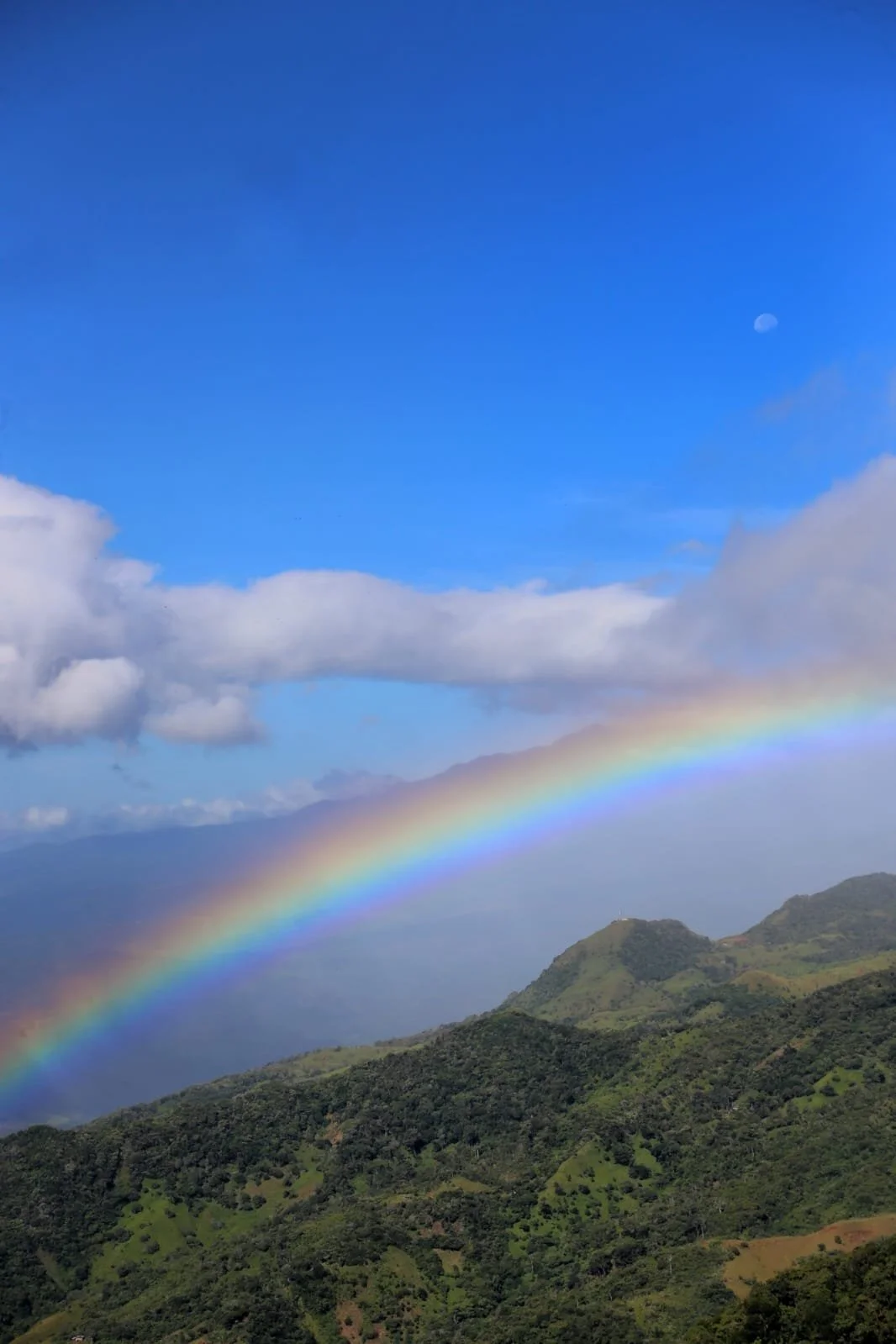
Tucked along the Caribbean slopes of western Panama, where steep mountains drop into deep river valleys and clouds drift low over endless forest, lies one of the country’s most important yet least talked-about conservation areas: Palo Seco Protected Forest. Often overshadowed by its famous neighbor La Amistad International Park, Palo Seco plays a role that is just as critical, acting as a vast ecological buffer, a wildlife corridor, and a living shield that protects one of Central America’s most biodiverse regions. It is not a park built for crowds or convenience, but rather a rugged, working landscape where conservation, indigenous culture, and natural resources intersect in complex and fascinating ways.
Established in 1983, the same year La Amistad received its UNESCO recognition, Palo Seco was created with a clear purpose: to protect the surrounding ecosystems and ensure that human activity did not encroach unchecked into the more fragile highland environments. Covering hundreds of thousands of hectares, it stretches across parts of Bocas del Toro and Chiriquí provinces, forming a continuous band of forest that links lowland tropical ecosystems with the cloud forests and highlands beyond. This connectivity is one of its greatest strengths. Wildlife does not recognize park boundaries, and Palo Seco allows species to move freely between habitats, maintaining genetic diversity and ecological balance.
Geographically, Palo Seco is defined by dramatic terrain. The land rises from humid lowlands into steep, forested mountains, cut through by powerful rivers that eventually feed into the Caribbean. These rivers, including the Changuinola watershed, are not only vital ecological arteries but also sources of hydroelectric power, highlighting one of the key tensions within the protected forest: balancing conservation with development. Unlike strictly protected national parks, Palo Seco allows for certain controlled uses of natural resources, making it a more flexible but also more complex management area.
The forest itself is dense and layered, a classic example of tropical rainforest transitioning into cloud forest at higher elevations. Towering trees form a canopy that filters sunlight into shifting patterns on the forest floor, while vines, mosses, and epiphytes create a sense of depth and movement in every direction. In the upper reaches, constant moisture feeds the growth of moss-covered branches and thick vegetation, giving the landscape an almost otherworldly feel. The biodiversity here is immense. Thousands of plant species thrive in these conditions, many of them still not fully studied, making Palo Seco an important site for scientific research.
Animal life in Palo Seco is equally rich and often elusive. The forest provides habitat for large mammals such as jaguars, pumas, and Baird’s tapirs, species that require vast territories and intact ecosystems to survive. Troops of monkeys move through the canopy, including howler monkeys whose calls echo across valleys, and white-faced capuchins known for their intelligence and curiosity. Birdlife is particularly abundant, with species ranging from toucans and trogons to the elusive quetzal in higher elevations. Amphibians and reptiles add another layer of diversity, with frogs, snakes, and lizards inhabiting the moist undergrowth and waterways.
What makes Palo Seco especially unique is its role as both a conservation area and a cultural landscape. Indigenous communities, particularly the Ngäbe people, live within and around the forest, maintaining traditional ways of life that are closely tied to the land. Their presence adds a human dimension to the forest, one that is rooted in long-standing knowledge of plants, wildlife, and seasonal cycles. This coexistence is not without challenges, but it represents an important model for integrating conservation with human livelihoods.
Access to Palo Seco is limited, which is part of what has helped preserve its wild character. There are no large-scale पर्यटन infrastructures or well-developed tourist circuits. Instead, access is typically through remote roads, river routes, or guided expeditions. Some entry points connect from areas near the Changuinola Valley or from the highlands near Boquete and Cerro Punta, but once inside, the experience is defined by isolation. Trails, where they exist, are often rough and unmarked, used more by locals and researchers than by casual visitors. This is not a place for quick visits, it is a destination for those prepared to navigate challenging terrain and embrace uncertainty.
Ranger presence in Palo Seco exists but is spread thin across its vast area. Stations are often basic, serving as operational bases for monitoring, enforcement, and research. Rangers face the difficult task of protecting such a large and remote region, dealing with issues such as illegal logging, hunting, and land use conflicts. Their work is essential, though often carried out far from public attention.
One of the defining features of Palo Seco is the interplay between conservation and development. The presence of hydroelectric projects within the region has brought both economic benefits and environmental concerns. Rivers that once flowed freely have been altered, affecting fish migration and local ecosystems. These projects highlight the broader challenge of managing natural resources in a way that balances human needs with environmental protection. In many ways, Palo Seco serves as a real-world example of how complex conservation can be, especially in regions where livelihoods and ecosystems are deeply intertwined.
Despite these challenges, the forest remains a stronghold of biodiversity and an essential component of Panama’s environmental network. Its connection to La Amistad ensures that species can move between lowland and highland habitats, a factor that is becoming increasingly important in the face of climate change. As temperatures shift, many species will need to migrate to survive, and corridors like Palo Seco make that possible.
For those who venture into Palo Seco, the experience is less about sightseeing and more about immersion. The forest is alive with sound, insects humming, birds calling, rivers rushing through unseen valleys. The air is heavy with moisture and the scent of vegetation. There is a sense of being in a place that operates on its own terms, where human presence is secondary to the rhythms of the natural world.
In the end, Palo Seco Protected Forest is not defined by a single feature or attraction. It is defined by its role, as a connector, a protector, and a living landscape where nature and people coexist in a delicate balance. It may not have the fame of other parks, but its importance is undeniable. Without it, the ecosystems of western Panama would be far more fragmented, and the wild heart of the region would be weaker for it.