
There are places in Panama that tourists talk about constantly. The islands with turquoise water, the famous surf towns, the cloud forests wrapped in mist. Then there are places like Capira, a town that many travelers pass through without realizing they are moving across one of the most geographically fascinating transition zones in the entire country. At first glance, Capira can seem like a simple roadside district west of Panama City, a place of fruit stands, buses, hills, cattle fields, and neighborhoods spreading slowly outward from the Inter-American Highway. But beneath that ordinary first impression is a landscape where tropical forest, agriculture, mountain weather, migration routes, and rural Panamanian culture all collide in surprisingly dramatic ways.
Capira sits in the province of Panamá Oeste, positioned between the expanding gravitational pull of Panama City and the wilder interior regions that eventually lead toward the Pacific beaches and mountain zones farther west. Because of this location, Capira has become one of Panama’s great transition regions. It is not fully urban, not fully rural, not entirely tropical lowland, and not entirely mountain territory either. Instead, it exists in a kind of ecological and cultural in-between space that gives the district a character unlike almost anywhere else in the country.
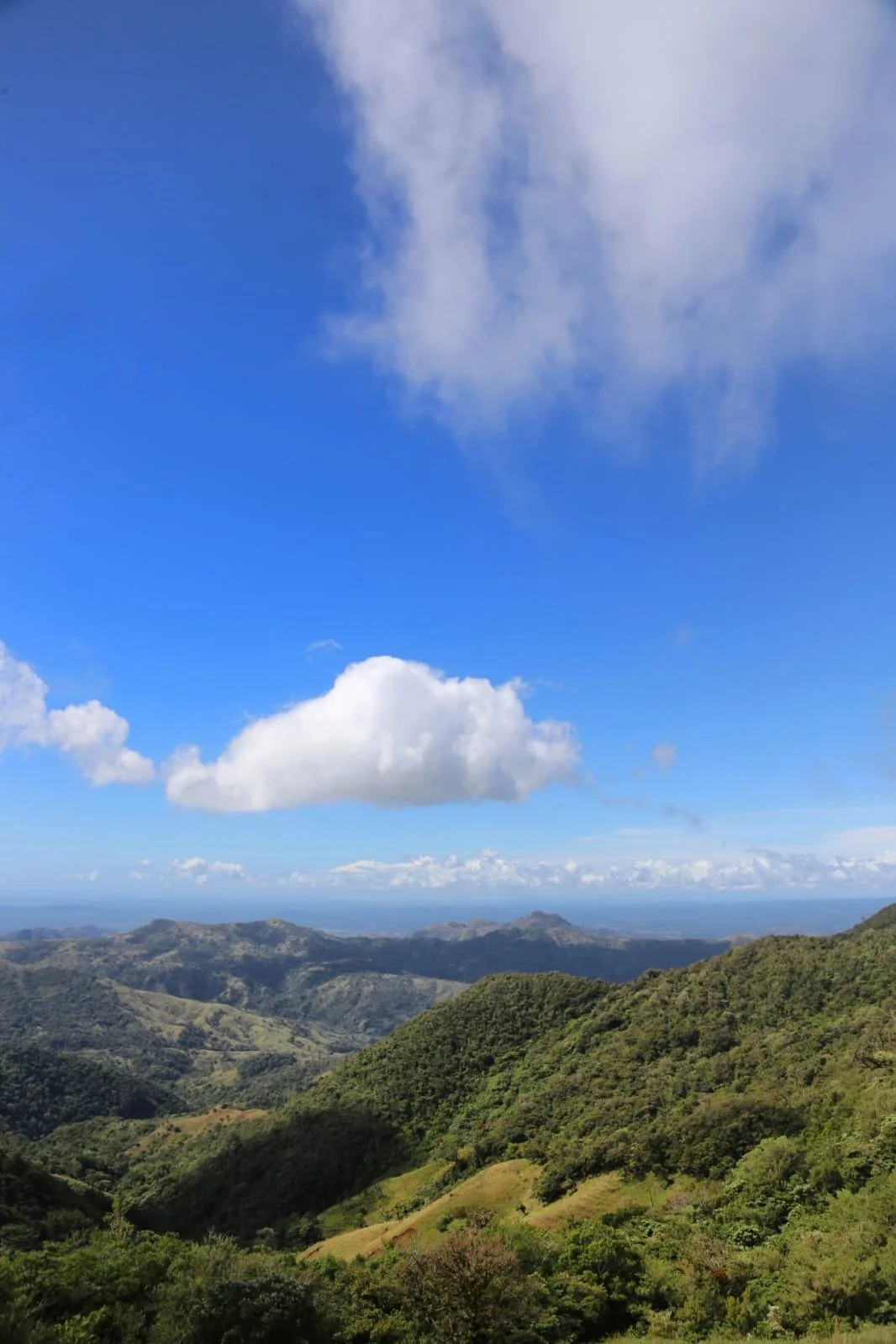
The first thing many people notice about Capira is the landscape itself. The terrain rises and falls constantly. One moment there are broad cattle pastures glowing bright green beneath the tropical sun, and the next there are dense forested hills disappearing into fog. During the rainy season the entire district seems to explode with life. Moss spreads over concrete walls, vines climb utility poles, frogs emerge from drainage ditches at night, and clouds move low over the hills with incredible speed. The atmosphere often feels heavier and greener than nearby Panama City, partly because Capira receives substantial rainfall and partly because so much vegetation still survives throughout the district.
One of the most remarkable things about Capira is how quickly the environment changes with elevation. In lower areas the heat can feel intense and humid, with tropical birds calling from roadside trees and insects roaring after sunset. Yet higher sections of the district can become dramatically cooler, especially in the evenings or after storms. Certain upland areas almost begin to hint at the climate of Panama’s better known mountain towns. This variation allows an enormous diversity of plant and animal life to survive within relatively short distances.
Birdwatchers quietly know that Capira is one of the more underrated wildlife regions in central Panama. The forests and secondary growth areas around the district attract everything from toucans and parrots to hawks and hummingbirds. During migration seasons, birds moving between North and South America pass overhead in astonishing numbers. Panama itself is one of the world’s greatest bird migration bottlenecks, and regions like Capira become part of this aerial highway. On some days enormous kettles of vultures and hawks can be seen circling above the hills on rising thermals.
At night the district transforms completely. Tropical insects dominate the soundscape. Crickets pulse from grassy areas while frogs produce metallic clicking noises from puddles and streams. Geckos gather around lights waiting for moths. In forest fragments, kinkajous and opossums sometimes move through trees under cover of darkness. The sheer amount of nocturnal life can surprise people who only associate wildlife with Panama’s famous national parks. Even relatively developed parts of Capira can still feel deeply connected to the natural world after sunset.
Capira is also part of a fascinating agricultural belt that helps feed much of central Panama. Along roadsides you can often find stands selling pineapples, avocados, yuca, plantains, oranges, and other produce grown nearby. During certain seasons the smell of ripe fruit hangs in the humid air beside the highway. Many families in the district maintain strong ties to farming traditions, even as development gradually expands westward from the capital. This mixture of old agricultural lifestyles and rapid modernization creates a very particular atmosphere. A person might see horseback riders crossing near busy roads filled with commuter traffic heading toward Panama City.
The cattle culture in Capira is especially important. Throughout the district there are extensive grazing lands, and livestock remains a major part of local identity and economy. The rolling hills dotted with cattle give some parts of Capira an almost pastoral appearance, especially during the dry season when golden grass spreads across the slopes beneath huge skies. Yet even these ranching landscapes are intertwined with tropical ecology. Forest patches, rivers, and wetland areas remain scattered throughout the countryside, allowing wildlife to survive surprisingly close to human activity.
Weather plays an enormous role in shaping life in Capira. The rainy season can feel incredibly dramatic. Towering thunderheads build over the hills in the afternoon, often unleashing torrential downpours that flood roads and turn fields into shining expanses of mud and water. Lightning storms can be spectacular. The rain also creates some of the lushest scenery imaginable. Ferns become gigantic, rivers swell rapidly, and every shade of green seems intensified. During the dry season the atmosphere changes completely. Dust rises from roads, grass yellows in open areas, and sunsets often become vivid explosions of orange and red.
One of Capira’s most fascinating qualities is that it reveals how quickly Panama is changing. The district has increasingly become connected to the expansion of the metropolitan region surrounding Panama City. New housing developments continue appearing, transportation links grow busier, and more people commute eastward for work. Yet despite this growth, large parts of Capira still retain a rural rhythm. Small stores, roadside fondas, agricultural communities, and forested valleys remain deeply woven into daily life. It is a place where Panama’s future and past seem to exist side by side.
Many travelers underestimate how culturally diverse regions like Capira can be. Families from different parts of Panama have migrated into the district over generations, bringing food traditions, accents, and local customs with them. Rural Panamanian culture remains strong here, especially in smaller communities beyond the highway corridors. Traditional music, local festivals, and community events continue to shape social life in ways that feel far removed from the business towers of the capital.
The roads around Capira also lead toward some of the most interesting hidden landscapes in central Panama. Forest trails, rivers, waterfalls, and hilltop viewpoints are scattered throughout the district and surrounding areas. Some locations remain largely unknown outside local communities. Adventurous travelers exploring beyond the main highway can encounter dense jungle valleys alive with butterflies, hidden swimming spots beneath rocky cascades, and panoramic ridges overlooking enormous stretches of Pacific lowlands.
One particularly fascinating aspect of Capira is its role as a biological bridge. Panama famously connects two continents, allowing species from North and South America to intermingle. Regions like Capira demonstrate this ecological mixing beautifully. Animals, plants, and insects from different evolutionary histories overlap here in complex ways. Scientists studying tropical biodiversity understand that even fragmented forests near populated regions can still contain remarkable ecological richness.
The insect life alone can be astonishing. Giant moths arrive at lights during humid nights. Leaf cutter ants march in endless lines carrying fragments of vegetation larger than their bodies. Cicadas erupt into deafening choruses before rainstorms. Brightly colored butterflies drift across roads and fields throughout the day. In wetter forested sections, the diversity of spiders, beetles, and amphibians becomes immense. To someone paying attention, Capira can feel like a living tropical laboratory.
The district’s rivers and streams also shape the landscape profoundly. During heavy rain these waterways can transform rapidly from calm creeks into roaring torrents. Along their banks grow dense tangles of vegetation where birds, reptiles, and amphibians thrive. Freshwater ecosystems in Panama are often overlooked compared to beaches and rainforests, yet they support extraordinary biodiversity. In Capira, water is everywhere, flowing through valleys, feeding farms, and sustaining the surrounding ecosystems.
Food in Capira reflects the practical, hearty traditions of rural Panama. Roadside eateries frequently serve meals centered around rice, beans, meat, fried plantains, and local produce. Fresh juices made from tropical fruits are common, especially in the heat. There is something deeply satisfying about eating simple Panamanian food while rain pounds on a tin roof somewhere in the hills outside town.
Perhaps the most fascinating thing about Capira is that it represents the Panama most tourists never truly see. It is not polished into a resort destination or internationally branded travel hotspot. Instead, it reveals the everyday texture of life in central Panama, where jungle edges meet highways, where tropical storms reshape afternoons, where cattle graze beneath migrating hawks, and where forests still survive surprisingly close to expanding urbanization.
For travelers willing to slow down and look carefully, Capira becomes far more than a place passed through on the way somewhere else. It becomes a portrait of Panama itself, geographically complex, ecologically rich, rapidly changing, and deeply alive.