
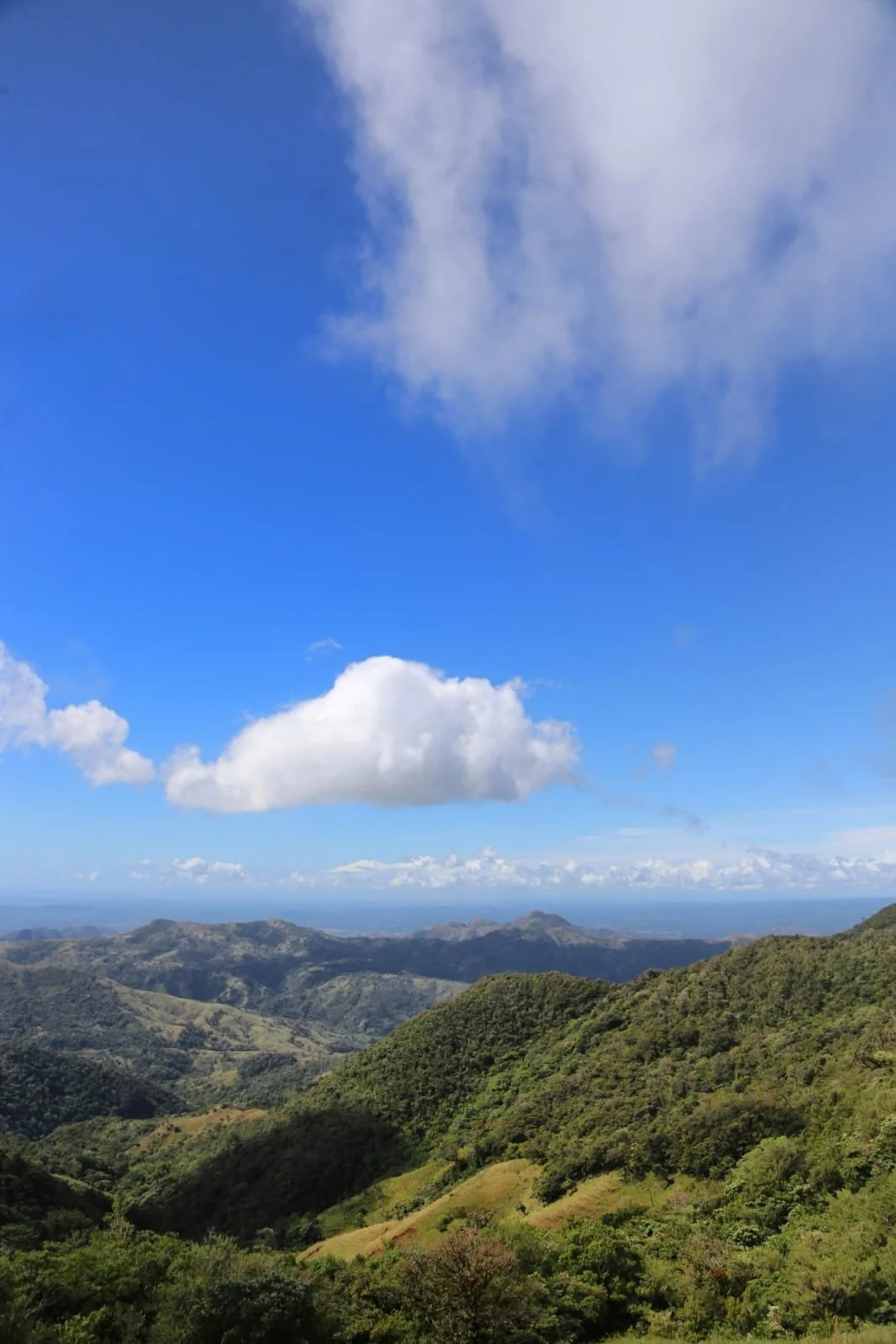
Far off the Pacific coast of Panama, beyond the highways, cattle ranches, and mountain towns of western Panama, lies a marine world that many travelers never see. The waters of the Gulf of Chiriquí spread outward in a maze of jungle islands, volcanic rock formations, coral reefs, mangrove channels, and isolated beaches that feel astonishingly remote. Among these islands, few capture the imagination quite like Isla Parida.
To reach Isla Parida usually requires traveling through the province of Chiriquí Province to small coastal ports such as Boca Chica, where boats wait at sheltered docks facing the Pacific. From there, the mainland slowly disappears behind curtains of tropical haze. The ocean begins to open into a scattered island wilderness that feels dramatically different from the busy Panama many visitors imagine.
The Gulf of Chiriquí contains dozens of islands, some inhabited, many completely empty, and others so isolated that only fishermen, researchers, or occasional adventurous travelers ever visit them. Unlike more heavily developed island destinations elsewhere in Central America, much of this region still feels wild and lightly touched by mass tourism.
Isla Parida itself is covered in dense tropical forest that spills almost directly onto pale beaches and rocky shorelines. The island sits inside the larger marine ecosystem of the Gulf of Chiriquí National Marine Park, an enormous protected region that shelters coral reefs, sea turtles, dolphins, migratory whales, and countless tropical fish species.
The first thing many visitors notice about Isla Parida is the silence. Outside of bird calls, crashing surf, and insect noise, there is remarkably little human sound. No highways echo in the distance. No urban skyline interrupts the horizon. At night, the darkness can feel almost complete except for stars reflected in the Pacific and occasional lightning flashing far beyond the sea.
The forests of Isla Parida are alive with wildlife. Howler monkeys roar through the canopy at dawn with calls so deep they can sound almost prehistoric. Iguanas cling motionless to branches over the shoreline. Scarlet macaws and parrots streak overhead in flashes of color. Coatis wander through leaf litter searching for food, while hermit crabs scatter across beaches during low tide.
The Gulf of Chiriquí itself is geologically fascinating because many of its islands are volcanic in origin. Over millions of years, tectonic activity, shifting sea levels, and erosion helped shape the scattered archipelago visible today. Some islands rise steeply from the sea with rugged jungle covered hills, while others remain low and lined with mangroves.
The waters surrounding Isla Parida can appear dramatically different depending on weather and tides. During calm mornings the Pacific may look almost glasslike, reflecting islands in perfect detail. During storms or seasonal winds, however, the gulf becomes darker and rougher, with strong swells rolling through the channels between islands.
One of the most remarkable aspects of the region is how empty it often feels. Even though Panama’s Pacific coast is not far away geographically, psychologically these islands feel detached from modern life. Travelers sometimes spend entire days boating between islands without seeing more than a handful of other people.
Nearby islands each possess their own distinct atmosphere. Isla Gamez is known for beautiful beaches and calm water suitable for snorkeling and kayaking. Parts of the island feel almost dreamlike during low tide, when wet sand reflects the sky like glass.
Further offshore lies Isla Bolaños, a rocky island that serves as an important refuge for seabirds. Brown boobies, pelicans, frigatebirds, and other marine birds circle constantly above the cliffs and shoreline. The island’s harsh rocky appearance contrasts sharply with the softer jungle landscapes elsewhere in the gulf.
Another fascinating island is Isla Secas, part of a private archipelago that has become known for luxury eco tourism while still maintaining extraordinary biodiversity. The waters around Isla Secas are famous for whale sightings during migration season, especially humpback whales traveling through the Pacific.
Farther away, the legendary silhouette of Coiba Island rises from the horizon on clear days. Although not immediately beside Isla Parida, Coiba dominates the broader marine identity of western Panama. Once used as a penal colony, the island remained isolated for decades, accidentally preserving one of the richest ecosystems in the eastern Pacific.
The isolation of these islands has shaped both their ecology and human history. Indigenous peoples navigated these waters long before European arrival, fishing and trading throughout the Pacific coast. Later, Spanish colonial routes passed nearby, and stories of pirates and hidden anchorages became attached to parts of the gulf.
Even today, fishermen sometimes speak about remote coves where boats shelter during storms or hidden beaches rarely visited by outsiders. The geography of the Gulf of Chiriquí creates endless small channels, rocky points, and concealed inlets that can feel mysterious even on modern maps.
The marine life surrounding Isla Parida is one of the region’s greatest treasures. Snorkeling reveals coral formations, schools of tropical fish, rays, and occasionally reef sharks gliding through deeper water. Dolphins frequently appear beside boats, surfing the wake playfully before disappearing beneath the surface.
During whale migration season, the gulf transforms completely. Humpback whales arrive in Panamanian waters to breed and give birth, and encounters can be unforgettable. Massive tails rise from the sea. Columns of mist erupt from blowholes. Sometimes the whales breach entirely from the water in explosions of spray and foam.
The climate of the region also shapes daily life dramatically. The Pacific coast of western Panama experiences strong wet and dry seasons. During the rainy season, thunderstorms build over the sea with astonishing speed. Clouds tower above the islands, and rain crashes onto jungle canopies with immense force. Rivers on the mainland swell and pour sediment into coastal waters.
During the dry season, however, the islands can appear almost impossibly idyllic. Golden sunsets spread across calm water while frigatebirds glide overhead. The forests shimmer green against deep blue ocean horizons.
Because of their isolation, many islands in the Gulf of Chiriquí have escaped the heavy development seen in other tropical destinations. There are no giant hotel towers dominating Isla Parida. No cruise ship terminals overwhelm the beaches. Much of the region remains accessible mainly by boat, which naturally limits mass tourism.
This isolation creates both advantages and challenges. Ecosystems remain healthier than in many overdeveloped coastal areas, but local communities also face economic limitations and logistical difficulties. Transportation, medical access, and infrastructure can all become complicated in remote island environments.
For travelers seeking nightlife, shopping, or crowded beach scenes, the Gulf of Chiriquí may feel too quiet. But for people searching for wilderness, marine life, and a sense of discovery, the islands can feel extraordinary.
Perhaps the greatest appeal of Isla Parida and its neighboring islands is the sensation that the modern world has thinned out there. The Pacific feels larger. Time feels slower. The forests seem ancient and self contained. Even the nights feel different, filled with stars, insect calls, and distant surf instead of engines and city lights.
In many ways, the Gulf of Chiriquí represents a version of tropical Panama that still remains largely hidden from international tourism. While famous destinations receive most of the attention, these scattered Pacific islands continue drifting quietly beyond the mainland, wrapped in jungle, tides, storms, whales, and silence.