
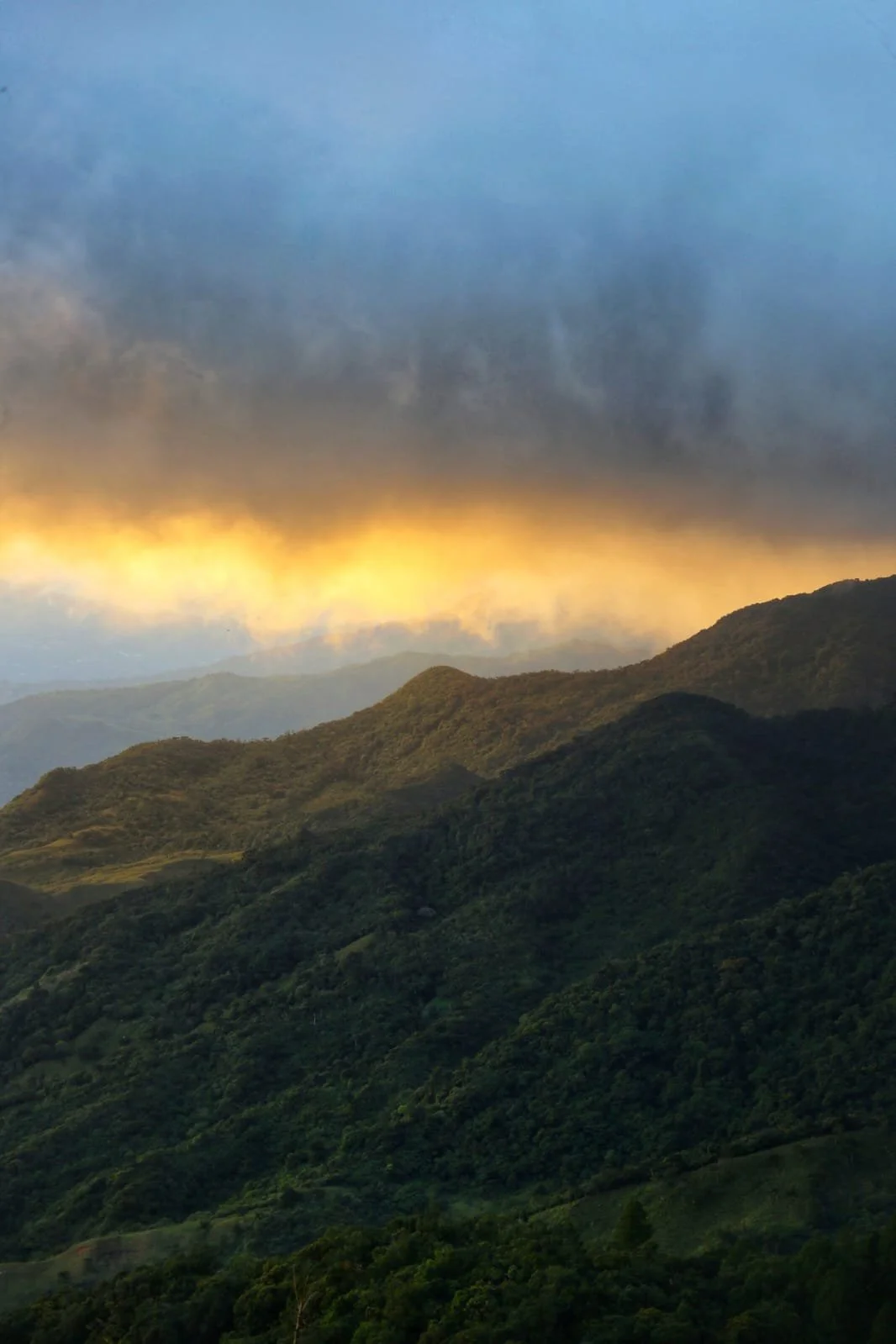
Deep in the mountains of Veraguas Province, surrounded by rivers, cloud forests, waterfalls, and mist covered hills, lies one of the most enchanting and emotionally captivating destinations in all of Panama. This is Santa Fe, a mountain town that many travelers visit for a few days and then struggle to leave.
Unlike Panama’s famous beach destinations or the modern skyline of Panama City, Santa Fe exists in a completely different world. The atmosphere changes long before visitors even arrive. The roads begin climbing into greener and cooler terrain. Rivers appear beside the highway. Forested hills rise in every direction. Clouds drift low across the mountains while the tropical heat of the lowlands slowly fades behind layers of elevation and mist.
For many travelers, the first feeling Santa Fe creates is relief.
The air is cooler. The pace is slower. The nights are quieter. Instead of traffic and concrete, visitors encounter waterfalls, birdsong, mountain rain, coffee farms, hiking trails, and endless green landscapes stretching across the spine of central Panama. Santa Fe feels less like a tourist destination and more like a hidden mountain refuge.
People often describe the town as peaceful, but that word barely captures its atmosphere. Santa Fe possesses a strange emotional quality that causes visitors to relax almost immediately. The surrounding mountains seem to absorb noise and urgency. Time slows down there. Travelers spend entire afternoons watching fog move across ridges or listening to rain strike metal rooftops while rivers roar somewhere below the hills.
Part of what makes Santa Fe so fascinating is its geography. The town sits within the mountainous interior of Veraguas, close to the edges of some of the most biologically rich cloud forest ecosystems in Panama. Elevation plays a huge role in shaping the environment. Unlike Panama’s hotter coastal regions, Santa Fe enjoys a cooler and wetter mountain climate that creates ideal conditions for forests, rivers, mosses, orchids, ferns, and incredible biodiversity.
The landscape surrounding Santa Fe feels almost impossibly green.
Cloud forests drape the mountainsides in layers of vegetation. Trees disappear beneath moss, vines, bromeliads, lichens, and orchids. Ferns grow to enormous sizes beside rivers and trails. During rainy periods, mist moves through the forest canopy in slow waves, creating scenery that often feels more like fantasy than reality.
Travelers love Santa Fe because it provides access to this environment without requiring extreme expedition style travel. Within a relatively short distance from town, visitors can hike to waterfalls, natural swimming holes, river canyons, mountain viewpoints, and forest trails alive with wildlife.
Water defines the entire region.
Santa Fe sits within one of the wettest and most river rich mountain landscapes in Panama. Rivers descend rapidly from the surrounding highlands, carving valleys and creating countless waterfalls throughout the area. Some are easily accessible while others require long muddy hikes through jungle and farmland.
The waterfalls around Santa Fe are one of the biggest reasons travelers become obsessed with the region. Cascades pour through dense vegetation into emerald pools surrounded by giant rocks and tropical forest. During the rainy season, many waterfalls become thunderous walls of water crashing through mist filled ravines. During drier periods, swimming becomes easier in calmer natural pools beneath the falls.
One of the most fascinating aspects of Santa Fe is how deeply the weather shapes the atmosphere.
Mountain weather here changes constantly. A sunny morning can transform into thick fog by afternoon before giving way to heavy rain and then sudden clear skies at sunset. Clouds drift through valleys at eye level. Mist clings to ridges while distant thunder echoes through the mountains.
This unstable weather creates the magical feeling many visitors describe after arriving in Santa Fe. The environment never feels static. The mountains are always changing appearance depending on light, rainfall, and cloud movement.
Rain itself becomes part of the experience.
In many places rain is seen as an inconvenience. In Santa Fe it feels essential. Heavy tropical downpours drum against roofs while rivers swell and forest vegetation drips with moisture. After storms pass, the mountains glow with intense shades of green while fog rises slowly from the valleys below.
The forests surrounding Santa Fe are biologically extraordinary. This region forms part of an important ecological corridor connecting different mountain ecosystems throughout central Panama. Because of the elevation and moisture, the area supports species that cannot survive in hotter lowland environments.
Birdwatchers especially adore Santa Fe. The cloud forests and surrounding habitats contain an incredible range of birdlife. Hummingbirds flash through gardens and forest edges while toucanets, tanagers, hawks, and countless smaller species move through the canopy. Early mornings often begin with a chorus of bird calls echoing through misty valleys.
One of the region’s most iconic birds is the Resplendent quetzal, one of the most famous and beautiful birds in Central America. Although sightings are never guaranteed, nearby highland forests provide suitable habitat for these remarkable birds with their iridescent plumage and long flowing tail feathers.
But Santa Fe is not only about birds. The surrounding forests contain monkeys, frogs, butterflies, reptiles, and astonishing insect diversity. At night the environment transforms completely. Frogs emerge beside streams and puddles while insects create dense walls of sound from every direction. The darkness feels deep and alive.
For many travelers, the nighttime atmosphere becomes one of their favorite parts of Santa Fe. Unlike urban areas flooded with artificial light, the mountains become genuinely dark after sunset. On clear nights the stars can appear brilliant above the valleys. During wetter periods, clouds and fog create an entirely different mood, mysterious and atmospheric beneath the sounds of insects and flowing water.
Another reason people love Santa Fe is that it still feels authentic.
The town has tourism, but it has not become overwhelmed by it. Visitors still encounter everyday mountain life rather than an environment built entirely around outsiders. Farmers move through the hills on horseback. Small local stores line the streets. Coffee dries beneath the sun in rural areas surrounding town. Conversations happen slowly and naturally.
This authenticity creates a very different feeling compared to heavily commercialized destinations. Travelers often feel less like consumers and more like temporary participants in a mountain community.
The coffee culture around Santa Fe is another major attraction. The cooler mountain climate provides excellent conditions for growing high quality coffee. Small farms scattered throughout the hills produce beans with rich flavors influenced by elevation, rainfall, and volcanic style mountain soils. Visitors frequently discover tiny family run coffee operations hidden along rural roads and forested slopes.
Food in Santa Fe also contributes to the town’s appeal. The cooler climate encourages hearty meals compared to lighter coastal cuisine. Fresh vegetables, local coffee, soups, rice dishes, and tropical fruits all play important roles in the local food culture. Eating a warm meal while rain falls outside and fog drifts across the mountains becomes part of the Santa Fe experience itself.
Adventure travelers are drawn to Santa Fe because of the incredible outdoor opportunities surrounding the town. Hiking is perhaps the biggest attraction. Trails range from relatively easy walks to difficult mountain treks through muddy cloud forest terrain. Some routes cross rivers repeatedly while others climb steep ridges offering panoramic views across the mountains of Veraguas.
The nearby Santa Fe National Park adds even more ecological significance to the region. The protected forests within and around the park help preserve critical watersheds and biodiversity corridors. These forests also influence regional climate by trapping moisture and generating rainfall that feeds rivers flowing throughout central Panama.
River tubing, waterfall exploration, birdwatching, horseback riding, and canyon adventures all contribute to Santa Fe’s growing reputation among nature oriented travelers. Yet even with these activities available, the town never feels rushed or overstimulating.
That slower rhythm may actually be the main reason people become emotionally attached to Santa Fe.
The town encourages people to pay attention to things they often ignore elsewhere, the movement of clouds, the sound of rain, the smell of wet earth, the changing colors of mountains at sunset, the noise of frogs after dark, the taste of fresh mountain coffee in cold morning air.
Many travelers arrive expecting a typical mountain destination and instead discover a place that feels emotionally restorative.
Santa Fe also attracts people because it offers a version of Panama that surprises them. Internationally, Panama is often associated with the canal, banking, skyscrapers, beaches, and tropical heat. Santa Fe reveals another side entirely, cooler, quieter, greener, and deeply connected to mountain ecosystems.
The road into Santa Fe itself contributes to the feeling of entering another world. As travelers climb higher into the mountains, the landscape becomes progressively more dramatic. Valleys deepen, rivers sharpen into whitewater, and forested ridges stretch endlessly into the distance. By the time visitors arrive, many already feel psychologically separated from the rest of the country.
This sense of escape has become increasingly valuable in modern travel.
People are overwhelmed by noise, screens, traffic, schedules, and overstimulation. Santa Fe offers the opposite. It offers waterfalls hidden in jungle valleys, clouds drifting through forests, cold rivers flowing over stone, and nights filled with stars and insects instead of engines and alarms.
For geographers, Santa Fe is fascinating because it demonstrates the ecological importance of Panama’s interior mountains. The region shows how elevation, rainfall, biodiversity, rivers, and human settlement interact to create unique environmental systems. The cloud forests function as water towers for surrounding landscapes while also supporting immense biological richness.
For travelers, however, Santa Fe’s appeal often becomes deeply personal.
Some fall in love with the waterfalls. Others with the climate, the hiking, the coffee, or the forests. Many simply fall in love with how the place makes them feel.
Because Santa Fe is not merely somewhere to visit.
It is somewhere that reminds people what quiet sounds like, what darkness looks like, and what it feels like to exist inside a landscape where nature still dominates almost everything.