
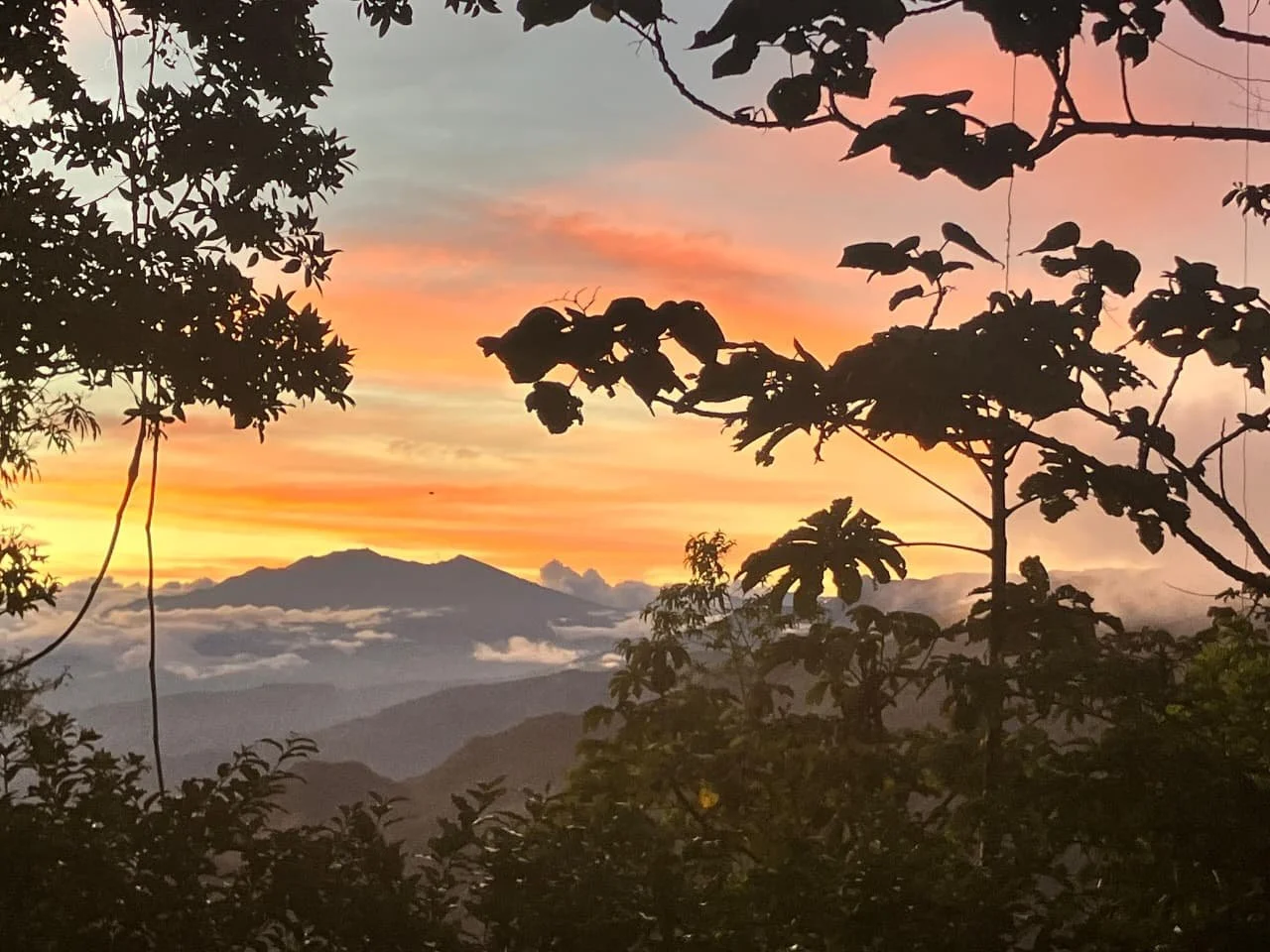
High in the mountains of Chiriquí Province, far above the tropical heat that most people associate with Panama, lies a place that feels almost like another country entirely. The road climbs higher and higher through curves wrapped in fog until suddenly the landscape changes. Palm trees disappear. The air becomes crisp and cold. Endless green valleys open beneath towering mountains. Strawberry fields, onion farms, and vegetable patches spread across rolling hills while clouds drift slowly through the forests like smoke.
This is Cerro Punta, one of the most extraordinary and unique places in all of Panama.
For many first time visitors, Cerro Punta is deeply surprising. Panama is usually imagined as a land of beaches, jungles, humidity, and blazing tropical heat. Then travelers arrive in Cerro Punta wearing shorts and sandals only to find themselves shivering in mountain fog while drinking hot coffee surrounded by cloud forests.
At over 2,000 meters above sea level, Cerro Punta is the highest major town in Panama and one of the coldest inhabited areas in the country. Temperatures often range between cool and genuinely chilly, especially at night when mist settles over the valley and winds sweep down from the mountains. During certain dry season mornings, temperatures can become cold enough for frost in the surrounding highlands.
The drive into Cerro Punta is part of the magic. The winding mountain roads twist upward through the highlands of Chiriquí, passing rivers, forests, farms, and viewpoints that seem almost unreal. Around every curve the scenery changes. One moment there are rolling green hills. The next moment dense cloud forest closes in around the road while fog drifts through giant trees covered in moss and orchids.
Then suddenly the valley opens.
Cerro Punta sits inside a spectacular bowl shaped mountain valley surrounded by forested ridges and dramatic slopes. The scenery looks almost more like the Andes or rural Europe than the tropical image most people have of Panama. Small houses and farms dot the hillsides while mountain streams rush through the valley floor.
The atmosphere of Cerro Punta is unlike anywhere else in the country. The air smells fresh and earthy. Rain comes and goes quickly. Clouds roll through constantly. Locals call the misty weather “bajareque,” a type of drifting mountain fog that blankets the valley before disappearing again moments later. These rapid weather changes create endless rainbows, dramatic lighting, and constantly shifting landscapes.
One of the most fascinating things about Cerro Punta is its role as the agricultural heart of Panama. Despite being a relatively small mountain community, the region produces an enormous percentage of the country’s vegetables and fruits. The cool mountain climate allows crops to grow that struggle in Panama’s hotter lowlands.
Driving through the area feels like passing through a giant living garden. Hillsides are covered with neat rows of lettuce, onions, potatoes, carrots, cabbage, strawberries, herbs, and flowers. Trucks loaded with vegetables rumble down the roads every morning heading toward markets across the country.
The farms themselves create a strangely beautiful patchwork across the mountainsides. From high viewpoints, the valley looks like an enormous green quilt stitched together with fields, forests, streams, and fog.
Yet Cerro Punta is much more than agriculture.
It is also one of Panama’s greatest nature destinations.
The town lies beside some of the most important cloud forests in Central America. Nearby protected areas like La Amistad International Park and Volcán Barú National Park protect ancient mountain forests filled with extraordinary biodiversity.
These forests feel magical.
Trees disappear beneath thick layers of moss, bromeliads, orchids, and ferns. Everything drips with moisture. Strange bird calls echo through the fog while hummingbirds dart among flowers. The forests seem almost prehistoric, as though dinosaurs could emerge from the mist at any moment.
One of the greatest wildlife treasures of Cerro Punta is the resplendent quetzal. This legendary bird, famous for its brilliant green feathers and impossibly long tail, attracts birdwatchers from around the world. Spotting a quetzal in the cloud forest is considered one of the great wildlife experiences in Central America.
The forests around Cerro Punta are among the best places in Panama to see them.
Early mornings are especially magical. Mist hangs between giant oak trees while the forest slowly wakes up. Somewhere overhead comes the soft call of a quetzal hidden deep in the canopy.
Even people who are not serious birdwatchers become captivated by the atmosphere of these mountains.
One of the most famous hiking routes in Panama begins here: the legendary Los Quetzales Trail. This trail connects Cerro Punta with Boquete by passing through high elevation cloud forest beneath the slopes of Volcán Barú.
The hike is famous for its beauty but also for its difficulty. Mud, steep climbs, dense fog, and rapidly changing weather make it an unforgettable adventure. Along the route hikers pass giant trees, waterfalls, moss covered forests, and some of the richest birdlife in the country.
The contrast between Cerro Punta and the rest of Panama fascinates many visitors. Down in places like Panama City, temperatures can feel intensely tropical with heavy humidity and heat. In Cerro Punta people wear jackets, drink hot chocolate, and sleep beneath blankets while cold rain taps on rooftops.
The local culture also feels different. Life moves more slowly here. Agriculture shapes daily rhythms. Farmers wake before sunrise to work the fields while fog still covers the valley. Trucks loaded with produce head down mountain roads toward the rest of the country. Small roadside restaurants serve hot soups, fresh strawberries, coffee, and mountain comfort food perfect for the chilly weather.
Many travelers fall in love with the quiet atmosphere. Unlike more heavily touristed mountain towns, Cerro Punta remains relatively peaceful and authentic. There are fewer crowds, fewer bars, and more focus on nature, scenery, farming, and mountain life.
At night the valley becomes especially beautiful. Temperatures drop quickly while clouds drift silently over distant hills. Lights from scattered houses glow through the mist. The cold mountain air carries the smell of wet earth and wood smoke.
The region is also famous for flowers and orchids. Gardens explode with color thanks to the cool wet climate. Hummingbirds seem to exist everywhere, hovering around flowers in flashes of green and purple.
Rain is deeply connected to life in Cerro Punta. Afternoon showers are common for much of the year, and weather can shift dramatically within minutes. A bright sunny valley may suddenly vanish beneath thick fog before clearing again just as quickly.
This constantly changing weather gives Cerro Punta much of its mysterious atmosphere.
There is also something deeply peaceful about the area. The combination of mountain silence, drifting fog, distant bird calls, and cool air creates a feeling difficult to describe until experienced personally. Many visitors arrive expecting only scenic farmland and leave feeling emotionally attached to the place itself.
Cerro Punta also represents an important environmental crossroads in Panama. Agriculture has expanded enormously over the decades, transforming large parts of the valley into productive farmland. At the same time, nearby cloud forests remain critically important wildlife corridors connecting mountain ecosystems between Panama and Costa Rica.
This balance between farming and conservation shapes much of the region’s identity today.
What makes Cerro Punta unforgettable is not simply one attraction or viewpoint. It is the entire atmosphere. The cold wind sweeping across mountain valleys. The smell of rain and fresh vegetables. The endless layers of green hills disappearing into clouds. The feeling of standing high above tropical Panama inside a completely different world.
Many travelers visit expecting just another mountain town.
Instead they discover one of the most magical landscapes in all of Central America.