
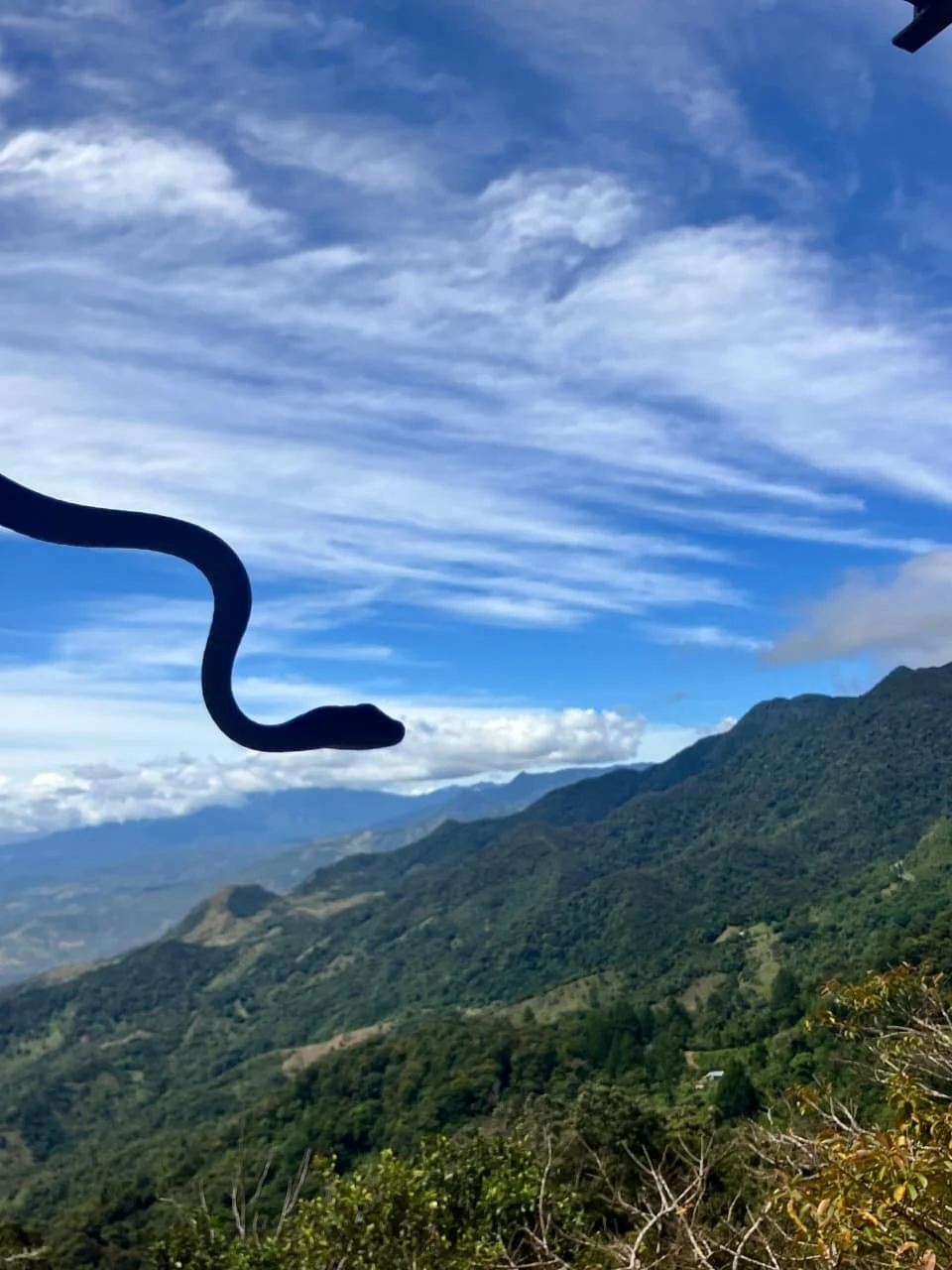
Hidden within the forests of Panama lives an animal that many travelers never realize even exists. It races through jungle branches with the agility of a monkey, hunts with the confidence of a much larger predator, climbs effortlessly through the canopy, and carries an energy level that seems almost impossible to contain. This remarkable creature is the tayra, one of the rainforest’s most fascinating and underrated mammals.
For people lucky enough to encounter one in the wild, the experience is unforgettable. A dark sleek body suddenly appears along a jungle trail or darts across a branch overhead before disappearing back into the forest almost instantly. Sometimes a tayra pauses briefly to stare at observers with bright intelligent eyes, almost as if trying to decide whether humans are interesting enough to investigate further. Then, within seconds, it is gone again.
Many first time observers have no idea what they just saw. The animal seems strangely familiar yet completely foreign at the same time. Some people think it resembles a giant weasel. Others compare it to a monkey, a wild cat, or some kind of jungle ferret. The confusion is understandable because the tayra combines traits from many different animals into one highly unusual rainforest predator.
Scientifically known as Eira barbara, the tayra belongs to the mustelid family, the same family that includes otters, badgers, martens, wolverines, and weasels. Yet unlike many of its relatives, the tayra evolved specifically for tropical forest life. Over millions of years it became one of the most adaptable, intelligent, and athletic predators in Central America.
In Panama, tayras inhabit rainforests, cloud forests, secondary forests, jungle edges, and remote wilderness areas across much of the country. Although many people rarely see them, they are more widespread than most travelers realize. The reason encounters are uncommon is not because tayras are especially rare but because they move incredibly fast and cover large areas while constantly exploring their environment.
Tayras seem almost permanently active. Unlike sloths hanging motionless in trees or anteaters slowly searching for insects, tayras behave like restless bundles of jungle energy. They run, climb, sniff, leap, investigate, hunt, and explore continuously. Watching one move through the forest feels almost like watching pure curiosity given physical form.
Physically, they are beautiful animals. Their bodies are long, muscular, and streamlined for movement. Most tayras in Panama are covered in dark brown or black fur, often with lighter patches on the chest or throat that create striking contrast. Their faces sometimes appear slightly paler than the rest of the body, giving them a unique expressive appearance. They possess strong legs, sharp claws, flexible bodies, and long tails that help maintain balance while climbing through trees.
When fully grown, a tayra is larger than many people expect. Up close they appear powerful and athletic rather than cute or delicate. Everything about their body is built for speed, agility, and versatility.
One of the reasons tayras fascinate scientists so much is because they are extraordinary opportunists. They will eat almost anything they can find, catch, steal, or scavenge. Their diet includes rodents, birds, eggs, reptiles, insects, frogs, fruit, carrion, and countless other food sources depending on what is available. They are highly intelligent hunters constantly searching for opportunities in the rainforest.
Tayras are also famous for raiding beehives. Their thick fur offers some protection against stings while they tear into nests searching for honey and larvae. This behavior has earned them a reputation for fearlessness because few animals willingly attack swarms of angry tropical bees. Yet tayras often do so enthusiastically.
Their intelligence is one of their most impressive qualities. Researchers studying tayras have observed problem solving abilities and behaviors that suggest a surprisingly advanced level of adaptability. In some areas they have even been documented collecting unripe fruit and hiding it until it ripens later, showing an ability to plan ahead that seems remarkable for a wild rainforest predator.
Unlike ambush predators that rely mainly on stealth and patience, tayras often hunt actively by constantly searching their surroundings. They use excellent eyesight, a strong sense of smell, and endless curiosity to locate prey. They inspect holes in trees, rotten logs, branches, rock crevices, and forest floor debris looking for anything edible.
Their climbing ability is astonishing. Tayras move through trees with incredible confidence, leaping between branches and racing through the canopy with an agility that surprises anyone seeing them for the first time. Despite their muscular bodies they seem perfectly comfortable high above the forest floor.
In Panama, some of the best places to potentially encounter tayras include the forests of Soberanía National Park, remote jungle areas within Darién National Park, and cloud forests near Boquete. Wildlife enthusiasts walking quiet jungle trails occasionally spot them crossing roads, moving through branches, or searching for food near forest edges.
Sometimes they are even seen in the park near Lost and Found Hostel, surprising backpackers and hikers exploring the surrounding cloud forest trails. Encounters there are never guaranteed, but the surrounding wilderness provides excellent habitat for wildlife, and tayras occasionally appear moving quickly through the trees or along forest edges before disappearing again into the dense vegetation. Seeing one unexpectedly near the hostel often becomes one of the most exciting wildlife moments of a traveler’s trip.
Part of what makes tayras so exciting to observe is their unpredictability. Sloths stay visible for hours. Monkeys often travel noisily in groups. Tayras are different. They appear suddenly and vanish just as quickly. Many sightings last only seconds.
This fleeting nature gives them an almost mythical quality in the rainforest.
Another fascinating characteristic of tayras is their confidence. Despite not being extremely large, they behave boldly and fearlessly. They are capable of defending themselves aggressively and will investigate situations many other animals avoid. Some farmers in rural areas even consider them troublemakers because once a tayra discovers chickens, fruit trees, or another reliable food source, it may return repeatedly.
Yet in healthy forests, tayras play an important ecological role. They help control rodent populations and contribute to the complex predator network that keeps rainforest ecosystems balanced.
Tayras are generally solitary animals, although pairs and mothers with young are sometimes seen together. They communicate using scent marking, vocalizations, body posture, and various sounds including growls, chirps, and snorts. Young tayras are especially playful, spending enormous amounts of time wrestling, climbing, and practicing hunting behaviors.
In Panama’s forests, tayras share habitat with jaguars, ocelots, boas, harpy eagles, monkeys, anteaters, and countless other rainforest species. Surviving in such a competitive environment requires intelligence, speed, adaptability, and constant awareness. Tayras possess all of these qualities in abundance.
Their dark coloration helps them blend beautifully into rainforest shadows while moving through dense vegetation. Even when one is nearby, it can disappear almost instantly once it enters thick forest cover.
Because they are often active during daylight hours, tayras offer lucky visitors the possibility of daytime sightings, unlike many elusive rainforest mammals that remain hidden at night. Wildlife photographers and birdwatchers walking quiet forest trails occasionally experience the sudden thrill of seeing a tayra race across the canopy overhead.
Photographing them is notoriously difficult because they rarely remain still for long. Most encounters involve a blur of motion followed by excitement and disbelief.
Tayras also hold a place in local folklore and indigenous knowledge throughout Central and South America. For generations people living near forests recognized them as intelligent, curious, resourceful animals with bold personalities.
Despite their adaptability, tayras still face threats from habitat loss, expanding roads, and forest fragmentation. Large connected forests remain essential for their survival because they travel widely while hunting and exploring. Fortunately, Panama still protects substantial rainforest habitat where tayras continue thriving better than in many other parts of their range.
What makes the tayra so captivating is the strange combination of qualities it possesses. It has the body of a weasel, the climbing ability of a monkey, the curiosity of a raccoon, the confidence of a much larger predator, and the endless energy of a creature that never truly stops moving.
Seeing one in the wild feels like discovering one of the rainforest’s hidden secrets.
In many ways, the tayra perfectly represents the spirit of Panama itself. Wild, fast moving, intelligent, unpredictable, and full of hidden wonders waiting quietly inside the forest for those lucky enough to notice them.