
Hidden deep within the cool green highlands of western Chiriquí Province, almost pressed against the border with Costa Rica, lies one of the most overlooked and fascinating regions in all of Panama: Río Sereno. Most tourists rushing through Panama have never even heard of it. Backpackers heading toward beaches and islands often pass far away from it entirely. Even many Panamanians from the capital know surprisingly little about this quiet mountain town hidden among forests, farms, valleys, rivers, mist, and rolling green hills.
And yet Río Sereno feels like a completely different side of Panama.
This is not the tropical Panama of skyscrapers, beaches, and blazing heat that many foreigners imagine. Río Sereno belongs to another Panama altogether. It is a land of cool mountain air, dairy farms, coffee plantations, fog drifting across hillsides, cows grazing beside volcanic soil, and winding roads that disappear into forests near the Costa Rican frontier. Life moves slowly here. People wake up early. The mornings are cold enough for jackets. The landscape often feels more like parts of rural Costa Rica or even the highlands of Colombia than the humid tropical lowlands many associate with Panama.
The town sits within the district of Renacimiento in northwestern Chiriquí Province near the Costa Rican border and at elevations that range roughly between 900 and 1500 meters above sea level. Because of this altitude, Río Sereno enjoys one of the mildest climates in Panama, with temperatures often hovering between 15 and 26 degrees Celsius. In a country known for tropical heat and heavy humidity, Río Sereno feels refreshingly cool and calm.
The name itself almost perfectly captures the atmosphere. “Río Sereno” translates roughly to “Serene River,” and serenity truly defines the region. The moment travelers arrive, they notice the difference. The air smells cleaner and fresher. The forests seem thicker. The roads become quieter. Instead of traffic and city noise, the soundtrack becomes birds, wind through trees, distant cows, rain falling on metal roofs, and rivers moving through valleys below.
The geography surrounding Río Sereno is one of the main reasons the area feels so unique. The town sits within the mountainous frontier region near the Talamanca mountain range, one of the most ecologically rich areas in Central America. The landscape rises and falls constantly, creating valleys, ridges, rivers, and cloud forest environments that support incredible biodiversity. From certain viewpoints, people can even see distant panoramas toward the great Volcán Barú, Panama’s highest volcano.
Clouds and mist are deeply connected to the identity of Río Sereno. Unlike the dry Pacific coast or the steaming Caribbean lowlands, this is a place where weather changes rapidly. Mornings may begin bright and sunny before fog slowly drifts across the mountains by afternoon. Rainstorms arrive dramatically during the wet season, covering the hills in deep green vegetation. During cooler evenings, low clouds sometimes settle across the roads and valleys, giving the entire region a mysterious and almost cinematic atmosphere.
Agriculture defines everyday life in Río Sereno more than tourism does. This is fundamentally a working rural region where farming remains central to the economy and culture. The fertile volcanic soil and cool temperatures make the area ideal for agriculture. Coffee is especially important. Traditional coffee farms and gourmet coffee production are deeply woven into the landscape and identity of the region.
Driving through the countryside around Río Sereno reveals endless farmland stretching across the hills. Locals cultivate tomatoes, peppers, beans, corn, bananas, yuca, chayote, and strawberries, while cattle ranches and dairy farms dominate many of the valleys. The smell of fresh earth, wet grass, wood smoke, and livestock becomes part of the experience. Unlike heavily tourism focused towns, Río Sereno still feels genuinely rooted in agricultural life rather than built around visitors.
One of the most fascinating aspects of Río Sereno is its relationship with the border itself. The town serves as one of the crossing points between Panama and Costa Rica. Borders in Central America often feel very different from the heavily militarized frontiers people imagine elsewhere in the world. Around Río Sereno, the border sometimes feels surprisingly informal and deeply intertwined with daily life. Families, commerce, farming, and transportation all interact across this frontier zone.
Historically, frontier regions like Río Sereno developed unique identities because they existed slightly apart from the political and cultural centers of both countries. People in these mountain communities often share customs, accents, foods, and economic relationships that transcend national boundaries. In many ways, Río Sereno feels less isolated from nearby Costa Rican communities than from distant Panama City itself.
The border has occasionally generated disputes and tension throughout history. Boundary demarcations between Panama and Costa Rica in the Río Sereno area required official commissions and marker placements to clarify territorial lines. Yet today the atmosphere is generally peaceful, and the border mainly contributes to the area’s interesting cultural blend and strategic importance.
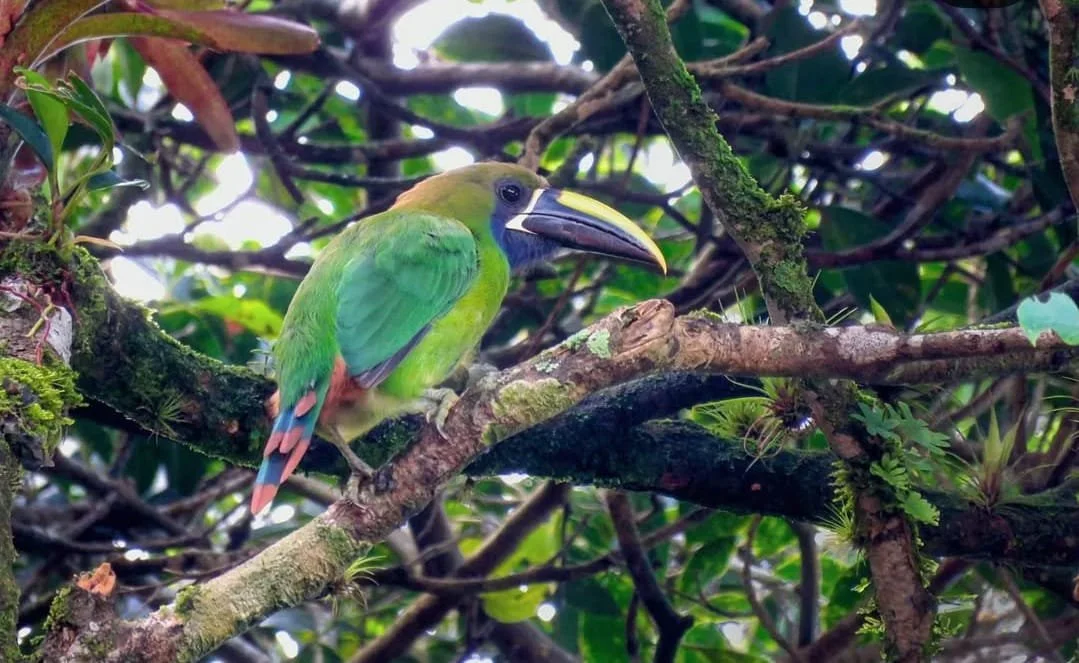
Nature around Río Sereno is extraordinary but understated. This is not a place with giant tourist attractions or heavily marketed eco tours. Instead, the beauty feels quieter and more authentic. Forests surround much of the region. Birdwatching opportunities are excellent because the surrounding highlands support many species associated with cloud forest ecosystems. Travelers may encounter hummingbirds, toucans, hawks, parrots, and countless smaller tropical birds hidden among the trees.
The forests themselves feel ancient in certain areas. Moss covers rocks and tree trunks. Ferns spill across hillsides. Rivers cut through dense vegetation. During rainy periods the entire landscape seems alive with moisture and growth. Insects sing loudly at night while fog drifts between mountain ridges. The atmosphere often feels deeply peaceful yet slightly wild at the same time.
One of the reasons Río Sereno remains relatively unknown internationally is that it lacks the polished tourism infrastructure found in places like Boquete. There are fewer luxury hotels, fewer organized tours, and fewer backpacker crowds. For some travelers this might sound like a disadvantage, but for others it is exactly what makes Río Sereno special. The region still feels authentic and uncommercialized. Visitors experience ordinary life rather than a heavily curated tourist version of Panama.
The roads leading into Río Sereno contribute strongly to the feeling of remoteness. The drive through the Renacimiento district winds through mountain landscapes filled with farms, forests, rivers, and scattered villages. At times the scenery becomes breathtaking. Rolling hills covered in green pasture stretch endlessly beneath low hanging clouds. Small houses appear beside steep slopes. Horses graze quietly near roadside fences. It feels like the kind of place where life remains closely tied to weather, land, and seasons.
Rainy season in Río Sereno is especially memorable. While much of Panama becomes intensely wet during these months, the highland environment transforms into something almost dreamlike. Mist settles over the mountains for hours. Rivers swell with rainwater. The forests become impossibly green. Water drips continuously from leaves and rooftops. Sometimes entire hillsides disappear behind clouds. Travelers who enjoy moody weather, mountain scenery, and dramatic landscapes often fall in love with the atmosphere during this time of year.
At night Río Sereno feels profoundly quiet compared to Panama’s urban areas. Temperatures drop noticeably after sunset. The darkness becomes deep and complete outside the town center. Crickets, frogs, and distant dogs create the nighttime soundtrack. On clear evenings the stars can appear remarkably bright because there is relatively little light pollution. During foggy nights, however, visibility shrinks dramatically and the mountains feel mysterious and isolated.
The people of Río Sereno reflect the hardworking agricultural identity of the region. Communities throughout the Renacimiento district are known for farming traditions, strong family ties, and quieter rural lifestyles. Life here often revolves around agriculture, local schools, churches, markets, and family networks rather than tourism or international business. Visitors frequently notice how different the pace of life feels compared to Panama City.
Food in Río Sereno reflects the agricultural richness of the area. Fresh dairy products, vegetables, beans, corn, and locally grown produce play major roles in regional cuisine. The cooler climate also allows crops uncommon in hotter parts of Panama to thrive more successfully. Meals often feel hearty, simple, and closely connected to the surrounding farmland.
Coffee culture deserves special attention because the surrounding highlands produce excellent beans. While nearby Boquete receives most international recognition for coffee tourism, Río Sereno and the greater Renacimiento region quietly produce high quality coffee as well. The cool temperatures, elevation, rainfall, and volcanic soil create favorable conditions for cultivation. Coffee farms scattered across misty hillsides contribute heavily to the region’s character and economy.
One of the most intriguing aspects of Río Sereno is how it challenges stereotypes about Panama itself. Many foreigners imagine Panama primarily as a tropical canal nation filled with beaches, humidity, and skyscrapers. Río Sereno reveals an entirely different identity hidden within the same country. Here Panama becomes mountainous, cold, agricultural, and deeply rural. The climate, scenery, and atmosphere surprise many people who never imagined Central America could feel this way.
There is also a strong emotional quality to places like Río Sereno that is difficult to fully explain. Remote mountain towns often create a sense of calm and introspection. The combination of cool air, fog, forests, rivers, and slower daily rhythms affects people psychologically. Travelers sometimes describe feeling unusually relaxed there, almost disconnected from modern stress and noise.
In an increasingly connected and commercialized world, Río Sereno remains refreshingly quiet. It is not trying to become the next giant tourist hotspot. It is simply existing as a beautiful highland frontier community surrounded by nature, agriculture, and mountains. That authenticity is becoming increasingly rare not only in Panama but across the world.
For travelers willing to leave behind beaches and resorts, Río Sereno offers something far more subtle and memorable. It offers a glimpse into a cooler, greener, quieter Panama that many people never realize exists at all.