
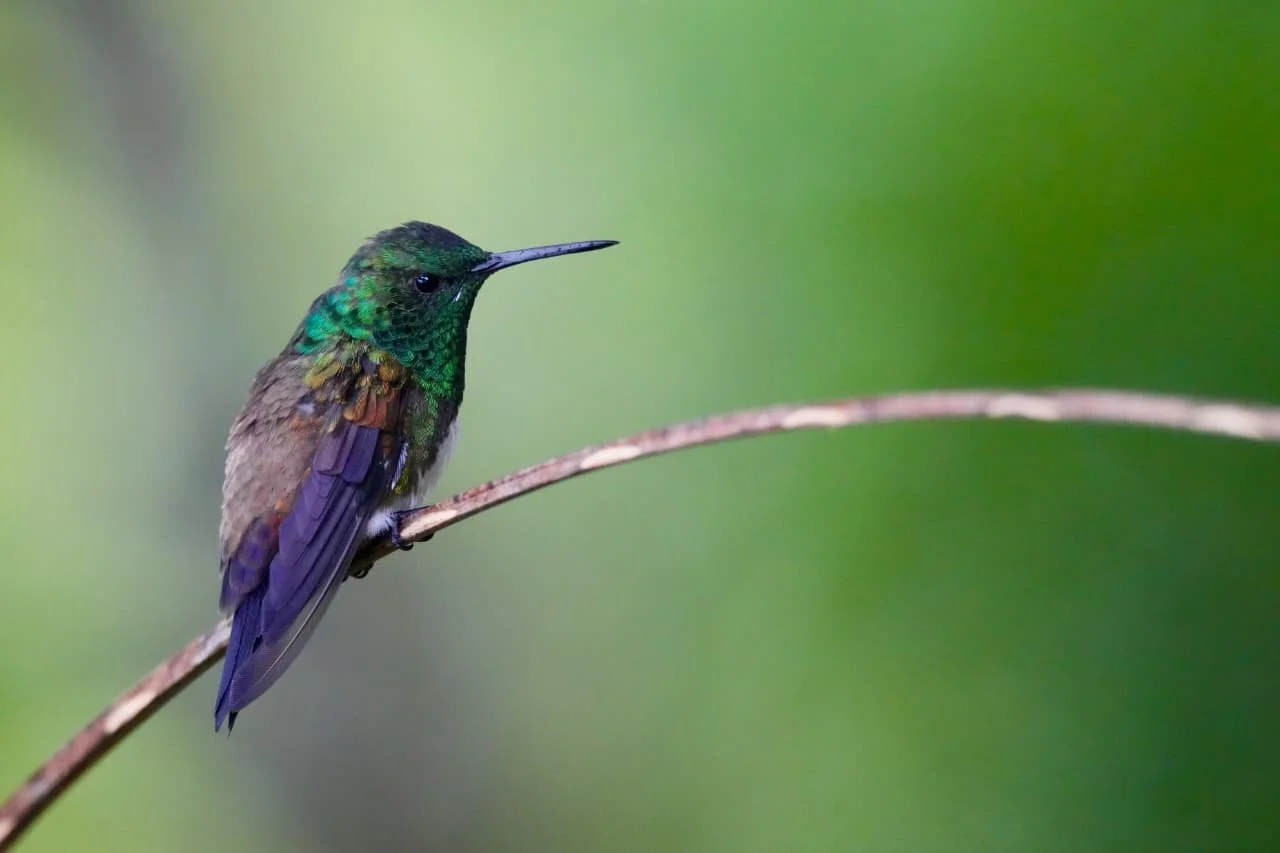
For a country that many people can barely point to on a map, Panama protects an astonishing amount of wilderness.
This surprises many first time visitors. Panama is often imagined mainly as a canal country, a place of cargo ships, skyscrapers, banking, and tropical beaches. But beyond the highways, ports, and city towers lies one of the richest natural landscapes in the Americas. Mountains disappear into cloud forests. Jaguars roam remote jungles. Scarlet macaws cross rainforest canopies. Sea turtles crawl ashore beneath moonlight. Coral reefs shimmer beside tiny islands while waterfalls crash through untouched valleys.
And remarkably, huge portions of this biodiversity survive because Panama created an extensive network of national parks and protected areas that shield much of the country from total development.
For travellers, Panama’s national parks are not just scenic side trips. They are the country’s real backbone. They protect the forests that feed rivers, support wildlife, stabilize the climate, and even help supply the water needed for the Panama Canal itself. Without healthy forests, the canal would struggle because the lock system depends heavily on freshwater rainfall captured by jungle watersheds.
In Panama, wilderness is not separated from national survival. The forests are part of the infrastructure.
What makes Panama’s parks especially fascinating is the country’s geography. Panama is narrow, mountainous, tropical, and biologically positioned between North and South America. This created one of the greatest biodiversity crossroads on Earth. Species from both continents overlap there. Caribbean ecosystems collide with Pacific ecosystems. Cloud forests rise above mangrove swamps. Coral reefs sit beside jungle rivers.
As a result, Panama contains astonishing biodiversity for such a small nation. Scientists estimate the country contains over 10,000 plant species, more than 1,000 bird species, and countless insects, amphibians, reptiles, and mammals. Entire valleys still contain species barely studied by science.
And many of those species survive because of Panama’s parks.
Soberanía National Park: The Jungle Beside the Canal
One of the most famous and accessible protected areas in Panama is Soberanía National Park, located surprisingly close to Panama City itself. Few capital cities on Earth sit so close to dense tropical rainforest.
Soberanía protects part of the canal watershed and serves as one of the world’s greatest birdwatching destinations. The park contains thick lowland rainforest, streams, wetlands, and rolling jungle hills alive with wildlife.
Its most famous route is Pipeline Road, legendary among birders worldwide. More bird species have been recorded along this road than almost anywhere else on the planet. Harpy eagles, toucans, trogons, motmots, antbirds, and hummingbirds all inhabit the forest there.
But even travellers who know nothing about birds usually become captivated by Soberanía. The forest feels intensely alive. Howler monkeys roar through the canopy. Leaf cutter ants form endless highways across trails. Blue morpho butterflies drift through shafts of sunlight. Sloths cling motionless to branches above muddy paths.
And all of this exists less than an hour from modern skyscrapers and container ports.
The contrast feels surreal.
Darién National Park: Panama’s Last Great Wilderness
If Soberanía represents accessible rainforest, then Darién National Park represents something far more extreme.
Darién is enormous, remote, humid, dangerous, biologically rich, and legendary. Covering a massive area near the Colombian border, it protects one of the largest remaining wilderness regions in Central America. UNESCO recognizes it as a World Heritage Site because of its ecological importance.
This is not casual jungle.
Darién contains swamps, mountains, rivers, dense rainforest, and isolated indigenous communities. Jaguars, tapirs, harpy eagles, crocodiles, monkeys, and poison dart frogs inhabit its forests. Scientists still discover species there. Entire areas remain extremely difficult to access.
The Darién Gap, the infamous break in the Pan American Highway between Panama and Colombia, lies within this broader wilderness region. No road crosses it completely. Swamps, mountains, rivers, thick jungle, and political realities prevented full highway construction.
The result is one of the last major roadless barriers in the Americas.
Darién carries an almost mythological reputation among adventurers because it feels genuinely untamed. Heat, insects, mud, rain, and isolation define the landscape. Even experienced travellers speak about the region with a kind of respect bordering on fear.
Yet ecologically, Darién is priceless. It protects migration corridors, massive rainforest systems, and cultures that have existed there for centuries.
Volcán Barú National Park: Panama Above the Clouds
Most travellers associate Panama with beaches and tropical heat, but Volcán Barú National Park reveals an entirely different side of the country.
Centered around Volcán Barú, Panama’s tallest mountain, this park contains cool cloud forests, volcanic landscapes, highland farms, and dramatic elevation changes.
At over 3,400 metres above sea level, Volcán Barú feels worlds away from the humid lowlands. Temperatures can become surprisingly cold, especially before sunrise. Moss hangs from trees. Mist drifts constantly through forests. Hummingbirds zip between flowers while mountain winds sweep across ridges.
Many hikers climb Volcán Barú overnight to watch sunrise from the summit. On exceptionally clear mornings, people claim they can see both the Pacific Ocean and Caribbean Sea from the top.
The surrounding Chiriquí Highlands are also famous for coffee production, especially Geisha coffee, one of the world’s most expensive and celebrated coffee varieties.
The forests around Volcán Barú shelter species adapted to cooler mountain conditions. Quetzals, one of Central America’s most iconic birds, inhabit cloud forests there alongside orchids, tree ferns, and countless epiphytes.
Coiba National Park: Panama’s Jurassic Island
Far offshore in the Pacific lies Coiba National Park, one of Panama’s greatest natural treasures.
Coiba Island was isolated from mainland Panama thousands of years ago, allowing species there to evolve separately. Scientists often compare it to a mini Galápagos because of its biodiversity and relative isolation.
For decades Coiba remained protected unintentionally because it served as a penal colony. The prison’s existence discouraged large scale development and tourism. Ironically, the island’s harsh history helped preserve its ecosystems.
Today Coiba National Park protects rainforests, coral reefs, mangroves, and marine habitats filled with extraordinary wildlife.
Marine life around Coiba is spectacular. Whale sharks, humpback whales, dolphins, sea turtles, reef sharks, rays, and enormous schools of fish move through nearby waters. Divers consider Coiba among the best dive destinations in the eastern Pacific.
On land, the island contains endemic species found nowhere else. Coiba howler monkeys, agoutis, birds, and reptiles evolved separately after rising sea levels isolated the island from mainland Panama.
Walking through Coiba feels almost prehistoric. Dense jungle presses close to black sand beaches while scarlet macaws cross overhead.
Marino Ballena and the Caribbean Marine Parks
Panama’s national park system is not only jungle and mountains. Marine parks protect huge sections of coastline, coral reefs, mangroves, and islands on both oceans.
The Caribbean side especially contains breathtaking marine environments around places like Bocas del Toro and the protected areas surrounding the archipelago.
Coral reefs there shelter tropical fish, nurse sharks, rays, octopus, sea horses, and sea turtles. Mangrove forests create nursery habitats for marine species while also protecting coastlines from erosion.
On the Pacific side, humpback whales migrate through Panamanian waters seasonally. During whale season, boats often encounter mothers and calves breaching offshore.
Panama’s oceans are biologically rich partly because the country sits between two major marine systems. Caribbean reefs and Pacific upwelling zones support completely different ecosystems within relatively short distances.
La Amistad International Park: The Forgotten Giant
Perhaps one of the least appreciated but most important protected areas in the region is La Amistad International Park, shared between Panama and Costa Rica.
This massive protected wilderness contains mountains, cloud forests, rivers, and some of the most untouched habitat in Central America.
Much of the park remains extremely remote and difficult to access. Dense forests, steep terrain, and constant rainfall dominate the landscape. Scientists consider it one of the most biologically important regions in the Americas because of its enormous species diversity and high number of endemic organisms.
The park protects habitats ranging from tropical rainforest to alpine like highland ecosystems. Jaguars, pumas, tapirs, monkeys, and rare amphibians inhabit its forests.
Even today, parts of La Amistad remain scientifically underexplored because the terrain is so challenging.
Metropolitan Natural Park: Jungle Inside the City
One of the strangest protected areas in Panama might be Metropolitan Natural Park.
This park exists directly inside Panama City itself.
Very few capitals on Earth contain genuine tropical rainforest within city limits. Yet Metropolitan Park preserves a patch of jungle filled with monkeys, sloths, toucans, iguanas, and tropical vegetation surrounded by highways and skyscrapers.
Visitors can hike forest trails while hearing traffic in the distance and watching skyscrapers rise beyond the canopy. It perfectly symbolizes Panama itself: urban modernity colliding with raw tropical nature.
The Role of National Parks in Panama’s Future
Panama’s parks do more than protect scenery.
They regulate water systems. Prevent erosion. Support tourism. Store carbon. Protect fisheries. Maintain biodiversity. Preserve indigenous territories. Support scientific research. And critically, they help maintain the freshwater systems necessary for canal operations.
Without forests capturing rainfall, the canal would struggle to function efficiently because every ship transit depends on enormous quantities of freshwater.
This creates a fascinating reality where global trade partially depends on the survival of tropical rainforests.
Panama’s parks also help buffer the country against climate change. Mangroves protect coastlines. Forests stabilize rainfall patterns. Mountain cloud forests regulate river systems.
Yet these protected areas face constant pressure. Deforestation, mining, agriculture, illegal logging, climate change, poaching, and development threaten many ecosystems. Roads cut deeper into forests. Expanding populations increase land pressure.
At the same time, ecotourism has become increasingly important economically. Travellers now visit Panama specifically for birdwatching, hiking, diving, whale watching, jungle lodges, and wildlife photography.
And wildlife in Panama is genuinely spectacular.
Harpy eagles soar over rainforest valleys. Glass frogs cling beneath leaves beside streams. Poison dart frogs flash neon colours across wet forest floors. Sea turtles nest on remote beaches. Sloths hang lazily over jungle trails. Humpback whales breach offshore during migration season.
The sheer diversity feels overwhelming for such a small country.
Perhaps that is what makes Panama’s national parks so extraordinary. They are not isolated wilderness fragments disconnected from daily life. They are woven directly into the country’s identity, economy, geography, and survival.
The forests feed the rivers. The rivers feed the canal. The canal feeds the economy. And all of it depends on protecting the narrow tropical bridge between two oceans.
In Panama, the wild is never very far away. Even from skyscrapers, highways, ports, and cities, the jungle waits just beyond the edges, humid and alive, filled with creatures, rivers, storms, and forests that shaped the country long before modern borders existed.
And thanks to the national parks, much of that wild heart still survives.