
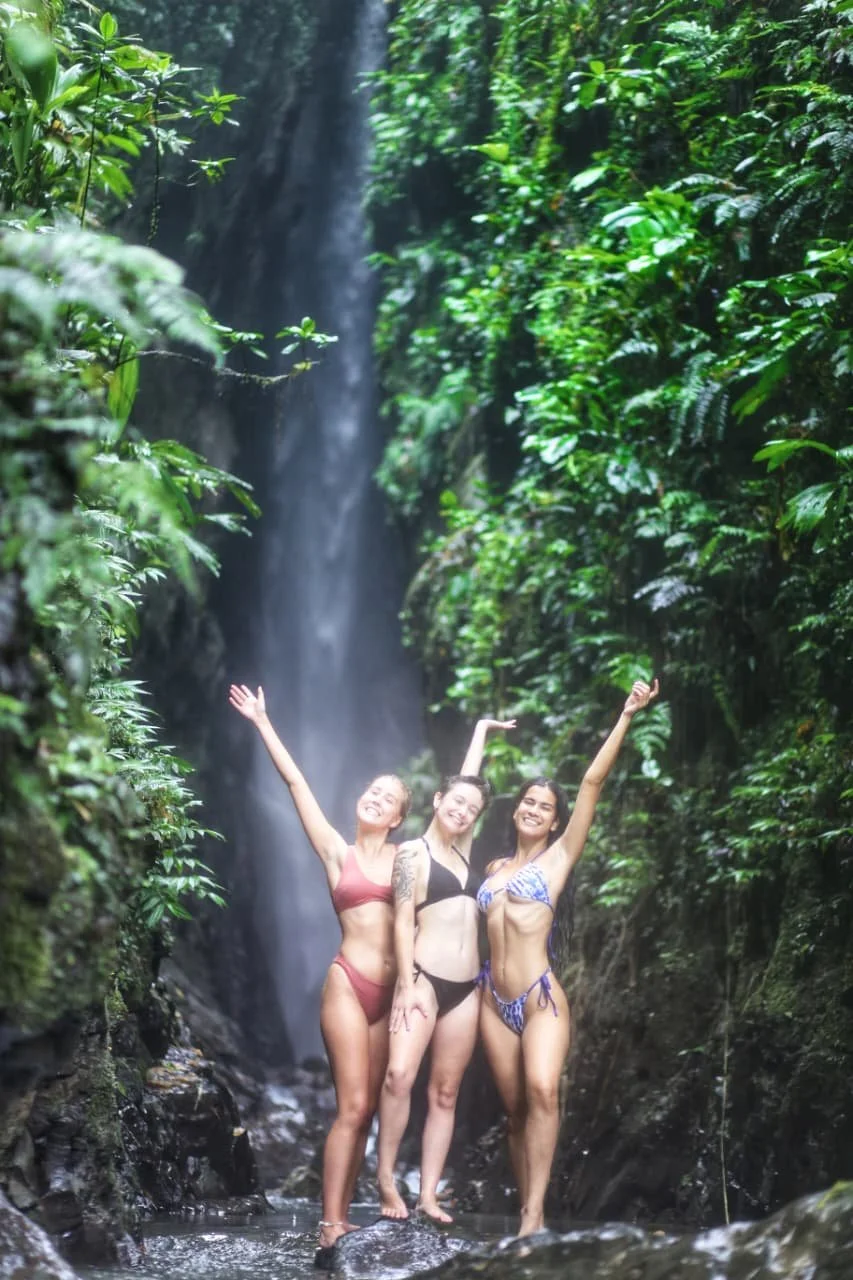
When most people imagine Panama, they picture dripping rainforests, tropical islands, waterfalls, and dense green jungle. Panama is famous for humidity, biodiversity, and some of the wettest ecosystems in the Americas. It is a land of cloud forests, mangroves, coral reefs, and rivers overflowing during the rainy season.
Which is exactly why the landscape of Sarigua National Park feels so shocking.
The first time travellers arrive at Sarigua, many think they took a wrong turn somewhere. The lush tropical scenery suddenly disappears and is replaced by cracked earth, dusty winds, skeletal trees, and a pale almost lunar landscape stretching toward the Pacific coast. The ground looks sunburned. White salt crusts shimmer under brutal heat. Cactus and thorny brush cling to survival while dry wind blows across terrain that barely resembles the Panama most people know.
It feels more like northern Mexico, parts of Peru, or even a miniature version of the Sahara than tropical Central America.
And yet Sarigua exists right there on the Azuero Peninsula of Panama, hidden within one of the country’s driest regions.
What makes Sarigua truly fascinating is that this “desert” is not fully natural.
In many ways, it is one of the clearest environmental warning stories in all of Panama.
The Desert That Should Not Exist
Sarigua National Park sits in Azuero Peninsula near the town of Parita in Herrera Province. Covering thousands of hectares, it protects a landscape unlike almost anywhere else in the country. The region contains barren clay flats, eroded soils, salt affected ground, mangroves, dry tropical forest remnants, and coastal ecosystems along the Gulf of Parita.
Locals and visitors often casually call it “the desert of Panama,” although technically it is not a true desert in the climatic sense. Panama still receives rainfall there seasonally. The harsh barren appearance developed largely because of severe environmental degradation over centuries.
Long ago, the Sarigua region looked very different.
Before colonization and large scale cattle ranching, much of the Azuero Peninsula supported tropical dry forests. These forests were adapted to Panama’s pronounced dry season but still contained abundant plant and animal life. Trees stabilized soils. Vegetation retained moisture. Rivers and coastal ecosystems functioned more naturally.
Then came deforestation.
Over generations, settlers cleared enormous portions of forest for cattle grazing, agriculture, charcoal production, and human settlement. Trees disappeared faster than ecosystems could recover. Once vegetation vanished, tropical sun and seasonal rains began destroying the exposed soil.
This process accelerated dramatically in Sarigua because of the local geography and climate. The Azuero Peninsula already experiences one of the strongest dry seasons in Panama. Without forests protecting the land, erosion intensified. Wind stripped topsoil away. Rain compacted exposed clay. Salt intrusion from nearby coastal zones worsened soil damage.
Eventually, parts of the landscape became almost sterile.
The result was Sarigua: a haunting example of desertification created largely by human activity.
A Landscape of Cracked Earth and Salt
Walking through Sarigua during the dry season feels surreal.
The ground often forms giant cracked patterns like broken pottery stretching toward the horizon. Under intense sunlight, the clay hardens into pale geometric plates. In some areas, salt deposits create white surfaces that shimmer beneath the heat.
The heat can feel brutal because there is little shade. Unlike Panama’s humid jungles filled with towering canopy trees, Sarigua is exposed and open. Wind sweeps across the plains carrying dust and dry air. The silence feels unusual for Panama too. Tropical forests normally roar with insects and birds, but Sarigua often feels eerily still during the hottest parts of the day.
Yet despite its harsh appearance, life still survives there.
Dry adapted plants such as cactus, thorny shrubs, grasses, and scrub vegetation cling to the landscape. Birds cross the open skies searching for food near coastal wetlands and mangroves. Reptiles thrive in the heat. During rainy months, parts of the area briefly transform as dormant vegetation suddenly reappears in flashes of green.
This seasonal transformation surprises many visitors. Sarigua is not permanently dead. It is a wounded ecosystem struggling against harsh environmental conditions.
And that struggle itself makes the park deeply fascinating.
Panama’s Forgotten Dry Forest World
One reason Sarigua feels so strange is because many people do not realize Panama contains tropical dry forest ecosystems at all.
The international image of Panama focuses heavily on rainforest and jungle. But the country actually contains several climate zones depending on geography and rainfall patterns. The Pacific side of the Azuero Peninsula receives far less rainfall than regions closer to the Caribbean coast.
Historically, dry tropical forests covered large portions of the Pacific lowlands in Central America. These forests looked very different from humid rainforest. Trees often dropped leaves during dry season. Grasses and thorny plants became more common. Wildlife adapted to seasonal drought conditions.
Much of this ecosystem has disappeared across the region due to agriculture and ranching. Sarigua therefore represents both ecological damage and a surviving fragment of a once widespread environment.
The contrast between Sarigua and the rest of Panama feels dramatic. Within the same country, travellers can move from cloud forests dripping with moss and orchids to landscapes cracked by drought and salt.
That environmental diversity is one of the most underrated aspects of Panama.
Ancient People of Sarigua
Sarigua is not only ecologically important. It is historically important too.
Archaeological evidence suggests humans lived in the area thousands of years ago. Some of Panama’s oldest known pre Columbian settlements were discovered in the Sarigua region. Archaeologists found pottery, tools, and evidence of ancient agricultural communities dating back several millennia.
This means Sarigua was supporting human civilization long before modern Panama existed.
The area’s coastal location likely made it attractive for fishing, farming, and trade among Indigenous groups. Rivers, mangroves, and marine ecosystems would have provided abundant food resources despite the seasonal dryness.
These discoveries challenge the assumption that Panama’s history revolves only around jungles and the canal. Human societies adapted to many different Panamanian environments long before Europeans arrived.
The Harsh Climate of the Azuero Peninsula
The Azuero Peninsula itself has a unique identity within Panama.
Known for cattle ranching, folkloric traditions, festivals, and strong regional culture, Azuero experiences a much stronger dry season than wetter parts of the country. During summer months, grasses turn golden brown and dust rises from roads while rivers shrink dramatically.
Locals adapt life around this climate rhythm. Water management becomes important. Shade matters enormously. Agricultural cycles follow the arrival of rains carefully.
Sarigua represents the extreme end of these dry conditions.
Temperatures can become punishing under direct sunlight. During midday, the ground radiates heat upward while reflected sunlight from pale soil intensifies the feeling. Travellers unprepared for the exposure often underestimate how dehydrating the environment can become.
Ironically, because Panama is famous for humidity and rain, many visitors arrive completely unprepared for desert like heat.
Mangroves, Mudflats, and Coastal Life
Sarigua is not only barren plains.
The park also protects coastal ecosystems including mangroves and tidal mudflats along the Gulf of Parita. These areas are biologically important for fish, birds, shellfish, and marine life.
Mangroves serve as nurseries for countless species and protect coastlines from erosion. Birds use the wetlands during migrations. Crabs scuttle through mud while fish move with changing tides.
This mixture of dry barren land beside productive coastal wetlands creates an unusual ecological contrast.
In some places, cracked earth abruptly transitions into mangrove forest alive with birds and insects. Few places in Panama display environmental extremes so dramatically side by side.
The Psychological Feeling of Sarigua
One of the most interesting aspects of Sarigua is emotional rather than scientific.
Many visitors describe the place as eerie.
Perhaps it is because the landscape feels so unexpected within tropical Panama. Or perhaps it is because the cracked earth and dead trees create a visual reminder of environmental collapse. There is a loneliness to Sarigua that feels different from the dense overwhelming isolation of jungle.
The jungle feels alive and crowded.
Sarigua feels exposed.
The wind becomes part of the experience. Dust moves across open ground. Dead branches cast sharp shadows under intense sunlight. Heat shimmers distort the horizon. During dry season, the landscape can appear almost post apocalyptic.
And yet people are fascinated by it precisely because of that harshness.
Photographers love Sarigua because the textures and light feel dramatic and unusual. The cracked earth creates abstract patterns resembling giant mosaics. Sunset colours spread beautifully across the dry plains. Storm clouds during rainy season produce incredible contrasts against the pale terrain.
Wildlife of the Dry Lands
Although Sarigua looks empty at first glance, wildlife survives there in surprising ways.
Birds are especially important. Hawks circle overhead riding thermal currents while shorebirds forage near wetlands. Herons, ibises, egrets, and migratory species use nearby coastal habitats extensively.
Reptiles handle the harsh conditions well. Lizards dart between rocks and scrub vegetation while snakes inhabit drier areas.
Mammals are less visible but still present in surrounding habitats, especially near remaining forest patches and mangroves.
The survival strategies of these animals differ dramatically from species in Panama’s rainforests. Instead of adapting to endless moisture and dense vegetation, Sarigua’s wildlife must handle exposure, drought, and seasonal scarcity.
Sarigua as an Environmental Warning
More than anything else, Sarigua has become symbolic in Panama because it demonstrates what uncontrolled deforestation can do.
Environmental scientists and educators frequently reference Sarigua when discussing soil degradation, erosion, and unsustainable land use. It stands as a visible example of how quickly ecosystems can collapse when forests disappear.
This lesson matters enormously in tropical countries.
Forests are not simply collections of trees. They regulate water cycles, stabilize soil, reduce erosion, maintain biodiversity, and influence climate. Remove them carelessly and landscapes can degrade much faster than many people expect.
Sarigua shows that even tropical regions famous for rain and fertility can become barren under enough environmental pressure.
And once severe degradation occurs, recovery can take extremely long periods of time.
A Place Unlike Anywhere Else in Panama
For travellers exploring Panama, Sarigua often becomes one of the most surprising destinations in the country.
People arrive expecting endless green jungle and instead find cracked earth, dry wind, salt flats, and cactus beneath blazing sunlight. The landscape challenges assumptions about what Panama is supposed to look like.
It also reveals how environmentally diverse the country truly is.
Within a relatively small territory, Panama contains cloud forests, volcanoes, coral reefs, mangroves, rainforests, islands, rivers, wetlands, dry forests, and landscapes bordering on desertification.
Sarigua may not possess the lush beauty of Bocas del Toro or the dramatic mountains of Chiriquí, but it offers something different: perspective.
It tells a story about ecology, history, climate, and human impact written directly into the ground itself.
And standing there under the brutal sun, surrounded by cracked earth in the middle of tropical Panama, travellers suddenly realize how strange and complex this little country really is.