
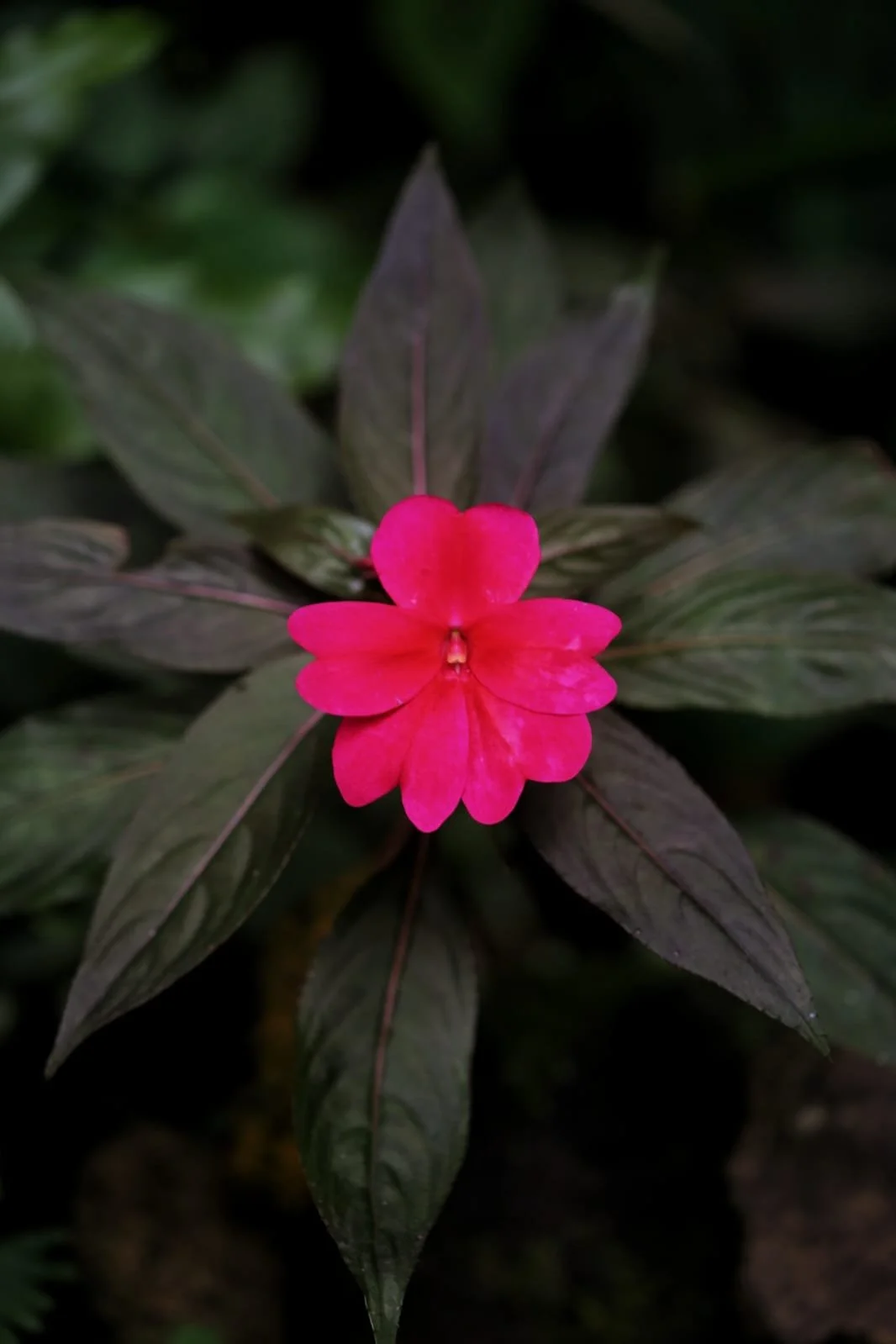
Panama is often celebrated for its tropical beaches, colorful wildlife, world-famous canal, and astonishing biodiversity. Visitors arrive hoping to see toucans, monkeys, sloths, sea turtles, whales, and orchids. Yet hidden in plain sight is one of the country's greatest natural treasures: its trees.
Towering above the forest floor, shaping entire ecosystems, feeding wildlife, storing water, capturing carbon, and providing shelter for countless species, Panama's trees are among the most important living things in the country. They are the architects of the rainforest, the guardians of watersheds, and the silent giants that have witnessed centuries of history. Some trees standing in Panama today were already mature when pirates sailed the Caribbean, when Spanish explorers crossed the isthmus, and perhaps even when indigenous civilizations flourished long before European arrival.
To truly understand Panama, one must understand its trees.
They are everywhere. From the cloud forests of Chiriquí to the dense wilderness of Darién, from the mangrove swamps of both coasts to the tropical forests surrounding the Panama Canal, trees define the landscape. They influence rainfall, support agriculture, stabilize mountainsides, and create habitats for thousands of species. Without trees, Panama would be an entirely different country.
A Tree Superpower Hidden Between Two Oceans
Panama occupies a unique position on Earth. Situated on the narrow land bridge connecting North and South America, it serves as a meeting point for species from both continents. This geographical location has helped create one of the richest collections of tree species anywhere in the world.
Scientists estimate that Panama contains thousands of species of trees, ranging from giant rainforest emergents that tower more than fifty meters above the forest floor to tiny species adapted to harsh mountain environments. In some parts of the country, a single hectare of rainforest can contain more tree species than are found across entire regions of Europe or North America.
Walking through a Panamanian forest is unlike walking through many forests elsewhere. Instead of seeing one or two dominant tree species, visitors encounter an astonishing variety of trunks, bark textures, leaf shapes, flowers, and growth forms. Every few steps may reveal an entirely different species.
Some trees possess enormous buttress roots that spread outward like the walls of a cathedral. Others are covered with mosses, orchids, bromeliads, and ferns. Some produce spectacular flowers visible from great distances, while others bear fruits that attract birds, monkeys, bats, and countless insects.
The sheer diversity can be overwhelming.
The Rainforest Giants
Among Panama's most impressive trees are the giants of the lowland rainforest.
These massive trees rise far above the surrounding canopy, forming what scientists call the emergent layer. Their crowns receive direct sunlight throughout the day, making them critical components of the forest ecosystem.
One of the most famous examples is the majestic kapok tree, sometimes called the silk cotton tree. These enormous trees can reach extraordinary heights and are often instantly recognizable because of their immense buttress roots. Standing beside a mature kapok tree can feel like standing next to a natural skyscraper.
The trunk may be so wide that several people holding hands would struggle to encircle it.
For wildlife, these giant trees function almost like apartment buildings. Birds nest in their branches. Monkeys travel through their crowns. Bats roost beneath their limbs. Epiphytes cover their bark. Insects occupy countless crevices.
A single giant tree can support an entire community of living organisms.
Trees and the Panama Canal
Few people realize how important trees are to the operation of the Panama Canal.
The canal depends on enormous quantities of freshwater. Every time a ship passes through the locks, millions of gallons of water are used. This water originates largely from rainfall collected in watersheds surrounding the canal.
Trees play a crucial role in this process.
Forests absorb rainfall and release it gradually into rivers and reservoirs. Their roots stabilize soil and reduce erosion. Their leaves help regulate local climate conditions.
Without healthy forests, maintaining reliable water supplies for canal operations would become far more difficult.
In many ways, the success of one of the world's most important engineering achievements is closely linked to the health of Panama's forests.
The connection between trees and global commerce is rarely obvious to visitors watching ships transit the canal, yet it is one of the most fascinating relationships in the country.
The Mountain Forests of Chiriquí
Travelers who venture into Panama's highlands encounter a completely different world of trees.
The cloud forests of regions such as Boquete and the Fortuna area support tree species adapted to cooler temperatures and frequent mist.
These forests often appear almost magical.
Branches are covered with moss.
Tree trunks disappear beneath layers of ferns and epiphytes.
Clouds drift silently through the canopy.
Water droplets collect on leaves and drip continuously to the forest floor.
The trees themselves often seem transformed by their environment. Instead of growing tall and straight like lowland rainforest species, many cloud forest trees develop twisted, moss-covered forms that look as though they belong in a fantasy novel.
These high-elevation forests are among the most beautiful ecosystems in Panama and provide critical habitat for numerous species found nowhere else.
The Forest Around Lost and Found Hostel
One of the most remarkable places to appreciate Panama's trees is the forest surrounding Lost and Found Hostel.
Located within the mountains near the Fortuna Forest Reserve, the hostel is surrounded by dense forest containing an extraordinary variety of trees and plant life. Visitors often arrive expecting scenic views and hiking trails but quickly become fascinated by the forest itself.
The trees here create a living cathedral of green.
Towering trunks rise through the mist.
Moss blankets branches.
Epiphytic plants cling to every available surface.
The forest changes character throughout the day as clouds move through the mountains and sunlight filters through the canopy.
Many hikers initially focus on wildlife such as birds and mammals, only to discover that the trees themselves are among the area's most impressive attractions.
The sheer variety of shapes, sizes, and ecological relationships becomes impossible to ignore.
Every trail reveals something new.
Panama's National Tree
Among Panama's most beloved trees is the Panama tree, known scientifically as Sterculia apetala.
This impressive species is recognized as Panama's national tree and can be found throughout various parts of the country.
The Panama tree is notable not only for its size but also for its ecological importance. Numerous animals depend on it for food and shelter. Its broad canopy provides shade, and its seeds attract wildlife ranging from birds to mammals.
For many Panamanians, the tree serves as a symbol of strength, resilience, and national identity.
Trees That Feed the Forest
Many of Panama's trees play an essential role in feeding wildlife.
Fruit-producing species provide resources for monkeys, toucans, parrots, bats, agoutis, coatis, and countless other animals.
When certain trees fruit, entire ecosystems seem to come alive.
Birds gather in large numbers.
Monkeys travel long distances to reach feeding sites.
Bats emerge after sunset to consume fruits and disperse seeds.
This process creates a remarkable cycle.
Animals eat fruits.
Seeds are transported to new locations.
New trees grow.
The forest expands and regenerates.
Without these relationships, many forests would struggle to maintain their extraordinary diversity.
The Remarkable World of Strangler Figs
Among the most fascinating trees in Panama are strangler figs.
Their life begins in an unusual way.
A seed is deposited high in the canopy by a bird or other animal. Instead of germinating on the ground, it begins life on another tree.
Over time, roots descend toward the forest floor.
The fig gradually surrounds its host.
Eventually, the original tree may die, leaving behind a hollow column formed by the fig's interwoven roots.
These trees often appear almost sculptural, creating some of the most visually striking forms in tropical forests.
They also provide critical food resources for wildlife throughout the year.
Ancient Relationships
The relationship between people and trees in Panama extends back thousands of years.
Indigenous communities have long relied on trees for food, medicine, construction materials, transportation, tools, and cultural traditions.
Many species possess medicinal properties that have been understood by local communities for generations.
Others provide fruits, fibers, resins, or wood used in daily life.
Even today, traditional knowledge regarding trees remains an important part of cultural heritage in many regions of the country.
The Seasonal Spectacle of Flowering Trees
Many visitors associate tropical forests with endless green, but Panama's trees can also produce spectacular displays of color.
During certain seasons, flowering trees transform landscapes with brilliant blooms.
Pink, purple, yellow, orange, and red flowers appear across cities, towns, and rural areas.
Some trees bloom so intensely that their leaves become almost invisible beneath the flowers.
These seasonal displays provide food for pollinators while creating some of the country's most beautiful natural scenery.
Trees and Climate Change
In recent years, Panama's forests have gained additional significance because of their role in addressing climate change.
Trees absorb carbon dioxide from the atmosphere and store it within their trunks, branches, roots, and surrounding soils.
Large tropical trees can contain enormous amounts of stored carbon accumulated over decades or even centuries.
Protecting forests therefore benefits not only Panama but the entire planet.
Every preserved forest represents an investment in biodiversity, water security, climate stability, and future generations.
The Living Foundation of Panama
When people think about Panama, they often picture the canal, tropical islands, colorful wildlife, or mountain towns. Yet all of these experiences are connected in some way to trees.
The forests provide habitat for wildlife.
They protect watersheds.
They stabilize mountains.
They influence rainfall.
They support agriculture.
They enhance tourism.
They preserve biodiversity.
They store carbon.
They shape landscapes.
They sustain life.
Without trees, there would be no rainforest symphony of birds and insects. There would be fewer monkeys, fewer butterflies, fewer orchids, fewer rivers, and fewer of the natural wonders that make Panama one of the most biologically rich countries on Earth.
The next time you stand beneath the canopy of a Panamanian forest, whether in the misty mountains of Chiriquí, the jungles of Darién, the canal watershed, or the cloud forests surrounding Lost and Found Hostel, take a moment to look upward.
Above you stands a world of giants.
Some have survived storms, droughts, floods, and centuries of change.
Some are older than entire nations.
Together they form one of the most extraordinary forests on the planet and one of Panama's greatest treasures.