
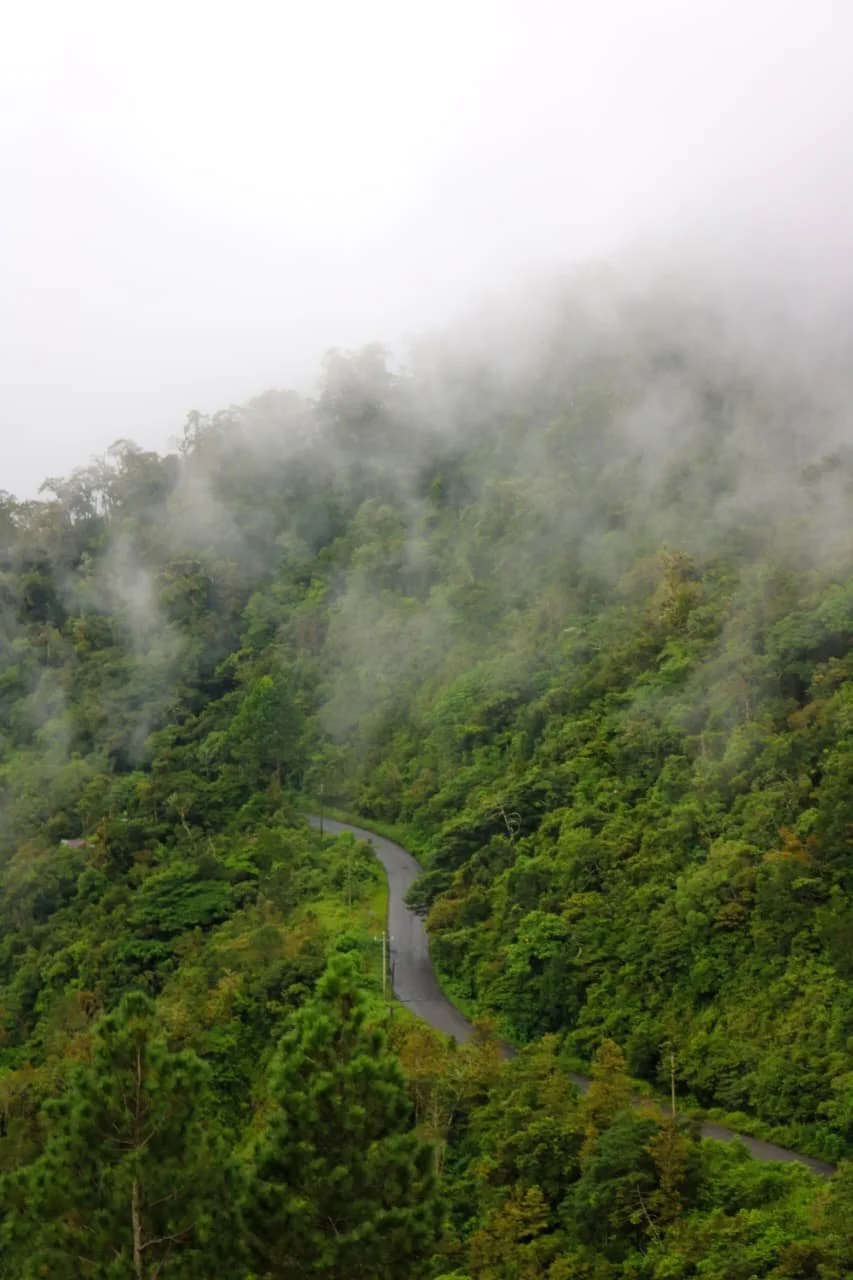
Panama is often portrayed as a nation of lush rainforests, misty cloud forests, tropical wildlife, and extraordinary biodiversity. Visitors arrive expecting endless green landscapes filled with monkeys, toucans, sloths, orchids, and towering trees. In many parts of the country, those expectations are still met. Vast stretches of jungle remain, particularly in places such as Darién National Park, Soberanía National Park, and the forests surrounding Boquete and the Fortuna region. Yet behind the postcard images lies one of the most important environmental challenges facing Panama today: deforestation.
Deforestation is the large scale removal of forests and trees, usually to make way for other land uses such as cattle ranching, agriculture, development, infrastructure, or logging. Although Panama still possesses significant forest cover compared to many countries, its forests have changed dramatically over the past century. Areas that were once covered by dense tropical forest have been converted into pasture, farms, roads, settlements, and industrial projects. In some regions, the transformation has been so extensive that it is difficult to imagine what the landscape looked like before large scale clearing began.
The story of deforestation in Panama is not simply about trees being cut down. It is a story about economics, population growth, agriculture, conservation, biodiversity, water resources, climate change, and the difficult challenge of balancing development with environmental protection.
A Country Once Dominated by Forest
Long before the arrival of Europeans, Panama was overwhelmingly forested. Dense tropical rainforests covered much of the isthmus from coast to coast. Indigenous communities lived within these ecosystems and developed ways of using forest resources while maintaining the natural balance of the landscape.
The forests of Panama supported extraordinary biodiversity. Jaguars roamed vast territories. Harpy eagles nested in giant emergent trees. Tapirs moved through river valleys. Countless species of birds, amphibians, insects, reptiles, and plants thrived in habitats that stretched across much of the country.
For thousands of years, these forests formed one of the most biologically rich regions on Earth.
The Arrival of Large Scale Land Clearing
The pace of deforestation accelerated significantly during the twentieth century.
As roads expanded into remote areas, access to previously untouched forests became easier. New agricultural opportunities encouraged settlement in regions that had once been difficult to reach. Cattle ranching expanded throughout many provinces, becoming one of the primary drivers of forest loss.
In numerous parts of Panama, the pattern repeated itself.
A forested area would be cleared.
Trees would be burned or removed.
Pasture would be established.
Cattle would be introduced.
The landscape would gradually transform from rainforest into open grassland.
For many decades, clearing forest was often viewed as a sign of economic progress. A piece of land covered in trees was frequently considered "unused," while cleared land was viewed as productive.
This perspective contributed to the loss of millions of trees across the country.
Cattle Ranching and Forest Loss
One of the biggest drivers of deforestation in Panama has been cattle ranching.
Across provinces such as Chiriquí, Veraguas, Los Santos, Herrera, Coclé, and parts of Darién, large areas of forest were converted into grazing land.
The transformation can often be seen when traveling through rural Panama today.
Rolling hills covered in pasture stretch across landscapes that were once forested.
Scattered trees may remain, but the dense canopy that previously supported wildlife has disappeared.
The relationship between cattle ranching and deforestation is not unique to Panama. Similar patterns have occurred throughout much of Latin America. However, because Panama contains such rich biodiversity, the ecological consequences can be especially significant.
When forests are replaced by pasture, countless species lose habitat. Animals that depend upon large continuous forest areas often struggle to survive in fragmented landscapes.
The Special Case of Darién
Perhaps nowhere is the issue of deforestation more visible and concerning than in the Darién region.
Darién National Park remains one of the largest protected wilderness areas in Central America and is recognized as a UNESCO World Heritage Site. The region contains some of the most intact tropical forests in the Americas and supports an astonishing variety of wildlife.
Yet deforestation pressures continue to affect areas surrounding the park.
Road expansion, agricultural development, land speculation, and illegal clearing have all contributed to forest loss in parts of Darién. Satellite imagery over the years has revealed growing patches of cleared land spreading into previously forested regions.
Conservationists often describe Darién as one of the most important environmental battlegrounds in Panama because what happens there will influence the future of some of the country's last great wilderness areas.
Why Forests Matter More Than Many People Realize
When people hear the word deforestation, they often think simply about trees being removed.
The reality is much more complex.
Forests provide countless benefits that extend far beyond the trees themselves.
They regulate water cycles.
They help prevent soil erosion.
They reduce flooding.
They store carbon.
They influence local rainfall patterns.
They support agriculture.
They provide habitat for wildlife.
They contribute to tourism.
They help maintain water quality.
When forests disappear, these benefits are often diminished or lost.
The consequences may not always be immediate, but over time they can affect entire regions.
Deforestation and Water Resources
One of the most important functions of forests in Panama is their role in protecting water resources.
Trees act like giant natural sponges.
Their roots absorb water.
Their leaves slow rainfall.
Their presence helps regulate river flow.
When forests are removed, water often runs off more quickly, increasing erosion and sedimentation.
This is particularly important in a country that depends heavily on reliable water supplies.
Even the operation of the Panama Canal is connected to forest conservation. The canal depends on freshwater reservoirs fed by rainfall within protected watersheds. Maintaining healthy forests helps ensure that these watersheds continue functioning effectively.
Without forests, water management becomes significantly more difficult.
Wildlife Loses Its Home
Panama is one of the most biologically diverse countries in the world.
Scientists have recorded more than a thousand bird species, hundreds of mammal species, thousands of plant species, and an extraordinary variety of reptiles, amphibians, and insects.
Many of these species depend directly on forests.
When forests are fragmented or removed, wildlife populations can decline dramatically.
Large animals such as jaguars require extensive territories.
Harpy eagles depend upon mature forest trees for nesting.
Certain frogs may survive only within specific forest conditions.
Many species simply cannot adapt to open pastureland.
As forests shrink, isolated wildlife populations become increasingly vulnerable.
Climate Change and Carbon Storage
Forests also play a major role in combating climate change.
Trees absorb carbon dioxide from the atmosphere through photosynthesis and store it within their trunks, branches, roots, and surrounding soils.
Large tropical forests represent enormous carbon reservoirs.
When forests are cut down, some of that stored carbon is released back into the atmosphere.
This contributes to global climate change.
Protecting forests therefore benefits not only Panama but also the broader global environment.
In recent years, this connection between forests and climate has become increasingly important in conservation planning.
Signs of Hope
Despite the challenges, there are encouraging developments.
Panama has become a regional leader in several conservation initiatives. Protected areas cover significant portions of the country, and many forests that might otherwise have been lost remain intact because of national parks and reserves.
Important protected areas include:
Coiba National Park
La Amistad International Park
Darién National Park
Volcán Barú National Park
Soberanía National Park
These protected landscapes preserve critical habitats while supporting tourism, scientific research, and ecosystem services.
Panama has also participated in reforestation efforts designed to restore degraded land and reconnect fragmented habitats.
Ecotourism Creates Economic Incentives
One positive trend is the growth of ecotourism.
Visitors travel to Panama specifically to experience its forests, wildlife, and natural beauty.
Destinations such as Boquete, Bocas del Toro, and the forests surrounding Lost and Found Hostel attract travelers seeking nature experiences rather than urban development.
This creates an important economic incentive.
A standing forest can generate income through tourism year after year.
A cleared forest often provides only short-term benefits.
As more communities recognize the economic value of conservation, protecting forests becomes increasingly attractive.
Reforestation and Forest Recovery
Interestingly, not all forest trends in Panama are negative.
In some regions, abandoned pastureland has begun returning to forest.
Young secondary forests are growing on land that was previously cleared decades ago.
Although these forests do not immediately replace old-growth ecosystems, they can gradually provide habitat, store carbon, and improve environmental conditions.
Panama has become known internationally for some of its reforestation initiatives, demonstrating that degraded landscapes can recover when given sufficient time and protection.
The Future of Panama's Forests
The future of deforestation in Panama will largely depend on decisions made over the coming decades.
Population growth, infrastructure development, agriculture, and economic pressures will continue creating demands for land.
At the same time, awareness of environmental issues is growing.
Many Panamanians recognize that forests are among the country's greatest natural assets.
The challenge is finding ways to balance development with conservation.
Protecting forests does not mean preventing progress.
Rather, it means ensuring that progress occurs in a way that preserves the natural systems upon which future generations depend.
More Than Just Trees
Ultimately, deforestation is not simply about the loss of individual trees.
It is about the loss of entire ecosystems.
It is about water resources, wildlife habitats, climate regulation, soil protection, tourism opportunities, and cultural heritage.
The forests of Panama are among the most valuable natural resources in the country. They support an extraordinary web of life that has evolved over millions of years and continues to provide benefits every single day.
The future of Panama's forests will help determine the future of Panama itself. Whether in the remote jungles of Darién, the cloud forests of Chiriquí, the canal watershed, or the countless smaller forests scattered throughout the country, these landscapes represent far more than collections of trees. They are living systems that sustain biodiversity, support communities, and contribute to the identity of one of the most biologically rich nations on Earth.
The story of deforestation in Panama is still being written. The decisions made today will shape the forests, wildlife, rivers, and landscapes that future generations inherit tomorrow.