
When people talk about mountains in Panama, one name almost always dominates the conversation: Volcán Barú. It is the mountain that appears in guidebooks, travel blogs, hiking forums, and social media posts. It is famous for its summit views, its volcanic origins, and the rare possibility of seeing both the Pacific Ocean and the Caribbean Sea from the same location on a clear day. Yet hidden deep within one of the wildest and least explored regions of the country stands another giant that receives only a fraction of the attention. Rising to approximately 3,335 meters above sea level, Cerro Fábrega is Panama's second highest peak, a remote and mysterious mountain that few Panamanians have seen and even fewer have climbed.
Unlike Volcán Barú, which can be reached by road and attracts thousands of visitors each year, Cerro Fábrega remains a true wilderness mountain. It lies deep within the vast protected landscapes of western Panama near the border with Costa Rica, surrounded by dense cloud forest, rugged terrain, and ecosystems that remain among the least disturbed in Central America. For many nature lovers, that remoteness is exactly what makes the mountain so fascinating. It represents something increasingly rare in the modern world: a major peak that still feels genuinely wild.
The first thing that surprises many people is how little they know about Cerro Fábrega despite its impressive height. At more than 3,300 meters, it would be a celebrated landmark in many countries. It towers above most of Panama's mountain ranges and stands far above the elevations where tropical rainforest thrives. Yet because it sits within an isolated section of La Amistad International Park, the mountain remains largely hidden from public view. Unlike famous peaks that appear constantly in tourism campaigns, Cerro Fábrega is known primarily among serious hikers, biologists, conservationists, and those with a deep interest in Panama's geography.
Its location is part of what makes it so remarkable. The mountain rises within the Talamanca Range, a vast mountain system that stretches across parts of western Panama and Costa Rica. This region contains some of the most important ecosystems in Central America. Massive forests cover the slopes. Rivers originate in the highlands and flow toward both oceans. Rare wildlife continues to inhabit the landscape. Many areas remain difficult to access, helping preserve habitats that have disappeared elsewhere. Standing somewhere within these mountains, surrounded by endless ridges fading into the distance beneath shifting clouds, it becomes easy to understand why this region is considered one of the ecological treasures of the continent.
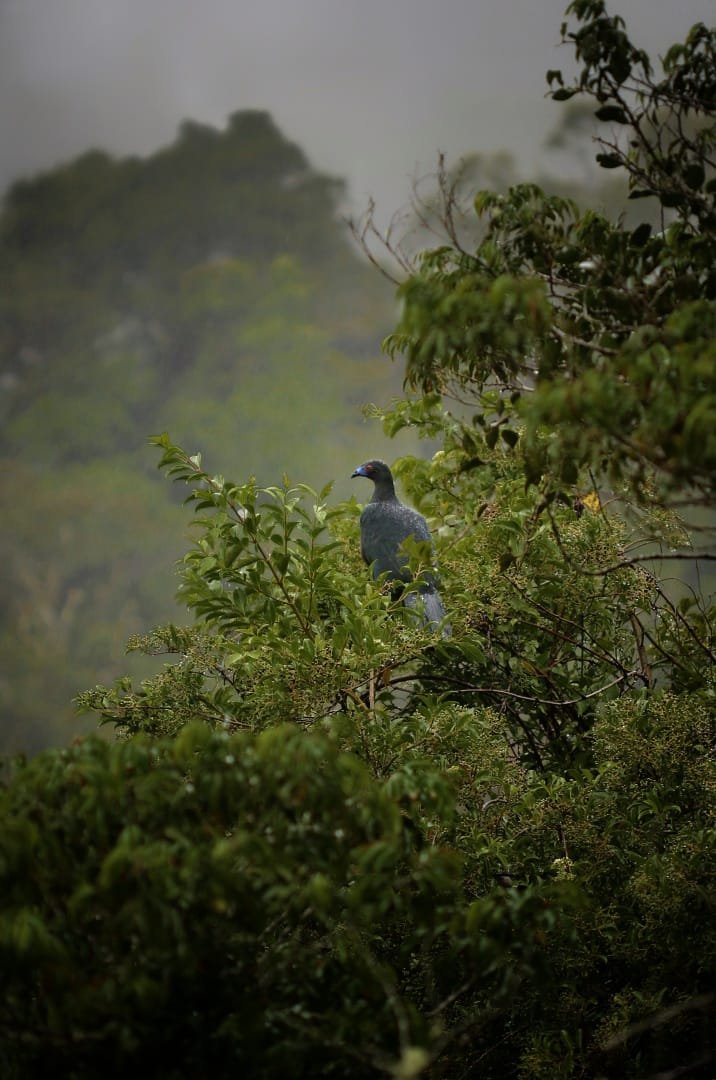
The journey from lowland Panama to the upper slopes of Cerro Fábrega is like traveling through multiple worlds stacked on top of one another. At lower elevations, tropical forests dominate the landscape. Temperatures remain warm and humidity hangs in the air. As elevation increases, the environment gradually transforms. Trees become draped in moss. Ferns grow larger and more abundant. Clouds begin moving through the forest itself rather than remaining overhead. Higher still, the landscape enters the realm of cloud forest, one of the most enchanting ecosystems on Earth. Here every branch seems coated in mosses, orchids, bromeliads, and epiphytes. The air feels cooler. Visibility changes constantly as clouds drift through the trees. The entire forest takes on an almost magical appearance.
Cloud forests are among the most biodiverse habitats in Panama, and Cerro Fábrega sits within some of the finest examples remaining in the country. These forests function as giant natural water collectors. Moisture from passing clouds condenses on vegetation and contributes to streams, rivers, and watersheds below. In many ways, cloud forests act like living reservoirs, helping sustain ecosystems far beyond the mountains themselves. Without these high elevation forests, countless species and communities downstream would be affected.
Wildlife in the region is equally impressive. The forests surrounding Cerro Fábrega provide habitat for many of Central America's most iconic species. Colorful birds move through the canopy. Amphibians inhabit moist forest floors. Mammals ranging from small rodents to larger predators roam the landscape. Birdwatchers consider these mountains particularly special because they support species associated with high elevation habitats that occur nowhere else. The chance of encountering rare wildlife is one reason scientists continue to study the region so closely.
Among the most famous inhabitants of Panama's highlands is the magnificent Resplendent Quetzal. Few birds inspire as much admiration. With its brilliant colors and flowing tail feathers, the quetzal has become almost mythical throughout Central America. The cloud forests surrounding Cerro Fábrega provide suitable habitat for these spectacular birds, and the possibility of seeing one adds another layer of fascination to the region. For birdwatchers, a glimpse of a quetzal often becomes a highlight remembered for decades.
One of the most interesting aspects of Cerro Fábrega is how different it feels from Volcán Barú despite both being among Panama's highest peaks. Barú is dramatic and accessible. It offers sweeping views and attracts hikers from around the world. Cerro Fábrega, by contrast, feels secretive. It hides within vast protected forests. Reaching it requires serious effort, planning, and often specialized knowledge. There are no crowds at the summit. There are no souvenir stands. There are no lines of vehicles climbing a mountain road. Instead there is wilderness, silence, and the sense of venturing into a landscape that remains largely unchanged.
Weather plays a major role in shaping the mountain's character. Conditions can shift rapidly. Bright sunshine may suddenly give way to fog. Clear views can disappear behind clouds within minutes. Rainfall supports the lush vegetation that covers the slopes, while cooler temperatures create conditions unlike those found in much of tropical Panama. Visitors often find themselves experiencing multiple seasons in a single day. This constant interaction between mountains and weather helps create the rich ecological diversity for which the region is known.
The cultural significance of the surrounding highlands should not be overlooked. Indigenous communities have lived within parts of these mountain regions for generations, developing deep knowledge of local landscapes, plants, wildlife, and environmental conditions. Their connection to the land forms an important part of the broader story of Panama's mountainous interior. Long before modern conservation areas were established, people understood the value of these forests and watersheds.
From a conservation perspective, Cerro Fábrega represents something incredibly important. Around the world, wilderness areas continue to shrink as development expands. Roads reach deeper into forests. Human activity transforms landscapes. Yet portions of the Talamanca Range remain among the largest and most intact mountain ecosystems in Central America. Protecting these areas helps preserve biodiversity, maintain water resources, and safeguard ecological processes that benefit entire regions. Mountains such as Cerro Fábrega are not merely scenic landmarks. They are vital components of living systems that support countless species.
There is also something inspiring about the mountain's relative obscurity. In an age when nearly every destination seems heavily photographed and endlessly discussed online, Cerro Fábrega remains surprisingly mysterious. Many Panamanians have never seen it. Many travelers have never heard of it. Yet it quietly rises above the landscape, the country's second highest summit, wrapped in clouds and surrounded by ancient forests. Its lack of fame has, in many ways, become one of its greatest strengths.
Standing somewhere in western Panama and looking toward the distant highlands, it is easy to focus attention on Volcán Barú because of its prominence and reputation. Yet beyond the better known mountain lies another giant. Cerro Fábrega may not receive the same recognition, but it embodies something equally valuable. It represents wilderness, remoteness, biodiversity, and the enduring power of nature. It is a mountain of cloud forests and hidden valleys, of rare wildlife and pristine watersheds, of mystery and exploration.
For those who love geography, wildlife, conservation, and the untamed landscapes that still survive in parts of the world, Cerro Fábrega is one of Panama's greatest natural treasures. It may never become as famous as Volcán Barú, and perhaps that is for the best. Some places are special precisely because they remain a little hidden. Rising high above the forests of western Panama, Cerro Fábrega stands as a reminder that even in a world of maps, satellites, and constant connectivity, there are still mountains that feel wild, remote, and wonderfully unknown.