
Panama is often imagined as a country of fast motion and loud life, hummingbirds darting through light, monkeys calling through canopy, rivers rushing through rainforest, and storms rolling across mountain ridges with sudden intensity. But hidden beneath all of that speed is one of the slowest, quietest, and most overlooked groups of animals in the entire ecosystem: snails. In a country defined by rain, humidity, and dense vegetation, snails are not rare curiosities tucked away in damp corners. They are everywhere, shaping soil, recycling nutrients, feeding entire food chains, and turning the forest floor into a living mosaic of shells, slime trails, and hidden movement that most people never notice unless they learn how to look.
What makes Panama especially rich in snail life is its constant moisture and ecological diversity. From coastal mangroves to lowland rainforest, from river edges to cloud forest moss beds high in the mountains, snails occupy nearly every humid environment. They thrive in places where water is abundant and decomposition is constant, and Panama provides exactly that on an almost year round basis. After heavy rains, especially in the wet season, the forest floor seems to awaken with snail activity. Leaves that looked empty during the day suddenly reveal slow moving shapes at night or in early morning light, sliding across wet surfaces, feeding on fungi, decaying plants, and microscopic layers of organic material that build up in tropical ecosystems.
In the lowland rainforests, snails often play the role of quiet recyclers. They feed on decaying leaves, soft plant matter, algae, and fungi, breaking down material that would otherwise accumulate on the forest floor. This makes them essential participants in nutrient cycling, even if they are rarely noticed compared to larger animals. Their movement creates thin shining trails across leaves and logs, and these trails are more than just footprints. They are chemical signatures that help snails navigate, communicate indirectly, and maintain moisture around their bodies in environments where drying out too quickly would be fatal. In this sense, the forest floor is not static at all. It is constantly being written over by invisible lines of movement that appear and disappear with each passing hour.
Among the most well known snails in tropical regions like Panama is the invasive giant African land snail, scientifically known as Lissachatina fulica. This species is originally from East Africa but has spread widely across tropical and subtropical regions around the world, including parts of Central America. It is large, highly adaptable, and capable of surviving in disturbed habitats such as gardens, agricultural areas, and forest edges. In Panama it is often found in humid lowland zones where human activity and tropical growth overlap. Its presence is controversial because it can damage crops and compete with native snail species, but it is also a striking example of how resilient mollusks can be in warm wet environments. When conditions are right, these snails emerge in large numbers after rainfall, moving slowly across soil and vegetation in search of food, leaving behind thick silvery trails that mark their passage through the landscape.
Alongside introduced species like this, Panama is also home to a wide variety of native land snails that are far less visible but ecologically important. Many of these species are small, beautifully patterned, and highly adapted to microhabitats within the rainforest. Some live under leaf litter, others cling to moss covered tree trunks, and some prefer the damp undersides of logs where humidity remains stable even during dry periods. Their shells can vary dramatically in shape and color, from smooth and glossy spirals to textured and ridged forms that help camouflage them against bark and soil. These native snails are often highly sensitive to environmental change, which makes them useful indicators of forest health. When snail diversity is high, it often signals that the ecosystem is functioning well, with stable humidity and intact decomposition cycles.
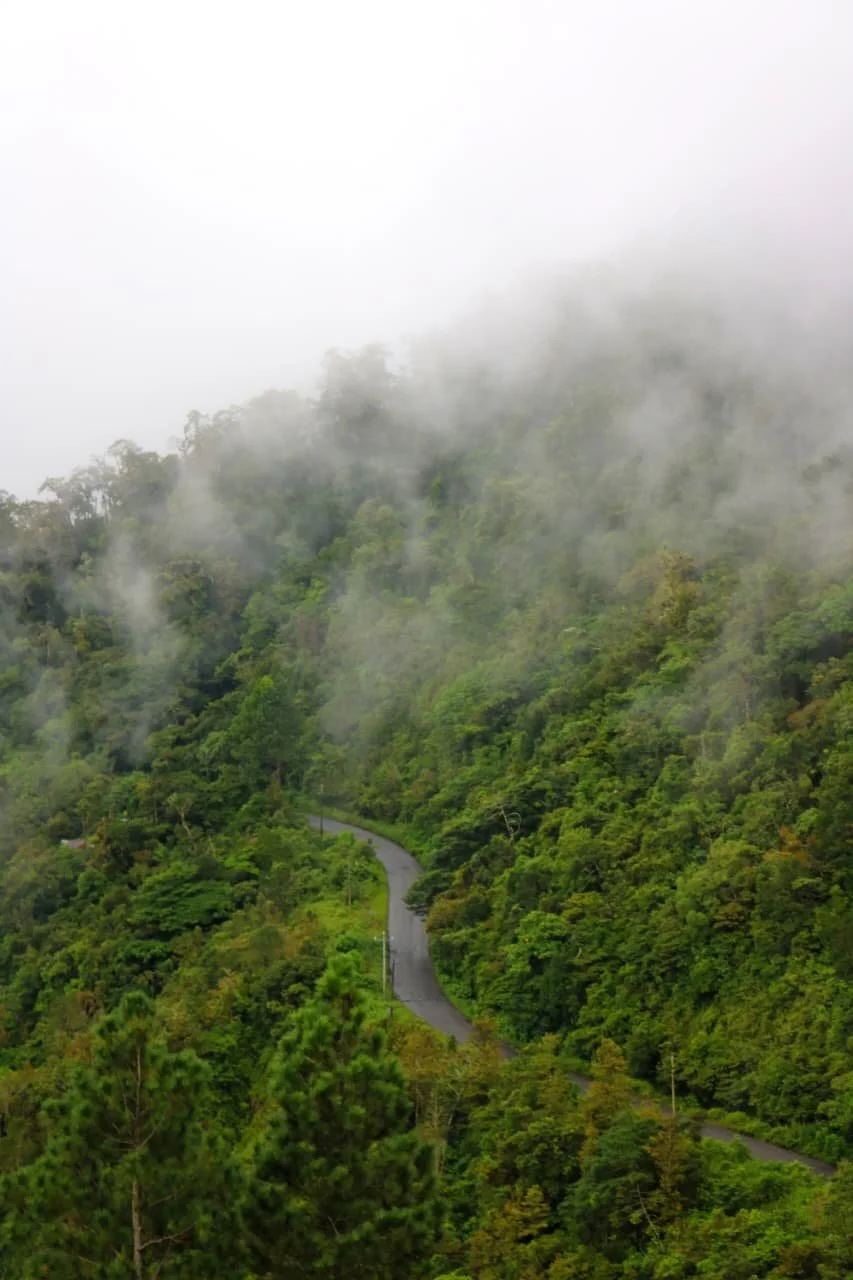
In Panama’s cloud forests, particularly in regions like Boquete and the western highlands, snail life becomes even more specialized. Constant mist and cooler temperatures create ideal conditions for moisture dependent species that might struggle in hotter lowland environments. Here, snails can often be found on moss covered branches, feeding on algae films or microscopic fungal layers that grow on damp surfaces. The entire forest feels like it has been designed for slow movement, with every surface holding enough moisture to support life that moves at a pace almost imperceptible to human observation. In these environments, snails are not just ground dwellers. They become vertical travelers, moving up tree trunks and across hanging vegetation, turning the forest into a three dimensional landscape of slow exploration.
One of the most fascinating aspects of snail biology in Panama is how closely tied it is to rainfall cycles. Many species remain hidden during dry periods, sealed under leaf litter or tucked into shaded crevices where moisture is preserved. Then, within hours of heavy rain, the forest transforms. Snails emerge in large numbers, often appearing suddenly on paths, leaves, and logs as if they have been summoned by the storm itself. This rapid response is not magic but biology, a survival strategy built around avoiding desiccation while taking advantage of short windows of ideal feeding and mating conditions. In tropical ecosystems where rain can be intense but intermittent, this cycle of disappearance and reappearance is one of the defining rhythms of snail life.
Snails also play an important role in the broader food web of Panama. They are prey for a wide range of animals, including birds, reptiles, amphibians, insects, and small mammals. Their shells provide protection, but not absolute safety, and many predators have evolved specialized strategies to extract or consume them. This constant pressure helps regulate snail populations and integrates them deeply into the ecological balance of forest systems. Even their shells, once empty, become microhabitats for other organisms, including insects and fungi, continuing their ecological usefulness long after the snail itself is gone.
What makes snails especially interesting in a place like Panama is how easily they are overlooked. In a landscape filled with bright birds, loud monkeys, and dramatic natural scenery, snails operate on a completely different scale of time and attention. They are not designed to be noticed quickly. Instead, they reward patience and stillness. A single step on a forest trail might pass dozens of individuals without detection, each one moving through its own slow journey across leaves, soil, or bark. When you begin to notice them, the forest changes character. It becomes less about dramatic movement and more about layered activity happening at different speeds, with snails representing the deepest and slowest rhythm of all.
Even places like Lost and Found Hostel, situated in a rich forest corridor between Panama’s highland and lowland ecosystems, sit within active snail environments. After rainfall, the surrounding vegetation and forest floor often become dotted with snail activity, especially in shaded, damp areas where organic material accumulates. Guests who slow down and look closely will often find snails moving across steps, plants, and leaf litter, quietly participating in the same ecological cycles that support the louder and more visible wildlife of the region. In this way, even a social and adventurous space becomes part of a much older and quieter natural system, one that is constantly decomposing, rebuilding, and sustaining life through slow and steady biological work.
Ultimately, snails in Panama represent a different way of understanding the rainforest. They remind us that ecosystems are not only defined by speed, color, or sound, but also by patience, persistence, and transformation over time. They are the quiet engineers of decay and renewal, the unnoticed travelers of the forest floor, and one of the most essential pieces in the hidden machinery of tropical life. To walk through Panama without noticing snails is to see only part of the story. To begin noticing them is to realize that the forest is not just alive in dramatic bursts, but in countless slow movements that continue whether or not anyone is watching.