
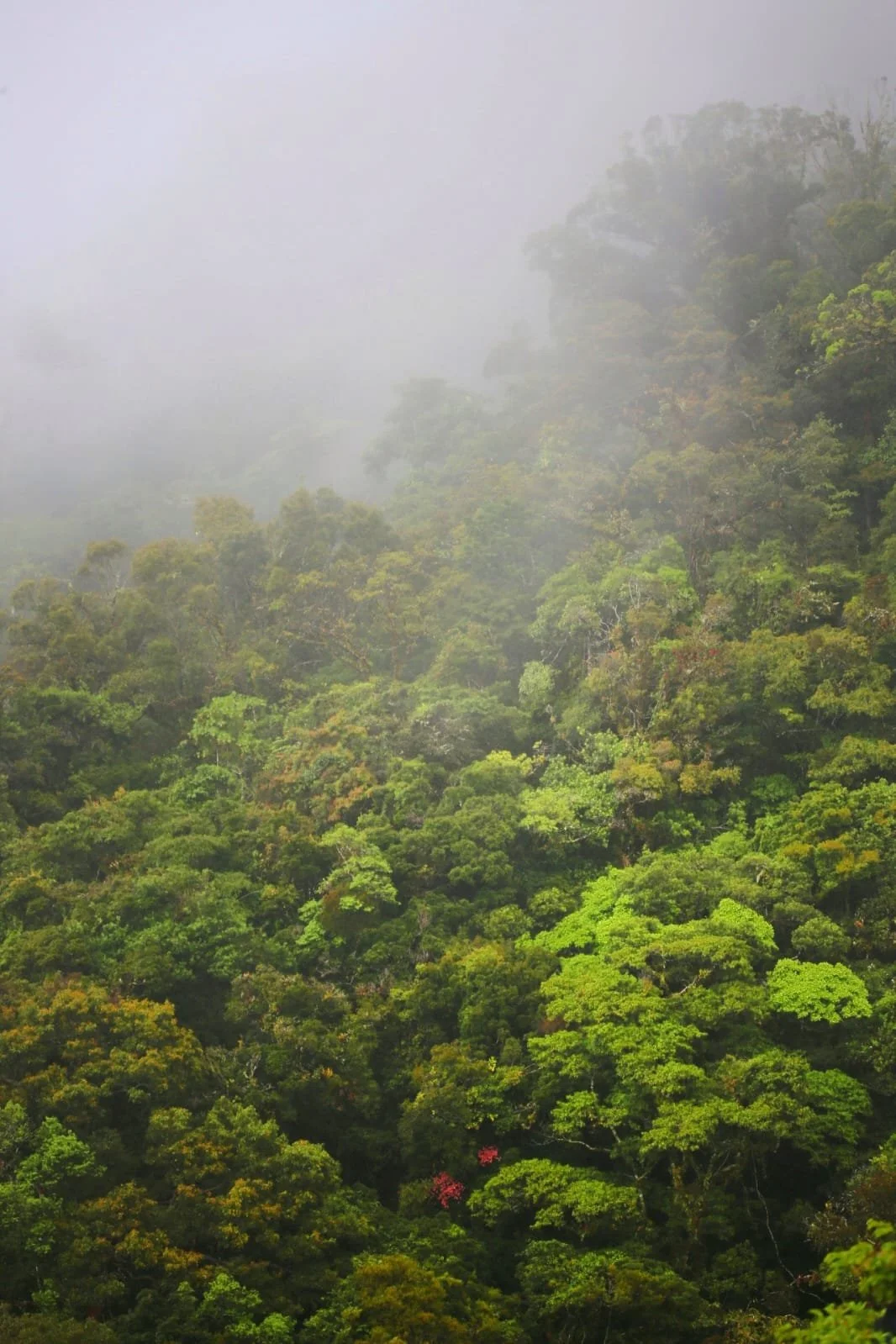
Across the vast and interconnected ecosystems of Panama, where tropical rainforest blends into savanna like grasslands, where agricultural fields press against jungle edges, and where rivers carve long corridors through dense vegetation, there exists a small wild predator that moves through these environments with such subtlety and efficiency that it is often present without ever being noticed. This animal is the jaguarundi, scientifically known as Jaguarundi, and in Panama it represents one of the most widespread yet least observed carnivores in the entire country. Its presence is confirmed across multiple habitat types, yet its behavior, appearance, and movement patterns combine to create an illusion of rarity that persists even in regions where it is ecologically well established.
To understand this animal in Panama, one must first understand the nature of the landscapes it inhabits, because the jaguarundi is not a species that belongs exclusively to deep forest, nor to open plains, nor to human dominated environments. Instead, it thrives in the transitional zones where these systems overlap, forming a continuous but fragmented network of habitats that stretch across the country. These include forest edges where sunlight penetrates dense vegetation, riverbanks lined with tangled shrubs, secondary forests regenerating after disturbance, pasturelands with scattered cover, and even agricultural mosaics where patches of natural vegetation remain interspersed among human activity. In these environments, the jaguarundi is able to move, hunt, and survive with remarkable flexibility, taking advantage of the structural complexity that exists between fully wild and heavily modified ecosystems.
Unlike many of the more visually iconic felids of the Neotropics, this species does not rely on striking patterning or large body mass to define its ecological role. Instead, it has evolved a form that is elongated, low to the ground, and highly streamlined, with relatively short legs, a small and flattened head, and a tail that extends fluidly behind the body as part of its continuous motion. Its coloration varies from dark gray to reddish brown depending on geographic variation and individual genetics, but regardless of color, its body shape is consistently designed for movement through dense vegetation and low cover rather than for visual display. This morphology allows it to slip through grass, shrubs, and tangled understory with minimal resistance, creating a mode of locomotion that is quiet, direct, and highly efficient in environments where visibility is limited.
One of the most important aspects of jaguarundi ecology in Panama is its behavioral flexibility, particularly in relation to activity patterns. While many wild cats in tropical ecosystems are strongly nocturnal, relying on darkness to avoid detection and increase hunting success, the jaguarundi does not adhere strictly to this pattern. Instead, it may be active during daylight hours, twilight periods, or nighttime depending on environmental conditions, prey availability, and levels of human disturbance. This temporal adaptability allows it to occupy ecological niches that are unavailable to more strictly timed predators, and it also contributes significantly to its low detectability, since its activity does not follow predictable windows that would make observation easier.
Its hunting behavior reflects the same flexibility. The jaguarundi is a mesopredator, feeding primarily on small vertebrates such as rodents, birds, lizards, frogs, and occasionally larger insects or small mammals depending on availability. Rather than relying on ambush tactics from concealed positions, it often employs a steady, exploratory hunting style in which it moves continuously through vegetation, responding quickly to movement, sound, or scent cues. This creates a hunting strategy that is less about explosive bursts of speed and more about persistent, adaptive coverage of space, allowing it to exploit a wide range of prey types across different habitats.
Within the ecological framework of Panama, the jaguarundi occupies an important but often underappreciated role as a regulator of small vertebrate populations. By preying on rodents and other small animals, it helps maintain balance within ecosystems that include both natural forest and human influenced agricultural zones. In rural landscapes, this can have indirect benefits for agriculture, as rodent populations that might otherwise expand unchecked are naturally controlled by native predators. However, because the jaguarundi is so elusive and rarely observed directly, its ecological contributions are often overlooked in comparison to more visible or culturally significant wildlife species.
The distribution of jaguarundis across Panama is broad, reflecting their capacity to inhabit a wide range of environmental conditions. They are found from lowland tropical forests to dry forest regions, from foothill zones to open grasslands, and across fragmented landscapes where forest patches are separated by human development. This wide distribution is made possible by their tolerance for habitat disturbance, a trait that distinguishes them from more specialized forest dependent species. In fact, in some regions, moderate levels of habitat fragmentation may even create favorable edge environments that increase prey availability and provide sufficient cover for movement and hunting.
Despite this adaptability, the jaguarundi remains one of the least frequently observed wild cats in Panama. This is due in large part to its behavior rather than its abundance. Its low body profile allows it to move through vegetation without creating obvious visual signatures, and its lack of distinctive markings makes it difficult to detect even when briefly visible. Its movements are quiet, deliberate, and often occur along concealed pathways such as dense grass lines, shrub corridors, or shaded understory routes. Even when present in relatively close proximity to human activity, it often goes unnoticed because it does not rely on open space or elevated visibility.
In many parts of Panama, especially in rural or semi forested regions, occasional anecdotal sightings suggest the presence of small, elongated cats moving quickly through vegetation or crossing roads during low light conditions. However, these encounters are typically brief and uncertain, contributing to the species’ reputation as a ghost like predator of the lowlands. Even experienced wildlife observers may go long periods without confirmed visual encounters, despite evidence from camera traps and ecological surveys indicating that the species is present across a wide range of habitats.
The ecological importance of jaguarundis extends beyond direct predation. As part of a broader community of mid level carnivores, they interact indirectly with other species in complex food web dynamics. In some cases, they may compete with other small predators for similar prey resources, while in others they may occupy slightly different spatial or temporal niches that reduce direct competition. Larger carnivores in the ecosystem may also influence their distribution and behavior, creating a layered structure of predator interactions that shapes movement patterns and habitat use across the landscape.
One of the most intriguing aspects of jaguarundi ecology is how effectively the species integrates into human modified environments without becoming dependent on them. In agricultural mosaics, pasture edges, and rural settlements with surrounding vegetation, jaguarundis can persist as long as sufficient cover and prey populations remain available. This ability to function in both natural and semi altered landscapes makes them particularly resilient in regions experiencing ongoing land use change, and it positions them as one of the more adaptable native carnivores in Central America.
Within the broader biological corridors of Panama, jaguarundis contribute to the continuity of ecological processes across fragmented landscapes. Panama’s geography, connecting North and South America, creates a natural convergence zone for biodiversity, where species must often navigate complex habitat mosaics in order to survive. In this context, the jaguarundi’s flexibility becomes a significant evolutionary advantage, allowing it to persist across discontinuous habitats while maintaining functional ecological roles in each.
Behaviorally, jaguarundis are generally solitary animals outside of reproductive interactions, and their communication is relatively subtle compared to more social species. They rely on scent marking, low intensity vocalizations, and spatial awareness rather than overt displays or group coordination. This solitary nature further contributes to their low visibility, as they do not form groups that would increase detectability or produce noticeable patterns of movement.
For human observers, the experience of learning about jaguarundis often involves a shift in perception about what constitutes wildlife presence. Unlike animals that dominate attention through size, sound, or group behavior, the jaguarundi challenges the assumption that ecological significance must correlate with visibility. Instead, it represents a form of ecological presence defined by subtlety, persistence, and integration into background environments.
Ultimately, the jaguarundi is one of the most effective examples of a predator adapted not for dominance but for invisibility within complexity. It moves through Panama’s landscapes not as a prominent figure in the ecological narrative, but as a continuous thread of motion woven through grass, forest edge, and fragmented habitat. And even when it is not seen, even when there is no direct evidence of its passage, it remains present within the structure of the ecosystem, contributing quietly to the balance of life across one of the most biodiverse regions on Earth.