
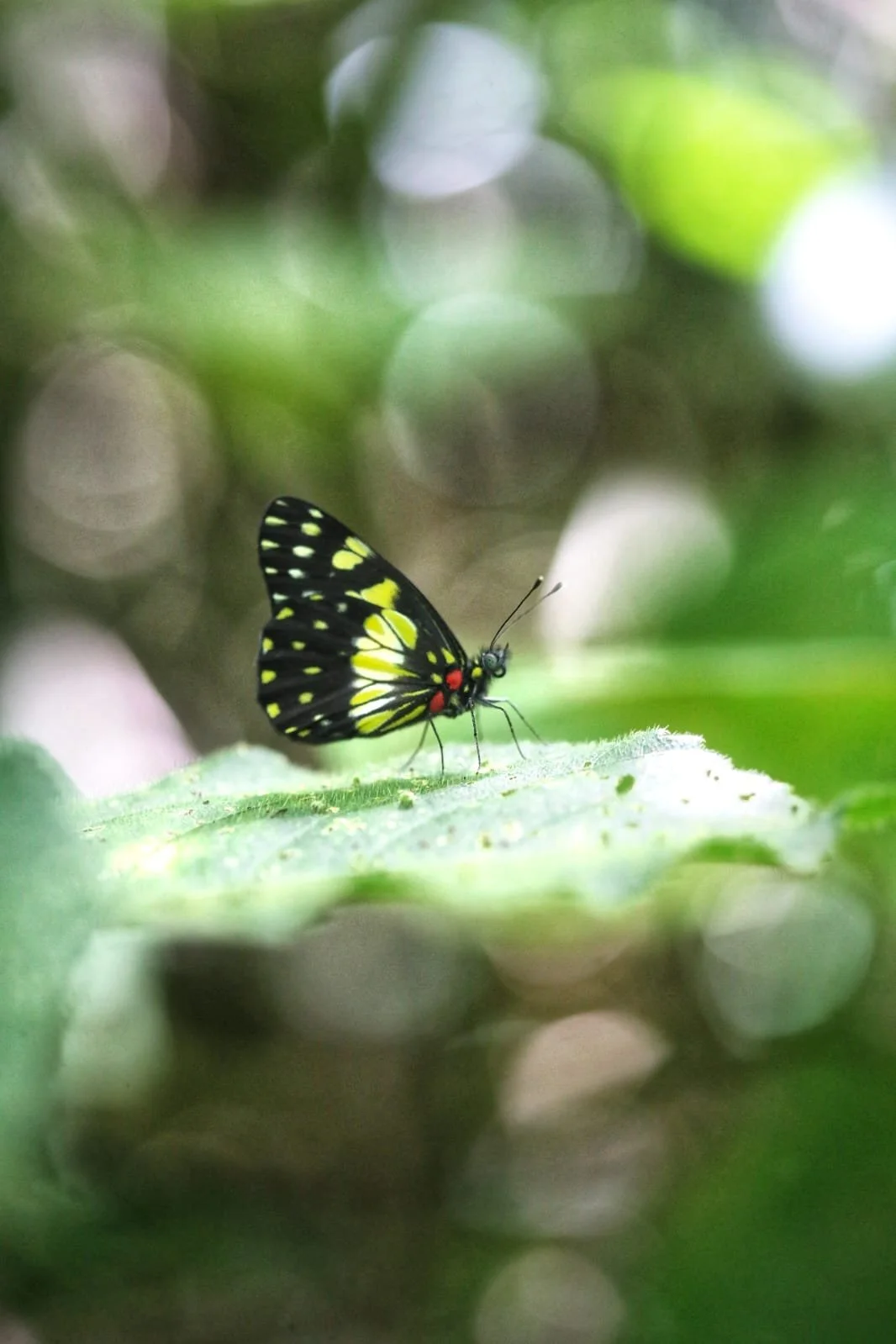
Deep within the tropical landscapes of Panama, where mist rises through valleys at dawn, where the sound of insects fills the air like a continuous electrical hum, and where the forest floor appears at first glance to be a place of stillness and decay, there exists a hidden world of extraordinary scale and organization that most humans will never fully perceive even if they spend years walking through the jungle. This world is built and maintained by leaf cutter ants, members of the remarkable biological guild commonly referred to as leaf cutter ant, and in Panama they are not merely present but foundational to the functioning of entire ecosystems, shaping vegetation, soil, nutrient cycles, and even the spatial architecture of the forest itself through their relentless, coordinated activity.
To begin to understand their importance, one must first abandon the idea that the rainforest is primarily defined by what can be seen at eye level. The true structure of Panama’s forest systems exists in layers that extend far above and far below human perception, and leaf cutter ants operate primarily in the lowest visible layer and the vast hidden layer beneath it. What appears to be a quiet, damp forest floor covered in leaves, roots, and decomposing organic matter is in reality a dynamic surface interface for an enormous subterranean civilization that may extend across multiple meters of depth and span territories large enough to influence plant growth patterns across entire sections of forest. Each colony functions as a self contained ecological engine, continuously converting fresh vegetation into fungal biomass, soil nutrients, and waste material that is redistributed throughout the ecosystem in ways that sustain long term forest regeneration.
At the most visible level of their existence, leaf cutter ants manifest as unmistakable surface highways, often described as living rivers of motion that cut through the jungle floor in dense, organized streams. These trails are composed of thousands upon thousands of individuals moving in opposite directions with perfect coordination, forming bidirectional flows that appear almost engineered in their efficiency. Outgoing workers travel toward vegetation sources, while incoming workers return carrying fragments of leaves, flowers, and plant tissue that are often many times larger than their own bodies. The visual effect is striking not only because of the sheer number of individuals involved but because of the precision of their movement, which maintains stable lanes, avoids collisions, and adapts fluidly to obstacles such as rocks, roots, fallen branches, or uneven terrain without breaking overall flow continuity.
These surface trails are not random or temporary. They are maintained through an advanced system of chemical communication based on pheromone gradients that function as both navigation and coordination infrastructure. Each ant deposits chemical markers that influence the movement of others, reinforcing successful routes and gradually diminishing less efficient ones. Over time, this creates an emergent optimization system in which the most effective foraging paths are strengthened through repeated use, while inefficient ones fade away. This process requires no central authority, no planning, and no conscious oversight, yet it produces logistical systems that rival engineered transport networks in their efficiency and adaptability.
However, what is visible on the surface represents only a fraction of the system’s true complexity. Beneath the forest floor lies the core structure of the colony: an extensive, multi chambered subterranean architecture that can stretch across vast underground volumes. These colonies are not simple nests but fully developed biological cities composed of specialized functional zones. There are brood chambers where eggs, larvae, and pupae are carefully tended; waste chambers where spent material and fungal residue are deposited; ventilation shafts that regulate airflow and temperature; and, most importantly, fungal agriculture chambers where the colony’s food production takes place.
The agricultural system at the heart of each colony is one of the most remarkable examples of non human farming on Earth. Leaf cutter ants do not consume the plant material they collect. Instead, they cultivate a specialized fungus that has been domesticated over evolutionary time and now exists in a mutually dependent relationship with its ant hosts. This fungus serves as the primary food source for the entire colony, converting raw plant material into nutrient rich structures that can be consumed by larvae and adult workers. The ants, in turn, provide the fungus with a constant supply of freshly processed vegetation, optimal environmental conditions, and protection from competing microorganisms.
The process of fungal cultivation is extraordinarily sophisticated. Worker ants carefully process harvested leaves into a finely shredded pulp that is deposited into controlled growth chambers. They remove contaminants, adjust moisture levels, and maintain temperature stability through constant movement and ventilation regulation. Specialized worker castes are responsible for grooming the fungus, pruning unwanted growth, and applying antimicrobial secretions that prevent the spread of harmful bacteria or parasitic fungi. The fungus itself responds by producing edible structures that are harvested by the ants and distributed throughout the colony. This creates a closed loop agricultural system that is both highly efficient and entirely self sustaining, dependent only on external plant material as an input.
In Panama’s diverse ecological zones, from lowland rainforests to foothill ecosystems and disturbed secondary forests, these colonies can exist at varying densities depending on environmental conditions. In regions with high vegetation productivity, colonies may reach enormous sizes, containing millions of individuals distributed across vast underground networks. In more marginal environments, colonies may be smaller but still function with the same structural complexity and behavioral precision. Their distribution is closely tied to the availability of suitable plant material, soil conditions, and microclimatic stability, all of which influence colony success and longevity.
The ecological impact of leaf cutter ants extends far beyond their immediate colonies. By continuously harvesting plant material, they exert significant influence over vegetation dynamics, selectively removing leaves from certain plant species while allowing others to proliferate. This selective pressure contributes to shaping forest composition over time, influencing which plant species dominate in certain areas and how plant communities regenerate after disturbance. In addition, the physical excavation of soil during colony construction improves aeration, enhances water infiltration, and redistributes organic matter into deeper soil layers, effectively altering the physical and chemical structure of the ground itself.
Over long periods, abandoned colonies leave behind nutrient enriched soil structures that serve as microhabitats for new plant growth. These sites often become localized zones of increased fertility, supporting higher rates of seed germination and plant diversity compared to surrounding areas. In this way, leaf cutter ants contribute not only to the consumption of vegetation but also to its renewal, acting as both regulators and facilitators of forest regeneration cycles.
Within the broader ecological framework of Panama, leaf cutter ants occupy one of the most important functional roles in tropical ecosystem dynamics. Panama’s position as a biological corridor connecting North and South America has created a convergence of species diversity and ecological interactions that is unmatched in many other regions. In this environment, leaf cutter ants act as one of the dominant invertebrate forces shaping energy flow between plants, soil systems, and decomposer communities. Their activity links the canopy, understory, and subterranean zones into a continuous cycle of matter transformation that sustains the productivity of the entire forest.
Their behavioral complexity is equally remarkable. Individual ants operate within highly specialized castes, each adapted to specific roles that contribute to the overall functioning of the colony. Major workers are responsible for cutting and transporting vegetation, using powerful mandibles capable of slicing through tough plant tissue. Minor workers tend to the fungal gardens, brood chambers, and internal maintenance tasks, ensuring the stability of the colony’s internal environment. Soldiers defend colony entrances from predators and competing ant species, often engaging in intense territorial conflicts at the edges of foraging trails. At the center of it all is the queen, whose sole function is reproduction, continuously producing offspring that sustain the colony’s enormous population.
What makes this system particularly extraordinary is that all of these roles are coordinated without centralized decision making. Instead, colony behavior emerges from simple local interactions between individuals, mediated through chemical signals and environmental feedback. Each ant responds only to immediate stimuli, yet the collective outcome is a highly organized, adaptive, and resilient system capable of responding to environmental change with remarkable speed and efficiency.
For human observers in Panama, encountering leaf cutter ants often produces a shift in perception about what constitutes a living system. Unlike most wildlife encounters that focus on individual animals, leaf cutter ants present a phenomenon at the level of mass behavior. A single trail can contain thousands of individuals, yet the true organism is the colony itself, not any individual ant. This challenges intuitive ideas about individuality and agency, replacing them with a view of life as distributed across networks of cooperation and specialization.
In forested areas near eco lodges, rural properties, and jungle trails, these ant highways can cross human paths without deviation, continuing their routes as if human presence were simply another temporary feature of the landscape. In such moments, it becomes clear that the colony does not orient itself around human activity. Instead, humans are passing through a preexisting system that has been operating continuously for years or decades, shaped by ecological processes far older and more persistent than human infrastructure.
As night falls in Panama’s forests, surface activity may diminish in some colonies, but subterranean processes continue without interruption. Fungus is cultivated, waste is processed, chambers are maintained, and internal networks remain active in a constant cycle of biological production and maintenance. The forest floor may appear still, but beneath it, the colony continues functioning as a distributed organism whose total biomass and organizational complexity rival that of many vertebrate communities combined.
Ultimately, leaf cutter ants represent one of the most profound examples of emergent complexity in nature. They are not simply insects performing instinctive tasks, but components of a vast, self organizing system that functions as a unified agricultural civilization. Their trails are highways, their chambers are cities, their fungus gardens are farms, and their chemical communication systems are governance networks that operate without central authority yet achieve extraordinary coherence.
And even as the forest above them changes with weather, season, and ecological succession, the subterranean empire remains in continuous motion, quietly transforming vegetation into life, soil into structure, and scattered fragments of the jungle into one of the most efficient biological systems ever evolved on Earth, hidden just beneath the surface of Panama’s living world.