
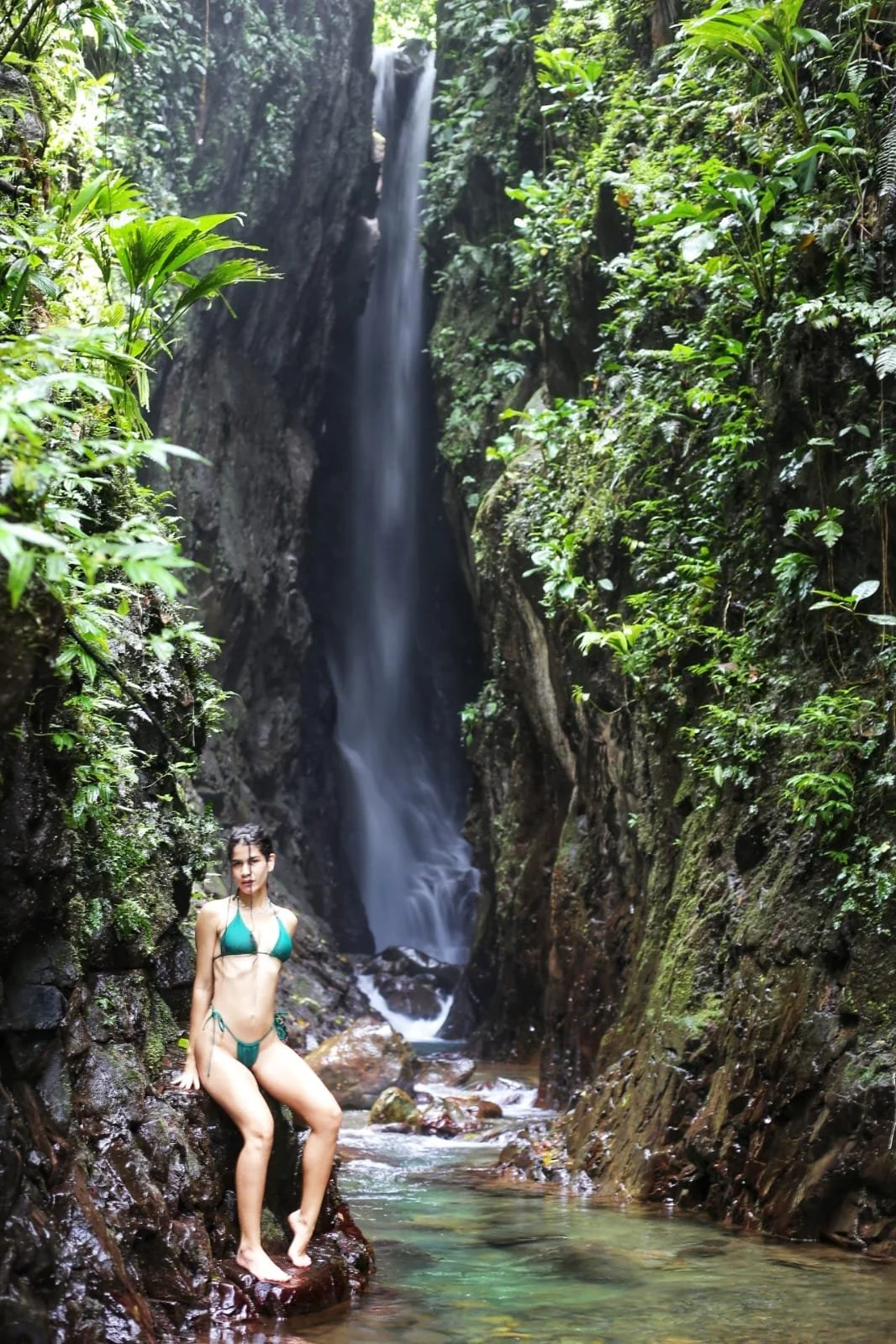
Ask most visitors to Panama about the country's most famous destinations and they will likely mention Panama City, Boquete, Bocas del Toro, Santa Catalina, or the beaches of Coronado. Mention Capira, however, and many may simply remember driving through it on the way somewhere else. Yet that would be a mistake. Capira is one of the most fascinating and important districts in Panama, a place that serves as a bridge between urban Panama and the rural heart of the country. It is a district where mountains meet farmland, where commuters share roads with cattle ranchers, where tropical forests still thrive, and where some of Panama's most productive agricultural lands help feed the nation.
Located in the province of Panamá Oeste, just west of Panama City, Capira occupies a strategic position along the Pan American Highway. For countless travelers, it marks the point where the dense urban sprawl of the capital region finally begins to give way to greener landscapes, rolling hills, and a slower pace of life. To many Panamanians, Capira represents the gateway to the country's interior. It is a place that thousands of people pass through every week, yet relatively few stop long enough to appreciate what makes it special.
One of the most remarkable aspects of Capira is its size. The district covers a vast area stretching from developed highway corridors to remote mountain regions where nature still dominates the landscape. This diversity means that there are actually many different Capiras. There is the Capira visible from the highway, with shops, gas stations, restaurants, and busy commercial activity. Then there is the agricultural Capira, where farmers cultivate crops and raise livestock across fertile lands. Beyond that lies the mountainous Capira, where forests, rivers, and cool highland environments offer an entirely different experience. The district contains such varied terrain that it can feel like multiple regions combined into one.
Agriculture has long been one of Capira's defining characteristics. The district is often associated with some of Panama's most productive farming areas. Pineapples are perhaps the most famous agricultural product linked to Capira. Travelers driving through the district frequently encounter roadside fruit vendors selling freshly harvested pineapples that are renowned throughout Panama for their sweetness and quality. During harvest periods, entire stretches of countryside may be devoted to pineapple production, creating a landscape unlike anything found in the country's more urbanized regions.
The reputation of Capira pineapples has become so strong that many Panamanians will specifically seek them out. Vendors proudly advertise their fruit as coming from Capira, knowing that customers associate the district with excellent quality. The combination of fertile soils, favorable climate, and agricultural expertise has helped make pineapple farming one of the area's agricultural success stories. For many visitors, their first memorable encounter with Capira is stopping at a roadside stand and tasting a freshly cut pineapple that seems impossibly sweet.
Yet pineapples represent only a small part of the agricultural picture. The district also supports cattle ranching, vegetable production, fruit cultivation, poultry operations, and a wide variety of other agricultural activities. Farms range from small family operations to larger commercial enterprises. The landscape reflects generations of agricultural development that have helped shape both the local economy and the character of the region.
One reason agriculture thrives here is the district's remarkable geography. Capira benefits from a variety of elevations and microclimates. Lower areas tend to be warmer and suitable for tropical crops, while higher elevations can offer cooler temperatures and different growing conditions. This environmental diversity allows farmers to produce a wide range of agricultural products. It also contributes to the district's scenic beauty. Travelers moving through Capira may pass open pastureland, fruit plantations, forested hillsides, river valleys, and mountain ridges all within a relatively short distance.
The mountains themselves are among Capira's least appreciated treasures. While Panama's famous highland destinations often receive most of the attention, Capira contains beautiful upland regions that remain relatively undiscovered by international tourism. These areas offer cooler temperatures, lush vegetation, and impressive views stretching toward both the Pacific side and the interior of the country. In some locations, morning fog drifts through the hills, creating landscapes that feel surprisingly distant from the nearby metropolis of Panama City.
Nature lovers often find Capira particularly rewarding because it sits near important forested areas and watersheds. The district plays an important role in protecting water resources that support both local communities and broader regional needs. Forests within and around Capira provide habitat for birds, mammals, reptiles, and countless other species. Birdwatchers frequently encounter toucans, parrots, hawks, and numerous tropical species. The biodiversity reflects Panama's unique position as a biological bridge connecting North and South America.
One of the most fascinating aspects of Capira is how it has changed over the past several decades. Historically, the district was considered relatively rural and somewhat distant from Panama City. Today, improved transportation and rapid growth in the western region have brought major changes. Many people now view Capira as part of the expanding orbit of the capital. Improved roads have made commuting more feasible. Residential developments have appeared in some areas. Land that once seemed extremely remote is now attracting attention from investors, retirees, and families seeking more space than they can find closer to the city.
This growth has transformed Capira into one of the most interesting transition zones in the country. It remains deeply agricultural and rural in many respects, yet it is increasingly influenced by urban expansion. The result is a district that often feels caught between two worlds. On one hand, cattle graze in open fields and farmers tend crops much as they have for generations. On the other hand, new residential projects, commercial development, and transportation improvements signal a rapidly changing future.
The district's location along the Pan American Highway further enhances its importance. Nearly everyone traveling west from Panama City toward the interior passes through Capira. Whether heading to the beaches of the Pacific coast, the mountains of Chiriquí, the agricultural heartland of the Azuero Peninsula, or destinations farther west, travelers encounter Capira along the way. This constant flow of people contributes to the district's commercial vitality. Restaurants, roadside vendors, repair shops, fuel stations, and other businesses benefit from the endless stream of vehicles moving through the region.
Traffic, however, has become one of Capira's defining modern challenges. As Panama Oeste continues to grow, congestion along portions of the highway can be significant. What was once a relatively quiet rural corridor now carries enormous volumes of commuters, freight vehicles, buses, and travelers. Discussions about infrastructure improvements, bypass routes, and transportation upgrades frequently include Capira because of its crucial role within the national transportation network.
Despite these challenges, many residents see enormous potential in the district's future. Land remains more affordable than in many areas closer to Panama City. Agricultural opportunities continue to exist. Tourism remains relatively underdeveloped, leaving room for growth. Eco tourism, agritourism, mountain retreats, and nature based attractions all have significant potential. Some observers believe Capira could eventually emerge as one of Panama's most attractive regions for sustainable development if growth is managed carefully.
Another reason people are increasingly drawn to Capira is lifestyle. For those seeking a balance between accessibility and tranquility, the district occupies an appealing middle ground. Residents can enjoy larger properties, greener surroundings, and a stronger connection to nature while still maintaining access to the services and opportunities of Panama City. This combination has become increasingly attractive as urban congestion and property prices continue rising.
Community life in Capira also retains many traditional Panamanian characteristics. Festivals, agricultural fairs, religious celebrations, and local gatherings remain important parts of the social fabric. Family ties are strong. Agricultural traditions remain visible. The pace of life often feels more relaxed than in the capital. Visitors who spend time in local communities frequently encounter the warmth and hospitality for which rural Panama is known.
Perhaps what makes Capira most fascinating is that it embodies many of the forces currently shaping modern Panama. It is agricultural yet increasingly suburban. Traditional yet changing rapidly. Rural yet closely connected to the nation's largest city. It sits at the intersection of development, conservation, agriculture, transportation, and population growth. Few places illustrate Panama's ongoing transformation as clearly as this district.
For travelers rushing westward, Capira may appear to be just another stop along the highway. For those who take the time to explore, however, it reveals itself as something much more interesting: a district of fertile fields, hidden mountains, hardworking farming communities, expanding opportunities, and landscapes that help tell the story of Panama itself. It is a place where the country's past, present, and future seem to meet. And that may be exactly what makes Capira one of Panama's most underrated destinations.