
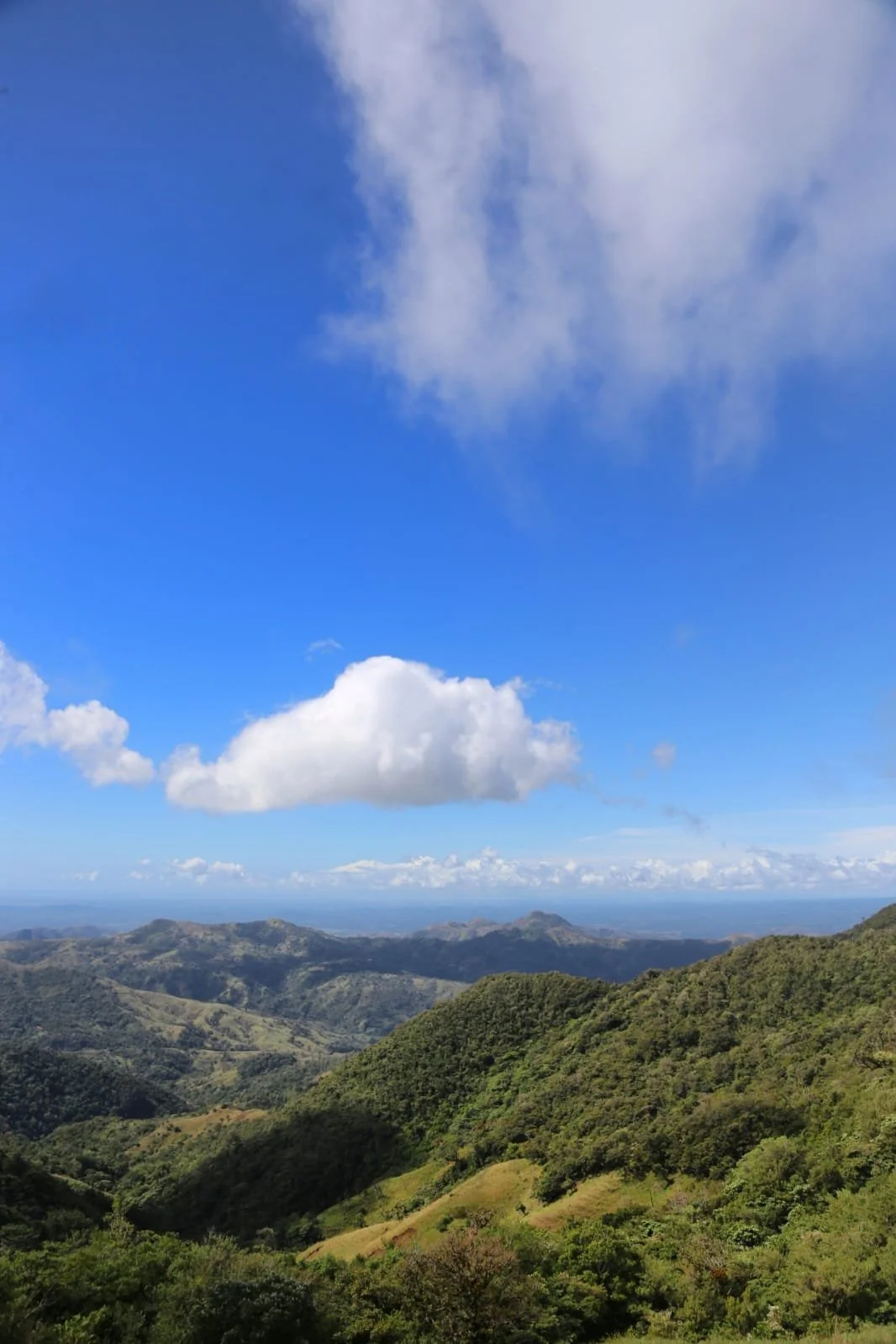
There are still places on Earth where maps feel incomplete. Places where rivers remain the primary highways, where villages are separated by days of travel rather than minutes, where dense rainforest stretches uninterrupted to the horizon, and where the modern world seems distant despite existing only a few hundred kilometers away. The Mosquito Coast of Panama is one of those places.
Mention Panama to most travelers and they immediately think of the canal, gleaming skyscrapers, tropical islands, surf towns, or mountain coffee farms. Few realize that along the country's remote Caribbean frontier lies one of the wildest and least developed regions in all of Central America. Here, near the border with Colombia, the landscape becomes something extraordinary. Roads disappear. Rivers dominate. Rainforests thicken. Human settlements become scarce. The natural world begins to reclaim its role as the primary force shaping daily life.
The Panamanian section of what is often referred to as the Mosquito Coast is not a sharply defined geographical area but rather part of a vast Caribbean wilderness extending across portions of eastern Central America. In Panama, the term evokes the remote Caribbean coastline and jungles associated with the province of Darién Province and parts of the indigenous territory of Guna Yala. It is a place where nature remains overwhelmingly dominant and where the sense of isolation can be unlike anywhere else in the Americas.
To understand the fascination of this region, one must first understand its geography. Eastern Panama is not merely rural. It is genuinely wild. Vast rainforests cover mountains, river valleys, swamps, and coastal plains. The famous Darién Gap forms part of this wilderness, representing one of the most formidable stretches of jungle on Earth. This region famously interrupts the otherwise continuous Pan American Highway, creating a natural barrier between Central and South America. While roads connect Alaska to much of the Western Hemisphere, the Darién remains one of the last great interruptions, a place where jungle still dictates the limits of human infrastructure.
The first thing that strikes visitors is the scale of the rainforest. In many tropical destinations, forests exist as protected parks surrounded by roads, farms, and towns. In the Mosquito Coast region, the rainforest feels endless. Rivers snake through canopies that stretch for kilometers. Massive trees rise above the forest floor. Lianas hang from branches. Orchids cling to trunks. The jungle possesses a depth and complexity that can be difficult to comprehend until experienced firsthand. Looking across the landscape, one realizes that the forest extends far beyond what the eye can see.
The wildlife is equally remarkable. This is one of the most biologically rich regions in the Western Hemisphere. Jaguars still roam these forests, though they are rarely seen. Tapirs move through dense vegetation. White lipped peccaries travel in noisy groups. Monkeys swing through the canopy. Harpy eagles, among the most powerful birds of prey on Earth and the national bird of Panama, patrol the skies. Poison dart frogs inhabit the understory. Hundreds of bird species fill the forest with calls and colors. The region serves as a critical bridge connecting the ecosystems of North and South America, allowing species from both continents to coexist.
Birdwatchers often speak of eastern Panama with a kind of reverence. For them, the forests represent one of the greatest avian treasures in the world. Scarlet macaws flash through the canopy like living fireworks. Toucans perch among fruiting trees. Antbirds, trogons, motmots, manakins, and countless other species occupy specialized ecological niches. A single morning in the forest can reveal more bird diversity than many countries contain in their entirety.
The rivers are perhaps even more important than the forests themselves. In much of the Mosquito Coast region, rivers function as roads, marketplaces, communication networks, and lifelines. Long dugout canoes equipped with outboard motors glide through brown waters carrying families, supplies, fishermen, and travelers. Communities that appear isolated on maps may actually be closely connected by waterways. Life follows the rhythm of the rivers. Water levels, rainfall, and currents influence everything from transportation to trade.
The Caribbean coastline itself possesses a beauty that feels almost prehistoric. Mangrove forests line estuaries. Empty beaches stretch for kilometers. Coconut palms lean toward turquoise waters. Offshore reefs shelter marine life while river mouths pour tannin stained freshwater into the sea. Unlike more developed beach destinations, many sections of this coastline remain largely untouched. There are places where one can walk for hours without encountering another person.
Human history here is every bit as fascinating as the natural environment. Long before Europeans arrived, indigenous peoples navigated these rivers and forests. Today, indigenous communities remain central to the region's identity. The Guna People maintain vibrant traditions, distinctive cultural practices, and a strong connection to their ancestral lands. Their communities preserve languages, crafts, governance systems, and knowledge that have evolved over centuries. Visitors often discover that understanding the region means understanding the indigenous cultures that continue to shape it.
Life along the Mosquito Coast has never been easy. The environment is extraordinarily productive biologically, but it can be challenging for human settlement. Heavy rainfall is constant. Flooding occurs. Transportation can be difficult. Tropical diseases historically influenced settlement patterns. Infrastructure development remains expensive and logistically complex. These challenges help explain why the region has remained relatively undeveloped compared to other parts of Panama.
Ironically, many of the factors that once limited development are now among the region's greatest assets. Around the world, truly wild places are becoming increasingly rare. Forests are fragmented. Wildlife populations decline. Remote landscapes disappear beneath roads and development. Yet large portions of eastern Panama remain astonishingly intact. Conservationists increasingly view the region as one of the most important ecological strongholds in the Americas.
Rain itself deserves special mention. The Mosquito Coast is not simply wet. It is one of the rainiest environments many visitors will ever experience. Clouds build over the Caribbean and release torrents of water onto the forests below. Rivers swell. Mist rises from the canopy. Vegetation grows at extraordinary speed. The constant presence of water shapes every aspect of the ecosystem. It is impossible to understand the region without understanding rain. Water is the architect that built the landscape.
The name "Mosquito Coast" often sparks curiosity. Contrary to what many assume, the term does not primarily refer to insects. Rather, it is historically associated with the Miskito people of Central America, although the modern use of the term varies depending on geography and historical context. Nevertheless, visitors quickly learn that mosquitoes are indeed plentiful in many parts of the region. They are simply another component of an ecosystem that remains remarkably complete. In a wilderness where birds, frogs, fish, reptiles, mammals, and insects thrive in enormous numbers, mosquitoes are part of the package.
Travel in this region feels different from travel elsewhere. There are fewer schedules, fewer conveniences, and fewer certainties. Journeys depend on weather, river conditions, boats, and local knowledge. A map may show a destination, but reaching it can become an adventure. For some travelers, this unpredictability is frustrating. For others, it is exactly what makes the region magical.
Perhaps the most remarkable quality of the Mosquito Coast is the sense of perspective it provides. In modern cities, humans dominate the landscape. Buildings define horizons. Roads dictate movement. Technology shapes experience. Along Panama's remote Caribbean frontier, the balance shifts. Nature resumes its role as the primary force. Forests determine where people live. Rivers dictate transportation routes. Rainfall influences daily life. Wildlife remains abundant. The landscape reminds visitors that there are still places where humanity is not entirely in charge.
For adventurers, naturalists, conservationists, photographers, and dreamers, the Mosquito Coast represents something increasingly rare: a glimpse of the Americas before highways, shopping centers, and urban expansion transformed so much of the continent. It is a place of immense forests, powerful rivers, vibrant cultures, and staggering biodiversity. It is a region where the wilderness still feels larger than civilization.
In an age when satellite imagery can reveal nearly every corner of the planet, the Mosquito Coast of Panama retains a sense of mystery. The rainforest still hides secrets. Rivers still lead to places few outsiders visit. Wildlife still moves through landscapes largely unchanged for centuries. It remains one of the last great frontiers of tropical America, a place where the natural world continues to reign with astonishing power and beauty.