
When people look at a map of the world, Panama often appears as a thin line connecting two continents and separating two oceans. It is easy to underestimate it. It looks small, almost insignificant compared to larger countries in North and South America. Yet this narrow strip of land has a level of global importance that far exceeds its size. It connects oceans, channels trade, hosts international finance, supports biodiversity, and sits at the crossroads of global movement in a way very few places on Earth can claim. And what makes Panama especially interesting right now is that it is not standing still. It is evolving quickly, and the direction it is heading suggests that its role in the world may grow even more significant in the coming decades.
The foundation of Panama’s global relevance has always been geography. The creation of the land bridge between North and South America millions of years ago fundamentally changed global ecosystems and ocean currents. In modern times, that same land bridge became the site of one of humanity’s most ambitious engineering projects. The Panama Canal transformed the country from a geographical curiosity into a critical artery of global commerce. But the canal is only the beginning of the story. What is happening now goes far beyond shipping lanes and locks. Panama is slowly developing into a multi layered hub where trade, finance, logistics, tourism, technology, and infrastructure all intersect in increasingly complex ways.
One of the most important forces shaping Panama’s future is its continued development as a global logistics center. The country is not only a passage point between oceans but also a redistribution hub for goods moving across continents. Cargo passes through ports, free zones, and storage facilities that connect Asia, Europe, and the Americas. The Colón Free Zone continues to play a central role in this system, functioning as one of the largest commercial distribution zones in the Western Hemisphere. As global trade becomes more interconnected and supply chains become more complex, Panama’s position as a logistics crossroads becomes even more valuable.
At the same time, Panama City continues to evolve into a major financial and business center. The skyline of Panama City is not just a symbol of urban development but a reflection of a deeper economic transformation. International banks, corporate headquarters, investment firms, and service industries are increasingly concentrated in the capital. The use of the U.S. dollar provides stability and predictability, which attracts foreign investment and simplifies international transactions. Over time, this has helped position Panama as a quiet but important financial node in Latin America, often overlooked but deeply integrated into global capital flows.
Beyond finance and logistics, infrastructure development is reshaping the physical identity of the country. New roads, bridges, ports, metro expansions, and residential developments are continuously changing how people move and live. The expansion of districts like Costa del Este shows how quickly land can transform from coastal space into dense urban environments filled with high rise buildings and modern commercial centers. This type of development is not random. It reflects growing demand from both local populations and international residents who see Panama as a stable and strategically located place to live and work.
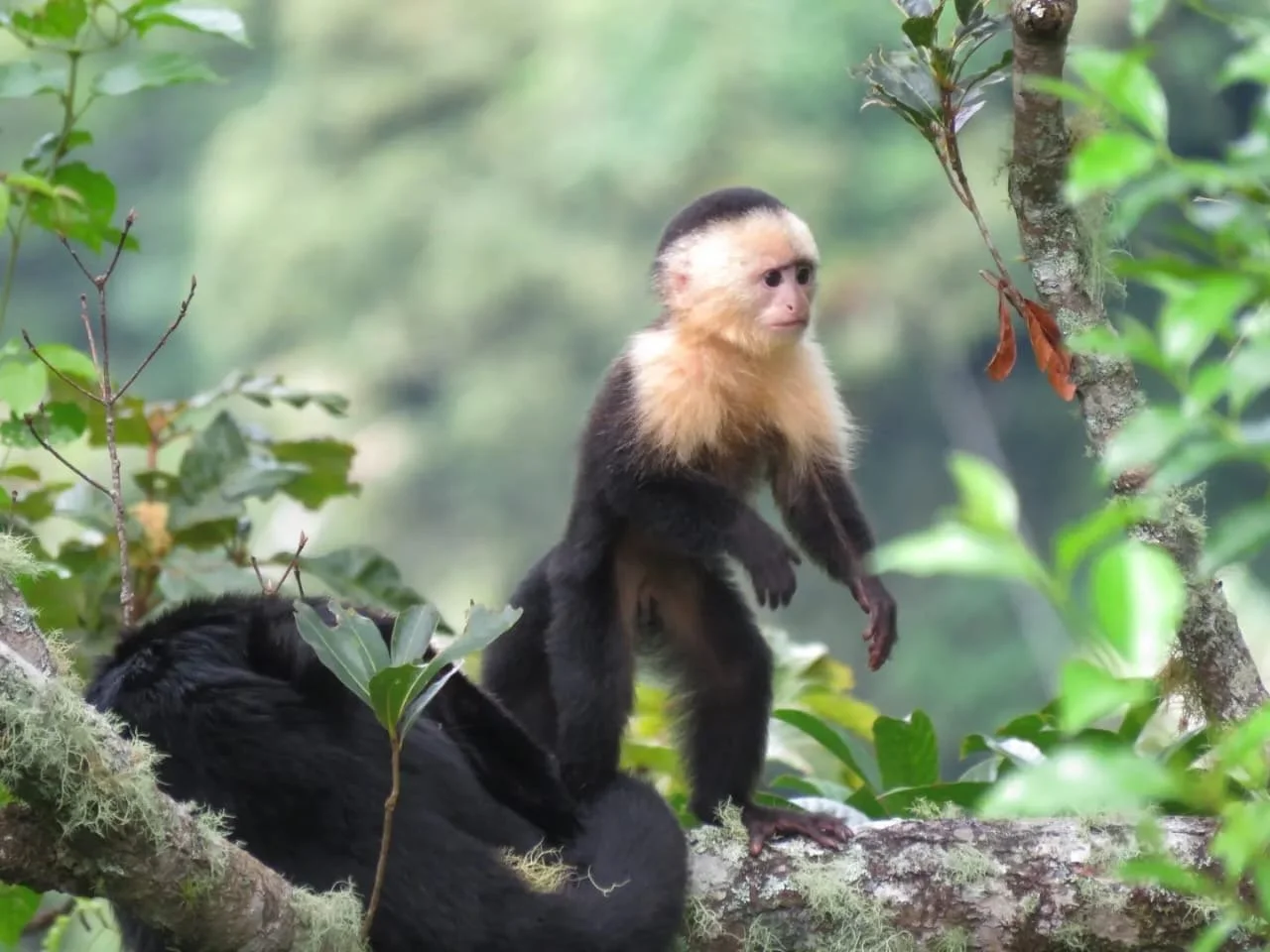
But perhaps the most interesting aspect of Panama’s future is not purely economic or infrastructural. It is environmental and geographical. Panama is one of the most biodiverse countries on Earth, and its ecosystems are still largely intact compared to many other regions. Rainforests, cloud forests, coral reefs, mangroves, and mountain ecosystems coexist within a relatively small area. In places such as Boquete, natural landscapes are not distant attractions but part of everyday life. This creates a unique situation where modern development and natural preservation exist side by side, sometimes in tension, sometimes in balance.
As global awareness of climate change and environmental preservation increases, countries with significant natural resources and biodiversity are likely to become more important on the world stage. Panama’s forests, watersheds, and marine environments are not just national assets. They are global ones. They influence climate patterns, support migratory species, and store carbon. This gives Panama a type of environmental significance that is increasingly relevant in international discussions about sustainability and conservation.
Tourism is another sector that is likely to play a growing role in Panama’s future, but not in the same way as mass tourism destinations. Instead, Panama’s appeal lies in its diversity. It offers urban experiences, island travel, mountain retreats, wildlife exploration, historical exploration, and cultural immersion all within relatively short distances. The historic district of Casco Viejo represents the cultural and architectural layer of this experience, blending colonial history with modern urban life in a way that continues to attract visitors who are looking for depth rather than just scenery.
Technology and remote work are also beginning to reshape Panama’s identity. While not yet considered a global technology hub, the country is increasingly attractive to digital workers who value stability, infrastructure, and geographic position. High speed internet in urban areas, modern housing options, and international connectivity make it possible for professionals to operate globally while living in Panama. This trend is still developing, but it aligns with broader global shifts toward decentralized work and location independent careers.
Education, healthcare, and lifestyle infrastructure are also improving steadily. Private hospitals in Panama City are expanding services, international schools are growing, and lifestyle amenities continue to diversify. These changes are important because they support long term residency, not just short term tourism or business activity. As more people consider living abroad for extended periods, these systems become critical in determining which countries attract sustained international populations.
Of course, Panama’s future is not without challenges. Rapid development brings questions about sustainability, inequality, and environmental pressure. Urban expansion must be balanced with the protection of natural ecosystems. Infrastructure must keep pace with population growth and economic activity. And as the country becomes more globally integrated, it must manage the complexity that comes with increased international attention.
Yet despite these challenges, Panama’s trajectory remains compelling. It is a country that is not trying to reinvent itself completely, but rather expand and strengthen the roles it already plays. It is building on its geography, its infrastructure, its financial system, its biodiversity, and its strategic position between continents.
What makes Panama unique is not just what it is today, but what it is becoming.
A global logistics hub.
A financial center.
A biodiversity stronghold.
A tourism destination of remarkable variety.
A place where modern cities and ancient forests exist within the same short journey.
A country small in size but disproportionately large in global importance.
And as the world becomes more interconnected, the value of places like Panama does not decrease. It increases.
Because in the end, Panama is not just a country between two oceans.
It is a country that connects them.
And that connection may turn out to be far more important in the future than most people realize.