
If you tried to understand Panama only through maps, photos, or statistics, you would get a partial picture at best. But there is another way to understand the country that almost nobody talks about: sound. Not music or nightlife specifically, but the everyday acoustic identity of different regions. Panama is small enough that its environments sit close together, yet diverse enough that each one produces its own distinct soundscape. Moving through the country is almost like moving through different audio zones.
In fact, if you were blindfolded and transported around Panama, you could probably tell where you are just by listening.
The Coastal City Sound: Traffic, Wind, and Ocean Layers
In Panama City, sound is layered rather than singular. At street level, there is the constant presence of traffic, engines, construction activity, and urban movement. But because the city sits directly on the coast, there is always another layer underneath it. The ocean never fully disappears from the sound environment.
Along the waterfront, wind interacts with open space, bridges, and tall buildings, creating shifting echoes that change depending on time of day and weather. In some areas, especially near the shoreline, the sound of water becomes part of the urban rhythm rather than something separate from it.
This creates a unique acoustic identity where city noise and natural coastal sound exist at the same time.
The Jungle Sound Layer: Dense, Continuous, and Directionless
Just outside the urban boundary, especially in places like Soberanía National Park, the soundscape changes completely. Instead of layered human activity, sound becomes dense and organic.
In the rainforest, sound is not structured in the way cities are. It does not come from clear directions or predictable sources. It surrounds you. Birds call from multiple levels of the canopy. Insects create continuous background frequencies. Distant movement in vegetation adds occasional interruptions to the constant base layer.
What makes jungle sound in Panama so distinctive is its continuity. It does not have the same sharp breaks that urban environments have. It feels continuous, like a living system that never pauses.
The Mountain Sound: Space, Distance, and Silence Between Notes
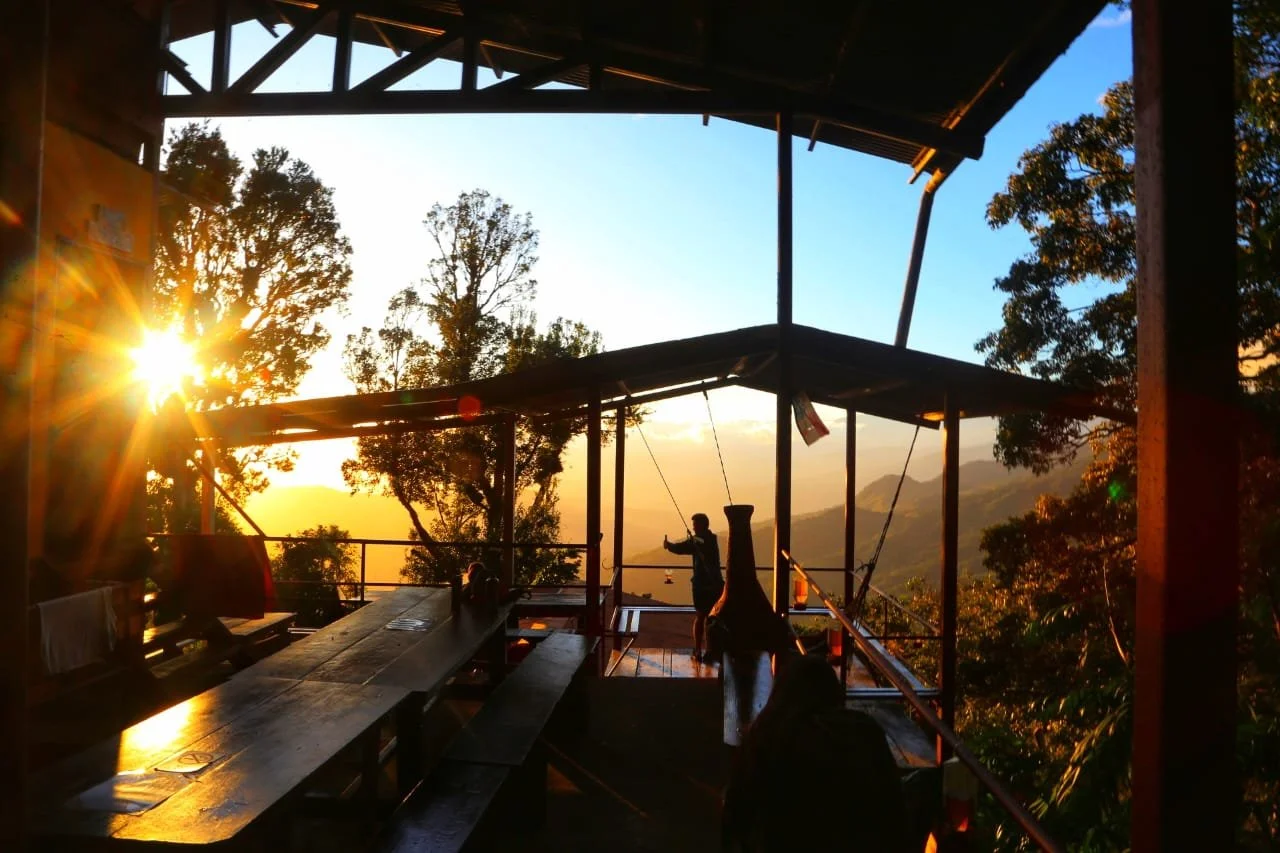
In highland regions such as Boquete, sound behaves differently again. Instead of density or constant layering, there is space between sounds.
Wind moves through valleys in slower patterns. Water from rivers and streams becomes more noticeable because there is less competing noise. Human activity exists but is more spaced out, allowing individual sounds to stand out clearly.
At night, this effect becomes even stronger. The absence of urban noise creates a sense of expanded silence where even small sounds feel amplified.
The Coastal Village Sound: Rhythm of Water and Daily Life
Along smaller coastal communities, especially on both the Pacific and Caribbean sides, sound tends to follow a different rhythm. It is less about volume and more about repetition.
Fishing activity, small boats, distant engines, conversations, and waves create a layered but calmer acoustic environment. The ocean plays a constant role, but it is not overwhelming. Instead, it blends into daily life as a background presence.
These environments often feel acoustically balanced, with no single dominant layer.
The Night Sound Shift: When Panama Rewrites Its Audio Identity
One of the most interesting aspects of Panama is how sound changes after dark. In cities, traffic noise decreases but does not disappear entirely. New sounds emerge from nightlife zones, restaurants, and social spaces.
In rural and natural areas, the shift is more dramatic. Jungle sounds intensify as temperature and humidity change. Insects become more prominent. Water and wind become clearer.
Night essentially resets the country’s sound map, reducing human noise in some areas while amplifying natural systems in others.
The Hidden Pattern: Sound Follows Geography More Than Culture
What becomes clear when listening to Panama is that sound is shaped more by geography than by human design alone. Elevation, proximity to water, density of vegetation, and urban development all play direct roles in shaping what you hear.
Cities produce layered mechanical soundscapes.
Forests produce continuous organic soundscapes.
Mountains produce spaced and reflective soundscapes.
Coasts produce rhythmic mixed soundscapes.
These patterns repeat consistently across the country.
The Psychological Effect of Panama’s Sound Diversity
Because Panama’s environments are so close together, the transition between soundscapes can happen quickly. Within a single day, a person can move from urban noise to rainforest density to mountain silence to coastal rhythm.
This constant shift affects perception of time and space. Sound becomes a marker of location and movement rather than just background noise. It also contributes to the feeling that Panama is larger and more complex than its physical size suggests.
Most countries are remembered visually. Panama is also understood acoustically, even if people do not realize it.
It is a place where sound changes as often as scenery.
Where cities speak in traffic and glass.
Where forests speak in layered life.
Where mountains speak in space.
And where the ocean speaks in rhythm.
And once you notice it, you start to realize that Panama is not just something you see as you move through it.
It is something you hear changing around you the entire time.