
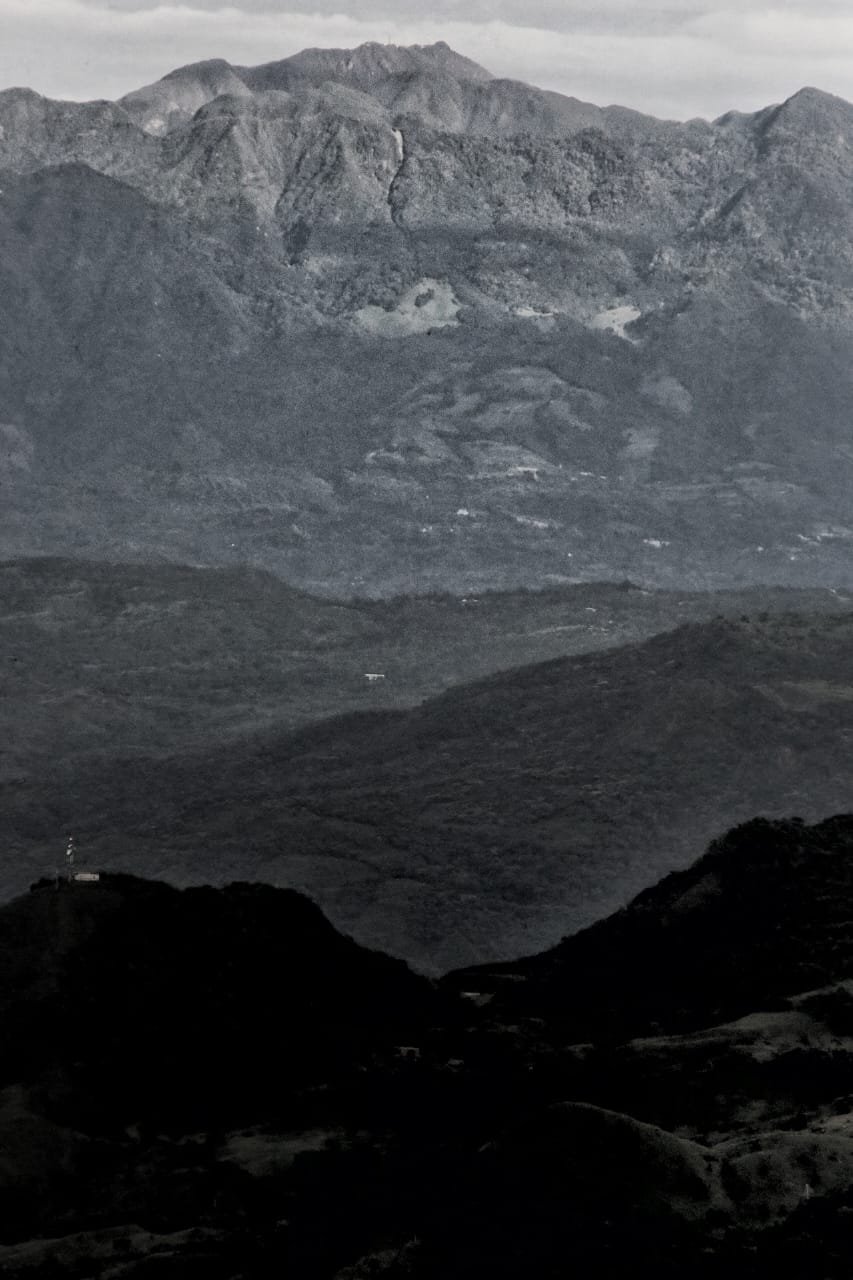
Along Panama's Caribbean coast lies a small town that many travelers pass through in just a few hours. At first glance, Portobelo appears to be a quiet fishing community surrounded by lush tropical hills and a beautiful natural harbor. Fishing boats bob gently in the water. Colorful homes line the shoreline. The jungle presses close to the town's edge. It is peaceful, picturesque, and easy to underestimate.
Yet beneath this tranquil appearance lies one of the most extraordinary stories in the history of the Americas. For centuries, Portobelo was not a sleepy Caribbean town but one of the most important ports in the Spanish Empire. Vast fortunes passed through its harbor. Treasure fleets crowded its waters. Merchants traveled from across the Atlantic to participate in its famous trade fairs. Kings, admirals, pirates, privateers, enslaved Africans, indigenous peoples, soldiers, priests, and adventurers all left their mark on its history. Entire wars were influenced by events that took place here. At one point, Portobelo stood at the center of a global economic system that connected Europe, Africa, North America, South America, and Asia.
Today, its crumbling fortresses and weathered stone walls tell the story of a place that once helped shape the modern world.
A Harbor So Perfect It Changed History
Long before Europeans arrived, the Caribbean coast of Panama was home to indigenous peoples who navigated its rivers, forests, and coastal waters. The area surrounding modern Portobelo was rich in wildlife and natural resources. Dense rainforests stretched inland while protected bays offered safe anchorage along a coastline often exposed to storms and rough seas.
Everything changed in 1502 when Christopher Columbus explored this section of the Caribbean coast during his fourth and final voyage to the New World. Upon seeing the magnificent natural harbor, he reportedly named it "Puerto Bello," meaning "Beautiful Port." The name was well deserved. Few harbors in the Caribbean offered such protection from storms and such easy access to the sea. Although Columbus could not have known it at the time, the harbor would eventually become one of the most valuable pieces of real estate in the Spanish Empire.
For more than a century after Columbus's visit, Spain was rapidly expanding its colonial possessions throughout the Americas. Enormous quantities of gold and silver were being extracted from territories that stretched from modern Mexico to Peru. The challenge facing the empire was how to transport these riches safely across oceans filled with storms, rival powers, and pirates. The solution would eventually place Portobelo at the very center of a vast global trade network.
The Silver Highway of the Spanish Empire
To understand Portobelo's importance, one must first understand the staggering scale of wealth flowing through the Spanish Empire during the sixteenth and seventeenth centuries. Following the conquest of the Inca Empire in South America, vast quantities of silver began flowing from mines in present-day Peru and Bolivia. Much of this treasure first traveled by ship along the Pacific coast to Panama.
From there, mule trains carried the silver across the narrow Isthmus of Panama. Imagine thousands upon thousands of mules loaded with treasure moving through tropical forests and muddy trails. Armed guards accompanied them. Merchants followed behind. Workers maintained the routes. The journey across Panama became one of the most important transportation corridors on Earth.
Once the treasure reached the Caribbean side of the isthmus, it arrived at Portobelo.
The harbor would fill with ships waiting to transport the wealth to Spain. Silver bars, gold coins, emeralds, pearls, spices, luxury goods, textiles, and countless other products flowed through the town. What appears today to be a modest settlement once handled riches that would be worth billions of dollars in modern terms.
At its peak, Portobelo became one of the busiest and wealthiest ports in the entire New World.
The Famous Portobelo Fairs
Perhaps the most extraordinary chapter in the town's history was the era of the Portobelo Fairs. These events were among the largest commercial gatherings in the world during the seventeenth century.
Merchants traveled from Spain, South America, Central America, and the Caribbean to participate. The town's population would suddenly explode as thousands of people arrived for weeks of buying, selling, negotiating, and transporting goods. Ships packed the harbor. Warehouses overflowed with merchandise. Streets filled with traders speaking multiple languages and representing cultures from across the globe.
For a brief period each year, this small tropical town became one of the busiest marketplaces on Earth.
Luxury fabrics from Europe, silver from the Andes, gold from South America, Asian goods that had crossed the Pacific through the Philippines, and products from every corner of the Spanish Empire converged here. The amount of money changing hands was almost unimaginable.
Contemporary accounts describe a bustling, crowded, and often chaotic atmosphere. Fortunes could be made or lost during a single fair. Deals involving vast quantities of treasure were negotiated in warehouses, taverns, and government offices. The economic significance of these gatherings rivaled that of major commercial centers in Europe.
For a time, Portobelo was one of the financial capitals of the Atlantic world.
A Magnet for Pirates and Privateers
Unfortunately for Spain, concentrating enormous quantities of treasure in one location attracted attention.
As word spread throughout Europe about the wealth flowing through Portobelo, pirates and privateers began dreaming of attacking the town. Some sought personal riches. Others operated with official backing from rival nations eager to weaken Spanish power.
The Caribbean became one of the most dangerous regions in the world during this period. Pirate attacks were common, and Portobelo became one of the most tempting targets.
Among the most famous attackers was Henry Morgan. In 1668, Morgan launched one of the most daring raids in Caribbean history. Leading a force of buccaneers through difficult terrain, he captured Portobelo despite its formidable defenses. The attack shocked the Spanish Empire and demonstrated that even heavily fortified treasure ports were vulnerable.
Morgan's assault became legendary. Stories of the raid spread across Europe and helped cement Portobelo's reputation as a place of immense wealth and high adventure. The town's name became synonymous with treasure, danger, and piracy.
The Fortress City
Spain responded to these threats by constructing an extensive network of fortifications around the harbor.
Today, visitors can still explore many of these remarkable structures, including San Jerónimo Fort, Santiago Fort, and other defensive works that once guarded the entrance to the bay.
These fortresses represented some of the most advanced military engineering of their era. Massive stone walls mounted powerful cannons overlooking the harbor. Strategic positions controlled access to the town. Soldiers remained constantly alert for signs of approaching enemy vessels.
Walking among these ruins today is a remarkable experience. Tropical vegetation grows through ancient stonework. Trees emerge from walls once designed to repel invaders. Cannons that once protected imperial treasure now overlook peaceful waters filled with fishing boats. The contrast between past and present is striking.
The ruins are so historically significant that the fortifications of Portobelo are now recognized as part of a UNESCO World Heritage Site.
Decline and Transformation
No empire remains dominant forever.
By the eighteenth century, changing trade routes, evolving political realities, and shifting economic systems began reducing Portobelo's importance. Spain modified how it transported goods and treasure. New commercial practices emerged. The great trade fairs became less significant.
Gradually, the crowds disappeared.
The warehouses emptied.
The treasure fleets stopped arriving.
The bustling international marketplace that had once connected continents slowly faded into history.
For many towns, such a decline would have meant complete disappearance. Yet Portobelo survived. Although its role in global commerce diminished, local communities remained. Fishing continued. Families built lives around the harbor. New generations inherited a town whose glorious past was visible in every stone wall and ruined fortress.
The African Legacy
One of the most important aspects of Portobelo's history is its connection to Afro-Panamanian culture.
During the colonial period, enslaved Africans were brought to Panama and became an integral part of the region's development. Their descendants helped shape the cultural identity of Portobelo and the surrounding Caribbean coast.
Today, Afro-Caribbean traditions remain deeply woven into local life. Music, food, religious practices, language, and cultural celebrations all reflect this heritage. The town has become one of the most important centers of Afro-Panamanian culture in the country.
Visitors often discover that Portobelo's historical significance extends far beyond pirates and treasure. It is also a living cultural landscape where centuries of African influence continue to thrive.
The Black Christ of Portobelo
Among the town's most famous traditions is the devotion surrounding the Black Christ of Portobelo.
The revered statue draws thousands of pilgrims each year from across Panama and beyond. Many arrive dressed in purple robes, walking long distances as acts of faith and devotion. The annual pilgrimage transforms the town into one of the country's most important religious destinations.
The origins of the statue are surrounded by legend, but its significance is undeniable. For countless believers, it represents hope, faith, healing, and spiritual strength.
This tradition has become one of the defining features of modern Portobelo, linking the present-day community to centuries of religious history.
Portobelo Today
Modern Portobelo is a fascinating blend of history, culture, and nature.
The same harbor that once welcomed treasure fleets now attracts divers, sailors, and travelers. The surrounding waters contain coral reefs and marine life. Rainforests blanket nearby hills. Historic fortifications stand beside everyday homes and businesses.
Unlike some famous historical destinations that have become heavily commercialized, Portobelo retains an authentic atmosphere. Daily life continues around the ruins rather than being overshadowed by them. Children play near centuries-old walls. Fishermen launch boats from the same harbor where Spanish galleons once anchored. Residents go about their routines surrounded by reminders of one of the most remarkable chapters in American history.
The town feels lived-in rather than preserved behind glass.
A Place Where the Past Refuses to Disappear
What makes Portobelo truly special is the way history remains visible everywhere. It is not confined to museums or plaques. It rises from the landscape itself.
The harbor that impressed Columbus more than five centuries ago remains just as beautiful. The fortresses that defended imperial treasure still stand against the tropical sky. The roads that once echoed with merchants and soldiers still connect the community. The cultural traditions shaped by centuries of migration, trade, faith, and resilience continue to thrive.
Few places in the Americas allow visitors to experience so many layers of history in such a compact setting. Portobelo was once one of the richest and most strategically important ports in the world. It survived pirate attacks, imperial rivalries, economic transformation, and the passage of centuries. Though the treasure fleets are long gone, the town itself endures.
Today, hidden among the jungles and bays of Panama's Caribbean coast, Portobelo remains a living monument to one of the most fascinating stories ever written in the New World. It is a place where global history, tropical beauty, and cultural resilience come together in a way found nowhere else on Earth.