
In a country famous for tropical beaches, rainforests, coral reefs, and the engineering marvel of the Panama Canal, one of its greatest natural treasures rises quietly above everything else. Hidden within the highlands of western Panama is a place where temperatures can feel almost alpine, where cloud forests cloak mountain slopes in mist, and where visitors can stand at the highest point in the nation and gaze across two oceans. This is Volcán Barú National Park, one of the most spectacular protected areas in Central America and a destination that reveals a side of Panama many visitors never expect to find.
At the heart of the park stands Volcán Barú itself, a dormant volcano that rises to approximately 3,475 meters (11,401 feet) above sea level. It is the highest point in Panama by a considerable margin, towering over the surrounding landscape and creating a dramatic mountain environment unlike anything else in the country. On clear days, the summit offers one of the rarest views in the world: the possibility of seeing both the Pacific Ocean and the Caribbean Sea from a single location. Very few mountains on Earth provide such a remarkable geographical perspective, and it is one of the reasons Volcán Barú has become legendary among hikers and nature enthusiasts.
The story of the volcano stretches back hundreds of thousands of years. Long before humans arrived in what is now Panama, powerful volcanic forces shaped the landscape of Chiriquí. Repeated eruptions built the massive volcanic cone that dominates the region today. Although Barú is considered dormant rather than extinct, its last known eruption occurred centuries ago, and the mountain now supports some of the richest ecosystems in the country. The fertile volcanic soils created by those ancient eruptions have helped transform the surrounding highlands into one of Panama's most productive agricultural regions, famous for vegetables, flowers, and some of the world's most highly regarded coffee.
The national park itself encompasses tens of thousands of hectares of protected land surrounding the volcano. What makes the park particularly fascinating is the incredible range of habitats found within its boundaries. Because the mountain rises so dramatically from lower elevations, visitors can pass through multiple ecological zones during a single hike. At lower elevations, lush tropical forests dominate the landscape. As altitude increases, the environment gradually transforms into cool cloud forests filled with moss-covered trees, orchids, bromeliads, and ferns. Higher still, near the summit, the vegetation becomes more rugged and adapted to cooler temperatures, creating an environment that feels remarkably different from the tropical lowlands most people associate with Panama.
One of the first things visitors notice when entering the park is the climate. Temperatures in the highlands can be dramatically cooler than elsewhere in the country. While coastal Panama may be experiencing tropical heat and humidity, hikers on the slopes of Volcán Barú often find themselves wearing jackets. The cool mountain air comes as a surprise to many travelers who arrive expecting a typical tropical experience. This variation in climate is one of the reasons the region has become so popular with both tourists and Panamanians seeking relief from the heat.
The cloud forests of Volcán Barú are among the most enchanting ecosystems in the Americas. These forests exist in a world of nearly constant moisture. Clouds drift through the trees, coating leaves and branches with tiny droplets of water. Moss blankets trunks and rocks. Orchids cling to limbs high above the forest floor. The atmosphere feels ancient and almost mystical. Walking through these forests often feels like entering another world, one where every surface is alive with vegetation and where visibility can change from crystal clear to foggy within minutes as clouds roll across the mountainside.
Wildlife is one of the park's greatest attractions. The forests support an astonishing variety of species, many of which are difficult to find elsewhere in Panama. Birdwatchers from around the world travel to the area in hopes of spotting the magnificent Resplendent Quetzal, one of the most beautiful birds on Earth. With its iridescent green plumage and long flowing tail feathers, the quetzal has achieved almost mythical status among bird enthusiasts. The cloud forests surrounding Volcán Barú provide some of the best opportunities anywhere in the world to observe this remarkable species in its natural habitat.
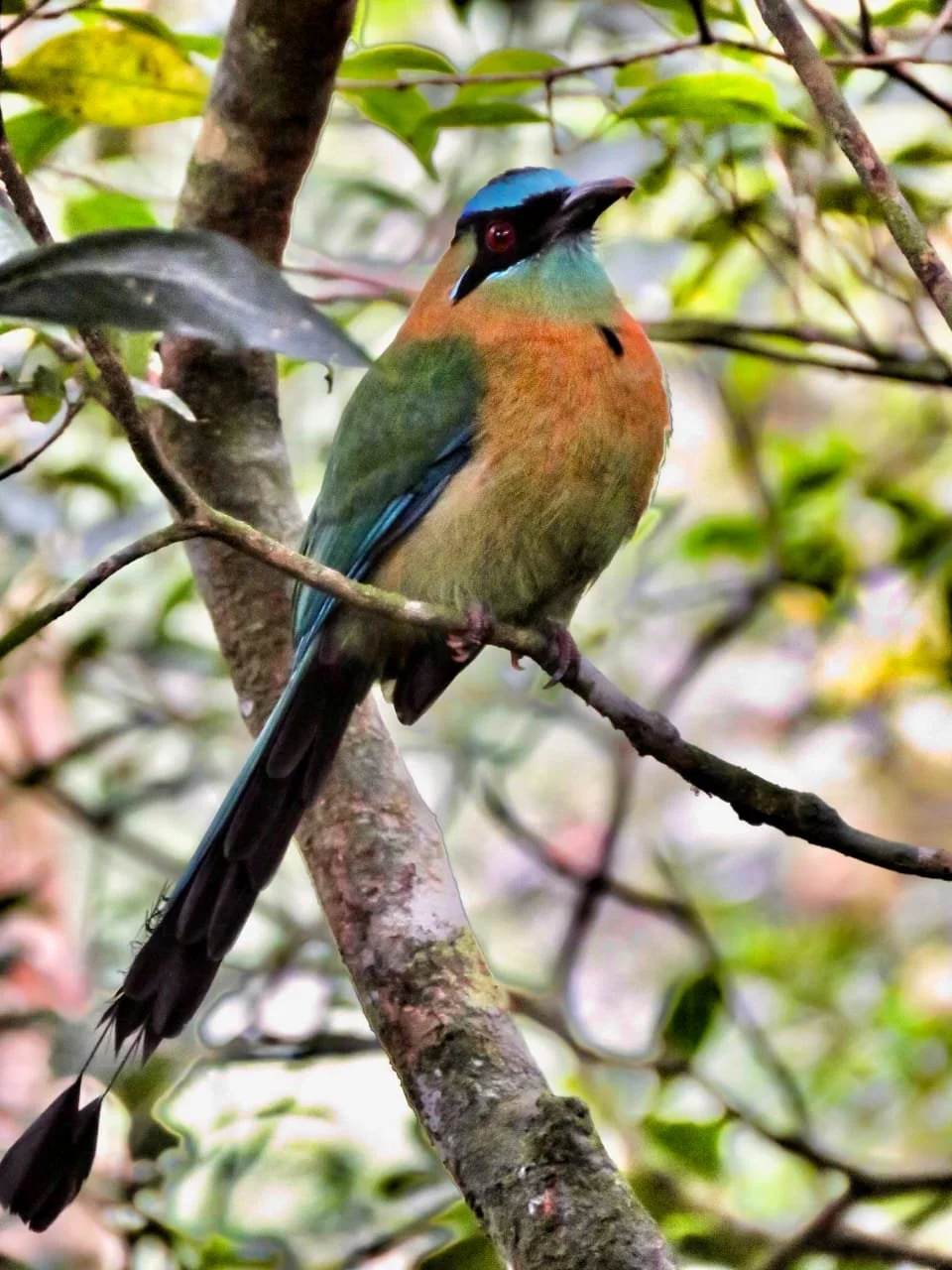
Yet the quetzal is only one of hundreds of bird species that inhabit the park. Hummingbirds dart between flowers, hawks soar above mountain ridges, and colorful tanagers move through the forest canopy. The diversity is so extraordinary that the highlands of Chiriquí have become one of the premier birdwatching destinations in the Western Hemisphere. For many visitors, the soundtrack of the park consists of birdsong echoing through misty forests from dawn until dusk.
The mammal population is equally impressive, although many species remain elusive. Howler monkeys, capuchin monkeys, coatis, armadillos, and various wild cats inhabit the park. Larger and more secretive animals, including jaguars and pumas, occasionally move through the more remote regions. Most visitors never see these predators, but their presence serves as a reminder that the park remains a functioning wilderness ecosystem despite its popularity.
For hikers, Volcán Barú offers one of the most rewarding adventures in Panama. The summit trek has become a rite of passage for many travelers. Most begin their ascent during the night, climbing in darkness beneath a canopy of stars. The trail steadily gains elevation through changing environments, with temperatures dropping as hikers approach the summit. After hours of effort, they arrive at the top just before sunrise. As dawn breaks, the clouds below often glow with shades of orange, pink, and gold. On exceptionally clear mornings, both oceans become visible, separated by the narrow width of the Panamanian isthmus. It is a view that few people ever forget.
The summit experience is remarkable not only because of the scenery but because of what it represents geographically. Standing atop Volcán Barú provides a perspective on Panama that cannot be appreciated from sea level. The country reveals itself as a narrow bridge of land connecting two continents and separating two great oceans. Forests, agricultural valleys, mountain ranges, and distant coastlines all become visible from a single vantage point. Few places provide such a comprehensive view of the nation's geography.
The park also plays a critical role in water conservation. The forests surrounding the volcano capture enormous quantities of moisture from clouds and rainfall. This water feeds rivers and streams that support agriculture, communities, and ecosystems throughout western Panama. In many ways, the health of the surrounding region depends on the continued protection of these mountain forests. They function as giant natural reservoirs, storing and releasing water throughout the year.
The cultural significance of the region is equally important. The communities surrounding the park, including Boquete and Cerro Punta, have developed strong connections to the mountain landscape. Agriculture, ecotourism, coffee production, and outdoor recreation all benefit from the unique environment created by the volcano. The park serves as both a natural treasure and an economic resource, supporting livelihoods while preserving biodiversity.
Perhaps the most remarkable aspect of Volcán Barú National Park is the contrast it offers with the rest of Panama. Many visitors arrive expecting tropical beaches and rainforests, only to discover a mountain wilderness where cool winds sweep across ridges, clouds drift through forests, and temperatures can feel more like springtime in a temperate country than the tropics of Central America. The park demonstrates the extraordinary diversity packed into a relatively small nation. Within a single day, a traveler can move from warm Pacific beaches to misty mountain forests thousands of meters above sea level.
In the end, Volcán Barú National Park is far more than a volcano. It is a sanctuary for wildlife, a refuge for rare plants, a source of water for surrounding communities, a paradise for birdwatchers, and one of the most breathtaking landscapes in Central America. It represents the wild heart of Panama's highlands and offers visitors a chance to experience a side of the country that feels completely different from the tropical image most people carry in their minds. Rising above the clouds, it stands as a reminder that some of Panama's greatest wonders are found not along its coastlines but on the summit of a sleeping giant that has watched over the nation for thousands of years.