
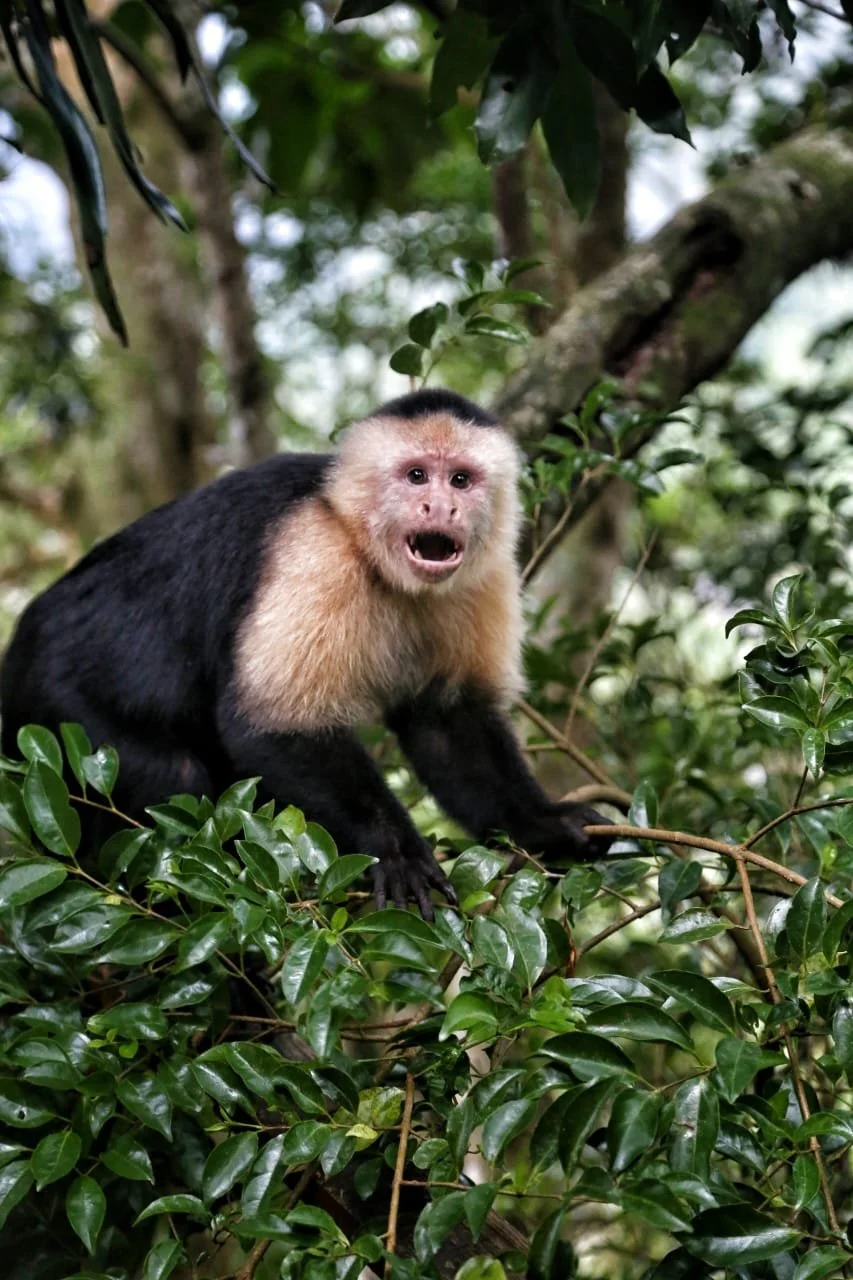
When most people hear the phrase "Panamanian rainforest," they imagine a single endless jungle stretching across the country. The reality is far more fascinating. Panama is home to an astonishing variety of rainforest ecosystems, each shaped by different elevations, rainfall patterns, temperatures, soils, and geographical influences. Within a country smaller than South Carolina, a traveler can move from steamy lowland jungle filled with crocodiles and monkeys to mist-shrouded cloud forests dripping with moss and orchids, then continue onward to isolated mountain forests where species exist that are found nowhere else on Earth. This diversity is one of the reasons Panama is considered one of the world's greatest biodiversity hotspots. The country serves as a biological bridge between North and South America, and its rainforests contain a remarkable blend of species from both continents.
What makes Panama particularly special is the speed at which these ecosystems change. In larger countries, traveling between major rainforest types may require days of driving. In Panama, entirely different rainforest environments can often be reached within a few hours. Elevation changes rapidly, mountain ranges intercept moisture from both the Caribbean and Pacific, and weather systems create dramatically different environments over surprisingly short distances. The result is a country where rainforest enthusiasts can experience multiple worlds of tropical nature in a single trip.
The Caribbean Lowland Rainforest: Panama's Classic Jungle
The rainforest most people imagine when they think of Panama is the Caribbean lowland rainforest. These forests occupy large portions of the Caribbean side of the country and receive enormous amounts of rainfall throughout the year. Unlike many tropical regions that experience pronounced dry seasons, some Caribbean rainforests remain lush and green almost continuously. Rain can fall on hundreds of days annually, creating conditions that support extraordinary plant growth.
These forests are characterized by towering trees that can exceed fifty meters in height, dense understories, giant buttress roots, countless vines, and an incredible diversity of wildlife. The air is often warm, humid, and filled with the sounds of insects, frogs, birds, and monkeys. Sunlight struggles to penetrate the canopy, creating a dim green world beneath the trees. Species such as sloths, capuchin monkeys, howler monkeys, toucans, poison dart frogs, and jaguars inhabit these ecosystems.
Excellent examples can be found in and around Soberanía National Park, the forests surrounding the Panama Canal, and the remote Caribbean regions of Bocas del Toro. Some of the wettest forests occur near the Caribbean coastline where moisture-laden trade winds arrive directly from the sea.
The Pacific Lowland Rainforest: The Seasonal Jungle
The Pacific side of Panama hosts a different type of rainforest. Although still lush and biologically rich, these forests generally experience a more pronounced dry season. During the wet months they appear overwhelmingly green, but as the dry season arrives some tree species shed leaves and the forest takes on a slightly different character.
The Pacific lowland rainforest often feels more open than its Caribbean counterpart. Wildlife remains abundant, but the seasonal nature of rainfall influences everything from flowering cycles to animal behavior. These forests support many of the same iconic species found elsewhere in Panama, including monkeys, parrots, toucans, and big cats.
Important examples survive in areas such as Coiba National Park and protected forests throughout the Darién region. In some places these forests transition into drier tropical environments, creating fascinating ecological gradients where species from multiple habitats overlap.
The Cloud Forest: The Enchanted Rainforest Above the Clouds
Among Panama's most magical ecosystems is the cloud forest. Unlike lowland rainforests, cloud forests occur at higher elevations where persistent moisture condenses directly from passing clouds. These forests are often wrapped in mist, creating landscapes that seem pulled from fantasy novels.
The appearance of a cloud forest differs dramatically from a lowland jungle. Trees are often shorter but heavily covered in mosses, bromeliads, ferns, lichens, and orchids. Every branch seems alive with plant growth. Moisture drips continuously from leaves even when it is not raining. The air is cooler, the light softer, and visibility can change rapidly as clouds drift through the forest.
Cloud forests contain some of Panama's most spectacular biodiversity. They are particularly famous for birds such as the magnificent Resplendent Quetzal, along with hundreds of hummingbird species and rare amphibians adapted to cool mountain environments.
Some of the finest examples occur within Fortuna Forest Reserve, Volcán Barú National Park, and the highlands surrounding Boquete. These forests are among the most biologically important habitats in all of Central America.
The Premontane Rainforest: The Transition Zone
Between the lowland rainforests and the cloud forests lies an often-overlooked ecosystem known as premontane rainforest. These forests occur at middle elevations and combine characteristics of both worlds. Temperatures are cooler than the lowlands but warmer than the cloud forests. Rainfall remains abundant, and biodiversity is often exceptionally high because species from multiple elevation zones overlap.
Premontane forests are sometimes considered the sweet spot of tropical biodiversity. Visitors may encounter lowland species near one trail and cloud forest species on another. Many birdwatchers consider these middle elevations among the most rewarding habitats in Panama because of the sheer variety of species present.
Large areas of premontane rainforest occur throughout western Panama, particularly along the slopes of the Talamanca Mountains and within the broader highland regions of Chiriquí.
The Montane Rainforest: Panama's High Mountain Wilderness
At even higher elevations, above many cloud forests, lie montane rainforests. These forests experience cooler temperatures, stronger winds, and harsher environmental conditions. Trees become smaller and more twisted, shaped by constant moisture and mountain weather.
These ecosystems often feel surprisingly different from tropical forests at lower elevations. The cool air can resemble springtime in temperate countries. Moss blankets nearly every surface. Epiphytes thrive in astonishing abundance. Some mountain ridges receive moisture not only from rain but directly from passing clouds and fog.
The upper slopes of Volcán Barú contain some of the country's finest montane rainforest. Here, species adapted to cooler climates survive in isolated mountain refuges separated from similar habitats by vast expanses of warmer lowlands.
The Flooded Rainforest: Forests Shaped by Water
Not all rainforests are defined solely by rainfall. Some are defined by flooding. Along rivers, wetlands, and seasonally inundated areas, Panama supports flooded rainforests that spend part of the year underwater.
These forests are among the most productive ecosystems in the country. Fish move into flooded areas to feed and breed. Birds gather in enormous numbers. Reptiles such as crocodiles and caimans thrive. The interaction between water and forest creates habitats unlike those found anywhere else.
Examples occur in portions of the Darién region, around major river systems, and within wetland complexes such as San San Pond Sak Wetland. These environments play a critical role in maintaining fisheries, protecting water quality, and supporting wildlife populations.
The Mangrove Rainforest: Where Jungle Meets the Sea
One of Panama's most distinctive rainforest ecosystems grows not on dry land but in saltwater. Mangrove forests occupy coastal areas throughout both the Pacific and Caribbean coasts. These remarkable trees have adapted to survive in salty, oxygen-poor mud where few other plants can live.
Mangrove forests serve as nurseries for countless fish species, feeding grounds for birds, and natural barriers against coastal erosion. Their tangled roots create entire underwater ecosystems while also trapping sediments and improving water quality.
Major mangrove forests can be found throughout the Gulf of Panama, the Darién coastline, and numerous coastal estuaries. Some of the largest mangrove systems in Central America occur along Panama's Pacific coast.
The Darién Rainforest: Panama's Ultimate Wilderness
No discussion of Panamanian rainforests would be complete without mentioning the legendary Darién National Park. The Darién is not a single rainforest type but rather a vast mosaic containing lowland rainforest, mountain rainforest, flooded forests, rivers, wetlands, and coastal ecosystems.
The region represents one of the largest remaining wilderness areas in Central America. Its forests harbor jaguars, harpy eagles, tapirs, giant anteaters, and thousands of other species. Vast areas remain difficult to access, preserving an atmosphere of exploration that has disappeared from much of the world.
The Darién is significant not only because of its biodiversity but because it serves as a living bridge between two continents. Species from North and South America continue to interact within these forests much as they have for millions of years.
A Country of Many Jungles
The greatest misconception about Panama's rainforests is that they are all the same. In reality, the country contains an extraordinary collection of tropical ecosystems, each with its own climate, wildlife, plant communities, and ecological character. A traveler standing in a misty cloud forest near Fortuna may feel as though they are on a different planet from someone exploring a flooded jungle in Darién or kayaking through coastal mangroves along the Pacific shore.
This diversity is what makes Panama one of the most remarkable countries on Earth for nature lovers. Within a few hours, one can move from sea-level rainforest buzzing with insects and monkeys to cool mountain forests where quetzals glide through the mist. Few places offer such a concentration of rainforest diversity within such a compact area. Panama is not home to one rainforest, it is home to many, and together they form one of the richest and most fascinating natural landscapes in the Americas.