
When most people imagine the natural wonders of Panama, they think of rainforests filled with monkeys, brilliant tropical birds perched in the canopy, hidden waterfalls cascading through the jungle, or pristine beaches bordering two oceans. Nature photographers often arrive hoping to capture images of quetzals, sloths, toucans, whales, and colorful poison dart frogs. Birdwatchers come with life lists and binoculars, eager to add new species to their records. Yet beneath every tree, behind every leaf, within every flower, underneath every fallen log, and across every square meter of forest floor exists an entirely different world that is far larger, far older, and far more diverse than most visitors ever realize. Panama is not merely a paradise for birds or mammals. It is one of the most extraordinary insect kingdoms on Earth. For entomologists, naturalists, macro photographers, biologists, and anyone fascinated by biodiversity, Panama represents something close to perfection. The sheer abundance of insect life is almost impossible to comprehend until you experience it firsthand. A single rainforest trail can contain thousands of species interacting simultaneously. Every tree functions as a skyscraper supporting entire insect communities. Every flowering plant becomes a miniature ecosystem. Every stream, puddle, patch of moss, and section of bark contains species adapted to occupy a specific ecological niche. The deeper one looks, the more astonishing the complexity becomes. In many ways, Panama is not simply a country rich in insects. It is one of the greatest living laboratories of insect diversity anywhere on the planet.
The reason Panama supports such extraordinary biodiversity begins with geography and geological history. Few places on Earth occupy a more strategically important position for wildlife. Millions of years ago, the formation of the Isthmus of Panama connected North and South America, creating a biological bridge that transformed global ecosystems. Species that had evolved separately for millions of years suddenly gained the ability to move between continents. This event, known as the Great American Biotic Interchange, fundamentally reshaped life in the Western Hemisphere. While mammals often receive most of the attention when discussing this event, insects participated in the exchange as well. Over millions of years, Panama became a meeting point for lineages from both continents. Combined with the country's remarkable range of habitats, elevations, rainfall patterns, and microclimates, this created ideal conditions for diversification. Today, Panama contains lowland rainforests, cloud forests, mangrove swamps, dry forests, mountain ecosystems, wetlands, coastal habitats, islands, rivers, lakes, and alpine-like volcanic environments. Each habitat supports its own unique insect communities. Scientists estimate that tens of thousands of insect species occur within the country, and many experts believe the true number may be far higher. New species continue to be discovered regularly, and entire groups remain poorly studied. An entomologist could spend a lifetime working in Panama and still encounter species that have never been formally described by science.
Perhaps nowhere is Panama's insect diversity more apparent than in its tropical rainforests. These forests operate as enormous biological engines powered largely by insects. To the casual visitor, the forest may appear peaceful and still, but in reality it is a place of nonstop activity. Every moment, insects are pollinating flowers, decomposing organic matter, dispersing seeds, consuming vegetation, hunting prey, recycling nutrients, and serving as food for countless other organisms. The scale of this activity is staggering. Researchers studying tropical forests have found that a single mature tree may support hundreds or even thousands of insect species. Some insects spend their entire lives in the canopy, never touching the ground. Others specialize on particular plants, flowers, fungi, or microhabitats. Certain species emerge only at night, while others are active only during brief periods of the day. Some live within bromeliads high above the forest floor. Others inhabit rotting wood, leaf litter, streams, or underground chambers. Walking through a Panamanian rainforest without noticing insects is like visiting a city and ignoring the people. They are everywhere, influencing nearly every ecological process that keeps the forest functioning.
One of the most fascinating aspects of Panama's insect world is the incredible dominance of ants. Ants are among the most successful organisms on Earth, and nowhere is that success more obvious than in tropical forests. A visitor paying attention to the ground will quickly notice endless streams of ants moving in organized columns. Yet these visible highways represent only a fraction of the activity occurring beneath the surface. Panama hosts hundreds of ant species, ranging from tiny workers only millimeters long to formidable predators capable of delivering painful bites and stings. Leafcutter ants are among the most famous. Their vast colonies can contain millions of individuals and occupy complex underground networks extending deep beneath the forest floor. The sight of thousands of workers carrying pieces of leaves overhead remains one of the most iconic scenes in tropical ecology. What makes these ants particularly fascinating is that they do not eat the leaves they harvest. Instead, they use the plant material to cultivate specialized fungus gardens that serve as their primary food source. This form of agriculture evolved millions of years before humans began farming. Nearby, army ants patrol the forest in massive swarms that can contain hundreds of thousands of individuals. These nomadic predators move relentlessly through the undergrowth, flushing insects, spiders, lizards, frogs, and other creatures from hiding. Entire bird species have evolved specifically to follow army ant swarms, feeding on prey attempting to escape the advancing columns. Observing an army ant raid in Panama is like witnessing a natural phenomenon on the scale of a wildfire, except it is composed entirely of insects.
Butterflies represent another reason Panama has become legendary among entomologists and nature photographers. The country supports an astonishing variety of species, ranging from tiny skippers to giant tropical forms with wingspans approaching those of small birds. The famous Blue Morpho is perhaps the most recognizable. As it flies through sunlit rainforest clearings, its iridescent wings flash brilliant electric blue, creating one of the most memorable sights in tropical America. Yet the Blue Morpho is only one species among hundreds. Glasswing butterflies possess transparent wings that seem almost invisible against the forest backdrop. Owl butterflies display enormous eye spots that mimic the eyes of predators, helping deter attacks. Heliconian butterflies showcase some of the most striking warning coloration found in nature, advertising their toxicity to potential predators. Swallowtails drift elegantly through forest edges and gardens. Some species participate in complex mimicry systems, evolving to resemble toxic butterflies despite being harmless themselves. Others undertake seasonal movements in response to environmental conditions. The diversity of forms, colors, behaviors, and ecological relationships found among Panama's butterflies alone could occupy an entire career of study.
Beetles, however, may represent the ultimate expression of insect diversity in Panama. Scientists estimate that beetles comprise roughly a quarter of all known animal species on Earth, and tropical regions contain some of the richest beetle faunas ever documented. Panama is no exception. Jewel beetles shimmer with metallic colors that rival precious gemstones. Longhorn beetles possess antennae extending far beyond the length of their bodies. Rhinoceros beetles carry elaborate horns used in battles between males. Scarab beetles perform important ecological functions by recycling organic material. Tiger beetles race across open ground at remarkable speeds while hunting prey. Bark beetles, click beetles, ground beetles, fireflies, and countless others occupy specialized ecological niches. During nighttime surveys, researchers frequently encounter species they cannot immediately identify because the diversity is simply so immense. The abundance of beetles in Panama illustrates a broader truth about tropical ecosystems: there are often far more species present than most people realize. What appears to be a simple patch of forest may contain thousands of different beetles, each playing a unique role within the ecosystem.
The cloud forests of western Panama add another layer of complexity to the country's insect diversity. Regions such as the Fortuna Forest Reserve support cooler temperatures, frequent mist, high humidity, and ecosystems that differ dramatically from the lowland rainforests. These conditions create opportunities for specialized species adapted to cloud forest environments. Mosses, orchids, bromeliads, and epiphytes cover branches and trunks, creating intricate habitats for insects. Many species found in these forests occur nowhere else. Some have evolved to survive within narrow elevation ranges and may be restricted to only a few mountain systems. The result is a landscape filled with biological treasures waiting to be discovered. Hidden within this remarkable reserve, Lost and Found Hostel provides an excellent base for observing cloud forest biodiversity, allowing visitors to experience both daytime and nighttime insect activity without needing to travel far from the surrounding habitat. After dark, trails often reveal giant katydids, unusual moths, predatory beetles, and numerous species rarely encountered during daylight hours.
Nighttime in Panama deserves special attention because many entomologists consider it the most exciting period of the day. As darkness falls, an entirely different ecosystem emerges. Species active during daylight retreat, while countless nocturnal insects become active. Forests that seemed relatively quiet suddenly explode with movement and sound. Katydids begin calling from the vegetation. Giant moths emerge from hiding places. Predatory insects patrol tree trunks and leaves. Fireflies flash through the darkness. Spiders begin hunting. A simple white sheet illuminated by a light can attract dozens or even hundreds of species within a single evening. Moths arrive first, followed by beetles, caddisflies, lacewings, true bugs, and countless other insects. Each arrival brings the possibility of encountering something unusual or unexpected. For entomologists, these nighttime gatherings often provide some of the most productive opportunities for observation and research. A single evening can reveal more diversity than several days of casual daytime exploration.
Moths deserve particular recognition because they are often overshadowed by butterflies despite being equally fascinating and vastly more diverse. Panama supports an extraordinary array of moth species, including giant silk moths, sphinx moths, tiger moths, geometer moths, and countless smaller forms. Some possess wingspans exceeding fifteen centimeters. Others display camouflage so effective that they become nearly impossible to distinguish from bark, leaves, lichen, or moss. Certain species mimic snakes, wasps, or bird droppings. Many exist only for a brief adult lifespan focused entirely on reproduction. The sheer variety of shapes, colors, and survival strategies found among Panama's moths reflects millions of years of evolutionary experimentation. For macro photographers, these insects offer endless opportunities to capture some of the most intricate patterns found in nature.
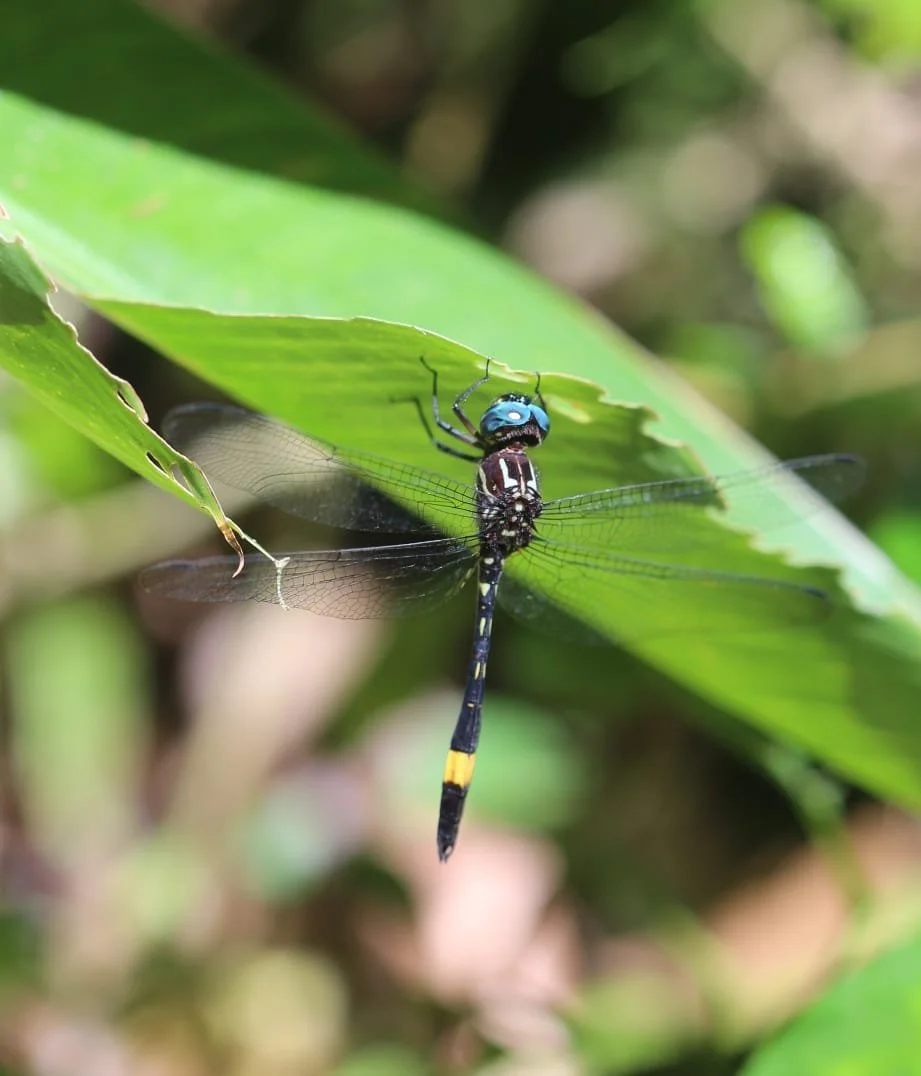
Even Panama's rivers, wetlands, and freshwater ecosystems contribute significantly to its insect diversity. Dragonflies and damselflies patrol streams, ponds, and marshes with remarkable agility. These ancient predators have existed for hundreds of millions of years and remain among the most efficient hunters in the animal kingdom. Their aquatic larvae play crucial roles within freshwater food webs, while adults help control mosquito populations and other insects. Some species display brilliant metallic coloration that shines in sunlight. Others patrol specific territories with almost military precision. Their presence often indicates healthy aquatic ecosystems, making them valuable indicators for conservation efforts.
Perhaps the most remarkable fact about Panama's insects is that scientists are still uncovering their secrets. New species continue to be discovered. Unknown ecological relationships are regularly documented. Entire communities remain poorly understood. Many remote forests have never been surveyed comprehensively. Every year, researchers make findings that expand our understanding of tropical biodiversity. This sense of discovery is one of the reasons Panama continues attracting entomologists from around the world. Unlike regions where most species are already well documented, Panama still offers genuine opportunities for exploration and scientific breakthroughs.
Ultimately, Panama's greatest attraction for entomologists is not any single butterfly, beetle, ant, or moth. It is the overwhelming realization that life exists here on a scale that challenges human comprehension. Every square meter of forest contains stories unfolding simultaneously. Every trail reveals new interactions. Every night brings surprises. Every ecosystem contains layers of complexity that reward patience and curiosity. For those willing to look closely, Panama transforms from a beautiful tropical destination into one of the most extraordinary showcases of insect diversity on Earth. It is a place where the smallest creatures create the largest wonders, and where every leaf, flower, branch, and patch of forest holds the potential for discovery. In a world where biodiversity is increasingly under pressure, Panama remains one of the planet's greatest strongholds of insect life, a living reminder of just how rich, intricate, and astonishing nature can be.