
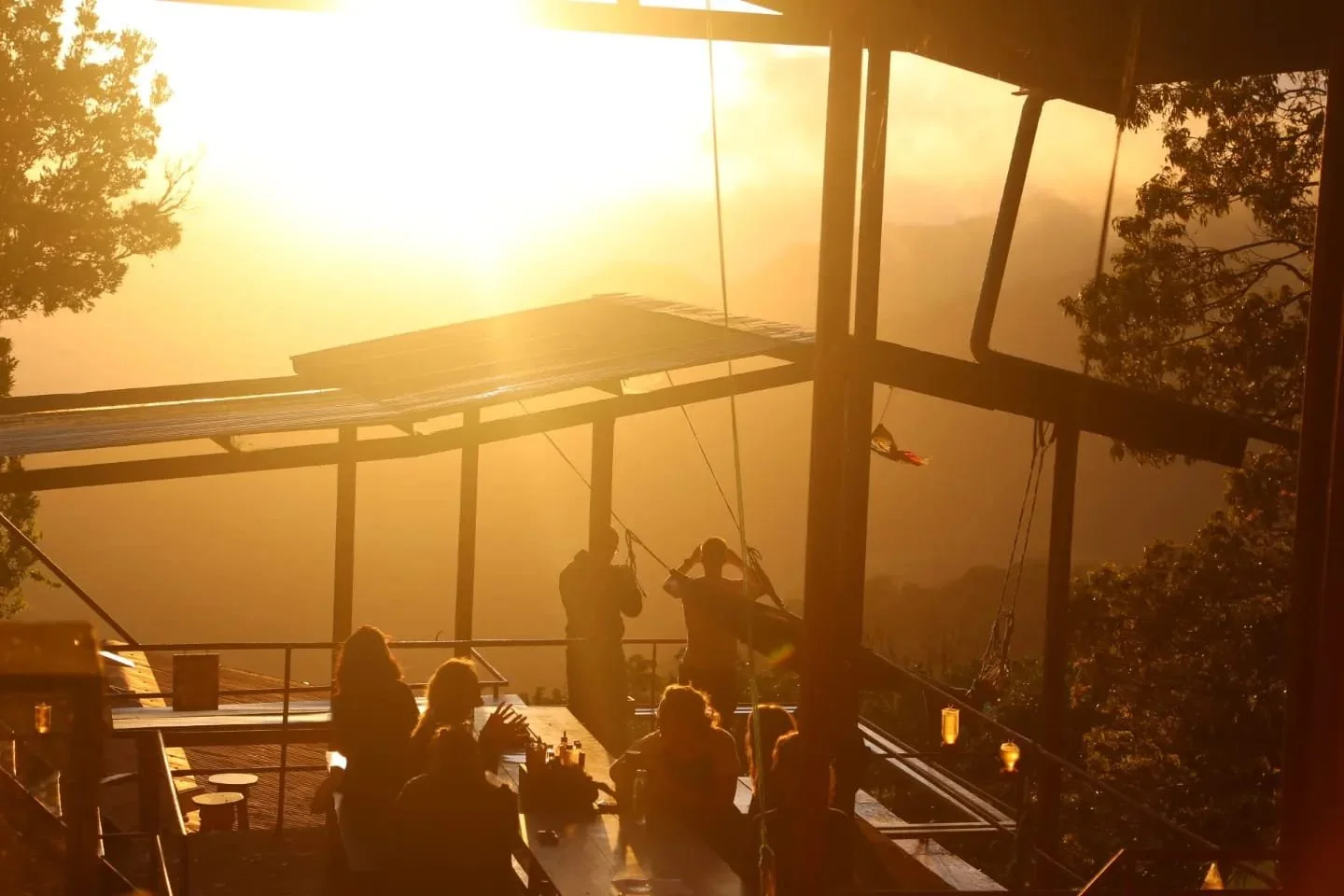
For many travelers arriving in Panama, hostels seem like a simple choice based on one thing: price. Find the cheapest bed, book it, and move on to planning volcano hikes, island hopping, or surfing lessons. But after spending a little time backpacking across the country, most travelers discover something fascinating. Panama's hostel scene has quietly evolved into what feels like a three-tier system, and understanding how it works can dramatically change both your budget and your overall travel experience.
Unlike many countries where hostels are fairly similar, Panama offers an enormous range. At one end are the classic budget backpacker hostels that have been welcoming travelers for decades. In the middle are modern, comfortable hostels that offer extra amenities without becoming overly expensive. At the top are the increasingly popular flashpacker hostels, places that often blur the line between boutique hotels and hostels, featuring rooftop pools, designer interiors, yoga decks, coworking spaces, trendy cafés, and breathtaking ocean views. On paper, it seems like an obvious progression. Spend more money and you'll have a better experience. Yet Panama has a funny way of turning that assumption upside down.
One of the first things experienced backpackers notice is that some of the country's most memorable hostels are not the expensive ones at all. In fact, many of the most talked-about hostels are the affordable, lively places where travelers naturally gather in the evenings, cook meals together, swap travel stories around a table, organize hiking trips, split taxis to waterfalls, or decide on a whim to travel together to the next destination. They may not have infinity pools or handcrafted cocktails, but they often have something much more valuable: atmosphere.
The classic budget hostels are the heart of Panama's backpacking culture. They usually charge somewhere between $10 and $18 per night depending on the destination and season. The rooms are often simple, sometimes rustic, and rarely luxurious. You probably won't find designer furniture or spa-quality bathrooms. Instead, you'll find bunk beds that have seen thousands of travelers pass through, colorful murals painted by previous guests, hammocks stretched between palm trees, well-used communal kitchens, and common rooms where complete strangers become friends within a single evening.
These hostels attract exactly the kind of people many solo travelers hope to meet. Long-term backpackers, cyclists crossing continents, digital nomads on tight budgets, gap-year students, volunteers, surfers chasing waves, hikers exploring Central America, and adventurous travelers who value experiences over luxury naturally gravitate toward these places. Because everyone is traveling on similar budgets, there is a shared mindset. Someone is always organizing tomorrow's hike, looking for people to share a water taxi, suggesting a beach you've never heard of, or inviting everyone to cook dinner together. For solo travelers especially, these hostels often become the social center of an entire trip.
Ironically, spending less frequently means meeting more people.
This is one of the most overlooked aspects of backpacking in Panama. The cheaper hostels often have significantly more single travelers than upscale flashpacker properties. Many guests are traveling alone, eager to socialize, and staying for several nights rather than simply passing through. The communal kitchens become gathering places from breakfast until late at night. Shared grocery trips become group dinners. One traveler begins making pasta, another contributes vegetables, someone else opens a bottle of wine, and before long ten strangers are laughing together as though they've known one another for weeks. These spontaneous moments become some of the memories people treasure most after leaving Panama.
Many experienced backpackers will even tell you that if your goal is making friends rather than simply finding a bed, the budget hostel is often the better choice.
Then comes Panama's middle tier of hostels, which has expanded rapidly over the past several years. These establishments generally charge between $18 and $35 per night and represent an excellent balance between comfort and affordability. Rooms tend to be cleaner and newer, mattresses more comfortable, bathrooms more modern, and Wi-Fi considerably stronger. Many feature swimming pools, rooftop terraces, air-conditioned dorms, gardens, quiet workspaces, and thoughtfully designed common areas. They appeal to travelers who appreciate a little extra comfort without sacrificing the social atmosphere that makes hostel travel so rewarding.
Importantly, many mid-range hostels still include fully equipped communal kitchens. That single feature often makes them one of the smartest choices in Panama. Travelers can enjoy comfortable accommodations while continuing to prepare their own breakfasts, lunches, and dinners. Since grocery stores throughout Panama are well stocked and fresh tropical fruit, vegetables, rice, beans, seafood, and local ingredients remain relatively affordable, cooking your own meals can dramatically reduce your daily travel expenses.
This brings us to Panama's increasingly famous flashpacker hostels.
These places are undeniably impressive. Some resemble boutique hotels more than traditional hostels. Infinity pools overlook turquoise Caribbean water. Rooftop bars serve craft cocktails at sunset. Interior designers have carefully chosen every piece of furniture. Dorm beds feature privacy curtains, reading lights, charging stations, premium mattresses, and oversized lockers. Coworking spaces allow digital nomads to work comfortably while specialty coffee is brewed downstairs. Some even offer yoga classes, organized excursions, beach clubs, and live music several nights a week.
During peak travel seasons, these hostels naturally command premium prices. Dorm beds often range from $35 to well over $60 a night, with private rooms climbing even higher. For many backpackers, these rates seem well beyond their budget.
Yet one of the most interesting characteristics of Panama's tourism industry is its seasonality.
When the rainy season arrives or visitor numbers naturally decline, many of these luxury hostels begin offering surprisingly aggressive discounts. A dorm that costs $55 during Christmas or New Year's might suddenly drop to $28. Another charging $45 during high season could appear for under $25 during quieter months. For flexible travelers, these discounts can feel almost unbelievable. Suddenly, staying in what resembles a boutique resort becomes almost as affordable as staying in a standard hostel.
It sounds like the perfect deal.
But this is where many first-time visitors unknowingly make one of the most expensive mistakes of their trip.
Many flashpacker hostels either have no communal kitchen at all or provide only the most basic food preparation facilities. This design is intentional. They often encourage guests to eat in the hostel restaurant, purchase drinks at the bar, order specialty coffees throughout the day, or join organized dinners and social events. Individually, these purchases may seem perfectly reasonable. But after several days, the costs begin adding up surprisingly fast.
Breakfast might cost $9. Lunch another $15. Dinner could easily reach $18 or more. Add fresh juices, cocktails, coffees, desserts, snacks, and bottled water, and suddenly food alone can exceed $50 in a single day. That discounted luxury hostel begins costing far more overall than a modest budget hostel with a fully equipped kitchen.
This is why experienced backpackers rarely compare accommodation prices alone.
Instead, they calculate total daily cost.
Accommodation.
Food.
Transportation.
Laundry.
Tours.
Convenience.
Social opportunities.
Everything becomes part of the equation.
A hostel charging only $15 with an excellent communal kitchen might ultimately cost half as much per day as a discounted luxury hostel charging $28 but requiring every meal to be purchased. Looking only at the room rate can be misleading, while looking at your total daily spending reveals the real value.
Perhaps the most fascinating aspect of Panama's hostel culture is that luxury does not automatically equal a better travel experience.
In fact, many seasoned travelers deliberately choose the cheaper hostels even when they can afford something nicer.
Why?
Because the atmosphere is often completely different.
Luxury hostels frequently attract couples, short-term vacationers, remote professionals with busy work schedules, or travelers who spend much of their day relaxing by the pool. There is absolutely nothing wrong with that, and many are beautiful places to stay. But they can sometimes feel quieter and less spontaneous. Guests may enjoy the facilities without interacting much beyond polite conversation.
Budget hostels, meanwhile, almost seem designed for connection. Since nearly everyone is trying to save money, people naturally spend more time in the communal spaces. Instead of ordering separate restaurant meals, they cook together. Instead of lounging privately, they gather in hammocks, around picnic tables, or in shared kitchens. Instead of retreating to private rooms, they join card games, movie nights, walking tours, beach trips, waterfall hikes, or impromptu adventures organized entirely by other guests.
For solo travelers, this difference can completely transform a trip.
It is no coincidence that so many lifelong friendships begin in Panama's more affordable hostels. People arrive alone, expecting nothing more than a cheap bed, and leave several days later with an entire group heading toward the next destination together. A simple conversation while chopping vegetables for dinner becomes a week-long island-hopping adventure. A recommendation overheard in the kitchen leads to a hidden waterfall that never appeared in any guidebook. Someone planning to climb Volcán Barú invites three others to join. Before long, strangers have become travel companions.
That sense of community is difficult to manufacture, and it often flourishes most naturally in the simpler hostels where everyone shares the same mindset.
The location also influences hostel prices throughout Panama. Panama City offers perhaps the widest range, from ultra-budget backpacker hostels in historic neighborhoods to sleek designer properties overlooking the skyline. Boquete combines mountain charm with excellent mid-range options catering to hikers, coffee lovers, and digital nomads. Bocas del Toro features everything from rustic island hostels built over the water to luxurious beachside flashpacker properties where the Caribbean Sea is only steps away. Santa Catalina, El Valle de Antón, Pedasí, and other destinations each have their own personality, creating opportunities for every type of traveler to find accommodations that fit both their budget and their travel style.
The smartest backpackers quickly learn that there is no need to stay in one category for an entire trip. Spend several nights in a lively budget hostel where you'll meet fellow travelers and keep costs low. Upgrade to a comfortable mid-range hostel after a long hike when you want a better mattress and stronger air conditioning. Then, when rainy-season discounts appear, reward yourself with a few nights in a beautiful flashpacker hostel overlooking the ocean. By mixing all three styles, you enjoy the best of every world without exhausting your travel budget.
In the end, Panama's hostel scene reflects the country itself. It is wonderfully diverse, full of unexpected surprises, and rewards travelers who look beyond the obvious. The cheapest bed is not always the worst experience. The most expensive hostel is not always the most memorable. Sometimes the hostel with the faded hammocks, communal kitchen, handwritten chalkboard of daily activities, and travelers cooking together under a tin roof becomes the place you remember most years later.
That is the beauty of backpacking in Panama. Luxury certainly has its place, and flashpacker hostels can be fantastic, especially when seasonal discounts make them accessible. But many travelers eventually discover that the soul of Panama's backpacking culture still lives in its relaxed, affordable hostels. They are where conversations last until midnight, where tomorrow's adventures are planned over shared dinners, where solo travelers almost never stay solo for long, and where the memories that define a journey are often created long before you ever leave the hostel's front gate.