
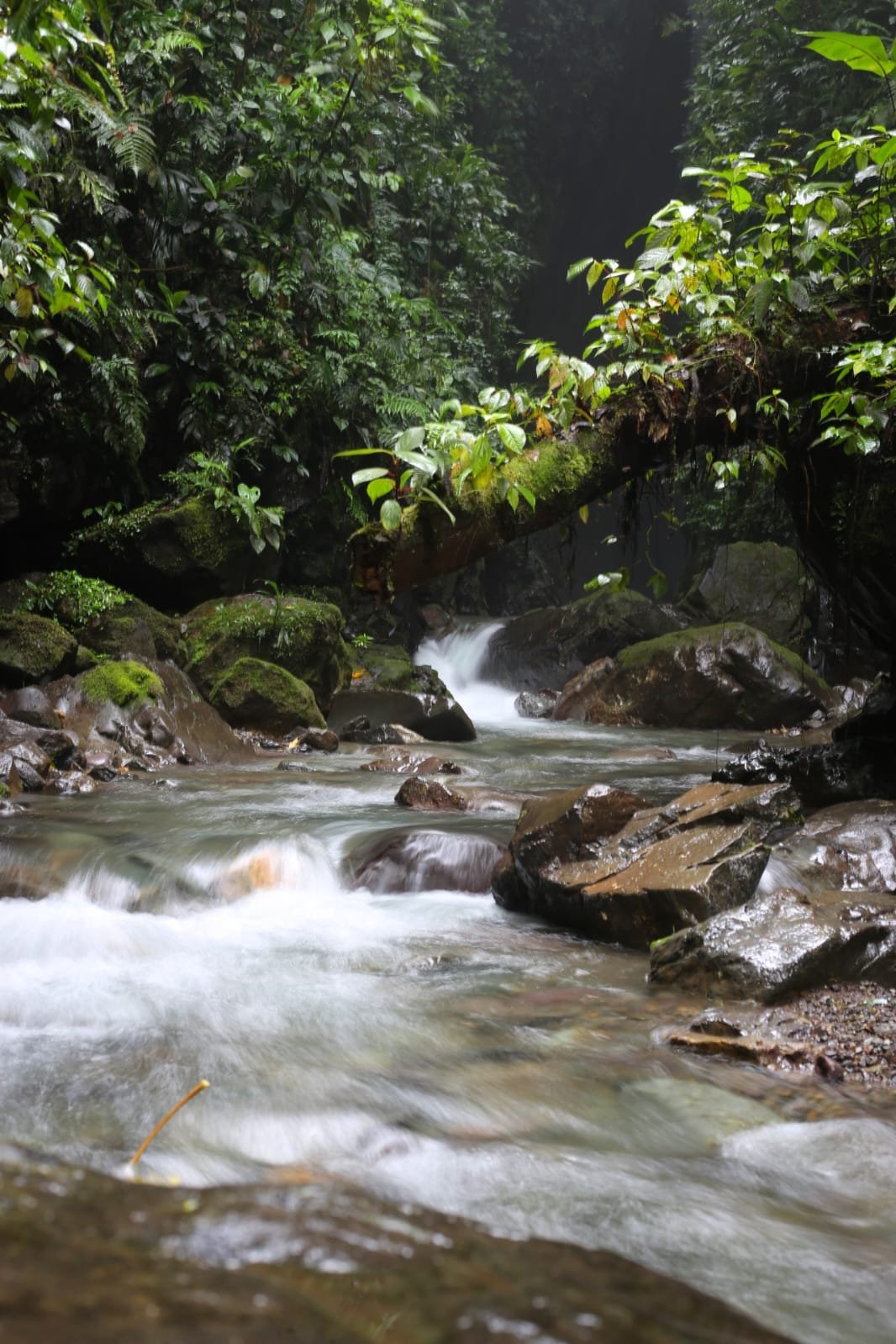
Few countries have experienced as much dramatic change over the past two centuries as Panama. Although small in size, Panama has repeatedly found itself at the center of world history because of one simple fact: it occupies the narrowest land bridge between North and South America. For thousands of years this strip of land has connected continents, cultures, plants, animals, and eventually global commerce. During the last 200 years, Panama has transformed from a remote province of the Spanish Empire into one of Latin America's most prosperous nations and the home of one of the greatest engineering achievements in human history. It has experienced revolutions, foreign occupations, gold rushes, financial booms, dictatorship, invasion, and remarkable economic growth, all while maintaining one of the most strategically important locations on Earth.
The End of Spanish Rule
When the nineteenth century began, Panama had already spent nearly 300 years under Spanish colonial rule. During the colonial era, the isthmus served as one of Spain's most valuable transportation routes. Gold and silver mined in Peru were transported across Panama before being loaded onto ships bound for Europe. Although Panama was strategically important, its population remained relatively small, and much of the interior consisted of dense rainforest, mountains, and Indigenous territories that remained only lightly influenced by colonial administration.
By the early 1800s, revolutionary movements were spreading throughout Latin America. Inspired by changing political ideas in Europe and the Americas, colonies began seeking independence from Spain. In 1821, Panama declared its independence from the Spanish Empire. Unlike some neighboring countries, Panama achieved independence with relatively little bloodshed. Instead of becoming an independent nation immediately, Panama voluntarily joined the newly created Republic of Gran Colombia, a vast country led by the famous South American liberator Simón Bolívar that included present-day Colombia, Venezuela, Ecuador, and Panama.
For many people, joining Gran Colombia seemed like the best way to ensure stability and protection during an uncertain period. However, the enormous republic soon experienced political divisions that eventually led to its collapse. After Gran Colombia dissolved in 1831, Panama remained part of what eventually became the Republic of Colombia.
Panama Under Colombian Rule
For the next seventy years, Panama remained a province of Colombia. During this period, the isthmus experienced repeated political unrest. Because Panama was geographically isolated from Bogotá by dense jungle and difficult terrain, governing the province proved challenging. Communication was slow, and many Panamanians felt that their interests were often overlooked by the central government.
Several attempts were made to separate from Colombia during the nineteenth century, but none succeeded permanently. Political instability became common, with civil wars occasionally disrupting life on the isthmus. Yet despite these struggles, Panama's importance continued growing because of international trade.
The California Gold Rush Changes Everything
One event transformed Panama almost overnight.
In 1848, gold was discovered in California. Hundreds of thousands of people from around the world rushed to North America hoping to strike it rich. Before the Panama Canal existed, traveling from the eastern United States to California meant either sailing around South America or crossing Panama.
Thousands of fortune seekers boarded steamships to the Caribbean coast, travelled up the Chagres River, crossed the jungle by mule or on foot, and boarded another ship on the Pacific side bound for California. Panama suddenly became one of the busiest transportation routes in the world.
Hotels, restaurants, warehouses, transport companies, and merchants flourished. Although many travelers stayed only briefly, the Gold Rush demonstrated Panama's enormous economic potential as a global crossroads.
The Panama Railroad
Recognizing the need for faster transportation, construction began on the Panama Railroad in 1850. Building the railway proved extraordinarily difficult. Workers battled tropical diseases such as malaria and yellow fever, dense jungle, heavy rainfall, floods, landslides, and intense heat. Thousands of laborers from around the world participated in the project, and many lost their lives during construction.
When completed in 1855, the Panama Railroad became the first railway connecting the Atlantic and Pacific Oceans. It dramatically reduced travel times across the isthmus and became one of the most profitable railways in history. For decades it served as the fastest route between the eastern and western United States.
The railroad also strengthened the growing belief that one day a canal could be built across Panama.
The French Canal Attempt
By the late nineteenth century, advances in engineering encouraged new efforts to build an interoceanic canal.
French engineer Ferdinand de Lesseps, famous for constructing the Suez Canal, launched an ambitious project to build a sea-level canal across Panama in 1881. Initial optimism quickly gave way to disaster.
Unlike Egypt's flat desert, Panama presented immense challenges. Mountains had to be excavated, rivers flooded unpredictably, and tropical diseases devastated the workforce. Mosquitoes carrying yellow fever and malaria killed thousands of workers, although scientists had not yet fully understood how these diseases spread.
Financial problems mounted as construction fell behind schedule. Eventually the French company collapsed in one of history's largest financial scandals. Tens of thousands of workers had participated in the project, but the canal remained unfinished.
Independence and the Birth of the Republic
At the beginning of the twentieth century, the United States became increasingly interested in constructing a canal.
Negotiations with Colombia failed, leading to a dramatic turn of events.
On November 3, 1903, Panama declared independence from Colombia. The United States quickly recognized the new republic and supported its separation. Shortly afterward, Panama signed the Hay-Bunau-Varilla Treaty, granting the United States control over the Canal Zone in exchange for financial compensation and guarantees related to the canal's construction.
Thus, the modern Republic of Panama was born.
Building the Panama Canal
Construction resumed under American leadership in 1904.
This time, engineers approached the project differently. Rather than attempting a sea-level canal, they designed a lock canal using the Chagres River and the newly created Gatun Lake.
Equally important was the fight against disease. Under the leadership of physician William Gorgas, mosquito-control campaigns dramatically reduced yellow fever and malaria. Swamps were drained, standing water eliminated, and public health measures transformed working conditions.
The engineering achievement that followed remains astonishing. Workers excavated millions of cubic metres of earth, constructed massive dams, built enormous locks, and created one of the world's largest artificial lakes.
On August 15, 1914, the Panama Canal officially opened.
The canal immediately became one of the world's most important shipping routes, permanently changing global trade.
The Canal Zone Era
Although Panama was now an independent nation, the United States controlled the Canal Zone, a strip of territory running across the country.
For decades, the Canal Zone functioned almost as a separate community with its own schools, hospitals, housing, police, and administration. Many Panamanians believed this arrangement limited their sovereignty and national pride.
Throughout the twentieth century, disagreements over the Canal Zone became a central issue in Panamanian politics.
Economic Growth and Modernization
Despite political tensions, Panama gradually modernized during the first half of the twentieth century.
Roads expanded, education improved, cities grew, and agriculture developed throughout provinces such as Chiriquí, Veraguas, and Coclé.
Banana plantations, cattle ranching, coffee production, and commerce all contributed to economic development.
Panama City's skyline slowly began transforming into the modern capital visitors recognize today.
The Flag Riots of 1964
One of the most emotional moments in Panamanian history occurred in January 1964.
Disputes over flying the Panamanian flag inside the Canal Zone led to protests by students. Violence erupted, resulting in deaths and injuries.
The events shocked the nation and significantly changed relations between Panama and the United States.
Calls for full sovereignty over the Canal Zone grew stronger than ever.
Military Rule
In 1968, a military coup overthrew the elected government.
General Omar Torrijos soon emerged as Panama's dominant leader.
Although his government limited some democratic freedoms, Torrijos also implemented land reforms, expanded education, invested in rural development, and became a symbol of Panamanian nationalism.
His greatest achievement came through diplomacy.
The Torrijos-Carter Treaties
In 1977, Omar Torrijos and U.S. President Jimmy Carter signed treaties establishing that the Panama Canal would gradually be transferred to Panamanian control.
The agreements represented a historic victory for Panama.
For the first time, a clear path existed toward complete national sovereignty over the canal.
The Noriega Years
Following Torrijos' death in a plane crash in 1981, political instability increased.
General Manuel Noriega gradually consolidated power.
International criticism intensified as allegations of corruption, election manipulation, and drug trafficking grew.
Relations with the United States deteriorated rapidly during the late 1980s.
Operation Just Cause
In December 1989, the United States launched Operation Just Cause, invading Panama to remove Noriega from power.
Fighting occurred primarily in Panama City and surrounding areas.
Although the invasion achieved its military objectives, it also caused civilian casualties and extensive damage in some neighborhoods.
The event remains one of the most debated chapters in modern Panamanian history.
Democracy Returns
Following the invasion, Panama rebuilt its democratic institutions.
Civilian governments replaced military rule.
The Panamanian military was abolished and replaced with public security forces.
Democratic elections became the foundation of political life.
The Canal Returns to Panama
Perhaps the proudest day in modern Panamanian history arrived on December 31, 1999.
As required under the Torrijos-Carter Treaties, the United States officially transferred full control of the Panama Canal to Panama.
Many observers had questioned whether such a small country could successfully operate one of the world's most complex engineering systems.
Panama quickly proved them wrong.
The Panama Canal Authority developed an international reputation for professionalism and efficiency.
The Twenty-First Century Boom
During the early twenty-first century, Panama experienced extraordinary economic growth.
Modern skyscrapers transformed Panama City's skyline into one of the most impressive in Latin America.
The banking sector expanded, logistics industries flourished, tourism increased, and foreign investment poured into the country.
Ports, airports, highways, and metro systems modernized rapidly.
In 2016, another historic milestone arrived with the opening of the Expanded Panama Canal. Larger locks now allow enormous Neo-Panamax ships to cross the isthmus, increasing the canal's capacity and strengthening Panama's position in global trade.
Panama Today
Modern Panama is one of Latin America's most dynamic economies. The canal remains the country's greatest economic engine, but banking, logistics, tourism, aviation, agriculture, and international commerce all play major roles. Panama City's skyline rivals that of many much larger nations, while the country's rainforests, beaches, mountains, cloud forests, and Indigenous cultures continue attracting visitors from around the world.
Yet Panama has also worked to preserve its extraordinary natural heritage. Roughly one-third of the country is protected in national parks and reserves, safeguarding habitats for jaguars, tapirs, harpy eagles, sea turtles, monkeys, and thousands of plant species. This combination of economic development and environmental conservation makes Panama unique among many rapidly growing nations.
A Nation Built on Connections
Looking back over the past 200 years, one theme appears again and again: connection. Panama has connected oceans, continents, cultures, and economies. It has witnessed the fall of empires, the rise of republics, the dreams of gold seekers, the triumph of engineering, and the return of one of the world's most important waterways to its own people.
Today, ships from every corner of the globe still pass through the Panama Canal, just as travelers, merchants, and explorers once crossed the isthmus by canoe, mule, and railroad. The forests that sheltered Indigenous peoples for thousands of years still stand, while modern skyscrapers rise above Panama City, symbolizing a nation that has embraced the future without forgetting its remarkable past.
The story of Panama over the last two centuries is one of resilience, ambition, and transformation. Few countries have influenced world history so profoundly while occupying such a small area on the map. From a quiet province of the Spanish Empire to a confident, independent nation at the crossroads of global trade, Panama's journey has been nothing short of extraordinary, and its story is still being written.