
When most people think about the California Gold Rush, they imagine rugged prospectors standing knee deep in icy rivers, swirling pans full of gravel, canvas tents scattered across dusty hillsides, and lucky miners discovering glittering nuggets that would change their lives forever. The story is usually told as an American adventure, one that transformed California from a remote frontier into one of the wealthiest and fastest growing regions in the world. Yet there is another chapter to this incredible story that is often overlooked. It unfolded thousands of kilometres away in the tropical jungles of Panama. Although almost no gold was ever mined there, Panama became one of the greatest beneficiaries of the Gold Rush. For nearly a decade, the narrow Isthmus of Panama became the busiest transportation corridor in the Western Hemisphere, carrying hundreds of thousands of hopeful fortune seekers toward California. Every steamship that arrived, every canoe that pushed up the Chagres River, every mule train that crossed the jungle, and every merchant who opened a shop helped transform Panama forever. The Gold Rush did not simply bring travelers through Panama. It reshaped the country's economy, accelerated engineering projects, attracted international investment, laid the foundation for the Panama Railroad, strengthened the case for building a canal, and permanently established Panama as one of the world's great crossroads.
The story began on a cold January morning in 1848 when James Wilson Marshall was inspecting a sawmill being built for John Sutter along the American River in northern California. As he examined the water flowing through the millrace, he noticed several bright yellow flakes sparkling in the sunlight. Curious, he picked them up and tested them using simple methods available at the time. The flakes turned out to be genuine gold. At first, those involved tried to keep the discovery secret, fearing that workers would abandon construction to search for treasure. Their efforts failed almost immediately. Rumours spread throughout California and then across the United States. Before long, newspapers around the world carried astonishing reports that gold could simply be picked up from riverbeds in California. Whether every story was true hardly mattered. The dream of instant wealth spread faster than almost any news had ever travelled before.
Within months, an extraordinary migration began. Farmers left their crops standing in the fields. Sailors deserted ships anchored in busy harbours. Shopkeepers locked their businesses. Doctors, lawyers, teachers, blacksmiths, carpenters, bankers, students, and labourers all abandoned their ordinary lives. Entire families sold everything they owned to finance the journey west. Some hoped to strike it rich themselves. Others planned to open hotels, restaurants, banks, equipment stores, or transportation companies. Gold fever swept across continents, inspiring people from Europe, Asia, Australia, South America, and beyond to seek fortunes in California.
There was just one enormous obstacle.
California sat on the far western edge of North America, and reaching it in 1848 was an adventure unlike anything people experience today. The United States had no transcontinental railway. Highways did not exist. Air travel was unimaginable. Anyone leaving New York, Boston, Philadelphia, London, Hamburg, Sydney, or Rio de Janeiro faced a difficult decision about how to reach the Pacific Coast.
One option involved sailing around Cape Horn at the southern tip of South America. This route covered nearly 25000 kilometres and often required five to eight months at sea. Ships battled freezing temperatures, violent storms, towering waves, and dangerous currents. Cape Horn had already earned a terrifying reputation among sailors as one of the most hazardous places in the world.
A second option involved travelling overland across North America by wagon. Although shorter in distance, the route crossed enormous prairies, deserts, mountain ranges, and rivers. Travellers faced disease, accidents, food shortages, severe weather, and occasional conflict. Even under favourable conditions, the journey often required several months.
Then people discovered a third route.
Panama.
Although the Panama Canal would not exist for another sixty five years, Panama offered something unique that no other place in the Americas could provide. At its narrowest point, the land bridge connecting the Atlantic and Pacific Oceans measured only a few dozen kilometres. If travellers could reach the Caribbean coast by ship, cross the Isthmus by river and land, and then board another ship on the Pacific side, they could reduce their journey dramatically.
Almost overnight, Panama became one of the busiest transportation corridors on Earth.
Steamships departing from New York, New Orleans, Havana, Kingston, and numerous other ports began arriving continuously at the small Caribbean settlement of Chagres. Before the Gold Rush, Chagres had been little more than a modest tropical port surrounded by rainforest. Suddenly it became an international gateway. Its harbour filled with steamships flying the flags of many nations. Thousands of passengers disembarked carrying trunks, mining equipment, food supplies, blankets, tents, and dreams of unimaginable wealth.
The atmosphere was unlike anything Panama had ever experienced.
The docks overflowed with activity from sunrise until long after sunset. Porters hurried between ships and warehouses carrying heavy luggage. Merchants shouted prices in multiple languages. Boatmen negotiated fares. Hotel owners searched desperately for available rooms. Traders unloaded imported goods while cooks prepared meals for travellers who had been at sea for weeks. The streets became crowded with people representing nearly every corner of the globe.
English mixed with Spanish, French, German, Italian, Chinese, Portuguese, Dutch, and countless regional dialects. Panama had become one of the world's first truly international transportation hubs.
The next stage of the journey led into one of Central America's most beautiful landscapes.
Travellers boarded long dugout canoes carved from enormous tropical trees. Local Panamanian boatmen possessed generations of experience navigating the Chagres River and its constantly changing currents. Their skill was essential because the river was unpredictable. During the dry season, shallow sections sometimes required passengers to disembark while crews pushed boats across rocky stretches. During the rainy season, swollen currents raced through the jungle with tremendous force.
For many travellers, the river journey became their first encounter with a true tropical rainforest.
Towering ceiba trees rose high above the forest canopy. Giant strangler figs wrapped themselves around ancient host trees. Vines hung from branches like enormous ropes. Brilliant orchids clung to moss covered trunks while colourful bromeliads collected rainwater high above the forest floor. Troops of howler monkeys announced their presence with deep roaring calls that echoed through the valley. White faced capuchin monkeys investigated passing canoes from overhanging branches. Scarlet macaws, parrots, toucans, kingfishers, and herons filled the air with flashes of brilliant colour.
The rainforest seemed almost endless.
At dawn, mist drifted silently above the river while the first rays of sunlight illuminated enormous trees. Butterflies floated through beams of light filtering beneath the canopy. Crocodiles rested quietly along muddy banks. Occasionally travellers spotted turtles sunning themselves on fallen logs or watched schools of fish dart through the clear water beneath their boats.
Yet beneath this extraordinary beauty lay countless challenges.
The tropical heat exhausted visitors accustomed to cooler climates. Mosquitoes appeared in enormous numbers. Humidity soaked clothing within minutes. Sudden afternoon rainstorms transformed peaceful river journeys into struggles against wind, rain, and rapidly rising water. Tropical diseases such as malaria and yellow fever remained poorly understood and claimed many lives throughout the period.
Eventually the canoes reached Gorgona or Cruces, marking the end of the navigable river.
From here the final crossing began.
Travellers either hired mules or attempted the remaining distance to Panama City on foot. The Camino de Cruces, originally established during the Spanish colonial period centuries earlier, became one of the busiest roads in the world.
It was hardly a road by modern standards.
The route climbed steep jungle hills, crossed countless streams, wound through dense forest, and descended into muddy valleys. Heavy rains frequently turned the trail into deep mud. Mules slipped on wet stones. Wheels became hopelessly bogged down. Travellers struggled beneath heavy luggage while insects buzzed constantly around them.
Those who arrived expecting an easy shortcut quickly discovered otherwise.
Diaries written by Gold Rush travellers describe exhaustion beyond anything they had previously experienced. Boots dissolved in constant mud. Clothing remained permanently damp. Tropical insects seemed relentless. Food often spoiled in the heat. Yet despite every hardship, the stream of travellers never stopped.
Some historians estimate that hundreds of thousands of people crossed Panama during the height of the Gold Rush.
The economic impact upon Panama was extraordinary.
Every arriving traveller needed transportation, lodging, meals, guides, luggage carriers, boat operators, mule rentals, blacksmiths, clothing repairs, banking services, medical care, fresh food, drinking water, and onward passage to California. Businesses appeared almost overnight to meet this enormous demand.
Hotels expanded rapidly. Restaurants served customers from sunrise until midnight. Warehouses stored mountains of cargo awaiting shipment. Merchants imported food, clothing, mining tools, medicines, and luxury goods from Europe and North America. Boat builders struggled to produce enough vessels for the Chagres River. Mule owners earned fortunes transporting passengers across the jungle.
Entire communities prospered.
For many Panamanians, the Gold Rush created opportunities unlike anything previous generations had experienced. Families found employment guiding travellers, operating inns, managing warehouses, cooking meals, repairing equipment, and transporting freight. Rather than searching for gold themselves, they profited by helping others reach California.
Ironically, many fortunes made during the Gold Rush came not from mining but from providing services.
The same pattern occurred in California itself.
Merchants, hotel owners, transport companies, banks, and equipment suppliers frequently earned more reliable incomes than miners searching uncertain riverbeds for gold.
Panama became a perfect example of this phenomenon.
The overwhelming number of travellers soon exposed the limitations of existing transportation. River journeys and mule trails simply could not handle such enormous demand forever.
Visionaries proposed an astonishing solution.
Why not build a railroad across Panama?
The idea seemed almost impossible.
Engineers would need to cut through dense rainforest, bridge rivers, drain swamps, battle tropical diseases, and transport enormous quantities of materials into remote jungle.
Construction began in 1850.
It became one of the greatest engineering challenges of the nineteenth century.
Workers arrived from the Caribbean, Europe, North America, South America, and Asia. They confronted relentless rain, oppressive heat, venomous snakes, insects, landslides, flooding rivers, and diseases that medicine still barely understood. Thousands died during construction, making the railway one of the most difficult infrastructure projects ever attempted.
Yet perseverance triumphed.
In 1855, the Panama Railroad officially opened.
Its completion transformed global transportation.
Passengers could now cross the Isthmus in only a few hours rather than several exhausting days. The Panama Railroad became the first railway anywhere in the world connecting the Atlantic and Pacific Oceans and quickly became one of the most profitable railways ever constructed.
Its success demonstrated beyond any doubt that Panama occupied one of the most strategically valuable locations on Earth.
Even after the Gold Rush slowed, international trade continued using the railway. Merchants, diplomats, businessmen, tourists, military officers, scientists, engineers, and immigrants all relied upon this remarkable transportation link.
Many historians believe the Panama Railroad directly inspired later efforts to construct the Panama Canal.
The railway proved that enormous engineering projects could succeed despite Panama's difficult geography. Investors recognized the tremendous financial rewards created by faster transportation across the Isthmus. Engineers gained valuable knowledge about the landscape, climate, and logistics of working in tropical rainforest.
Without the Gold Rush, the railroad might never have been built when it was.
Without the railroad, enthusiasm for building a canal might have developed much more slowly.
The Gold Rush therefore helped shape one of humanity's greatest engineering achievements decades before the first canal excavation even began.
Today, travellers can still experience pieces of this remarkable history. Portions of the original Camino de Cruces survive beneath towering rainforest trees, where stone paving laid centuries ago still emerges from the jungle floor. The Chagres River continues flowing peacefully through protected rainforest, much as it did when thousands of dugout canoes carried fortune seekers upstream. Modern trains still follow much of the original Panama Railroad route, offering passengers views of Gatun Lake and lush tropical forest that echo the landscapes seen by nineteenth century travellers.
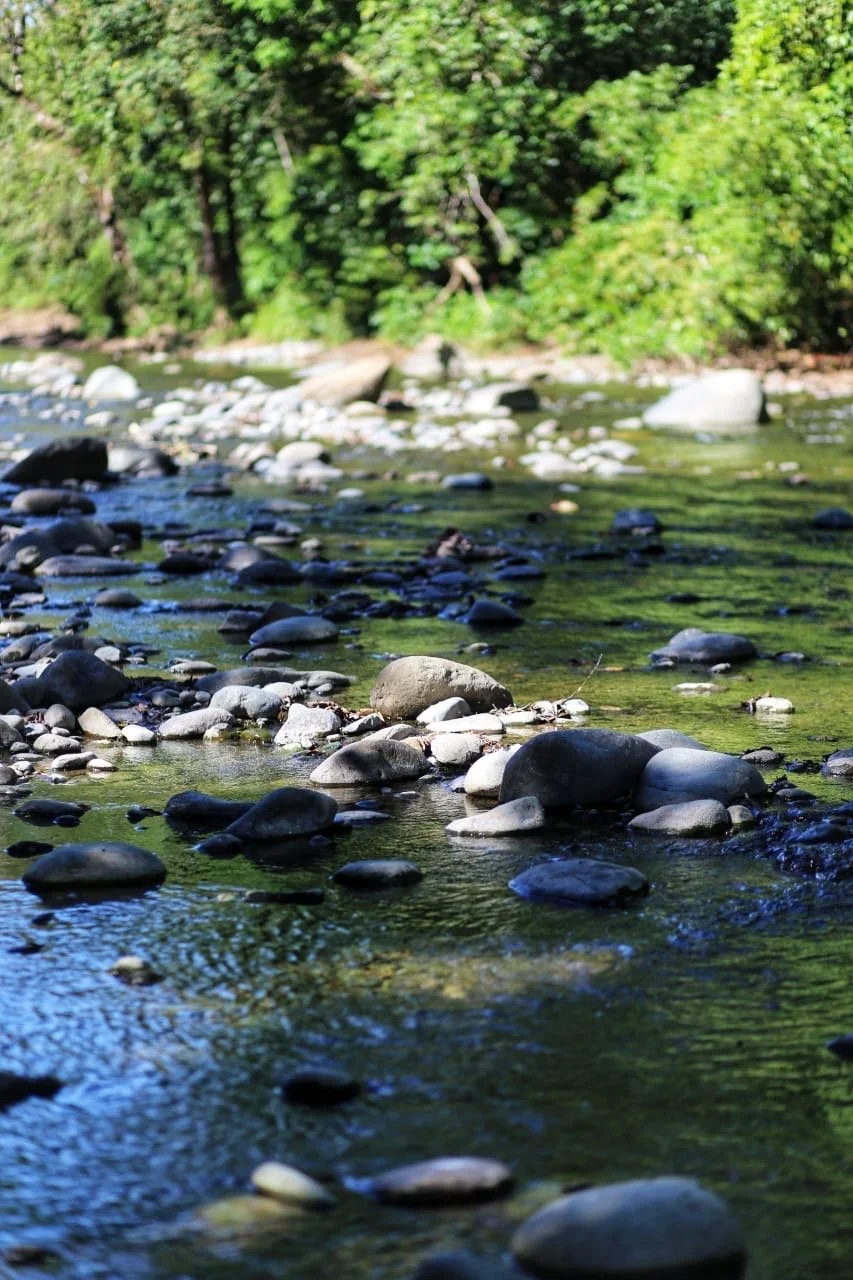
Standing beside the Chagres River today, it is difficult to imagine the incredible scenes that unfolded during the height of the Gold Rush. Canoes crowded with passengers from every corner of the world glided beneath the rainforest canopy. Steamships lined Caribbean harbours. Mule trains stretched along muddy jungle trails. Hotels overflowed with exhausted travellers. Merchants counted profits while prospectors dreamed of California. Every day thousands of lives briefly intersected in this narrow strip of tropical land before continuing toward the Pacific.
Perhaps the most remarkable aspect of Panama's Gold Rush story is that the country became wealthy not because of precious metals beneath its soil but because of its geography. Panama's greatest natural resource has never been gold, silver, oil, or diamonds. It has always been its unique position between two oceans and two continents. Long before the Panama Canal transformed world commerce, the Gold Rush revealed that extraordinary advantage to the international community.
The legacy of those incredible years remains visible everywhere. The Panama Railroad demonstrated the value of crossing the Isthmus. The transportation networks developed during the Gold Rush encouraged future investment. International attention focused increasingly upon Panama's strategic importance. Engineers, politicians, and businessmen began imagining even greater possibilities.
Eventually those dreams produced the Panama Canal, one of the greatest engineering achievements in history.
Every container ship, cruise liner, naval vessel, and cargo carrier passing through the canal today follows a route whose importance was dramatically reinforced during the Gold Rush. The prospectors may have been chasing California's gold, but in doing so they helped uncover something even more valuable. They revealed that Panama itself was one of the world's greatest treasures, a nation whose location would shape global trade for generations to come. The Gold Rush lasted only a few remarkable years, but it permanently transformed Panama from a quiet tropical province into one of the most important crossroads on Earth, a position it proudly continues to hold today.