
Among Panama's remarkable collection of wildlife, few animals inspire as much fascination as its wild cats. Most visitors dream of catching a glimpse of the mighty jaguar or perhaps the sleek puma, yet hidden deep within the country's forests lives a feline so secretive that even experienced researchers can spend years studying the rainforest without ever seeing one in the wild. This mysterious predator is the oncilla, one of the smallest and rarest wild cats in the Americas and one of Panama's most captivating mammals.
The oncilla (Leopardus tigrinus) is often overshadowed by its larger feline relatives, but size has little to do with how extraordinary this animal truly is. Barely larger than a domestic house cat, the oncilla is a fearless hunter, a remarkable climber, and an expert at surviving in some of the most challenging environments found in Central America. It is a creature of silence, patience, and precision, perfectly adapted for life in Panama's dense forests where every branch, vine, and shadow offers either opportunity or danger.
For wildlife enthusiasts, photographers, and biologists, spotting an oncilla ranks among the greatest wildlife achievements in Panama. Many lifelong naturalists have never seen one outside a camera trap photograph, a testament to just how elusive this beautiful little predator really is.
A Tiny Cat with the Appearance of a Miniature Jaguar
At first glance, the oncilla looks remarkably like a miniature jaguar or ocelot.
Its coat is covered in beautiful golden yellow fur decorated with dark rosettes and spots that provide exceptional camouflage among dappled sunlight, fallen leaves, moss covered branches, and tangled undergrowth. A creamy white chest contrasts sharply with the richly patterned back, while its long tail helps maintain perfect balance when climbing through trees.
Adult oncillas usually weigh between 1.5 and 3 kilograms, making them one of the smallest wild cats in the Western Hemisphere. Despite their tiny size, they possess long legs, powerful muscles, exceptionally sharp claws, and keen senses that allow them to compete successfully in Panama's complex rainforest ecosystems.
Their large eyes are particularly striking. Adapted for hunting in dim light, they gather every available ray of sunlight during dawn and dusk, while also providing excellent night vision after darkness falls.
A Master of Camouflage
The greatest strength of the oncilla is not speed or size.
It is invisibility.
Its spotted coat blends so perfectly into the rainforest that even when standing only a few metres away, it can become almost impossible to detect. Sunlight filtering through the canopy creates constantly shifting patterns of light and shadow that match the cat's markings almost perfectly.
Unlike larger predators that sometimes rely upon power to overpower prey, the oncilla depends upon remaining unseen.
It moves quietly through dense vegetation, placing each foot carefully before taking another step. Every movement is calculated. Every pause is deliberate.
Most animals never realize an oncilla is nearby until it is too late.
Home in Panama's Forests
Panama provides excellent habitat for oncillas thanks to its incredible diversity of ecosystems.
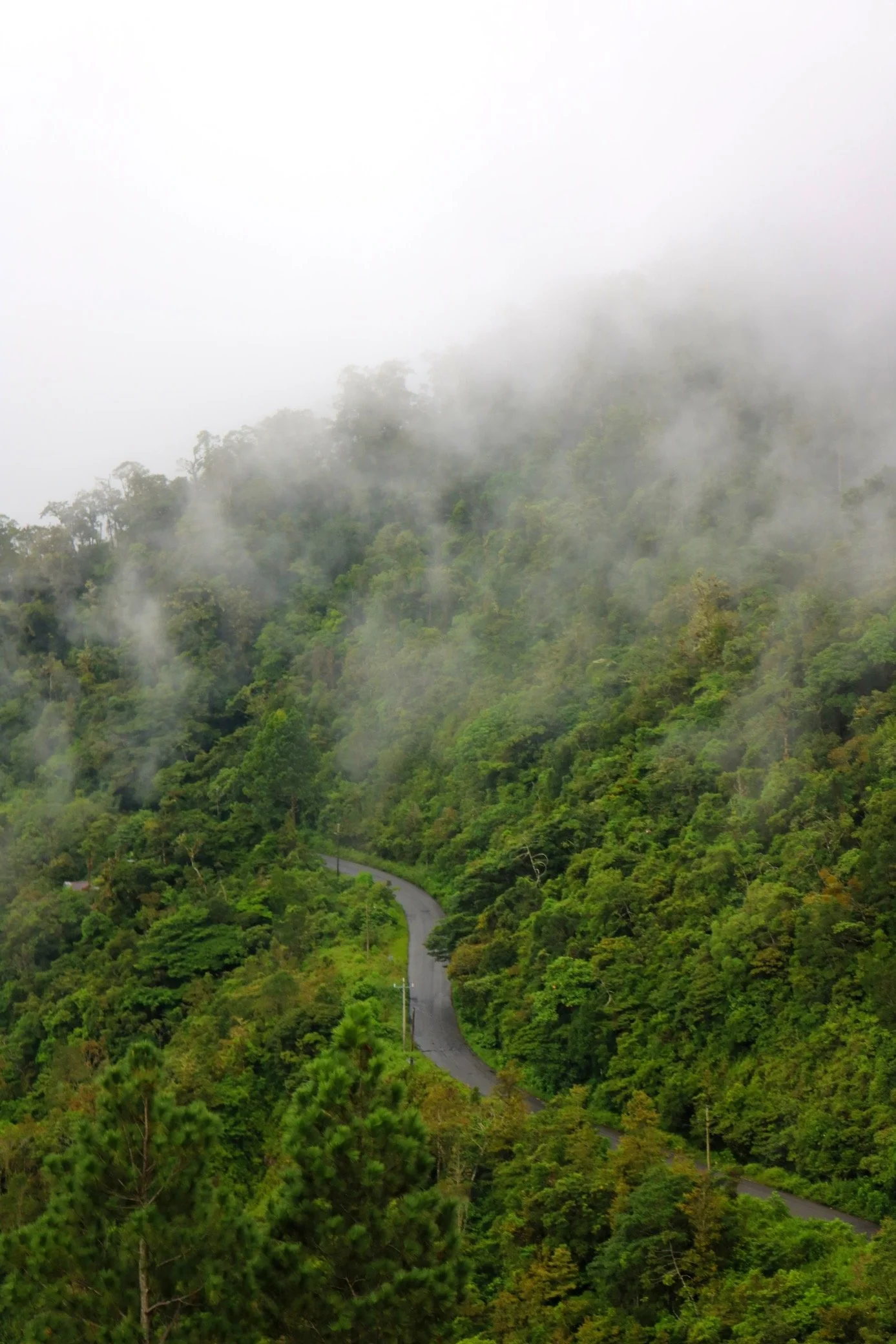
The species is particularly associated with humid mountain forests and cloud forests, where cool temperatures, dense vegetation, and abundant prey create ideal conditions. Moss covered trees, orchids, bromeliads, and thick undergrowth provide endless hiding places while supporting rich populations of rodents, birds, reptiles, and amphibians.
Some populations also inhabit lower elevation rainforests where mature forest remains intact.
Because oncillas require healthy forest ecosystems with abundant cover, they are considered indicators of good habitat quality. Finding evidence of oncillas usually means the surrounding ecosystem remains relatively undisturbed.
A Hunter of Remarkable Skill
Although small, the oncilla is an exceptionally capable predator.
Its diet includes rodents, mice, rats, squirrels, birds, lizards, frogs, insects, and occasionally small snakes. It hunts largely alone, relying on stealth rather than long chases.
The hunt often begins with complete stillness.
Hidden among branches or concealed within thick vegetation, the oncilla patiently waits for the slightest movement. Once prey comes within range, the cat launches with astonishing speed and accuracy.
Powerful hind legs allow explosive bursts of acceleration, while razor sharp claws grip struggling prey almost instantly.
The hunt is usually over within seconds.
Excellent Climbers
Unlike some larger cats that spend much of their time on the ground, oncillas are extremely comfortable in trees.
They climb effortlessly along narrow branches, leap confidently between trunks, and occasionally hunt birds or tree dwelling rodents high above the forest floor.
Their long tails act as balancing poles while flexible bodies allow graceful movement through even the most tangled vegetation.
This ability to hunt both on the ground and in the canopy gives oncillas access to a remarkable variety of prey.
Mostly Active at Night
The oncilla is primarily nocturnal, although it may also be active during dawn and dusk.
After sunset, Panama's forests transform completely.
Frogs begin calling.
Insects fill the air with sound.
Owls silently patrol the canopy.
Kinkajous climb fruiting trees.
And somewhere beneath the leaves, a tiny spotted cat begins its nightly patrol.
Its large eyes, sensitive hearing, and acute sense of smell make it perfectly suited to hunting in near darkness.
Living Alone
Oncillas are solitary by nature.
Each adult maintains its own territory, marking boundaries with scent and avoiding unnecessary encounters with other cats.
Males generally occupy larger territories than females, overlapping the home ranges of several potential mates.
After a short pregnancy, females usually give birth to one or two kittens hidden inside hollow logs, dense vegetation, or rocky crevices.
The kittens remain completely dependent upon their mother for several months while learning the complex hunting skills necessary for survival.
Because females produce relatively few young, populations recover slowly if numbers decline.
Why Are They So Rarely Seen?
The oncilla has earned a reputation as one of the most elusive mammals in Central America.
Several factors contribute to this remarkable secrecy.
It is naturally uncommon.
It hunts mostly at night.
It avoids people whenever possible.
Its camouflage is nearly perfect.
It inhabits dense forests where visibility is often limited to only a few metres.
Many confirmed records now come from motion activated camera traps placed deep within protected forests. These silent cameras have revolutionized scientists' understanding of the species, revealing that oncillas still inhabit areas where they had long been suspected but rarely observed.
For many wildlife researchers, receiving an oncilla photograph from a camera trap remains one of the most exciting moments of an entire field season.
A Relative of Other Beautiful Wild Cats
The oncilla belongs to the fascinating Leopardus group of spotted cats, which also includes the ocelot, margay, Geoffroy's cat, and pampas cat.
Although these species share similar markings, each occupies a slightly different ecological niche.
The larger ocelot often dominates lower elevation forests.
The margay specializes in life almost entirely within the trees.
The oncilla generally favours cooler mountain forests where competition from larger predators may be reduced.
Together these remarkable cats demonstrate how evolution allows closely related species to coexist by specializing in different habitats and prey.
Threats to Survival
Despite its remarkable adaptability, the oncilla faces significant challenges.
Habitat loss remains the greatest threat.
As forests are cleared for agriculture, roads, or development, populations become increasingly isolated. Small fragments of forest may not contain enough prey or territory to support healthy breeding populations.
Road mortality also affects some individuals, particularly where highways pass through suitable habitat.
Climate change may pose additional challenges for mountain populations by altering the cool cloud forest environments upon which many oncillas depend.
Historically, the species was also hunted for its beautifully patterned fur, although international protection has greatly reduced this threat.
Panama's Protected Forests Offer Hope
Fortunately, Panama possesses one of Central America's strongest protected area networks.
National parks, cloud forest reserves, Indigenous territories, and biological corridors preserve vast landscapes where oncillas continue hunting largely undisturbed.
Protected areas such as Volcán Barú National Park, La Amistad International Park, Fortuna Forest Reserve, and other mountainous forests provide some of the country's best remaining habitat.
Scientists continue studying these forests using camera traps, DNA analysis, and satellite technology to better understand the ecology of this mysterious cat.
A Dream Animal for Wildlife Lovers
Few animals generate as much excitement among wildlife enthusiasts as the oncilla.
Birdwatchers secretly hope one might cross a forest trail at dawn.
Nature photographers dream of capturing a clear image after days or even weeks of patient searching.
Biologists celebrate every new camera trap photograph because each one helps reveal another piece of the oncilla's hidden life.
Even hearing that an oncilla has recently been photographed in a particular forest is often enough to attract naturalists from around the world.
One of Panama's Greatest Hidden Treasures
Panama is famous for its spectacular biodiversity. Jaguars patrol remote rainforests, pumas roam mountain valleys, harpy eagles soar above towering trees, sloths sleep peacefully in the canopy, and poison dart frogs bring flashes of brilliant colour to the forest floor. Yet among this incredible collection of wildlife, the oncilla remains one of the country's best kept secrets.
Its survival depends upon the continued protection of Panama's forests, where mature trees, healthy prey populations, and uninterrupted habitats allow this remarkable little hunter to thrive. Every oncilla silently moving through the cloud forests represents a healthy ecosystem and a reminder that some of nature's most extraordinary creatures are also its most difficult to find.
To glimpse an oncilla in the wild is to witness one of the rarest wildlife experiences that Panama can offer. It is a fleeting encounter with a predator that has perfected the art of remaining unseen, a tiny spotted cat that has quietly mastered the forests of Central America for thousands of years. While many visitors come to Panama hoping to see its most famous animals, the oncilla reminds us that the country's greatest wonders are often hidden in plain sight, waiting patiently in the shadows of the rainforest for those fortunate enough to discover them.