
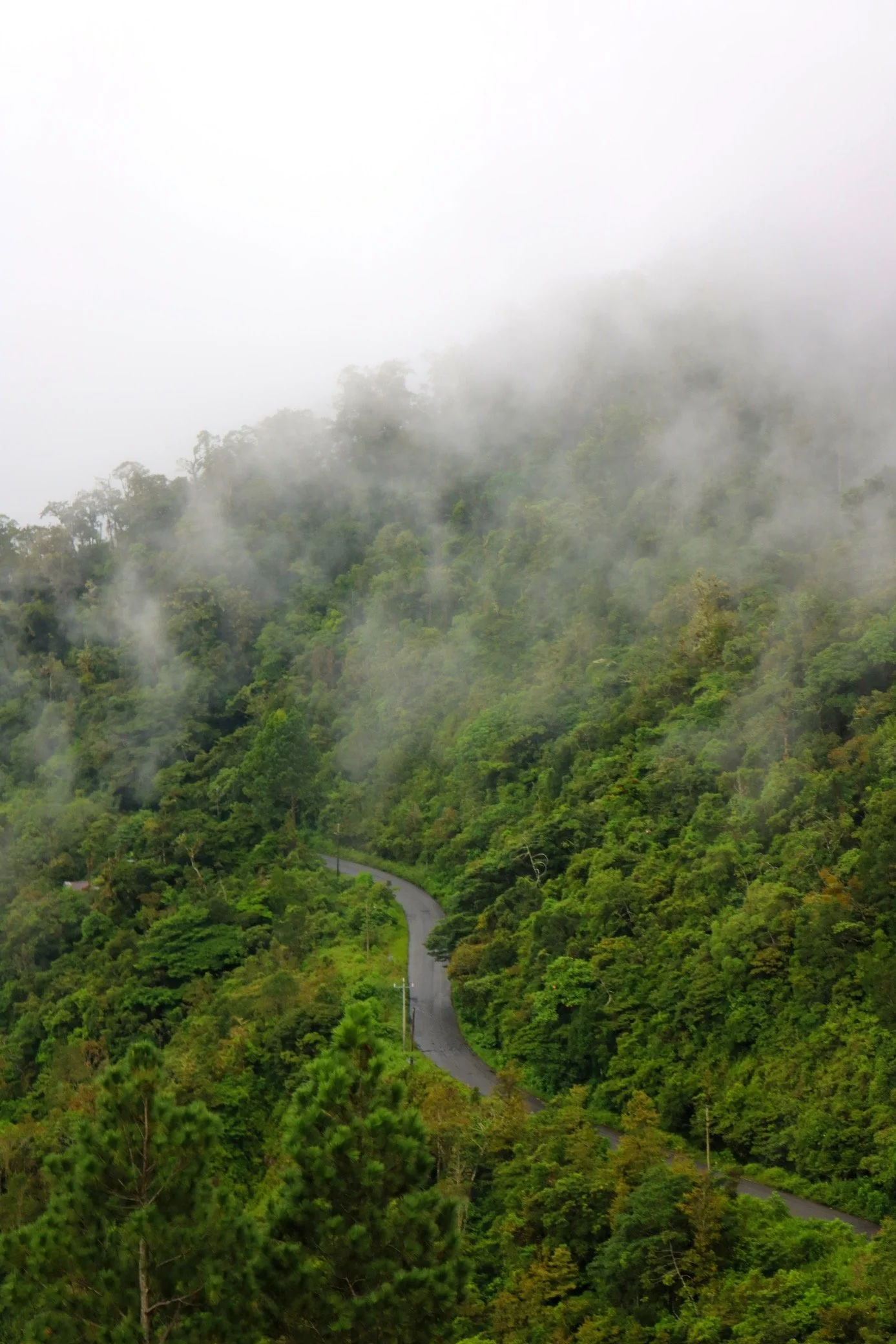
One of the most enchanting experiences in Panama is waking up in the mountains and finding the entire landscape transformed. Trees disappear into a white veil, trails become covered in tiny droplets of water, spider webs sparkle like jewels, moss glows bright green, and the air feels cool, fresh, and mysterious. Many visitors describe this as “fog,” but in Panama’s highlands, especially places like Boquete, Volcán, Cerro Punta, and the cloud forests of western Panama, several different weather phenomena create these magical conditions. Mist, fog, and bajareque may look similar at first glance, but they are actually different expressions of water moving through the atmosphere.
Understanding the difference between them helps explain why Panama’s cloud forests are among the most biologically rich environments on Earth. These forests survive not only because of traditional rainfall but because they constantly capture moisture floating through the air. The trees, mosses, orchids, bromeliads, and countless other plants have evolved to take advantage of these tiny droplets, creating one of the most spectacular ecosystems on the planet.
What Is Mist?
Mist is the lightest and most delicate of these weather phenomena. It consists of extremely small water droplets suspended in the air, but unlike a heavy fog, visibility usually remains fairly good. You may still clearly see mountains, trees, and buildings, but everything appears softer, almost as if the landscape has been covered with a thin filter.
In Panama, mist is common in the early mornings and evenings, especially in elevated areas. A traveler hiking through a cloud forest may notice tiny droplets floating through the air and collecting on clothing, leaves, and camera equipment. It may not feel like rain, yet after walking for an hour, your jacket and hair may become noticeably damp.
Mist forms when warm, humid air cools enough for water vapor to condense into tiny droplets. Panama’s mountains create perfect conditions for this. Moist air rises from the Pacific Ocean and Caribbean Sea, and as it reaches higher elevations, temperatures drop. The moisture begins transforming from invisible water vapor into visible droplets.
The experience of walking through mist in Panama is unforgettable because it changes the entire atmosphere. Sounds become softer, colors become deeper, and the forest feels alive. Birds may appear suddenly from the white background, while streams and waterfalls seem to emerge from nowhere.
What Is Fog?
Fog is essentially a cloud that forms at ground level. Scientifically, fog and clouds are made of the same thing: tiny water droplets suspended in the atmosphere. The difference is simply where they occur. A cloud floating above a mountain is a cloud, while that same cloud touching the ground becomes fog.
Fog is much thicker than mist. Visibility can drop dramatically, sometimes to only a few dozen meters. In Panama’s mountains, fog can completely transform the landscape. Roads that are normally surrounded by beautiful views may suddenly become tunnels through white clouds. Forest trails can feel like they are entering another world.
Cloud forests depend heavily on this phenomenon. The name “cloud forest” comes from the fact that these forests regularly exist inside clouds or fog. Unlike lowland tropical rainforests, where most water arrives through rainfall, cloud forests receive enormous amounts of moisture directly from the air.
Plants in these forests have adapted to capture this moisture. Mosses spread across tree branches like green carpets. Bromeliads collect droplets in their leaves. Orchids cling to trunks and absorb humidity directly from the atmosphere. Some trees are almost permanently covered in plants because the environment provides such a constant supply of water.
In Panama, some of the best examples of cloud forest conditions occur in the highlands of Chiriquí Province. Areas around Volcán Barú, Boquete, Cerro Punta, and other mountain regions regularly experience fog because of their elevation and exposure to humid air currents.
What Is Bajareque?
Bajareque is one of the most fascinating and uniquely Panamanian weather experiences. The word is commonly used in Panama’s mountain regions to describe a fine, misty drizzle carried by wind, especially in high elevations. It is not exactly heavy rain, and it is not simply fog. It is a combination of tiny droplets being pushed through the air, often when clouds move across mountain slopes.
Imagine standing on a mountain ridge and suddenly feeling thousands of tiny drops hitting your face. The sky may not appear to be raining, yet everything around you slowly becomes wet. That is bajareque.
The phenomenon is especially common in cloud forests because mountains force humid air upward. As the air rises and cools, clouds form. When winds push those clouds across the landscape, tiny droplets are carried with them. These droplets may be too small to fall quickly like normal raindrops, creating a mysterious wet breeze.
For people living in Panama’s highlands, bajareque is part of daily life. It influences agriculture, architecture, clothing choices, and even local culture. Farmers understand that certain areas receive more bajareque and therefore have different growing conditions. Coffee plantations, especially those producing Panama’s famous high altitude coffee, benefit from the cool and humid mountain environment created by these conditions.
Why Panama’s Cloud Forests Love These Conditions
The combination of mist, fog, and bajareque creates a unique environment where life explodes. A cloud forest may receive less traditional rainfall than a lowland rainforest, yet it can remain incredibly wet because it constantly captures moisture from passing clouds.
This process is called cloud interception. Trees act like enormous natural nets. Their leaves, branches, mosses, and epiphytes catch tiny droplets from the air. These droplets combine and eventually drip down to the forest floor, providing water to streams, plants, and animals.
This is one reason Panama’s mountain forests are so important for protecting water supplies. The forests around mountains such as Volcán Barú help regulate water flow, feeding rivers that eventually support communities, agriculture, and wildlife.
The Difference You Feel as a Traveler
For visitors, the difference between these conditions is something you experience with your senses.
Mist feels gentle. It is like walking through a soft invisible spray bottle. You notice moisture on your skin, but the landscape remains visible.
Fog feels dramatic. It changes your entire world. Trees disappear into white walls, distances become impossible to judge, and the forest feels mysterious and ancient.
Bajareque feels alive. It is wind carrying moisture. You can feel droplets moving through the air, sometimes sideways, sometimes gently brushing across your face. It is one of those uniquely tropical mountain experiences that photographs struggle to capture.
Bajareque and Panama’s Famous Coffee
One of the reasons Panama produces exceptional coffee is its mountain climate. The famous coffee growing regions around Boquete and the highlands benefit from cool temperatures, volcanic soils, altitude, and constant moisture.
Bajareque plays an important role by maintaining humidity and reducing extreme temperature changes. Coffee plants do not like excessive heat, and the misty mountain environment allows cherries to develop slowly, creating complex flavors.
The same conditions that make the forests magical also create ideal agricultural environments. This connection between weather, forests, and farming is one of the most fascinating aspects of Panama’s highlands.
Wildlife in the Mist
Mist and fog also create incredible opportunities for wildlife encounters. Cloud forests are home to some of Panama’s most spectacular animals, including hummingbirds, quetzals, frogs, salamanders, orchids, insects, and countless bird species.
Early mornings after a foggy night are often some of the best times for birdwatching. Birds become active as the forest begins waking up, and the moisture makes colors appear even more vibrant.
The famous Resplendent Quetzal, although rare and localized, is associated with these high elevation forests. Other birds, such as hummingbirds and tanagers, thrive in this constantly humid environment.
For hikers, the combination of fog, moss covered trees, and wildlife sounds creates the feeling of walking through a prehistoric world.
Why Roads and Hiking Trails Can Be Challenging
The beauty of Panama’s mountain weather also comes with challenges. Fog can reduce visibility dramatically, especially on mountain roads. Bajareque can make surfaces slippery, and mist can keep trails wet for hours or even days.
Drivers unfamiliar with these conditions may underestimate how quickly weather changes in the mountains. A sunny morning in the lowlands can become a cool, cloudy afternoon at higher elevations.
Travelers hiking in cloud forests should bring appropriate clothing, including something waterproof, because even without heavy rain, bajareque and fog can gradually soak clothing.
A Weather Experience Unique to Panama
For many visitors, the first encounter with mist, fog, or bajareque becomes one of their favorite memories of Panama. It is a completely different world from the tropical beaches and humid lowlands that most people imagine when they think of the country.
Panama is often described as a land of sunshine and tropical heat, but its mountains tell another story. Here, clouds walk through forests, trees collect water from the air, moss covers ancient branches, and tiny droplets sustain some of the richest ecosystems on Earth.
Mist, fog, and bajareque are not simply weather events. They are the heartbeat of Panama’s cloud forests. They create the conditions that allow orchids to bloom, hummingbirds to thrive, rivers to flow, and ancient forests to survive. Standing in a mountain forest while a cloud drifts through the trees is a reminder that sometimes the most beautiful weather is not the kind that clears the sky, but the kind that transforms the entire world into something mysterious and unforgettable.