
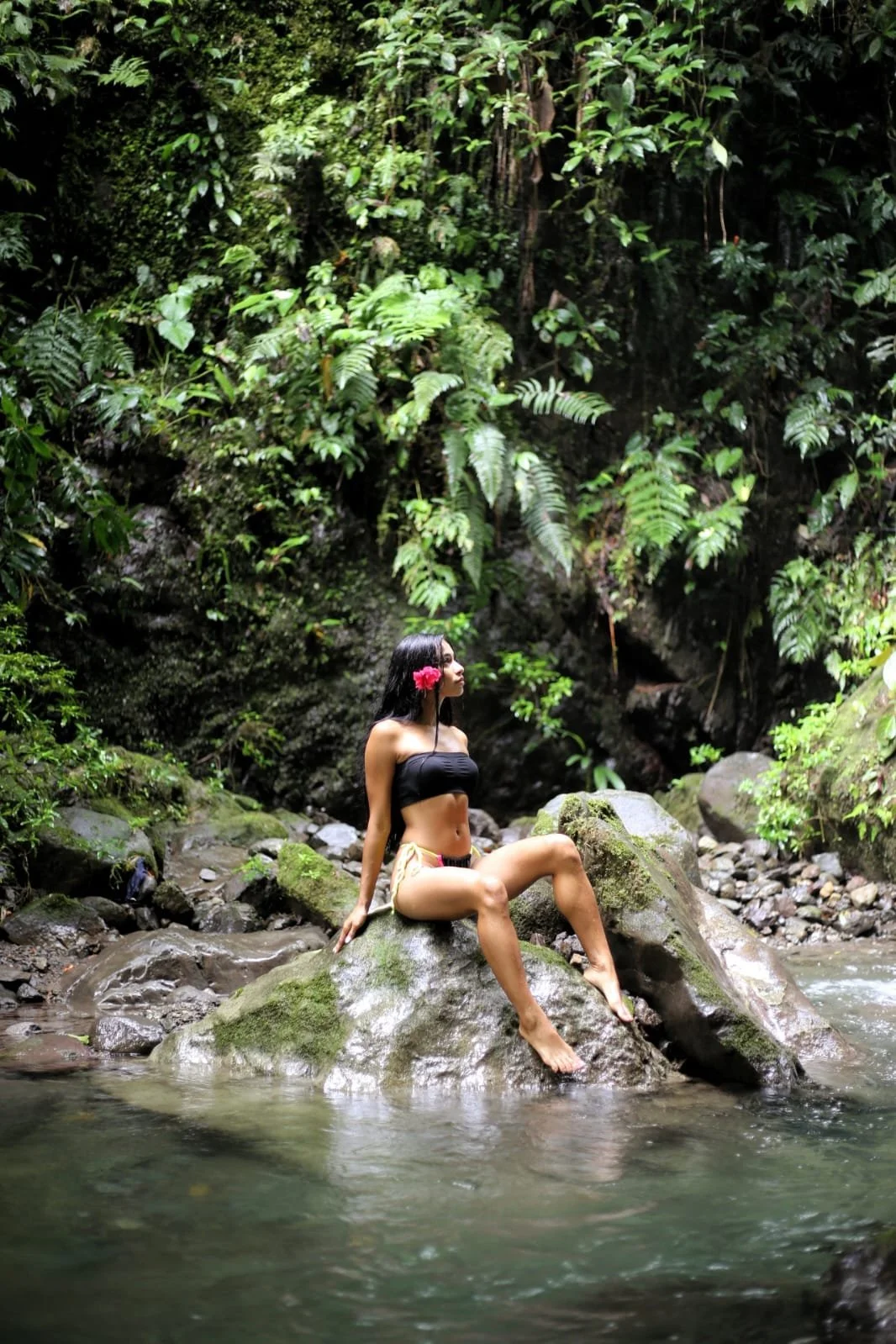
Central America is one of the great backpacking regions of the world. Stretching between North and South America, this narrow bridge of land packs an astonishing amount of variety into a relatively small area. Within a single journey, a backpacker can move from volcanic highlands to Caribbean islands, from misty cloud forests to tropical beaches, from ancient ruins to chaotic markets, from surf towns to tiny mountain villages where the pace of life seems completely different. It is a region where travel can still feel spontaneous. You can arrive somewhere without a perfectly organized itinerary, meet other travelers over breakfast, hear about a place you have never heard of, change your plans, and suddenly find yourself heading down a dirt road toward a waterfall or boarding a small boat for an island you did not know existed two days earlier.
Countries such as Guatemala, Belize, Honduras, El Salvador, Nicaragua and Costa Rica often receive much of the attention, and they absolutely deserve it. Guatemala has extraordinary volcanoes, Mayan culture and Lake Atitlán. Belize has an unmistakable Caribbean atmosphere and spectacular marine environments. Honduras has the Bay Islands and some of the most famous diving in the region. El Salvador has developed an exciting surf culture and a growing backpacker scene. Nicaragua combines volcanoes, colonial cities, beaches and extraordinary landscapes. Costa Rica is famous worldwide for its wildlife, national parks and adventure tourism. But somewhere along the backpacking route, Panama can sometimes become an afterthought. Travelers fly into Panama City, see the Canal, perhaps visit Bocas del Toro, and then continue south toward Colombia. That is a mistake. Panama is not simply the place where Central America ends. It is one of the most geographically diverse and adventurous countries in the entire region.
Part of what makes Central America so addictive is the scale of the adventure. The distances between destinations are manageable, yet the environments can change dramatically. One day you might be swimming in warm Caribbean water, and a few hours later you can be walking through a cool mountain forest. A night bus, local bus, shuttle, ferry or small boat can transport you into an entirely different world. There is also something wonderfully imperfect about traveling through the region. Roads are not always predictable. Buses can be crowded. Boats leave when they leave. A supposedly short journey can occasionally become an all day adventure. But those inconveniences often become part of the story. Backpacking is not simply about collecting destinations. It is about the strange sequence of events that happens between them.
Central America also has an extraordinary backpacker culture. Hostels become temporary communities where people from completely different countries end up sharing the same table, comparing routes and swapping recommendations. Someone who arrived yesterday might convince you to climb a volcano. Someone else might tell you about a hidden beach. Another traveler might have just come from Panama and tell you about a jungle hostel you have never heard of. The best backpacking destinations are not necessarily the ones with the longest list of attractions. They are the places where something happens. You meet people. You discover something unexpected. You wake up somewhere beautiful. You do something that was not in your original plan. And Panama has an enormous amount of that.
Panama City is often the first impression travelers get of the country, and it can be misleading. The skyline is enormous. Modern towers rise beside tropical forest. Roads and highways cut through a metropolis that sits directly beside one of the world's most famous engineering projects. The Panama Canal is obviously worth seeing, but the city is only the beginning. One of the country's greatest strengths is that wilderness begins surprisingly close to the capital. You do not have to travel for days before reaching rainforest. Around Panama City are enormous protected areas where monkeys, sloths, toucans, crocodilians and countless other species inhabit forests that exist practically alongside one of the busiest metropolitan areas in Central America.
Then the country starts opening up. Travel west and the Caribbean coast becomes increasingly wild. Continue toward the mountains and the climate changes. Go farther toward Chiriquí and you encounter volcanic landscapes, cloud forests and mountain communities. Head toward the Pacific and you find beaches, islands and remote coastal regions. Travel toward Darién and the landscape becomes increasingly isolated and genuinely wild. The remarkable thing is that all of this exists inside one relatively compact country.
Panama has an unusual geographical advantage. It is positioned between two oceans and contains mountains, tropical lowlands, rainforests, cloud forests, volcanic terrain, mangroves, islands and some of the most biologically diverse ecosystems on Earth. For backpackers, that means you do not have to choose between a jungle trip and a beach trip. You can do both. You can wake up in the Caribbean, spend an afternoon traveling through the mountains and end the day somewhere completely different. You can surf on the Pacific, snorkel in the Caribbean, hike through cloud forest, explore a rainforest and spend the evening in a backpacker hostel surrounded by people from around the world. This is one of the reasons Panama works so well as a backpacking destination. It does not force you into one particular type of travel. You can make the trip about beaches, wildlife, hiking, diving, adventure or simply combine everything.
Few destinations in Panama are more naturally suited to backpackers than Bocas del Toro. The islands have the classic ingredients of a Caribbean backpacking adventure: tropical water, beaches, jungle, boats, hostels, restaurants, nightlife and travelers constantly arriving from somewhere else. Bocas Town itself has an unmistakable backpacker energy. People walk around with surfboards, backpacks and beach towels. Boats move constantly between islands. Travelers compare snorkeling trips, beaches and places to stay. Plans change easily because the next adventure may be only a short boat ride away. But the real attraction is what exists outside town. There are quiet beaches, jungle trails, coral reefs, mangroves and tiny communities scattered throughout the archipelago. One of the pleasures of Bocas is simply getting on a boat and seeing where the day takes you. It is easy to spend several days there and then realize you have not seen nearly enough.
Then there is the complete opposite of the Caribbean: the mountains. Boquete sits in the highlands of Chiriquí, surrounded by green mountains, coffee plantations, rivers and cloud forests. The climate is noticeably cooler than the lowlands, which makes it an excellent change of pace for travelers coming from tropical coastal destinations. The mountains around Boquete provide opportunities for hiking, waterfalls, birdwatching, coffee tours and simply escaping the heat. Nearby Volcán and the slopes of Volcán Barú take the mountain experience even further. The region contains some of Panama's most spectacular high elevation environments and offers opportunities to experience landscapes that feel completely different from the beaches and tropical islands. For backpackers, this variety is incredibly valuable. You can spend several days sweating on a Caribbean beach and then suddenly find yourself wearing a jacket in a cool mountain town. That contrast is part of the magic.
One of Panama's most underrated attractions is its cloud forest. Cloud forests are places where moisture constantly moves through the vegetation, producing an almost dreamlike environment. Trees are covered with mosses, lichens, orchids and epiphytes. Mist moves through the forest. Water drips from leaves. Birds appear suddenly and disappear just as quickly. These ecosystems are exceptionally important for biodiversity, and they are fantastic places to hike. For a backpacker, walking through a cloud forest can feel completely different from hiking through the dry tropical landscapes that appear in other parts of Central America. The vegetation is dense, the air is cooler and the atmosphere can feel almost prehistoric. Panama's western highlands are particularly spectacular for this.
This is also where Panama's extraordinary birdlife becomes apparent. The country is famous among birdwatchers, and even casual travelers can encounter species they have never seen before. The famous resplendent quetzal is one of the great prizes of the Central American cloud forests, but it is only one small part of the region's incredible avian diversity. You can walk through the forest listening to birds calling from the canopy without even knowing what you are hearing. For travelers who slow down enough to pay attention, the forest becomes an enormous living ecosystem rather than simply a hiking trail.
Deep in the mountains of Chiriquí, places such as Lost and Found Hostel offer a very different kind of backpacking experience from a conventional beach hostel or city accommodation. Instead of simply being a place to sleep, the environment itself becomes part of the adventure. You are surrounded by jungle and mountain landscapes, with trails, wildlife, viewpoints and waterfalls forming part of the experience. This kind of destination represents something important about backpacking in Panama. You do not always need a famous attraction. Sometimes the attraction is simply being somewhere unusual. A hostel hidden in the forest can become a destination in itself. Travelers arrive expecting to stay one night and sometimes end up staying longer because the experience is completely different from what they expected. That is one of the great traditions of backpacking. You follow a map until the map stops being interesting. Then you follow a recommendation from another traveler. Then you discover somewhere you would never have found through a conventional vacation itinerary.
Panama is also one of those countries where you should constantly look up, down and into the trees. Sloths inhabit the forests. Monkeys move through the canopy. Toucans cross overhead. Hummingbirds hover around flowers. Agoutis move through the undergrowth. Armadillos, porcupines, peccaries, kinkajous and other mammals inhabit different parts of the country. And then there are the animals you are much less likely to see. Wild cats inhabit Panama's forests, including jaguars and pumas, although encounters are rare. Ocelots and margays are elusive nocturnal predators. Bats dominate the night skies. Frogs call from streams and ponds. Insects emerge after dark in astonishing diversity. A night walk can transform a familiar forest into a completely different ecosystem. During the day, you might notice birds and monkeys. At night, the forest becomes a world of sounds, movement and tiny flashes of life. For travelers interested in wildlife, this is one of Panama's strongest arguments.
The Caribbean gets enormous attention, but Panama's Pacific coast deserves far more. Santa Catalina became famous among surfers because of its powerful waves and proximity to Coiba. The area has a remote, adventurous atmosphere that feels worlds away from Panama City. Then there are the islands of the Gulf of Chiriquí, where tropical forests meet clear Pacific waters. Islands such as Boca Brava provide another version of Panama's tropical experience. The beaches, jungle and wildlife create a setting where travelers can slow down and spend a few days disconnected from the usual tourist circuit. The Pacific side is especially appealing to travelers who want something quieter. There are fewer obvious backpacker crowds, more space and a stronger feeling of being away from the established tourist route. Sometimes that is exactly what you want.
Panama's islands are one of its greatest advantages. There are Caribbean islands and Pacific islands. There are tiny islands covered in forest. There are islands with communities. There are islands where the main attraction is simply the water surrounding them. The San Blas Islands are perhaps the country's most famous island destination, with spectacular Caribbean scenery and Guna communities maintaining their own traditions and culture. But Panama's island experiences extend far beyond San Blas. Bocas del Toro alone can occupy an entire section of a backpacking itinerary, while the Gulf of Chiriquí provides an entirely different Pacific island experience. The result is a country where island hopping does not have to mean doing the same thing repeatedly. The Caribbean and Pacific feel completely different.
It is also easy for young backpackers to think of the Panama Canal as something they visit because they are "supposed to." But once you understand what you are looking at, it becomes genuinely fascinating. The canal changed global shipping by creating a shortcut between the Atlantic and Pacific Oceans. Ships that once had to travel around the southern tip of South America could instead pass through Panama. But the canal is not simply an enormous ditch. It is a complex system involving locks, artificial lakes, massive engineering works and an extraordinary history. And perhaps most fascinating of all is the fact that the canal exists within a landscape that remains intensely tropical and biologically rich. That combination of enormous human engineering and rainforest is uniquely Panamanian.
There is also something psychologically exciting about traveling through Panama. You are approaching the end of the road. Central America narrows dramatically before becoming the Darién region and eventually connecting with South America. For backpackers traveling overland, Panama can feel like a final chapter before an entirely different continent. And then comes Colombia. The transition is profound. You move from the Central American backpacking world toward South America, with its enormous distances, different cultures, different landscapes and completely different travel rhythms. That makes Panama more than another stop. It can be a bridge between two worlds.
This might actually be one of Panama's greatest advantages. Some destinations become victims of their own popularity. When a route becomes extremely established, everything begins to cater to the traveler. The same hostels appear in every guide. The same tours are offered everywhere. Travelers follow increasingly similar itineraries. Panama still has plenty of room for discovery. You can follow the established route through Panama City, Bocas del Toro and Boquete, but you can also go beyond it. You can explore the mountains of Chiriquí. You can travel through smaller coastal communities. You can visit islands that receive relatively few international travelers. You can hike through cloud forests. You can explore the Pacific coast. You can discover places through recommendations from other backpackers rather than through an algorithm. That sense of discovery is precious.
One of the biggest mistakes travelers make is treating Panama as a transit country. Three days in Panama City, maybe a couple of nights in Bocas, then Colombia. But Panama deserves more time. The country rewards slow travel. Spend time in the mountains. Spend time on the Caribbean. Spend time on the Pacific. Spend time in the jungle. Spend time in the city. The more you move through the country, the more you realize that Panama is not defined by one attraction. Its appeal is the combination.
If your idea of backpacking involves adventure, Panama should be near the top of the list. Hiking volcanoes, walking through cloud forests, exploring waterfalls, surfing Pacific waves, snorkeling Caribbean reefs, diving, island hopping, wildlife watching, river adventures, night walks, jungle exploration and mountain trekking are all part of the country's enormous adventure potential. Panama is particularly good for travelers who do not want their entire trip organized around scheduled tours. Sometimes the best adventure is simply following the road.
Backpacking is also about food, and Panamanian food is another reason to slow down. Rice, beans, plantains, yuca, corn, seafood, soups, tropical fruits and fresh juices appear throughout the country. Markets are especially interesting for backpackers because they provide an inexpensive way to experience local food. You can walk through a market and see enormous displays of tropical fruit, vegetables and ingredients that might be unfamiliar to visitors. Panama's international travel scene also means you can find everything from Caribbean food to vegetarian and vegan options in many tourist areas. Food becomes another way of experiencing the geography. The Caribbean has its own influences, the interior has another, the city has another and the indigenous regions bring their own traditions.
But backpacking is not ultimately about checking boxes. There is a temptation when traveling through Central America to create a checklist. One volcano. One waterfall. One beach. One jungle. One island. One colonial city. Then move on. But the best trips rarely work that way. You remember the ridiculous bus journey. The stranger who became a friend. The sunrise you were not planning to see. The hostel where everyone stayed up talking until sunrise. The unexpected waterfall. The tiny restaurant you discovered by accident. The road that took twice as long as expected. The night when you looked into the jungle and realized you were somewhere completely different from home.
Panama is particularly good at creating those moments because it has enough infrastructure to make travel relatively accessible while retaining enormous areas of wilderness. It gives backpackers the freedom to explore without requiring every moment to be planned in advance. You can have a rough itinerary without having a rigid one. You can know where you are going while still leaving room for the unexpected.
Guatemala might be the country of volcanoes, Mayan culture and dramatic highland landscapes. Belize is Caribbean, English speaking and famous for its marine environments. Honduras offers extraordinary diving and island adventures. El Salvador has developed a compelling surf and youthful travel culture. Nicaragua is a dream for volcanoes, colonial cities, lakes and beaches. Costa Rica is one of the world's great destinations for accessible wildlife and national parks. Panama's strength is different. Panama is the connector. It combines Caribbean and Pacific cultures, tropical lowlands and cool mountains, modern cities and remote wilderness, islands and mainland, rainforest and highlands. It is difficult to reduce the country to a single identity, and that is exactly why backpackers should visit.
Backpacking is not just about scenery either. Some of the best memories happen at hostels. You meet someone from Germany. Someone else is from Canada. Another person is traveling from Argentina. Someone has just arrived from Mexico. Someone else is heading toward Colombia. Suddenly everyone is comparing routes. "Where are you going next?" "You have to go there." "How long are you staying?" "I was only supposed to stay two nights." "Same." That is the backpacking experience. Panama's position on the Central American route means it naturally attracts travelers moving in both directions. Some are heading north through Costa Rica and Nicaragua. Others are heading south toward Colombia and South America. That creates an interesting mixture of travelers, and Panama becomes a meeting point.
And perhaps that is the strongest argument for putting Panama higher on the Central American backpacking map. It is not trying to be only one thing. It can be a beach destination, a jungle destination, a mountain destination, a wildlife destination, a surfing destination, a diving destination, a cultural destination and an adventure destination all within the same trip. You can spend a few days surrounded by Caribbean islands, travel through the mountains, hike through cloud forest, disappear into the Pacific coast and eventually find yourself standing at the edge of South America.
Panama should not be viewed simply as the final country before Colombia. It should not be viewed merely as the home of the Panama Canal. It should not be reduced to Panama City and Bocas del Toro, and it definitely should not be treated as somewhere you can cross in a couple of days.
Panama is a country of contrasts. Modern skyscrapers rise beside rainforest. Huge ships cross an artificial waterway while monkeys move through the surrounding jungle. Caribbean islands sit on one side of the country while powerful Pacific waves break on the other. Cloud forests occupy the mountains. Volcanoes dominate the western highlands. Remote islands disappear into tropical seas. Backpackers gather in hostels scattered throughout the country. And somewhere between all of those landscapes, you begin to realize what makes Panama special.
It is not necessarily the biggest attraction. It is the density of experiences.
You do not have to travel thousands of kilometers to encounter dramatically different environments. You do not need a huge budget to experience adventure. You do not need to spend your entire trip inside organized tours. You simply need time. Time to take the bus. Time to walk the trail. Time to talk to another traveler. Time to stay another night. Time to follow a recommendation. Time to get a little lost.
And that is ultimately what backpacking is supposed to be.
Central America is one of the world's great backpacking regions, but Panama is one of its most underrated chapters. It offers the beaches people expect, the jungles they dream about, the mountains they do not expect, the wildlife they came to see, the islands they did not know existed and the kind of unexpected encounters that turn a trip into a story.
So if your backpacking map currently has Guatemala, Belize, Honduras, El Salvador, Nicaragua and Costa Rica highlighted while Panama is sitting there as a little line between Costa Rica and Colombia, move the highlighter. Give Panama some space. Give it time. Get off the obvious route. Stay in the mountains. Find the jungle. Follow the coastline. Talk to other travelers. Take the road that looks interesting.
Because the traveler who rushes through Panama may remember the Canal.
The traveler who actually explores it may remember the adventure.