
Panama has a serious image problem. Not because it is boring. Quite the opposite. The problem is that Panama is almost suspiciously good at things and somehow still manages to sit there quietly while travelers argue about which Central American country is the "real" adventure.
Guatemala has volcanoes? Panama has volcanoes.
Costa Rica has rainforest? Panama has rainforest.
Belize has Caribbean islands? Panama has Caribbean islands.
Nicaragua has surf? Panama has surf.
Someone wants cloud forest? Panama has that too.
Someone wants tropical islands? Pick an ocean.
Someone wants wildlife? Start looking into the trees.
Someone wants a modern city? Hello, Panama City.
Someone wants to disappear into the jungle for a few days? Panama basically says, "How far off the road do you want to go?"
And somehow Panama still gets treated like the country you pass through on the way to somewhere else.
That might be the funniest thing about it.
Panama Is Basically Showing Off Without Admitting It
Panama is the geographical equivalent of someone who says, "Oh, I don't really do much," and then casually mentions they speak four languages, climbed a volcano last weekend and own a boat.
It has two coastlines.
It has tropical islands.
It has mountains.
It has cloud forests.
It has volcanoes.
It has enormous biodiversity.
It has indigenous cultures.
It has one of the world's most famous engineering projects.
It has some seriously wild jungle.
And it has a capital city full of skyscrapers sitting practically beside rainforest.
Most countries would build their entire tourism campaign around half of that.
Panama just shrugs.
The Two Ocean Problem
One of Panama's greatest tricks is that you can experience both the Caribbean and Pacific sides of the country without needing to cross an entire continent.
That sounds obvious until you actually think about it.
On one side you have Caribbean islands, turquoise water, reefs, tropical beaches and the unmistakable laid-back atmosphere of places like Bocas del Toro.
On the other side you have Pacific beaches, powerful surf, fishing communities, remote islands and a completely different feeling.
And between them?
Mountains.
Rainforest.
Cloud forest.
The Panama Canal.
Basically, Panama decided one coastline wasn't enough.
Then Someone Put a Rainforest Beside a Megacity
Panama City is another example of Panama being slightly ridiculous.
You can be standing among skyscrapers, traffic and shopping malls, and not particularly far away there are forests filled with monkeys, sloths, birds and all kinds of tropical wildlife.
That combination is strange.
You could spend the morning looking at enormous ships passing through the Panama Canal and the afternoon walking through rainforest.
Most cities don't really work like that.
Panama City does.
It is almost as if someone accidentally built a major international city in the middle of a nature documentary.
The Jungle Doesn't Care About Your Itinerary
This is where Panama becomes particularly good for backpackers.
The best experiences often happen when you stop trying to make the trip perfect.
You leave the city.
You take a bus.
You get dropped somewhere green.
You start walking.
You hear something moving in the trees.
You don't know what it is.
Now you're interested.
You keep walking.
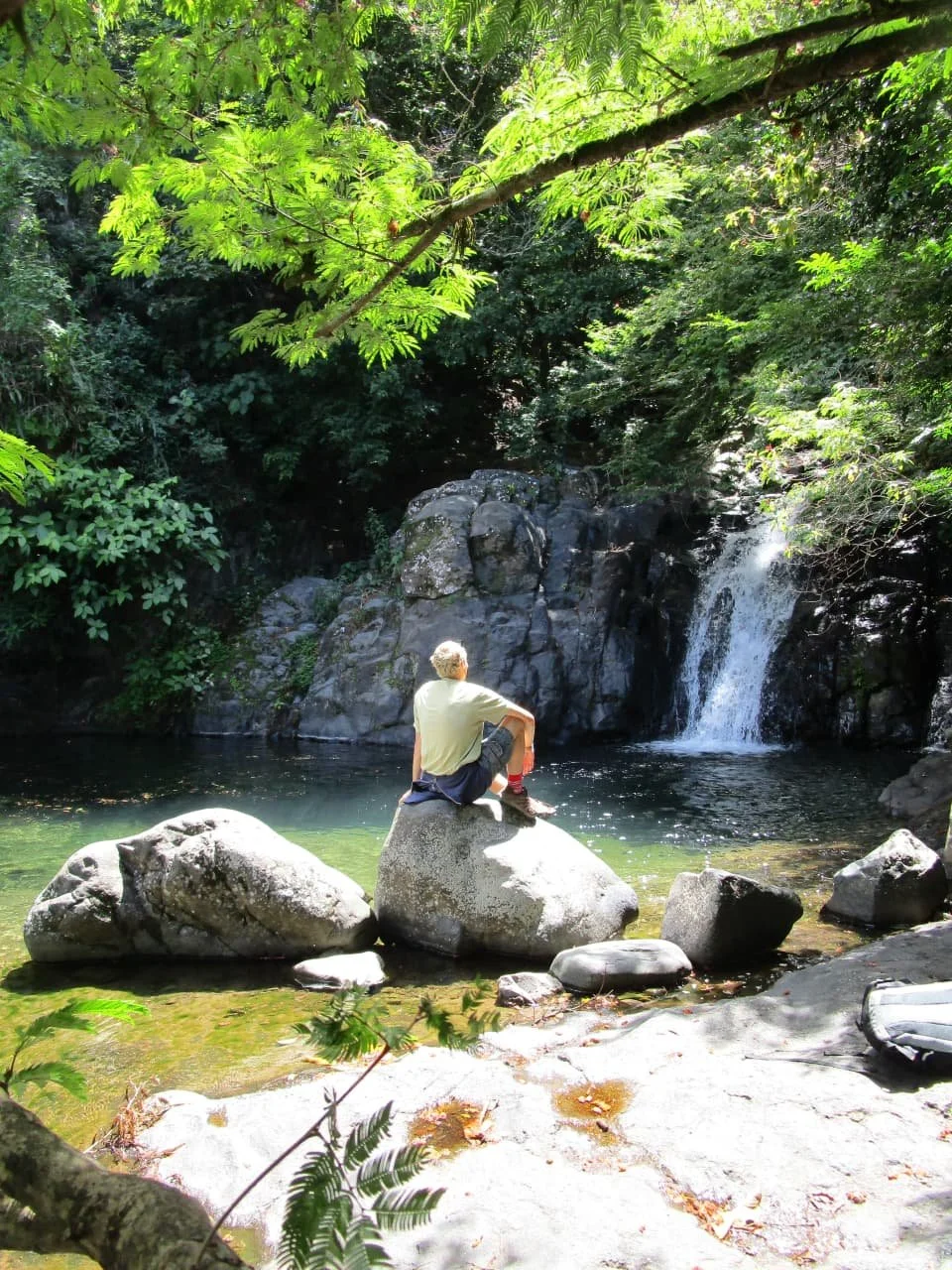
Eventually you find a waterfall, a viewpoint, a river, an old trail or some tiny place that wasn't the main attraction in your guidebook.
That is backpacking.
And Panama has plenty of room for it.
Bocas Del Toro Is Almost Cheating
Bocas del Toro looks like someone designed a Caribbean backpacking destination after being given an unlimited tropical-island budget.
Boats everywhere.
Jungle.
Beaches.
Warm water.
Hostels.
Restaurants.
Surfing.
Snorkeling.
Island hopping.
And enough travelers passing through that you can arrive knowing absolutely nobody and probably have a group to hang out with by the evening.
The danger isn't that Bocas is boring.
The danger is that you might forget to leave.
You tell yourself you'll stay three nights.
Then somebody mentions another island.
Then someone else recommends another beach.
Then there is a boat trip.
Then dinner.
Then suddenly you've been there for nine days and you're explaining to people back home that you are "still traveling."
Technically true.
Then Panama Pulls the Mountains Out
Just when you think Panama is all tropical beaches, the country changes personality.
Head into the highlands and suddenly the air is cooler.
The landscape becomes mountainous.
Clouds hang around the ridges.
Coffee plantations appear.
Waterfalls tumble through green valleys.
And places like Boquete and the surrounding highlands offer a completely different experience from the Caribbean coast.
This is one of Panama's greatest strengths.
You don't have to choose between tropical and mountainous.
You can have both.
Sometimes on the same trip.
Sometimes surprisingly quickly.
The Cloud Forest Is Panama's "Wait, This Is Still Panama?" Moment
Cloud forests are among the most magical ecosystems in Central America.
The vegetation is dense and covered in mosses, orchids and epiphytes. Mist moves through the trees. Streams run through the forest. Birds disappear into the canopy. Everything feels damp, green and alive.
And Panama has some spectacular examples.
For backpackers, this is where hiking becomes more than simply walking from one point to another.
You start noticing things.
A strange bird.
A frog beside the trail.
A hummingbird hovering impossibly close.
A huge tree disappearing into the mist.
Something moving through the leaves.
You realize the forest isn't scenery.
It's the main event.
Panama's Wildlife Has No Respect for Your Personal Space
Okay, maybe that's an exaggeration.
But Panama is an incredible wildlife destination.
Sloths hang around in the trees.
Monkeys move through the canopy.
Toucans fly overhead.
Hummingbirds appear like tiny flying machines.
Agoutis wander around the forest floor.
Armadillos, peccaries, porcupines and other mammals inhabit the country's forests.
And then there are the animals you probably won't see.
Jaguars.
Pumas.
Ocelots.
Margays.
They are there, but they are masters of avoiding people.
That is part of what makes wildlife watching exciting.
You aren't walking through a zoo.
You are entering an ecosystem where the animals have absolutely no interest in performing for you.
You might see a sloth immediately.
Or you might spend hours looking and see nothing.
Then suddenly something moves in the canopy.
And the entire group stops.
That's the moment you remember.
Panama's Nighttime Is a Completely Different Country
During the day, tropical forests can feel familiar after you've spent enough time around them.
At night?
Different story.
The forest becomes a giant sound system.
Frogs start calling.
Insects appear.
Bats fly overhead.
Nocturnal mammals become active.
Owls move through the darkness.
Things that spent the entire day hiding suddenly decide that it is time to get to work.
A night walk through Panama's forests can therefore feel like discovering a second ecosystem hiding underneath the first one.
The same trail you walked during the afternoon can feel completely unfamiliar after sunset.
And Then There Is the Canal
The Panama Canal sometimes gets treated like the obligatory tourist attraction.
Go see the Canal.
Take a photo.
Done.
But the more you think about it, the more absurdly impressive it becomes.
A massive artificial waterway crosses one of the narrowest points between two oceans.
Huge ships pass through enormous locks.
Water is moved.
Ships are raised and lowered.
And all around this enormous piece of human engineering is tropical forest.
You can literally watch global commerce moving through the middle of a rainforest.
That's pretty cool.
Panama Has a Weird Talent for Being Unexpected
Maybe this is the country's secret.
You think you know what Panama is.
Then it surprises you.
You think it's a canal country.
Then you find the mountains.
You think it's tropical.
Then you get cold in the highlands.
You think it's beaches.
Then you find cloud forest.
You think it's Panama City.
Then you're suddenly surrounded by jungle.
You think you've finished exploring.
Then somebody tells you about another island.
This is why Panama works so well for backpacking.
It keeps changing.
The Real Problem With Panama
The problem isn't that Panama doesn't have enough things to do.
The problem is that travelers often don't give it enough time.
They arrive in Panama City.
They see the Canal.
They go to Bocas.
Then they head toward Colombia.
And technically, yes, they visited Panama.
But they didn't really travel through Panama.
There is a difference.
Traveling through Panama means seeing how dramatically the landscape changes as you move across the country. It means getting into the mountains. It means spending time in the jungle. It means exploring the coast. It means talking to locals and other travelers. It means occasionally taking the slower route simply because it looks interesting.
That's when Panama starts becoming memorable.
The Backpacker Test
Here's the real test.
If you want a perfectly predictable vacation where everything happens exactly as planned, Panama can certainly accommodate you.
But if you want the kind of trip where someone at breakfast tells you about a place you've never heard of and by lunchtime you've changed your plans?
Panama is excellent.
If you want to hike until you find something interesting?
Panama.
If you want beaches without spending your entire trip on a beach?
Panama.
If you want mountains without giving up the tropics?
Panama.
If you want wildlife but don't want to spend your entire vacation inside a vehicle looking at it from a distance?
Panama.
If you want a country that can take a backpacker from skyscrapers to jungle, from Caribbean islands to Pacific surf and from tropical heat to cool mountain air?
Panama has entered the chat.
Stop Treating Panama Like a Hallway
This is probably the biggest mistake backpackers make.
They treat Panama like a hallway between Costa Rica and Colombia.
A place to pass through.
A place to catch a bus.
A place where the trip technically continues.
But Panama isn't a hallway.
It's a destination.
A big, wildly varied, slightly chaotic, ridiculously green destination.
And perhaps the funniest part is that Panama doesn't need to shout about it.
It doesn't need to convince you that it's adventurous.
You just have to get off the obvious route.
Take the bus.
Find the trail.
Get on the boat.
Look into the trees.
Stay another night.
And sooner or later you'll understand the joke.
Panama wasn't the country you were supposed to rush through.
It was the country you accidentally weren't supposed to leave.