
Few countries have a relationship with gold as fascinating as Panama. For centuries, the narrow isthmus between the Pacific Ocean and Caribbean Sea was one of the most important crossroads in the history of the Americas. Panama was not simply a place where gold was mined. It became a place where gold was discovered, transported, guarded, traded, fought over and loaded onto ships bound for Europe. The geography that makes Panama so important today made it extraordinarily valuable centuries ago: the country offered the shortest practical connection between the Pacific and Atlantic worlds.
Long before the Spanish arrived, Indigenous societies in Panama already had sophisticated traditions of working gold and other metals. Gold objects were used for personal adornment and ceremonial purposes, and archaeological discoveries demonstrate that goldworking was an important part of pre-Columbian cultures in the isthmus. Gold was not necessarily understood in the same way as the European concept of bullion or monetary wealth. Its cultural and symbolic importance could be just as significant as its material value. When Europeans arrived, however, they encountered societies possessing remarkable gold objects, and European fascination with precious metals quickly became one of the forces driving the conquest of the region.
The Spanish connection with Panama and gold became particularly dramatic during the early 1500s. The founding of Panama City on the Pacific side of the isthmus transformed the region into a launching point for Spanish expeditions toward South America. From Panama, expeditions headed toward the territories of the Inca Empire, and the isthmus subsequently became an essential link between the Pacific coast of South America and Spain's Atlantic trade network.
What made Panama extraordinary was its geography. South America's enormous quantities of precious metals could arrive on the Pacific side, particularly from territories farther south, while Spanish ships waited on the Caribbean side to carry treasure toward Europe. Panama provided a narrow land bridge between these two oceans. Instead of sailing around the entire southern tip of South America, valuable cargo could cross the isthmus by land and river.
This created one of the most extraordinary transportation networks of the colonial world. Treasure arriving on the Pacific coast could be moved across the isthmus along routes such as the Camino Real and later the Camino de Cruces, which incorporated the Chagres River. Eventually, the precious cargo reached Caribbean ports such as Nombre de Dios and, later, Portobelo. The Patronato Panamá Viejo notes that more than half of the gold and silver moving from South America toward Spain is estimated to have passed through Panama during the 16th and 17th centuries.
Imagine what that meant for the tiny strip of land that is Panama today. Deep in the tropical forest, mule trains carrying precious metals crossed muddy trails. Rivers became transportation corridors. Fortifications protected ports. Merchants arrived from across the Spanish Empire. Sailors waited in Caribbean harbors. Soldiers guarded warehouses. Indigenous people, Africans, Europeans and people of mixed backgrounds became part of a rapidly expanding colonial economy. The jungle landscape of Panama was effectively turned into one of the world's great treasure highways.
Portobelo became the legendary Caribbean end of this system. Founded in 1597, it replaced Nombre de Dios as the major Caribbean port for the Spanish treasure system. Gold and silver from South America could be transported across the isthmus and assembled around Portobelo before being loaded onto fleets heading toward Spain. The town became famous for its enormous trade fairs, which could last for weeks and attracted merchants from throughout the Spanish world.
This concentration of wealth inevitably attracted enemies. Portobelo became heavily fortified because enormous quantities of valuable cargo passed through the area. Pirates and privateers understood exactly what was moving through Panama. The famous attacks on Caribbean Panama were therefore not random acts of piracy; they were attempts to capture the wealth concentrated along one of the world's most valuable transportation routes.
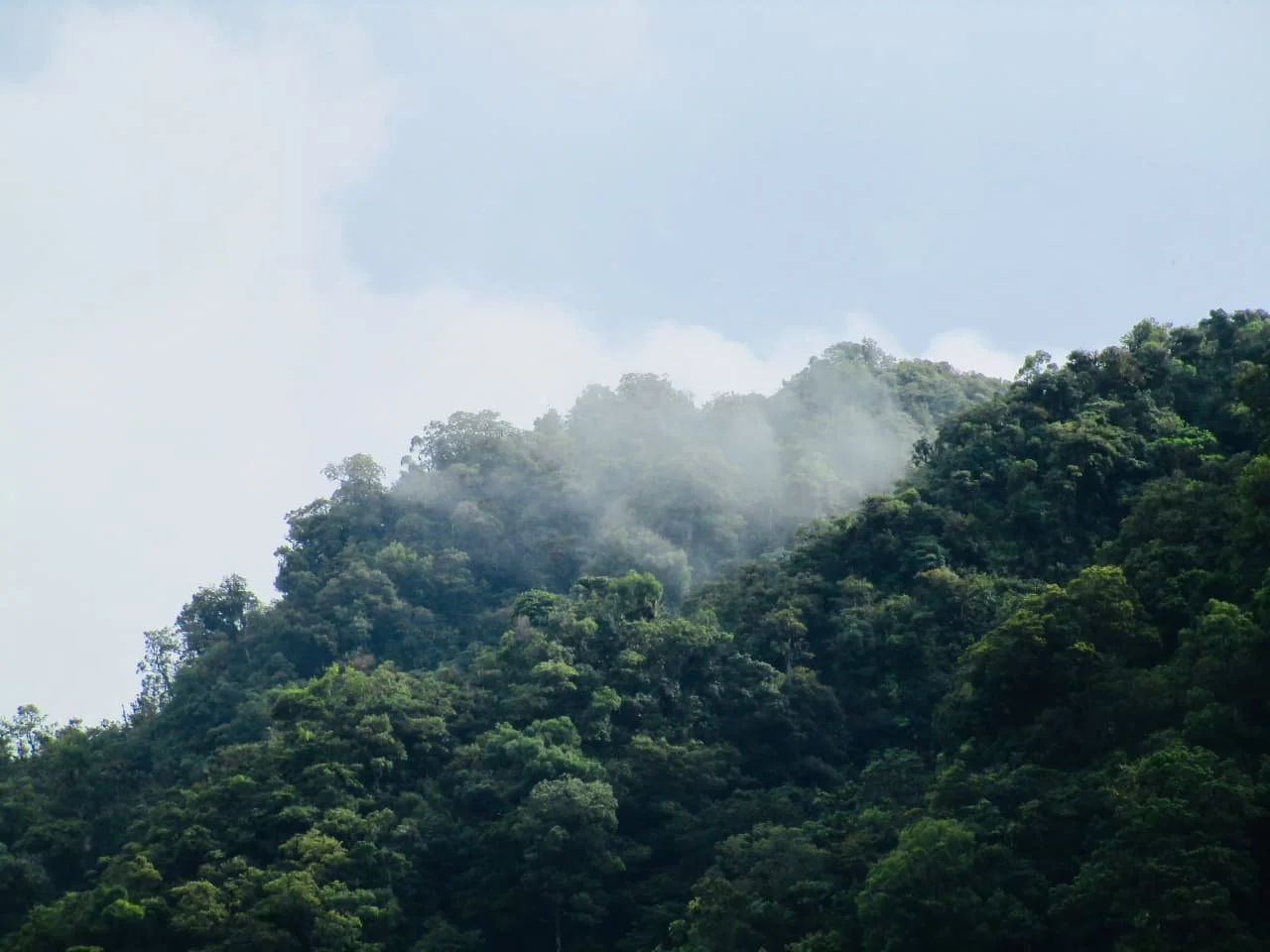
The story becomes even more dramatic when you realize that Panama's gold history is also a story about the jungle. The famous Camino de Cruces was not a modern highway cutting through an easy landscape. It crossed tropical terrain where heat, humidity, rivers, mud and dense vegetation made transportation difficult. Today, some of the surviving trails provide a fascinating glimpse into the landscape through which people and precious cargo once moved. The same rainforest that travelers now associate with monkeys, birds and incredible biodiversity was once part of a gigantic imperial transportation network.
And Panama's association with treasure became so strong that its Caribbean ports entered the mythology of pirates, explorers and treasure hunters. Names like Portobelo, Nombre de Dios, Chagres and Panama City became synonymous with Spanish treasure. The region attracted figures such as Sir Francis Drake and Henry Morgan, whose careers became intertwined with the wealth moving through the isthmus. Portobelo itself was attacked repeatedly because of its strategic and economic importance.
One of the most fascinating chapters is the connection between Panama and Henry Morgan's attack on Panama City in 1671. Morgan crossed the isthmus from the Caribbean side and attacked the colonial city on the Pacific. The destruction of Panamá Viejo became one of the defining events in the city's colonial history. The ruins that remain today are therefore not simply old buildings. They are remnants of a city that existed at the center of one of the most important treasure routes in the world.
The gold and silver moving through Panama also helped connect continents. Precious metals extracted in South America could eventually reach Europe, while European manufactured goods moved in the opposite direction. Panama became a gigantic transfer point in an early global economy. The treasure route connected mines, colonial cities, Pacific ports, Caribbean ports and European markets across thousands of kilometers.
But there is another side to this story that is essential to understanding Panama's relationship with gold. The wealth moving through the isthmus came at enormous human cost. European conquest brought warfare, disease, forced labor and profound disruption to Indigenous societies. Africans were also forcibly transported to the Americas and enslaved, becoming part of the colonial economy and the construction and operation of Panama's transportation networks. The glittering treasure story therefore sits alongside a much darker history of exploitation and colonial violence.
Panama's relationship with gold did not end with the colonial treasure fleets. Gold mining has continued in various parts of the country, particularly in regions such as Darién, and Panama has periodically experienced renewed interest in mineral exploration. Modern mining, however, has generated major debates over environmental protection, Indigenous rights, economic development and the appropriate use of Panama's extraordinary natural landscapes.
This modern history demonstrates something fascinating about Panama: gold has repeatedly appeared at the intersection of geography, economics and politics. The country may not be famous today as one of the world's largest gold producers, but its historical importance to gold is much greater than its modern production statistics might suggest.
Perhaps the most extraordinary example of Panama's continuing connection to treasure is the legendary San José galleon. The ship left Portobelo in 1708 carrying an enormous cargo of precious metals and other valuables from South America before it was attacked and sunk by a British squadron near Cartagena. Its story has become one of the most famous shipwreck treasure stories in the world. Recent archaeological research has strengthened the identification of the wreck, while estimates of its potential value have reached extraordinary levels.
The San José story perfectly captures the strange relationship between Panama and gold. The treasure had passed through the Caribbean side of the isthmus, through the enormous colonial trade system centered around Portobelo, before beginning its final voyage. Centuries later, the wreck remains a reminder of the enormous quantities of wealth that once moved through this corner of the world.
Even today, you can walk through places in Panama where this history happened. You can stand among the ruins of Panamá Viejo and imagine a city connected to the Pacific and the great South American expeditions. You can visit the fortifications of Portobelo and look across the same Caribbean bay where treasure fleets once assembled. You can explore sections of historic trails where people, animals and cargo once crossed the jungle. You can walk through the forests around the Chagres and realize that these apparently wild landscapes were once essential pieces of a global economic machine.
That contrast is perhaps what makes Panama's gold story so captivating. Today the jungle is often associated with wildlife, adventure and untouched nature. Five hundred years ago, some of those same forests were corridors of empire. Somewhere beneath the vegetation are remnants of old roads, settlements, fortifications and archaeological evidence of cultures that existed long before the arrival of Europeans.
Gold also explains why Panama became strategically important far earlier than the modern Panama Canal. The canal is often considered the ultimate expression of Panama's geographical importance, but the basic idea is much older. Long before engineers excavated the canal, people understood that Panama was the natural shortcut between two oceans. The Spanish treasure system effectively turned the entire isthmus into a primitive interoceanic transportation corridor.
That is why Panama's association with gold is so much bigger than the idea of finding a gold mine. Panama itself was the treasure route.
Its mountains, rivers, trails and ports formed a bridge between two oceans and two enormous spheres of the Spanish Empire. Gold from the south could cross the country. Silver could follow. European goods could travel in the opposite direction. Merchants and soldiers gathered around the ports. Pirates followed the wealth. Forts were built to protect it. Cities grew because of it. And the jungle absorbed the traces of the entire system.
Today, when travelers hike through the forests around Panama, visit Portobelo, explore Panamá Viejo or walk sections of the old Camino de Cruces, they are moving through landscapes that were once deeply connected to the greatest treasure network in the Americas.
The gold itself may have disappeared centuries ago, carried across oceans and transformed into coins, objects and fortunes far from Panama. But the story of the gold remains embedded in the country — in its ruins, trails, ports, legends and archaeological sites.
Panama was never merely a place where treasure passed through.
For centuries, it was the bridge that made the treasure route possible.