
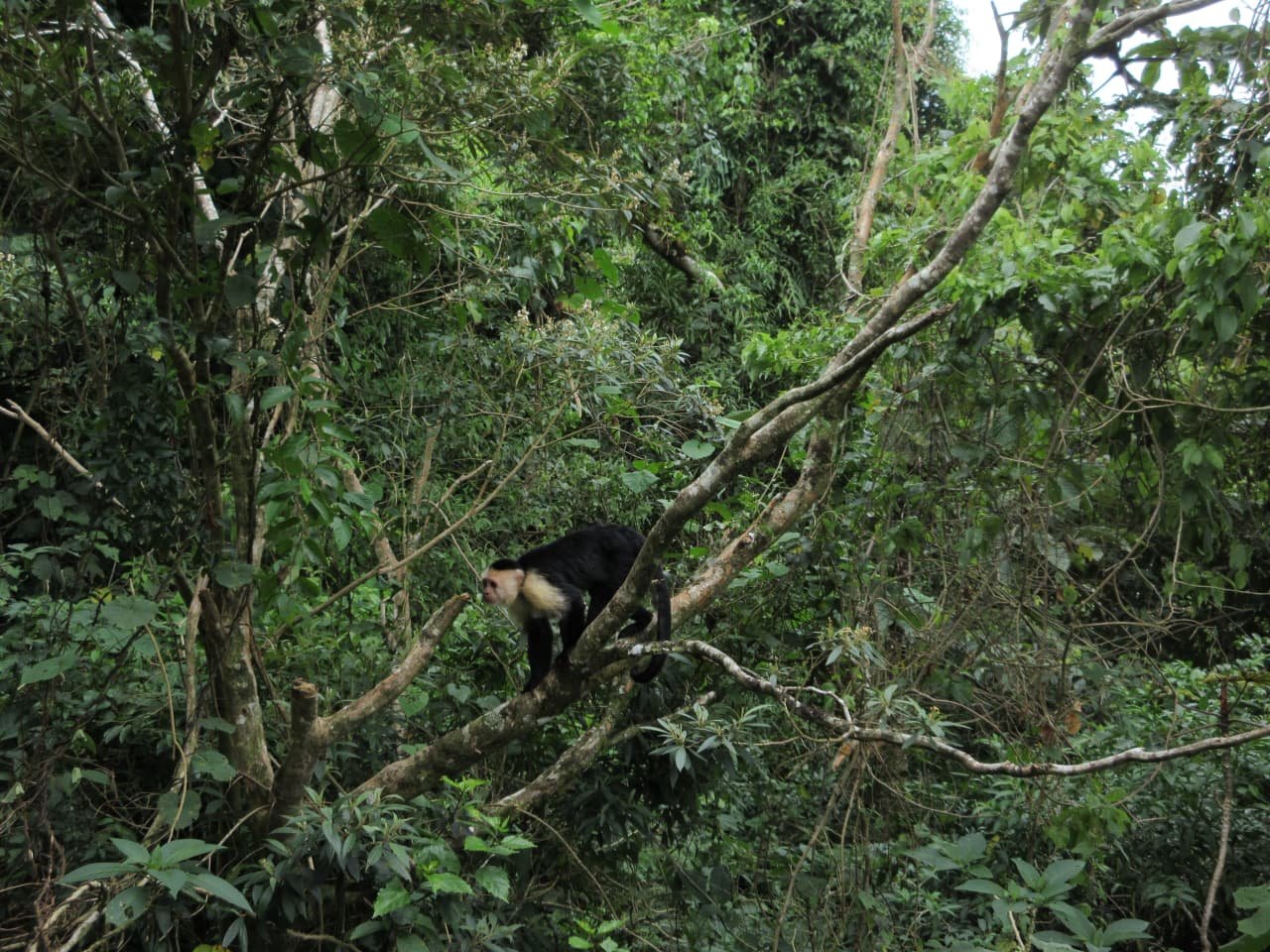
There is something strange about time in Panama. Not bad strange. Good strange. The kind of strange where you check your phone expecting it to be 3:00 in the afternoon and discover it is somehow 7:30. You haven't accomplished anything particularly important, but you've had a smoothie, walked down a jungle trail, talked to three strangers, watched a bird you couldn't identify, sat beside a river and somehow had an excellent day. Panama has a talent for making clocks feel slightly irrelevant.
You arrive with a schedule. You have destinations, buses to catch, hostels to check into, beaches to visit and mountains to climb. Then Panama starts happening around you, and suddenly your itinerary becomes more of a loose philosophical suggestion. You wake up early thinking today is going to be productive. You're going hiking, you're going to see a waterfall, you're going to visit the market and maybe you'll even do laundry. Then you sit down for breakfast. Someone starts talking to you. They're from Germany, Argentina, Canada or somewhere you've never been. They've just come from somewhere interesting. You ask where. They tell you. You ask how they got there. Twenty minutes later you're discussing your entire travel itinerary with somebody you met approximately seven minutes ago. The hike can wait.
In some countries, the afternoon is when things get serious. Meetings, work, traffic and schedules. Panama occasionally looks at the afternoon and says, "It's hot. Let's think about that later." The heat changes the rhythm. You slow down. You find shade. You drink something cold. You sit somewhere. You watch people. You listen to music. You realize you're not in a hurry anymore. And that can be one of the nicest things about traveling. You begin to understand that not every hour needs to produce something.
Then someone says, "Let's go to the beach." This sentence has destroyed countless travel itineraries. You were supposed to explore the town. Instead, you're going to the beach. You were supposed to leave at four. Now you're leaving at five. You were going to have an early dinner. Now you're watching the sunset. Someone suggests food. Someone else knows a restaurant. Suddenly it is 10:30 at night. Nobody knows exactly how this happened. Nobody particularly cares. That is Panama time.
Hostels are where clocks really go to die. You meet somebody in the kitchen. You start talking. Another person joins. Someone makes food. Someone puts music on. Someone asks where you're going tomorrow. Another person says you absolutely have to visit somewhere. Someone pulls out a map. Suddenly twelve people are planning twelve completely different adventures. Then somebody says, "We should all go out." This is how a quiet Tuesday becomes a memorable night, and how your 6:00 a.m. alarm becomes a personal insult.
In the jungle, your phone becomes less important. You start paying attention to sounds. Birds calling, water running, leaves moving, insects buzzing and rain hitting the canopy. The forest doesn't care whether it's 11:00 or 2:00. It operates on its own schedule. After enough time walking through it, you start doing the same thing. You stop thinking about the next appointment and start thinking about what is directly in front of you. A trail becomes something to experience rather than something to complete.
Sunset is another trap. You think you'll watch for five minutes. That's it. Just five. Then the sky changes. Orange appears, then pink, then the clouds catch the light. Someone takes a photo. Someone else says, "Look at that." Nobody moves. Five minutes becomes thirty. You realize you're sitting somewhere beautiful watching the day disappear, and suddenly you don't care about whatever you were supposed to be doing. Good. You probably didn't need to do it anyway.
Then comes the tropical rain. You can't control it and you can't negotiate with it. You can either wait or get wet. So you wait. And waiting in Panama can be surprisingly enjoyable. You sit beneath a roof, watch the rain, talk, eat, listen to music and watch the landscape disappear behind a curtain of water. Then, just as suddenly, the rain stops. The sun comes out. The road starts steaming. The jungle shines. And everyone continues as if nothing happened.
This is why backpackers get stuck. Not literally, usually, but emotionally. You tell yourself you're staying two nights. Then you discover the place has a good atmosphere. You meet people. You find a trail. You discover a waterfall. You have a great meal. You sleep well. Someone tells you about another place nearby. Suddenly you extend your stay. Then you extend it again. Eventually you stop saying you're staying an extra night. You're just living there now.
Panama can also make you realize how much time you waste when you're not traveling. Back home, you can spend hours scrolling through your phone, checking messages, watching videos, refreshing social media and looking at the clock. In Panama, you can spend an hour doing absolutely nothing and somehow feel like you've actually experienced something. You sit beside a river. You watch clouds move across a mountain. You drink coffee. You talk to someone. You walk without a destination. Somehow that hour feels longer than an hour spent staring at a screen. Maybe time doesn't actually move differently in Panama. Maybe you're just paying attention to it.
That's what backpacking can give you. Not luxury hotels, expensive restaurants or first class flights. The luxury of having nowhere you absolutely need to be. You can wake up and decide what kind of day you want. Jungle? Beach? Mountain? City? Hammock? You can change your mind. You can stay longer. You can leave earlier. You can follow somebody else's recommendation. You can get slightly lost. And if you're lucky, you can spend an entire afternoon doing something completely unproductive and somehow feel incredibly productive at life.
The Canal is impressive. The mountains are spectacular. The islands are beautiful. The wildlife is incredible. But there is another attraction that doesn't appear in most guidebooks. Time. Or more accurately, the feeling that you have enough of it. Panama can make you slow down without asking permission. You arrive with a schedule and leave with stories. Somewhere between the bus ride, the beach, the jungle trail, the hostel conversation and the sunset, you realize you haven't checked the clock in hours.
You look anyway.
It's later than you thought.
You smile.
Because for once, you weren't watching the time.
You were actually living it.