
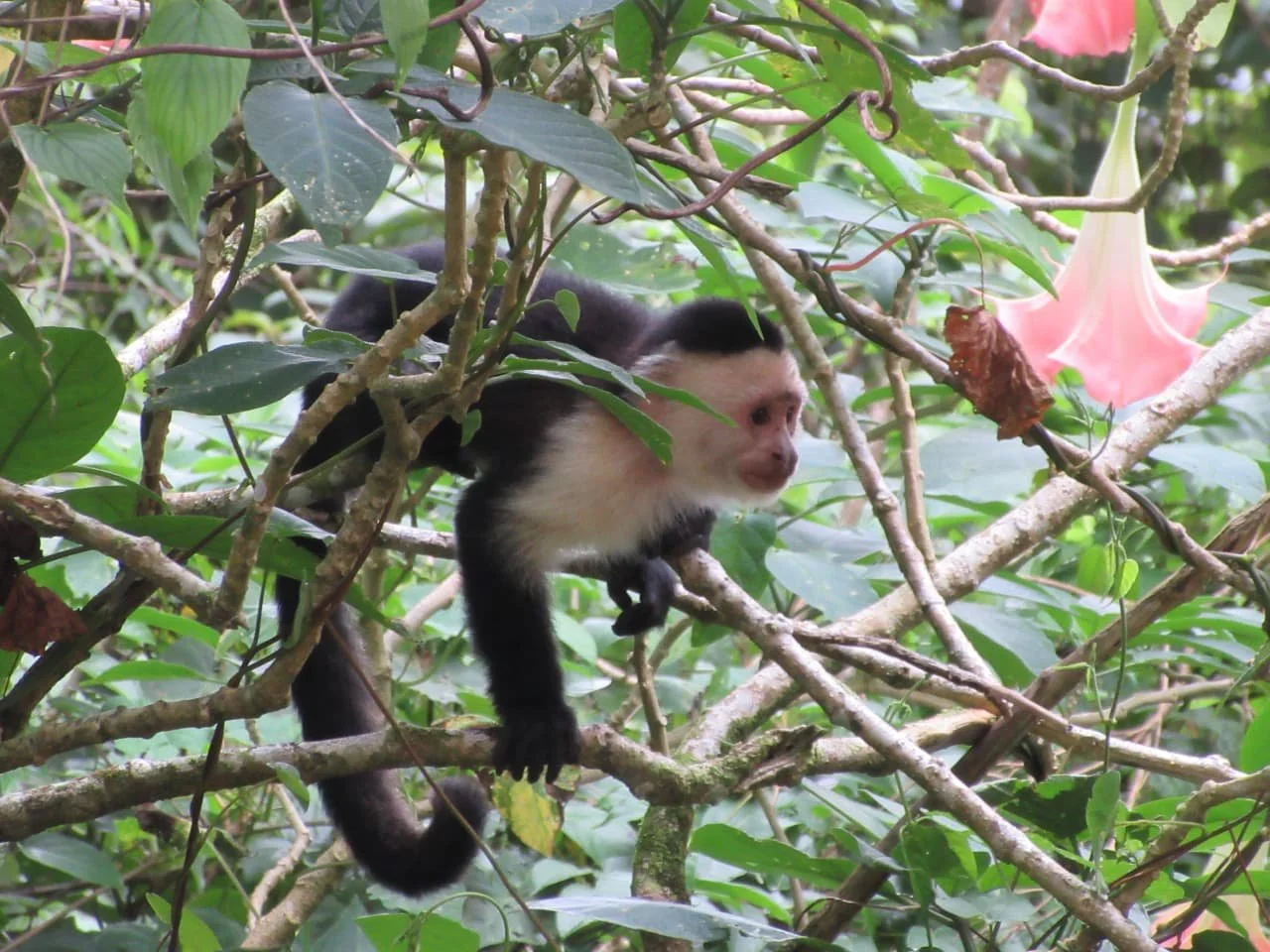
Welcome to Panama, where the coffee is dangerously good, the buses have their own interpretation of the concept of a timetable, the jungle is approximately 14 seconds away from wherever you are, and your carefully planned itinerary will probably be destroyed by someone saying, “There’s a really cool place you should go.”
Panama is one of those countries that looks small on a map and then proceeds to make you wonder where the last three weeks went. You can surf in the morning, hike through cloud forest in the afternoon, eat ridiculously good fruit for dinner and wake up the next day on a Caribbean island. You can see monkeys from a bus window, accidentally spend six hours talking to strangers at a hostel, and discover that the $3 local meal you almost walked past was better than the restaurant you researched for two hours.
The trick is not trying to conquer Panama. Panama wins that battle every time.
First rule: don't try to see everything
The biggest mistake first time backpackers make is treating Panama like a checklist.
“Three nights Panama City. Two nights Bocas. One night Boquete. One night Santa Catalina. Two nights El Valle. One night…”
Congratulations. You have now backpacked Panama entirely from the inside of a bus.
Slow down.
Panama rewards people who linger. If you find a beautiful beach, stay another day. If your hostel has an amazing atmosphere, don't immediately leave because your spreadsheet says Tuesday. If you discover a waterfall, go back. If someone tells you there's a tiny village down a dirt road where the best food you've ever eaten is served from someone's kitchen, investigate.
The country is small enough that you can cover a lot of ground, but interesting enough that you shouldn't.
Panama City: start with the chaos
Start in Panama City.
It's enormous compared with much of the rest of the country, and it's a fascinating introduction to Panama because you get skyscrapers, tropical heat, colonial streets, enormous ships, modern shopping malls and rainforest surprisingly close together.
Spend some time wandering Casco Viejo. Don't just photograph the pretty buildings and leave. Get lost in the streets. Sit somewhere. Eat something. Watch people. Then go see the Panama Canal and contemplate the fact that humanity looked at a giant piece of land and apparently decided, “You know what would improve this? Digging a giant ditch through it.”
The Canal is one of those places where knowing a little history makes the experience much more interesting.
And Panama City is also where you should learn your first important backpacking lesson:
Air conditioning is not a personality trait.
You will leave the airport feeling like you've walked directly into a tropical oven. This is normal.
Then escape the city
Once you've had your fill of skyscrapers, head into the country.
One of Panama's greatest strengths is how quickly the scenery changes. The urban environment can disappear surprisingly fast, and suddenly you're surrounded by mountains, jungle, rivers and villages.
This is where the trip becomes properly interesting.
And this is also where you discover that Panama's buses are part public transportation and part cultural experience.
Don't expect every bus to behave like a Swiss train.
Ask locals. Confirm directions. Confirm again. Then confirm with the person sitting beside you.
If three different people give you three different answers, congratulations: you're officially backpacking in Panama.
Boquete: mountains, coffee and the realization that Panama can be chilly
Boquete is one of the country's classic backpacker stops.
It's famous for its mountains, coffee, hiking and cooler climate. After sweating your way through Panama City, arriving somewhere where you might actually want a jacket feels vaguely miraculous.
Go hiking. Drink coffee. Eat. Walk around town. Explore the surrounding countryside.
And if you're thinking about climbing Volcán Barú, remember that Panama may be tropical, but mountains don't care about your assumptions. Prepare appropriately for the conditions.
The coffee deserves special attention too. Panama produces some extraordinarily prestigious coffee, and the highlands around Boquete are a perfect place to learn why.
You may arrive thinking you don't care about coffee.
You may leave discussing coffee processing methods with alarming confidence.
But don't just follow the obvious backpacker route
Here's where things get interesting.
Panama's best experiences aren't always the places appearing on every Instagram itinerary.
Some of the country's most memorable moments happen when you get slightly off the main tourist circuit.
One particularly unusual stop is Lost and Found Hostel, hidden in the cloud forest of the Fortuna Forest Reserve between the Boquete and Bocas del Toro areas.
It isn't your standard hostel where you walk from the bus directly to reception.
You hike into the forest.
Then you discover that the hostel itself is surrounded by trails, jungle, wildlife, mountain views and a completely different climate from the tropical lowlands.
It's exactly the sort of place that illustrates why backpacking Panama is different from simply touring Panama.
You aren't just visiting attractions.
You're staying inside the landscape.
And yes, there is a very good chance that somebody will convince you to go on a night walk when you were planning to go to bed.
Go anyway.
Future-you will thank you.
Bocas del Toro: go for the Caribbean nonsense
Then there's Bocas del Toro.
Bocas is where your itinerary begins falling apart in a beautiful way.
You arrive intending to stay three nights.
Someone says, “We're going to another island tomorrow.”
You go.
Then someone says, “There's a better beach.”
You go there.
Then somebody knows somebody with a boat.
Suddenly it's four days later and you have absolutely no idea what happened to your original plan.
Perfect.
Explore the islands, swim, snorkel, take boat trips and spend some time simply doing nothing.
Starfish Beach is one of the better-known stops, but don't assume the most famous place is automatically the best place for you. Ask locals and other travelers what they've discovered recently.
And remember that the Caribbean has weather.
The sea does not care about your ferry reservation.
Santa Catalina: when you need to disappear
If Bocas is Caribbean island chaos, Santa Catalina is where you go when you want to feel like you've escaped civilization.
It's famous for surfing and access to Coiba National Park, one of Panama's spectacular marine environments.
The journey itself is part of the charm.
Santa Catalina isn't the easiest place to reach, which is precisely why it still feels different from places that have been completely absorbed by mass tourism.
If you're into surfing, diving, snorkeling or simply sitting somewhere tropical wondering why you don't live beside the ocean permanently, put it on the list.
El Valle de Antón: Panama's giant volcanic bathtub
El Valle de Antón is another great mountain escape.
The town sits inside an enormous volcanic crater, surrounded by green mountains.
There are hiking trails, waterfalls, viewpoints and plenty of opportunities to work out exactly how unfit you are before blaming the altitude.
The hike up La India Dormida is particularly worthwhile.
Bring water.
This advice sounds boring until you're halfway up a mountain thinking, “Why did I believe the person who said this was an easy walk?”
Eat the local food
Do not backpack around Panama eating only pizza, burgers and things served in bowls.
You can do that anywhere.
Try sancocho, ceviche, carimañolas, hojaldres, patacones, arroz con pollo, tamales and fresh tropical fruit.
Visit local fondas.
A small restaurant filled with Panamanians eating lunch is often a better sign than an empty restaurant with an enormous English menu.
And if somebody tells you, “It's very spicy,” remember that their definition of spicy may be completely different from yours.
Proceed with courage.
Learn a little Spanish
You don't need fluent Spanish to backpack Panama.
But learn some.
“Hola.”
“Gracias.”
“Por favor.”
“¿Cuánto cuesta?”
“¿Dónde está…?”
“¿A qué hora sale?”
“¿Este bus va a…?”
These tiny phrases can transform your experience.
And here's an important backpacking principle:
People appreciate the attempt.
You don't need perfect grammar. You need enough Spanish to communicate, laugh at your mistakes and avoid accidentally ordering seventeen portions of something.
Don't obsess over money
Panama uses the U.S. dollar alongside its own coins, which makes budgeting pleasantly straightforward for travelers used to American currency.
But don't assume Panama is uniformly cheap.
You can spend very little on local food and transportation, then immediately destroy your budget with tours, taxis, nightlife and activities.
The backpacker's financial strategy is therefore simple:
Save money on the boring stuff so you can spend it on the unforgettable stuff.
Take the local bus.
Eat where locals eat.
Stay in hostels.
Then spend the money you saved on the snorkeling trip, the waterfall excursion, the surf lesson or the boat trip.
Your backpack is lying to you
You do not need 47 kilograms of equipment.
Panama is hot, humid and occasionally wet.
Bring lightweight clothing, comfortable walking shoes, swimwear, rain protection, sunscreen, insect repellent, a reusable water bottle and a small daypack.
You will discover that half the stuff you packed seemed absolutely essential when you were sitting in your bedroom.
Now it's just taking up space.
Your backpack should not require its own passport.
The jungle is not a theme park
This is important.
Panama has incredible wildlife, but the animals aren't performing for you.
Don't touch wildlife.
Don't feed it.
Don't chase it for a photograph.
Don't put your hand into holes because someone told you there might be something interesting inside.
And don't assume a cute little jungle creature wants to become your new roommate.
Observe.
Photograph from a safe distance.
Keep your snacks to yourself.
The jungle will provide the entertainment.
Rain is not a disaster
At some point, it will rain.
Possibly spectacularly.
You will look outside and think your travel plans have been destroyed.
Then the rain will stop.
The forest will look incredible.
Everything will smell like wet vegetation.
Waterfalls will become more impressive.
And you'll realize that you spent an hour complaining about the rain while standing in one of the most beautiful tropical countries on Earth.
Buy a rain jacket.
Accept your fate.
The most important Panama backpacking rule
Leave room for accidents.
Not bad accidents.
Good accidents.
The wrong bus that takes you somewhere interesting.
The stranger who recommends a waterfall.
The hostel where you intended to stay one night and end up staying four.
The tiny restaurant you almost ignored.
The beach that wasn't on your itinerary.
The hike you didn't know existed.
The conversation that lasts until 2 a.m.
Those are often the moments you'll remember.
Because that's the real secret to backpacking Panama.
You aren't really coming here to tick off Panama City → Boquete → Bocas → beach → airport.
You're coming to experience a country where Caribbean islands, Pacific beaches, volcanic mountains, cloud forests, jungle rivers and modern cities are packed into a remarkably small space.
So arrive with a plan.
Then be prepared to completely ignore it.
That's backpacking Panama. 🇵🇦🇵🇦 Backpacking Panama for the First Time: A Slightly Unhinged Guide to Doing It Right
Welcome to Panama, where the coffee is dangerously good, the buses have their own interpretation of the concept of a timetable, the jungle is approximately 14 seconds away from wherever you are, and your carefully planned itinerary will probably be destroyed by someone saying, “There’s a really cool place you should go.”
Panama is one of those countries that looks small on a map and then proceeds to make you wonder where the last three weeks went. You can surf in the morning, hike through cloud forest in the afternoon, eat ridiculously good fruit for dinner and wake up the next day on a Caribbean island. You can see monkeys from a bus window, accidentally spend six hours talking to strangers at a hostel, and discover that the $3 local meal you almost walked past was better than the restaurant you researched for two hours.
The trick is not trying to conquer Panama. Panama wins that battle every time.
First rule: don't try to see everything
The biggest mistake first time backpackers make is treating Panama like a checklist.
“Three nights Panama City. Two nights Bocas. One night Boquete. One night Santa Catalina. Two nights El Valle. One night…”
Congratulations. You have now backpacked Panama entirely from the inside of a bus.
Slow down.
Panama rewards people who linger. If you find a beautiful beach, stay another day. If your hostel has an amazing atmosphere, don't immediately leave because your spreadsheet says Tuesday. If you discover a waterfall, go back. If someone tells you there's a tiny village down a dirt road where the best food you've ever eaten is served from someone's kitchen, investigate.
The country is small enough that you can cover a lot of ground, but interesting enough that you shouldn't.
Panama City: start with the chaos
Start in Panama City.
It's enormous compared with much of the rest of the country, and it's a fascinating introduction to Panama because you get skyscrapers, tropical heat, colonial streets, enormous ships, modern shopping malls and rainforest surprisingly close together.
Spend some time wandering Casco Viejo. Don't just photograph the pretty buildings and leave. Get lost in the streets. Sit somewhere. Eat something. Watch people. Then go see the Panama Canal and contemplate the fact that humanity looked at a giant piece of land and apparently decided, “You know what would improve this? Digging a giant ditch through it.”
The Canal is one of those places where knowing a little history makes the experience much more interesting.
And Panama City is also where you should learn your first important backpacking lesson:
Air conditioning is not a personality trait.
You will leave the airport feeling like you've walked directly into a tropical oven. This is normal.
Then escape the city
Once you've had your fill of skyscrapers, head into the country.
One of Panama's greatest strengths is how quickly the scenery changes. The urban environment can disappear surprisingly fast, and suddenly you're surrounded by mountains, jungle, rivers and villages.
This is where the trip becomes properly interesting.
And this is also where you discover that Panama's buses are part public transportation and part cultural experience.
Don't expect every bus to behave like a Swiss train.
Ask locals. Confirm directions. Confirm again. Then confirm with the person sitting beside you.
If three different people give you three different answers, congratulations: you're officially backpacking in Panama.
Boquete: mountains, coffee and the realization that Panama can be chilly
Boquete is one of the country's classic backpacker stops.
It's famous for its mountains, coffee, hiking and cooler climate. After sweating your way through Panama City, arriving somewhere where you might actually want a jacket feels vaguely miraculous.
Go hiking. Drink coffee. Eat. Walk around town. Explore the surrounding countryside.
And if you're thinking about climbing Volcán Barú, remember that Panama may be tropical, but mountains don't care about your assumptions. Prepare appropriately for the conditions.
The coffee deserves special attention too. Panama produces some extraordinarily prestigious coffee, and the highlands around Boquete are a perfect place to learn why.
You may arrive thinking you don't care about coffee.
You may leave discussing coffee processing methods with alarming confidence.
But don't just follow the obvious backpacker route
Here's where things get interesting.
Panama's best experiences aren't always the places appearing on every Instagram itinerary.
Some of the country's most memorable moments happen when you get slightly off the main tourist circuit.
One particularly unusual stop is Lost and Found Hostel, hidden in the cloud forest of the Fortuna Forest Reserve between the Boquete and Bocas del Toro areas.
It isn't your standard hostel where you walk from the bus directly to reception.
You hike into the forest.
Then you discover that the hostel itself is surrounded by trails, jungle, wildlife, mountain views and a completely different climate from the tropical lowlands.
It's exactly the sort of place that illustrates why backpacking Panama is different from simply touring Panama.
You aren't just visiting attractions.
You're staying inside the landscape.
And yes, there is a very good chance that somebody will convince you to go on a night walk when you were planning to go to bed.
Go anyway.
Future-you will thank you.
Bocas del Toro: go for the Caribbean nonsense
Then there's Bocas del Toro.
Bocas is where your itinerary begins falling apart in a beautiful way.
You arrive intending to stay three nights.
Someone says, “We're going to another island tomorrow.”
You go.
Then someone says, “There's a better beach.”
You go there.
Then somebody knows somebody with a boat.
Suddenly it's four days later and you have absolutely no idea what happened to your original plan.
Perfect.
Explore the islands, swim, snorkel, take boat trips and spend some time simply doing nothing.
Starfish Beach is one of the better-known stops, but don't assume the most famous place is automatically the best place for you. Ask locals and other travelers what they've discovered recently.
And remember that the Caribbean has weather.
The sea does not care about your ferry reservation.
Santa Catalina: when you need to disappear
If Bocas is Caribbean island chaos, Santa Catalina is where you go when you want to feel like you've escaped civilization.
It's famous for surfing and access to Coiba National Park, one of Panama's spectacular marine environments.
The journey itself is part of the charm.
Santa Catalina isn't the easiest place to reach, which is precisely why it still feels different from places that have been completely absorbed by mass tourism.
If you're into surfing, diving, snorkeling or simply sitting somewhere tropical wondering why you don't live beside the ocean permanently, put it on the list.
El Valle de Antón: Panama's giant volcanic bathtub
El Valle de Antón is another great mountain escape.
The town sits inside an enormous volcanic crater, surrounded by green mountains.
There are hiking trails, waterfalls, viewpoints and plenty of opportunities to work out exactly how unfit you are before blaming the altitude.
The hike up La India Dormida is particularly worthwhile.
Bring water.
This advice sounds boring until you're halfway up a mountain thinking, “Why did I believe the person who said this was an easy walk?”
Eat the local food
Do not backpack around Panama eating only pizza, burgers and things served in bowls.
You can do that anywhere.
Try sancocho, ceviche, carimañolas, hojaldres, patacones, arroz con pollo, tamales and fresh tropical fruit.
Visit local fondas.
A small restaurant filled with Panamanians eating lunch is often a better sign than an empty restaurant with an enormous English menu.
And if somebody tells you, “It's very spicy,” remember that their definition of spicy may be completely different from yours.
Proceed with courage.
Learn a little Spanish
You don't need fluent Spanish to backpack Panama.
But learn some.
“Hola.”
“Gracias.”
“Por favor.”
“¿Cuánto cuesta?”
“¿Dónde está…?”
“¿A qué hora sale?”
“¿Este bus va a…?”
These tiny phrases can transform your experience.
And here's an important backpacking principle:
People appreciate the attempt.
You don't need perfect grammar. You need enough Spanish to communicate, laugh at your mistakes and avoid accidentally ordering seventeen portions of something.
Don't obsess over money
Panama uses the U.S. dollar alongside its own coins, which makes budgeting pleasantly straightforward for travelers used to American currency.
But don't assume Panama is uniformly cheap.
You can spend very little on local food and transportation, then immediately destroy your budget with tours, taxis, nightlife and activities.
The backpacker's financial strategy is therefore simple:
Save money on the boring stuff so you can spend it on the unforgettable stuff.
Take the local bus.
Eat where locals eat.
Stay in hostels.
Then spend the money you saved on the snorkeling trip, the waterfall excursion, the surf lesson or the boat trip.
Your backpack is lying to you
You do not need 47 kilograms of equipment.
Panama is hot, humid and occasionally wet.
Bring lightweight clothing, comfortable walking shoes, swimwear, rain protection, sunscreen, insect repellent, a reusable water bottle and a small daypack.
You will discover that half the stuff you packed seemed absolutely essential when you were sitting in your bedroom.
Now it's just taking up space.
Your backpack should not require its own passport.
The jungle is not a theme park
This is important.
Panama has incredible wildlife, but the animals aren't performing for you.
Don't touch wildlife.
Don't feed it.
Don't chase it for a photograph.
Don't put your hand into holes because someone told you there might be something interesting inside.
And don't assume a cute little jungle creature wants to become your new roommate.
Observe.
Photograph from a safe distance.
Keep your snacks to yourself.
The jungle will provide the entertainment.
Rain is not a disaster
At some point, it will rain.
Possibly spectacularly.
You will look outside and think your travel plans have been destroyed.
Then the rain will stop.
The forest will look incredible.
Everything will smell like wet vegetation.
Waterfalls will become more impressive.
And you'll realize that you spent an hour complaining about the rain while standing in one of the most beautiful tropical countries on Earth.
Buy a rain jacket.
Accept your fate.
The most important Panama backpacking rule
Leave room for accidents.
Not bad accidents.
Good accidents.
The wrong bus that takes you somewhere interesting.
The stranger who recommends a waterfall.
The hostel where you intended to stay one night and end up staying four.
The tiny restaurant you almost ignored.
The beach that wasn't on your itinerary.
The hike you didn't know existed.
The conversation that lasts until 2 a.m.
Those are often the moments you'll remember.
Because that's the real secret to backpacking Panama.
You aren't really coming here to tick off Panama City → Boquete → Bocas → beach → airport.
You're coming to experience a country where Caribbean islands, Pacific beaches, volcanic mountains, cloud forests, jungle rivers and modern cities are packed into a remarkably small space.
So arrive with a plan.
Then be prepared to completely ignore it.
That's backpacking Panama. 🇵🇦