
There is a particular moment when you first step outside in Panama City as a backpacker and realize that whatever you imagined Panama was going to feel like, you probably got it slightly wrong. The heat hits you immediately, the air feels thick and tropical, skyscrapers rise into the sky around you, traffic is moving in every direction, palm trees are blowing in the breeze and somewhere beyond all that concrete is a massive jungle. You are standing there with a backpack, probably carrying far too much stuff, wondering whether you should have packed more shorts or fewer pairs of socks, and thinking, “Okay… this is definitely different.” Welcome to Panama City, a place where modern skyscrapers, colonial streets, tropical jungle, enormous ships, rooftop bars, street food and backpackers with questionable sleep schedules somehow coexist in one gloriously chaotic city.
For many backpackers, Panama City initially seems like a place to simply fly into, spend one night, recover from the flight and immediately escape toward Bocas del Toro, Boquete, Santa Catalina or the Caribbean coast. That is understandable. Panama has an unfair amount of spectacular nature, and when you see photographs of turquoise Caribbean water and jungle-covered mountains, sitting in a city suddenly seems like a waste of precious backpacking time. But Panama City deserves more than a quick airport transfer. Give it a couple of days and the city starts revealing one of the most interesting things about Panama: this country is a collision between the modern world and the wild one. And nowhere is that collision more obvious than here.
One of the first places a backpacker should explore is Casco Viejo, because this is where Panama City starts to feel completely different from the version you saw from the airport. You can wander through narrow streets lined with colorful colonial buildings, old churches, balconies overflowing with plants and small plazas where people sit around enjoying the evening. Then you turn a corner and suddenly the modern skyline appears in the distance, enormous glass towers rising behind centuries-old architecture. It is one of those views that makes you stop for a second because your brain can't quite decide which century you're supposed to be in. You have old Panama in front of you and modern Panama behind you, and somehow both fit together perfectly.
The best thing about exploring Casco Viejo as a backpacker is that you don't need a complicated plan. Just walk. Wander down streets that look interesting. Find a small café. Sit in a plaza. Look at the architecture. Stop for food. Watch people passing by. Take the long way around. Panama City rewards people who are willing to explore slowly, and some of your favorite memories may come from places you never intended to visit. The backpacking instinct is often to search for the “top ten things to do,” photograph them all and move on. Panama City is better when you occasionally ignore the list and simply see where your feet take you.
Then there is the skyline, and this is where Panama City can feel almost surreal. From certain parts of the old city, the skyscrapers look enormous. Panama has developed into one of the most important financial and commercial centers in the region, and the skyline reflects that. It is modern, ambitious and surprisingly dramatic. At sunset, the buildings begin reflecting the changing light while the tropical sky turns different shades above the city. Add palm trees, the ocean and the old colonial architecture in the foreground and you get a cityscape that feels completely unlike the postcard version of Central America that many backpackers imagine before arriving.
And then you remember you're backpacking.
This is where Panama City can actually be surprisingly good for travelers on a budget. You don't need to spend every day booking expensive attractions or eating at fancy restaurants. Some of the best experiences cost little or nothing. Walk the waterfront. Explore the old city. Find a local restaurant. Sit somewhere and people-watch. Take public transportation. Wander through markets. Watch the city wake up and then watch it transform after sunset. The city itself becomes the attraction, and you don't need an expensive ticket to experience it.
Of course, there is one thing that every backpacker quickly discovers: Panama City is hot. Not “I forgot my jacket” hot. More like “Why does walking three blocks feel like an endurance sport?” hot. You leave your hostel feeling relatively fresh and arrive at your destination looking as though you've just completed a half marathon. Your backpack sticks to your back, your hair develops its own personality and suddenly the air-conditioning inside a small shop becomes the most beautiful thing you've ever experienced. This is why backpacking in Panama City requires a little strategy. Carry water. Take breaks. Don't assume every walk is going to be pleasant simply because Google Maps says it takes twenty minutes. And if you see a shady place to sit, use it. Your future self will thank you.
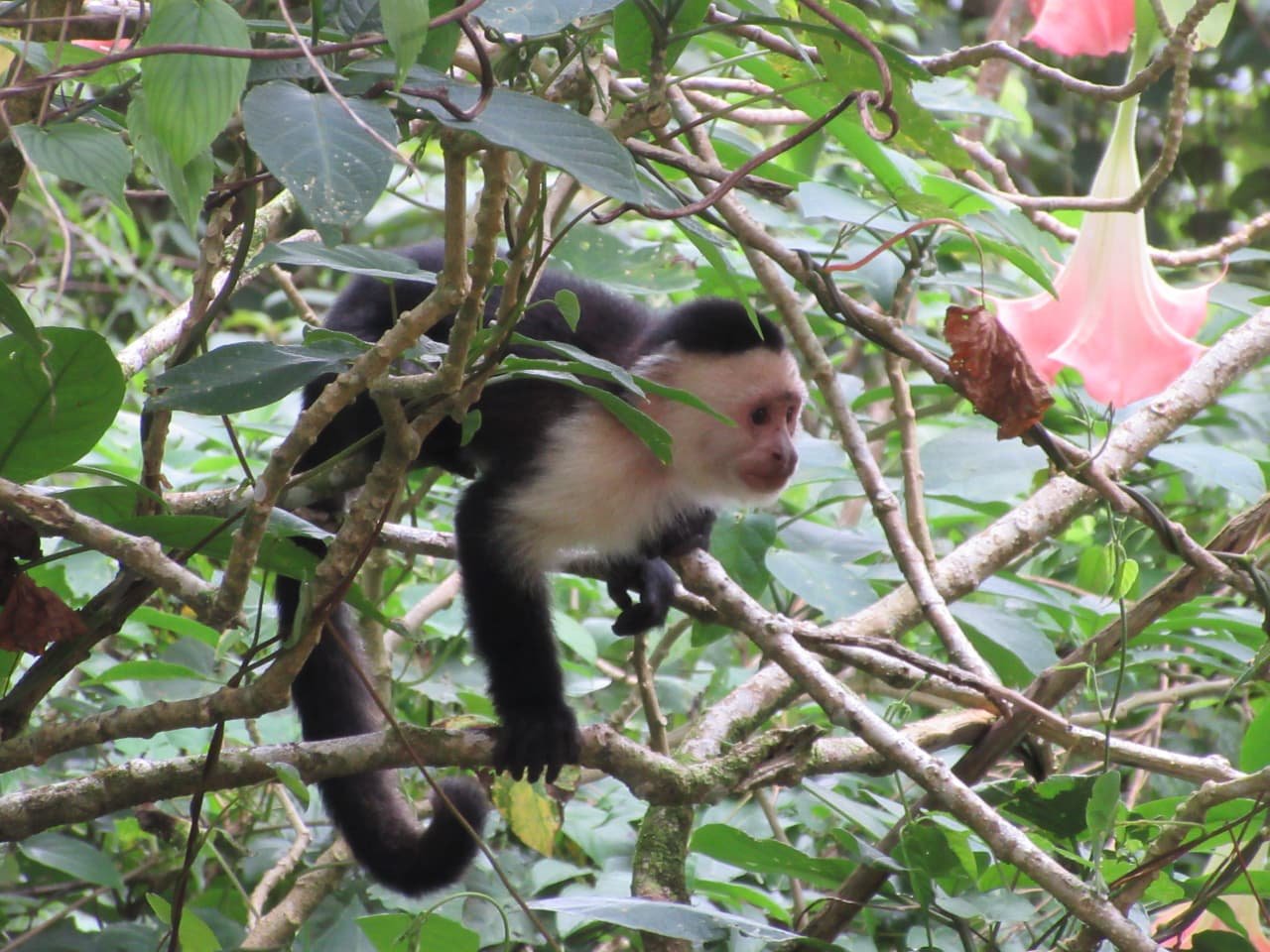
But here is where Panama City gets really interesting: the jungle is practically sitting beside the city. You don't need to travel for hours to feel like you've left civilization behind. Places such as Metropolitan Natural Park and the area around Ancon Hill offer opportunities to experience tropical nature surprisingly close to the urban center. You can be surrounded by traffic and skyscrapers, then suddenly find yourself walking underneath a canopy of trees listening for birds and wildlife. That contrast is one of Panama City's greatest surprises.
For a backpacker, this is fantastic because it means you don't have to choose between city life and nature. You can spend the morning exploring streets and cafés, head into the forest in the afternoon and return to the city for dinner. Panama doesn't make you travel to another country to change environments. Sometimes you barely have to travel across town.
And then, of course, there is the Panama Canal. Every backpacker hears about it before arriving. Everyone tells you that you have to see it. And after hearing about something so many times, it's easy to assume it will be overrated. But standing there and watching enormous ships pass through a waterway that changed global trade is genuinely fascinating. The Panama Canal isn't simply a tourist attraction. It is one of those pieces of human engineering that makes you stop and think about the sheer ambition involved in building it. You are standing in a country where ships can travel between two oceans because someone decided that cutting through this narrow piece of land was worth attempting.
And that is something worth remembering while you're backpacking around Panama. The country isn't just beautiful. It has an extraordinary geographic and historical position. The narrow land bridge between North and South America has influenced everything from wildlife to trade to migration, and the canal turned Panama into a global crossroads. You can spend the morning learning about that history and the afternoon eating something delicious in a little restaurant somewhere in the city. That combination is what makes Panama City so interesting.
But perhaps the biggest attraction for backpackers isn't something you can put on a map.
It's the people.
Panama City is a meeting point. Travelers are arriving from South America, heading toward Central America, coming from Europe, flying in from North America and passing through on their way to somewhere else. Hostels become temporary United Nations buildings where people from different countries sit around a table comparing itineraries. Someone is going to Colombia. Someone just came from Costa Rica. Someone is heading to Bocas tomorrow. Someone else insists that you absolutely have to visit Boquete. Another person tells you about a hidden waterfall. Someone else has heard about a jungle hostel in the mountains.
And suddenly your itinerary is changing.
This is the real backpacker economy.
Information.
People trade recommendations, destinations, warnings, bus routes, hostel names and stories. You might arrive in Panama City knowing exactly where you want to go and leave two days later with four new destinations written in the notes app on your phone. You didn't plan them. You don't really know what they're like. But somebody you met yesterday swears they are amazing.
And that's how backpacking is supposed to work.
There is something wonderfully liberating about realizing that you don't have to follow the exact itinerary you created at home. You are allowed to change your mind. You are allowed to stay longer somewhere you love. You are allowed to leave somewhere earlier than expected. You are allowed to hear about something interesting and completely rearrange your plans.
Panama City is particularly good at starting this process because it connects so many different parts of the country. You can arrive from the airport and use the city as a launchpad toward the mountains, the Pacific coast, the Caribbean islands or the jungle. But don't think of it simply as a transportation hub. Think of it as the place where you begin figuring out what kind of Panama adventure you actually want.
Maybe you discover that you love cities and want to explore more. Maybe you realize you need mountains immediately. Maybe another backpacker convinces you that you absolutely need to visit Bocas. Maybe you become obsessed with hiking and decide you're heading toward the highlands. Maybe you simply want to find a beach and disappear for a few days.
That's the beauty of arriving without everything locked into place.
Panama City also has an entirely different personality after dark. The heat begins to ease, the streets change, lights come on across the skyline and restaurants and bars start filling up. The same places that felt sleepy during the afternoon suddenly feel completely different. Backpackers start appearing, plans start forming and the classic question of every hostel begins circulating:
“So… what are you guys doing tonight?”
Nobody knows.
Somebody has heard about a place.
Someone else knows someone who works somewhere.
Another person says they were there last night.
Suddenly twelve people are going.
This is how backpacker nights are born.
You don't need to overthink them.
You just need to accept that your original plan of “having one quiet drink” has approximately zero chance of surviving contact with a hostel full of travelers.
But Panama City isn't only about nightlife. One of the things that makes it such a good starting point is that you can have a completely different kind of experience the next morning. You can wake up, grab coffee, walk along the waterfront and watch the city come alive. You can spend the afternoon exploring history. You can hike through tropical forest. You can watch ships moving through the canal. You can eat local food. You can find a rooftop and watch the sun go down behind the skyline.
And all of that can happen without leaving the city.
That is the part that surprises people.
Panama City is not a city sitting next to the jungle. It is a city tangled up with the jungle.
You can feel the wildness around you even when you're surrounded by concrete.
Birds are everywhere. Tropical vegetation appears in unexpected places. Rainstorms can roll through with almost no warning. The humidity reminds you that the Caribbean isn't far away. And beyond the skyscrapers, mountains and forests are waiting.
For backpackers, that creates an unusual feeling. You're not completely disconnected from civilization, but you're never far from adventure either.
And then comes the moment when you have to leave.
Maybe you're heading to Boquete for the mountains. Maybe you're going to Bocas del Toro for Caribbean island life. Maybe you're heading toward Santa Catalina and the Pacific. Maybe you're going deeper into Panama and eventually toward Costa Rica or Colombia.
You throw your clothes back into your backpack, which somehow weighs more than it did when you arrived despite not buying anything, check out of your hostel and head toward the bus station or airport.
You think you're leaving the city behind.
You're not.
Because by now you've heard about five more places you need to see.
Someone has given you a recommendation.
Someone has written a name on your phone.
Someone has told you about a trail.
Someone else has told you about a beach.
And suddenly Panama City has done exactly what a great backpacking destination should do.
It has made you curious about what comes next.
That's the real secret of backpacking in Panama City. Don't treat it as the place between your flight and your “real” Panama adventure. Give it time. Walk around. Get lost. Eat. Sweat. Explore. Talk to people. Watch the skyline. Find the jungle. See the canal. Let the city surprise you.
Because Panama City isn't trying to be one thing.
It's a modern metropolis with a tropical soul, a colonial past, a jungle practically on its doorstep and an international backpacker community constantly passing through.
You can arrive thinking you're here for two nights and leave three or four days later with a completely different travel plan.
You can arrive looking for the Panama Canal and leave obsessed with the jungle.
You can arrive alone and leave with a group of friends.
You can arrive with a perfectly organized itinerary and leave wondering who the hell wrote it.
And that's exactly what makes Panama City such a great place to start backpacking.
Because the best backpacking trips aren't the ones where everything goes according to plan.
They're the ones where you arrive with an idea…
…and Panama gives you a better one.