
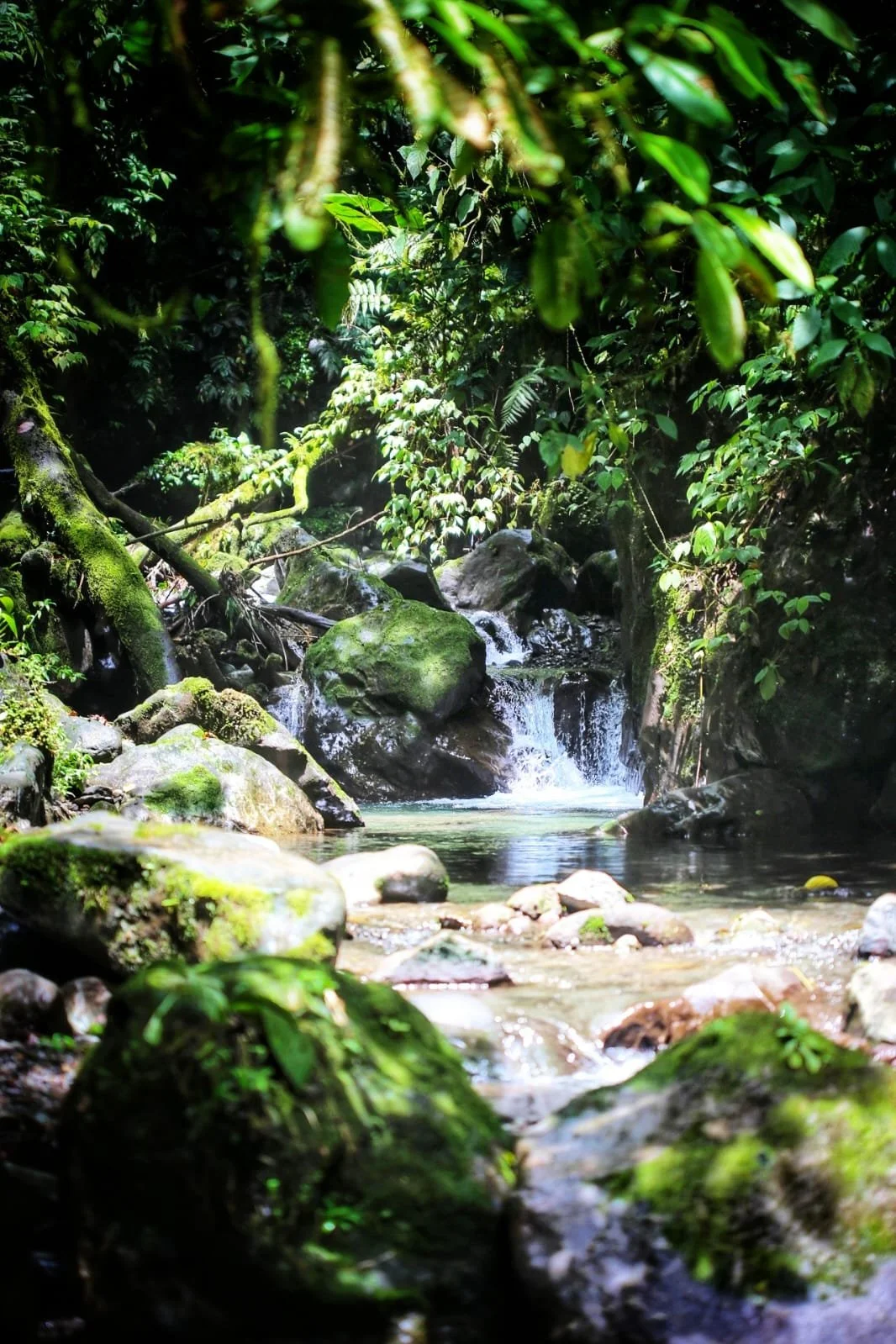
There is a secret side of Panama that most backpackers do not discover until they stop looking for attractions and start looking at the forest itself. From the road, a tropical jungle can look like one enormous wall of green. Trees, vines, leaves, shadows, everything seemingly tangled together. But walk into that forest and you quickly realize something extraordinary. There are highways everywhere. You just cannot see them.
High above your head, the canopy is busy. Monkeys move through it. Sloths use it like a slow motion apartment complex. Birds jump from branch to branch. Squirrels race along limbs. Bats take off as the light disappears. Tiny mammals move silently through the vegetation while insects create an almost continuous soundtrack. To a backpacker standing on the forest floor, it can look completely quiet.
It is not.
You are standing underneath a city.
This is one of the coolest things about exploring Panama’s forests. You have to stop thinking like a tourist and start thinking vertically. Most people walk along a trail staring straight ahead, hoping to spot something. But some of the most interesting wildlife is above you. Look into the canopy. Watch the branches. Listen for movement. Sometimes the first clue that an animal is nearby is not seeing it at all. It is hearing leaves rustle somewhere overhead.
And Panama is an incredible place to try this. The country’s position between North and South America has helped make it extraordinarily rich in wildlife, while its mountains, forests, rivers and two coastlines create a huge variety of habitats. You can be standing beside modern skyscrapers in Panama City and, before long, find yourself surrounded by rainforest. Travel farther into the country and the landscape changes again. Cloud forests, mountain valleys, tropical rivers and dense jungle appear one after another.
It is almost as if Panama forgot to choose one ecosystem.
So it kept them all.
The really fascinating part begins when the sun goes down. During the day, the forest can feel relatively calm. Birds call from the canopy, insects buzz around and sunlight filters through the leaves. But after dark, Panama’s jungle changes completely. Nocturnal creatures become active, the sounds become louder and stranger, and your flashlight suddenly becomes the most important piece of equipment you own.
A trail you have walked during the day can feel completely different at night. The trees look different. The shadows look different. Every rustle suddenly sounds important. You start noticing tiny movements that you would have completely ignored during daylight. A pair of eyes reflects your flashlight. Something flies across the trail. An insect makes an absolutely ridiculous noise from somewhere nearby. You stop walking and suddenly realize just how much is happening.
The jungle was never quiet. You were just listening to the wrong shift.
And this is where Panama gets especially interesting for backpackers. You do not necessarily need to be a hardcore explorer to experience it. You do not need to disappear into some remote wilderness for three weeks carrying an enormous backpack. Some of the country’s most fascinating forest experiences can happen on accessible trails, particularly around the mountain and cloud forest regions.
One of the most atmospheric areas is the Fortuna region of Chiriquí, where the mountains create a cool, incredibly wet environment that supports lush cloud forest. This is where the weather itself becomes part of the attraction.
Cloud forests are essentially forests living in the clouds, or at least in an environment where moisture, mist and low clouds are a major part of the ecosystem. Trees become covered in mosses, plants grow on other plants, vines stretch between trunks and the forest floor can feel permanently damp and intensely green.
For a backpacker arriving from Panama’s hot coastal regions, it can feel like you have accidentally traveled to another country.
You have not.
You have simply climbed.
That contrast is one of Panama’s greatest travel secrets. You can spend the morning somewhere tropical and humid, then head into the mountains and suddenly find yourself wanting a hoodie. The temperature drops, clouds drift through the trees and the entire landscape becomes quieter.
This is also why packing for Panama can be surprisingly complicated. Everyone tells you to bring shorts. They are right. Then you discover the mountains. Suddenly you are digging through your backpack looking for the one long sleeved shirt you brought “just in case.”
That shirt becomes your best friend.
Then it rains.
Because of course it rains.
Panama’s forests are incredibly wet for a reason. Rain and moisture are fundamental to the environment, and tropical mountain forests can produce some spectacularly dramatic weather. You might begin a hike beneath blue skies and finish surrounded by mist.
And somehow, that is better.
When the clouds roll through the forest, everything becomes cinematic. The trees disappear into fog. Water droplets hang from leaves. The air feels cooler. The forest becomes almost silent. For a few minutes, you feel like you have wandered into a completely different world.
Then the clouds move.
The sun comes out.
And Panama carries on as though nothing happened.
That is the thing about this country.
It keeps changing.
The beach is not the same as the mountain. The Pacific is not the Caribbean. The city is not the jungle. And the jungle during the day is not the jungle at night.
You can visit Panama several times and still feel like you have barely scratched the surface.
But perhaps the biggest mistake backpackers make is rushing through it. They arrive with a checklist.
Canal? Done.
Beach? Done.
Island? Done.
Next country.
But Panama is not really a checklist country.
It is a slow down and look around country.
Sit quietly in the forest. Listen. Look into the canopy. Watch the clouds. Follow a trail. Stop when something catches your attention.
You might see nothing.
And that is okay.
Because sometimes the experience is not about spotting the animal. It is about realizing that you are standing in an ecosystem that is doing an enormous amount of work around you without asking for your attention.
The forest floor is alive too. Tiny frogs hide beside streams. Ants move in organized lines carrying pieces of leaves many times their own size. Spiders build webs between vegetation. Beetles disappear underneath fallen branches. Mushrooms appear after rain. Ferns unfold from the forest floor. Even the fallen trees are slowly being transformed into part of the next generation of forest.
Nothing is really wasted.
Everything is connected.
And once you start noticing these tiny details, hiking through Panama becomes less about reaching the end of the trail and more about discovering what is happening around every corner.
Then you hear something moving overhead.
You look up.
A branch shakes.
You wait.
Nothing.
You keep walking.
And somewhere above you, something is probably watching you, wondering why the strange two legged creature keeps stopping every thirty seconds.
That is Panama.
A country where the most exciting thing you see might not be the attraction you came to find. It might be a shadow moving through the canopy. A strange call in the darkness. A tiny frog beside a trail. A cloud swallowing a mountain. A sudden flash of color between the leaves. Or simply the realization that the “empty” jungle around you is actually bursting with life.
And the longer you stay, the more you notice.
You start hearing different bird calls.
You start looking upward more often.
You start recognizing the difference between wind moving through leaves and something actually moving through them.
You start becoming curious about insects you would normally walk straight past.
You stop rushing.
That may be the greatest gift the jungle gives a backpacker.
It forces you to slow down.
There are no skyscrapers to photograph. No restaurant menu telling you what to look at. No attraction telling you where to stand. You simply walk into the forest and pay attention.
And suddenly, a two hour hike becomes an adventure.
So next time you are backpacking through Panama, do not just ask:
“Where is the next attraction?”
Ask a better question.
“What is happening around me right now?”
Look up.
Listen.
Look beside the trail.
Watch the clouds.
Wait a little longer.
Because Panama’s greatest attraction does not have an entrance fee, a ticket booth or a giant sign.
It does not care whether you have a camera.
It does not care whether you have a million followers.
And it certainly does not care whether you are in a hurry.
It is alive.
And once you learn how to look for it, you realize something incredible.
The jungle was never just scenery.
The jungle was the adventure all along.