
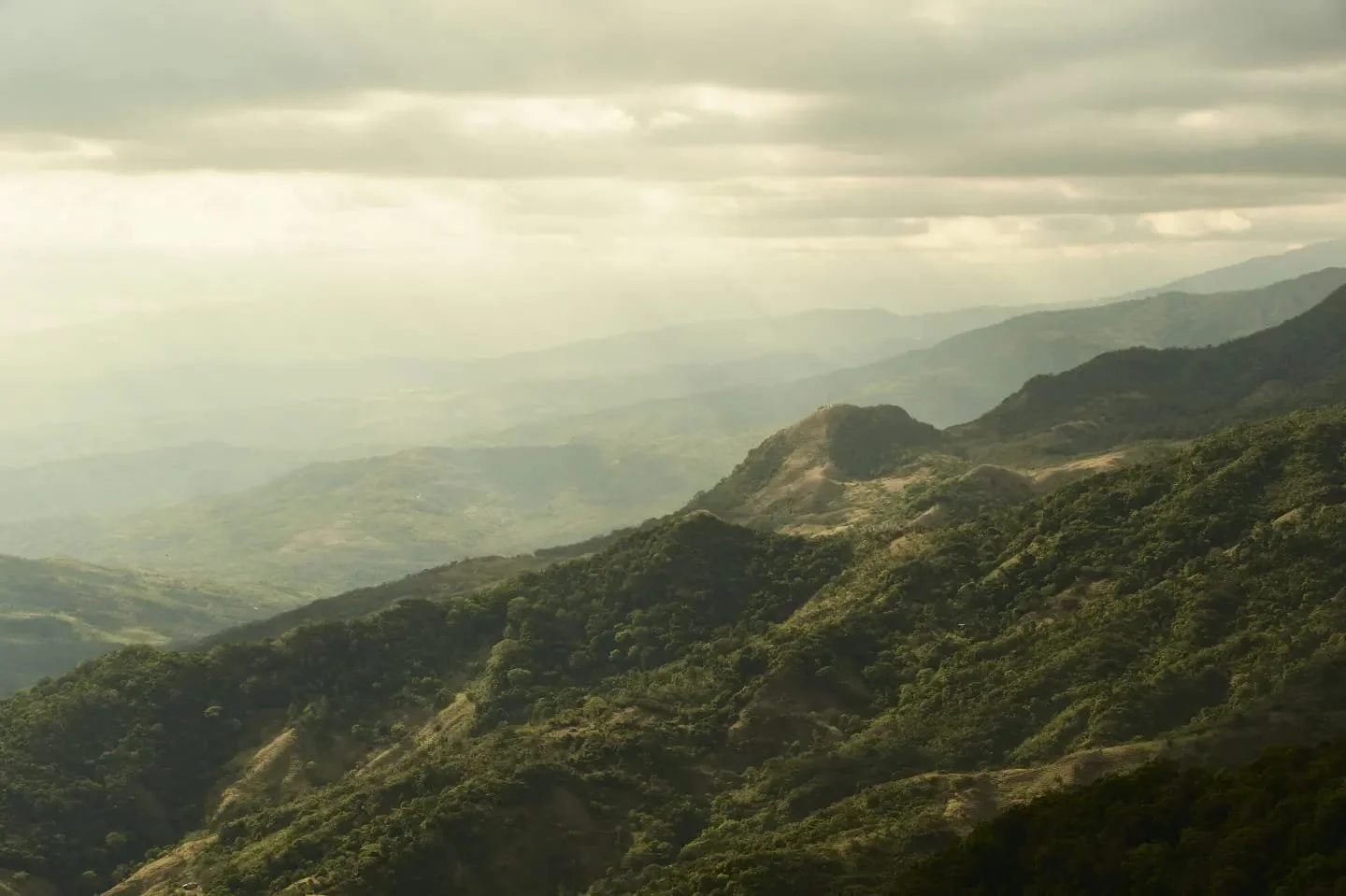
Walk through a Panamanian rainforest at night and the jungle can suddenly seem to change personalities. During the day, the forest is filled with birdsong, monkeys, butterflies and bright tropical colors. After sunset, a completely different community takes over.
Among the leaves, beneath bark, around rocks and inside dark crevices, some of Panama's most unusual arachnids begin moving.
Scorpions emerge.
And then there are the creatures that look like scorpions but are not scorpions at all.
These are the whip spiders, often confusingly called tailless whip scorpions. They can have enormous flattened bodies and extraordinarily long, delicate legs that make them look like something from science fiction.
Panama is home to a surprisingly diverse collection of these animals. Recent scientific work has documented at least sixteen scorpion species in Panama, belonging to three families, while research continues to refine exactly which species occur where.
Understanding the differences between them makes nighttime exploration considerably more interesting.
First Things First: They Are All Arachnids
The easiest way to understand Panama's scorpions and their strange relatives is to start with their family tree.
Scorpions are arachnids, meaning they belong to the same broad group as spiders, ticks, mites and harvestmen.
But being an arachnid does not mean being a scorpion.
A true scorpion belongs to the order Scorpiones.
A tailless whip scorpion, or whip spider, belongs to the completely different order Amblypygi.
A vinegaroon, sometimes called a whip scorpion, belongs to another order called Uropygi.
They are relatives, but they are not the same animal.
This distinction becomes extremely important when you are walking through Panama's jungle and encounter something that looks like a bizarre combination of spider and scorpion.
The Real Scorpions of Panama
Panama's genuine scorpions include members of several families, but the Buthidae are particularly important because some species have medically significant venom.
Scientific research has identified species from the genera Centruroides and Tityus as especially important in Panama. Research on Panamanian scorpion venom has examined eight buthid species from these two genera.
Among the Centruroides species recorded from Panama are Centruroides granosus, Centruroides panamensis, Centruroides limbatus, Centruroides bicolor and Centruroides margaritatus. Taxonomy is an evolving science, and a recent review has clarified some earlier identification and distribution questions.
That last point is worth emphasizing.
When people say "all the scorpions in Panama," scientists cannot always simply produce a permanent list and walk away. Species are sometimes reclassified, populations turn out to have been misidentified and new information changes our understanding of where particular species occur.
Panama's scorpion fauna is still being studied.
Centruroides: The Famous Bark Scorpions
If you encounter a relatively slender scorpion around buildings, vegetation or forested areas, there is a reasonable possibility that it belongs to the genus Centruroides, although identification should never be based solely on appearance.
These scorpions are often relatively slender compared with some of the chunkier scorpions people imagine.
Their pincers can appear comparatively narrow, while the tail is relatively prominent.
One Panamanian species, Centruroides granosus, is particularly interesting. Research describes it as the most common and densely populated Centruroides species in urban areas of Panama and the species associated with the greatest number of reported scorpion accidents in the country.
Another fascinating species is Centruroides panamensis, which is endemic to Panama. In other words, it is not naturally found anywhere else in the world.
That makes encountering one a tiny wildlife moment with enormous geographical significance.
You could be looking at an animal whose entire natural distribution is confined to Panama.
Centruroides bicolor
Centruroides bicolor is another Panamanian species that attracts scientific attention.
It is widely distributed in Panama, and research has associated it with medically important envenomation.
But an important point gets lost whenever people talk about venomous animals.
Venomous does not automatically mean deadly.
Scorpion stings can produce a range of effects, and the seriousness depends on factors including the species, the amount of venom delivered and the person affected. Recent taxonomic research notes that envenomations by Panamanian Centruroides are frequent but generally produce mild symptoms.
That is very different from saying that every scorpion encounter is a medical emergency.
Still, any unidentified scorpion should be treated with caution rather than handled.
Tityus: Another Major Group
The genus Tityus is another important component of Panama's scorpion fauna.
Several Tityus species have been studied for their venom, including species associated with Panama such as Tityus festae and Tityus cerroazul. Scientific research has found considerable diversity in the venom components of these animals.
The name Tityus is particularly familiar to scientists studying medically important scorpions throughout tropical South America and Central America.
Their presence in Panama demonstrates that the country's scorpion fauna is connected to the much larger Neotropical ecosystem.
The forests of Panama are not isolated.
Animals, plants and evolutionary lineages have moved through Central and South America for millions of years.
The Scorpions That Aren't Considered Major Medical Concerns
Not every Panamanian scorpion is equally important from a medical perspective.
Research has identified species such as Opistacanthus elatus, belonging to the family Hormuridae, and Chactas exsul, belonging to Chactidae, as species whose stings do not appear to have major medical importance according to cited Panamanian health assessments. Ananteris platnicki, a buthid species, has also been described in this context.
This is a great example of why judging an animal simply by appearance can be misleading.
A huge, intimidating looking arachnid may pose little danger to humans, while a much smaller animal can have medically significant venom.
Evolution does not design animals according to our sense of aesthetics.
The Secret Life of a Scorpion
Scorpions are remarkably well adapted to life in the darkness.
During the day, many species remain hidden beneath objects, inside crevices or in sheltered areas.
After dark, they become active.
They use their sensory systems to navigate a world where vision is often less important than detecting vibrations and environmental cues.
They are predators, and their diet consists primarily of other small animals, particularly insects and other arthropods.
For a scorpion, the rainforest floor is essentially a gigantic buffet.
Every fallen leaf can conceal something.
Every piece of bark can provide shelter.
Every crevice can contain prey.
And every night brings another opportunity to hunt.
The Incredible Fluorescent Scorpion Trick
One of the most fascinating things about scorpions is their ability to fluoresce under ultraviolet light.
Certain compounds in the hardened outer layers of their exoskeleton can cause them to glow under UV illumination.
This creates one of the strangest sights imaginable.
You can be looking at what appears to be an ordinary dark forest floor.
Then ultraviolet light reveals a scorpion glowing against the darkness.
Scientists have studied this phenomenon for decades, and its exact biological significance remains an interesting subject of research.
For anyone interested in natural history, it is one of the most extraordinary characteristics of scorpions.
And Then You Meet the Whip Spider
Now we enter a completely different world.
Imagine walking through a dark tropical forest and seeing something with an enormous flattened body, eight legs and two unbelievably long front appendages stretching out in front of it.
At first glance, you might think:
Scorpion.
Then you realize something is wrong.
There is no tail.
There is no obvious stinger.
And those front legs look ridiculously long.
Congratulations.
You may have just found an amblypygid, commonly called a whip spider or tailless whip scorpion.
The Name Is Confusing
The common name is responsible for much of the confusion.
"Tailless whip scorpion" sounds like it should be a scorpion that lost its tail.
It isn't.
Amblypygids belong to their own arachnid order, Amblypygi.
They are evolutionary relatives of scorpions, but they have a completely different body design and lifestyle.
They do not have the characteristic scorpion tail.
They do not have a venomous stinger.
And they are not the same thing as the true whip scorpions of the order Uropygi.
In Panama, scientific work has documented whip spiders belonging to the genus Phrynus, including recent research documenting cannibalism in Panamanian Phrynus.
Why Do Whip Spiders Have Those Crazy Long Legs?
Those incredibly long front appendages are not ordinary walking legs.
They are specialized sensory structures called antenniform legs.
Instead of simply using them to walk, the animal uses them to explore its environment.
Imagine being in complete darkness and having two enormous sensory feelers extending far beyond your body.
You could detect obstacles.
You could investigate surfaces.
You could sense movement.
You could explore the environment without needing to see everything directly.
That is essentially the world of an amblypygid.
Their long sensory legs help them navigate through darkness with remarkable precision.
They Look Terrifying
This is perhaps the funniest thing about whip spiders.
They look absolutely terrifying.
Their bodies can be broad and flattened.
Their legs can stretch surprisingly far.
Their specialized pedipalps give them an almost alien appearance.
And when one suddenly moves across a wall, it can look like something from a horror movie.
Yet their frightening appearance is mostly a matter of aesthetics.
They are not equipped with a scorpion's venomous tail.
They are predators of small animals, not giant monsters hunting humans.
For a rainforest ecosystem, they are fascinating nocturnal hunters.
Whip Spiders Are Masters of Darkness
Many amblypygids are strongly associated with dark, humid environments.
That makes Panama an excellent place to encounter them.
They can be found around forest habitats and other sheltered environments where humidity remains high.
At night, they become active.
Their sensory legs sweep through the darkness.
Their bodies remain close to surfaces.
And they use their specialized appendages to detect and capture small prey.
The effect is extraordinary.
A whip spider can appear almost weightless as it moves across a wall or tree trunk.
Then it suddenly stops.
It may remain completely motionless.
Then one sensory leg moves.
Then another.
The animal is effectively scanning the environment.
Scorpions and Whip Spiders Are Built Completely Differently
This is the easiest way to remember the difference.
A true scorpion has a recognizable tail ending in a stinger.
An amblypygid has no tail and has enormously elongated sensory legs.
A scorpion's tail is a weapon used to deliver venom.
An amblypygid's elongated front legs are primarily sensory tools.
A scorpion's pincers are relatively recognizable as claws.
An amblypygid has specialized pedipalps used to seize prey.
They may look related because they are both arachnids, but evolution has taken them in very different directions.
And What About the Real Whip Scorpion?
Here is where the naming becomes even more confusing.
There is another group called the whip scorpions, belonging to the order Uropygi.
They are not the same as amblypygids.
True whip scorpions have a whip like tail structure and are sometimes called vinegaroons because certain species can release an acetic acid based defensive secretion.
They are therefore quite different from both ordinary scorpions and tailless whip spiders.
So Panama's nighttime arachnid world can contain:
Scorpions.
Whip spiders.
Whip scorpions.
And all three are different groups.
That is enough to make any jungle night walk feel like an advanced zoology lesson.
The Tiny Pseudoscorpions
There is another group that deserves a mention.
Pseudoscorpions are tiny arachnids that look somewhat like miniature scorpions but lack a tail.
They can be found in leaf litter, soil, vegetation and other environments.
Their tiny size means most people walk past them without ever noticing.
They are completely different from the large scorpions that people usually picture.
Again, the rainforest demonstrates an important lesson.
"Scorpion" is not a single visual design.
Evolution has produced an entire collection of bizarre arachnid forms.
Why Panama Is Such a Great Place for Arachnids
Panama's extraordinary biodiversity helps explain why its arachnid fauna is so interesting.
The country sits between North and South America and contains Caribbean coastline, Pacific coastline, lowland rainforest, cloud forests, mountains, dry forests, wetlands and agricultural landscapes.
Each habitat creates different opportunities for arthropods.
A scorpion living around dry lowland vegetation faces a completely different environment from an amblypygid living in a humid mountain forest.
Different habitats encourage different adaptations.
That is why walking through Panama's forests can feel like walking through several different biological worlds.
The Night Changes Everything
During daylight, most travelers notice the obvious animals.
Birds.
Butterflies.
Monkeys.
Sloths.
Lizards.
But once the sun disappears, the hierarchy changes.
Insects become active.
Frogs begin calling.
Bats emerge.
Nocturnal mammals begin moving.
And arachnids that spent the day hidden begin exploring their surroundings.
This is why a nighttime walk through Panama can reveal an entirely different ecosystem from the one you experienced during the afternoon.
The forest has not changed.
Your ability to see it has.
The Great Arachnid Misidentification Game
One of the most entertaining things about exploring Panama is discovering how often people misidentify what they see.
A large spider becomes a tarantula.
A harvestman becomes a spider.
A whip spider becomes a scorpion.
A scorpion becomes a "huge spider."
And sometimes the animal is something completely different.
Learning a few basic differences makes wildlife encounters much more interesting.
If it has a tail with a stinger, you are looking at a true scorpion.
If it has enormous sensory front legs and no tail, you may be looking at an amblypygid.
If it has a whip like tail structure, you may be looking at a true whip scorpion.
If it is tiny and resembles a miniature scorpion without a tail, it could be a pseudoscorpion.
The more you learn, the more complicated the forest becomes.
And that is exactly what makes it fun.
Panama's Scorpions Are More Than Something to Fear
Scorpions have an unfortunate reputation.
People often see one and immediately think danger.
But ecologically, scorpions are fascinating predators that play an important role in controlling populations of other arthropods.
They are part of the food web.
They are predators.
They are prey.
They have evolved sophisticated sensory systems.
Their venom is a remarkable biological technology.
And their fluorescent exoskeletons make them one of the strangest sights in the nighttime forest.
Some species are medically important, which is why unidentified scorpions should not be handled. But that does not make every scorpion a deadly creature.
In Panama, the majority of encounters are likely to involve animals that would much rather avoid humans than interact with them.
A Final Look Into the Darkness
The next time you walk through a Panamanian forest after sunset, look beyond the obvious.
Look at the tree trunks.
Look beneath leaves.
Look carefully around sheltered areas.
The jungle is full of animals that most people never notice.
A small scorpion may be hunting beneath a fallen branch.
A Centruroides may be moving through vegetation.
A Tityus may be exploring the forest floor.
And somewhere in the darkness, an amblypygid may be standing motionless against a tree, its impossibly long sensory legs reaching into the darkness.
At first glance, they all seem to belong to the same nightmare family.
But look closer and they reveal an extraordinary story of evolution.
The scorpion has its tail and stinger. The whip spider has its sensory legs. The whip scorpion has its own bizarre defensive adaptations. The pseudoscorpion has shrunk the entire concept down to miniature scale.
They are all arachnids, but they have taken completely different evolutionary paths.
And that is perhaps the most fascinating thing about Panama's nighttime forests.
The animals that look the strangest are often the ones with the most interesting stories.
You just have to wait until the sun goes down.