
Panama is one of those countries that looks relatively small on a map but becomes surprisingly complicated once you start digging into it. It is a country where Caribbean culture, Central American traditions, Indigenous societies, international finance, tropical rainforest, huge agricultural regions and one of the world's most important shipping routes all exist within a remarkably compact space. For travelers, Panama can sometimes feel like several different countries stitched together: the skyscrapers and financial district of Panama City are a world away from the Indigenous islands of Guna Yala, the mountains of Chiriquí, the cattle country of Los Santos or the dense forests of Darién. Here are more than 40 fascinating facts that help explain how Panama works, who lives here, how the country is governed and why its economy and geography are so unusual.
1. Panama's official name is the Republic of Panama. The country occupies the narrowest part of the Central American land bridge connecting North and South America. It borders Costa Rica to the west and Colombia to the southeast, with the Caribbean Sea on its northern side and the Pacific Ocean on its southern side. That unusual geography is the foundation of almost everything important about Panama, from its climate and biodiversity to its shipping industry and history. Panama has approximately 75,417 square kilometers of territory, or about 29,119 square miles.
2. Panama's currency is the balboa, but you will probably spend U.S. dollars. The Panamanian balboa is officially the country's currency and is fixed at a one to one value with the U.S. dollar. The fascinating part is that Panama does not issue its own paper banknotes for ordinary circulation. Instead, U.S. dollar bills are used alongside Panamanian coins. Panama does produce balboa coins, including coins equivalent to American cents, quarters and dollars. So if you withdraw $20 from an ATM in Panama, you will normally receive U.S. dollars rather than a stack of balboa notes. In practical everyday life, people commonly refer to prices as dollars, even though the official currency is the balboa.
3. Panama is one of the few countries in the world where the U.S. dollar effectively functions as the everyday national currency without officially being the sole currency. This makes traveling particularly easy for Americans and Canadians because there is no normal currency exchange problem when arriving in the country. It also makes Panama unusual compared with most of Latin America, where visitors must constantly convert their money into local currencies.
4. Panama's current president is José Raúl Mulino. Mulino became president on July 1, 2024, and remains president in 2026. His government operates under Panama's presidential system, with the president serving as both head of state and head of government. The official presidency describes him as the seventh president elected during Panama's democratic era.
5. Panama is a presidential republic. The government has three principal branches: the executive branch headed by the president, the legislative branch represented by the National Assembly, and the judicial branch headed by the Supreme Court. Panama has experienced periods of political instability and military rule in its history, but the country has operated as a democratic republic since the restoration of civilian government in 1990. Elections are held for the presidency and National Assembly, as well as local positions.
6. Panama has 10 provinces. They are Bocas del Toro, Coclé, Colón, Chiriquí, Darién, Herrera, Los Santos, Panamá, Panamá Oeste and Veraguas. But the political map becomes more interesting because Panama also contains Indigenous comarcas with varying degrees of administrative autonomy.
7. Panama has five major Indigenous administrative territories, commonly described as Indigenous comarcas. These include Guna Yala, Emberá Wounaan, Ngäbe Buglé, Guna Madungandí and Guna Wargandí. Some are administered at a provincial level while others have a lower administrative status. These territories are particularly important because Indigenous communities maintain their own cultural traditions, languages, political structures and relationships with their ancestral lands.
8. Panama has eight officially recognized Indigenous peoples in its statistical classifications. They are Guna, Ngäbe, Buglé, Emberá, Wounaan, Naso/Teribe, Bribri and Bokota. Older sources sometimes use different spellings, such as Kuna instead of Guna, but the modern terminology increasingly uses Guna. Panama's 2010 census analysis identified these eight groups, and the country's 2023 census continues to collect detailed information about Indigenous identity.
9. Spanish is Panama's official language, but Panama is considerably more multilingual than many visitors realize. Spanish dominates government, education, business and everyday communication throughout most of the country. However, Indigenous languages remain alive, particularly in Indigenous territories. Languages include Ngäbere, Buglere, Guna, Emberá, Wounaan, Naso/Teribe and Bribri. English is also widely encountered, particularly in Panama City, tourism, international business and Caribbean communities.
10. Panama's Caribbean influence means you can hear English and English-based creole varieties as well. Panama has a long history of immigration from the English-speaking Caribbean, especially Jamaica and Barbados, connected partly to the construction of the Panama Canal and earlier railroad projects. This helped create a cultural world in which Spanish, English and Caribbean traditions have mixed for generations.
11. Panama's population is now roughly 4.4 million people. A 2025 estimate from UNHCR puts the population at approximately 4.379 million. The exact number depends on whether you use a census, projection or annual estimate, but Panama remains a relatively lightly populated country compared with its geographic importance.
12. The population is heavily concentrated around the Panama Canal corridor. Panama is not evenly populated. Panama City and the surrounding metropolitan region contain an enormous share of the country's population and economic activity. The eastern third of the country, particularly Darién, is dramatically more sparsely populated, while large portions of the mountains and rainforest also have relatively few inhabitants. The concentration becomes obvious when you travel outside the capital: you can drive for long periods through forest, farmland or mountains without encountering anything resembling the density of Panama City.
13. Panama City alone has nearly 2 million people in its wider urban area. Estimates put the population of the capital's major urban area at approximately 1.98 million in 2023. That means an enormous proportion of the country's population lives in or around the capital.
14. Roughly seven out of every ten Panamanians live in urban areas. The World Factbook estimates that about 69.5% of Panama's population was urban in 2023. This creates an interesting contrast because Panama is visually dominated by enormous areas of rainforest, mountains, plantations and countryside, yet most Panamanians live in cities or urbanized areas.
15. The difference between the city and the countryside is enormous. In Panama City you find skyscrapers, multinational companies, shopping malls, modern hospitals, international schools, financial institutions and one of the busiest airports in Latin America. Travel several hours into the interior and the landscape can change completely to farms, small towns, rivers, cattle ranches, jungle and mountain villages. This urban-rural divide is one of the most important characteristics of modern Panama.
16. Panama's economy is much larger than its population would suggest. The World Bank's trade data reports Panama's GDP at approximately US$83.3 billion at current prices for the latest data shown there. The country's economic importance comes partly from its position as a global transportation and logistics center rather than from its population size.
17. GDP and GNP are not the same thing. GDP measures the value of goods and services produced inside Panama, regardless of who owns the businesses producing them. GNP, now more commonly called GNI, or Gross National Income, looks at income associated with the country's residents and adds net income received from abroad. The World Bank explains that GNI includes income such as compensation and property income flowing across borders.
18. Panama's GDP per person is unusually high for Central America. The country's economy is heavily influenced by financial services, logistics, shipping, construction, tourism, commerce and the Canal. But GDP per capita can be misleading because Panama has significant inequality. Someone walking around the financial district of Panama City can see enormous wealth, while rural communities and some Indigenous territories have dramatically lower incomes and access to infrastructure.
19. Panama does not have one single national minimum wage. This is an important fact for anyone working or employing people in Panama. The minimum wage depends on factors including region, economic activity, occupation and sometimes company size. The new minimum-wage system established by Executive Decree No. 13 of December 31, 2025, took effect on January 16, 2026, and contains 59 different rates covering 74 economic activities.
20. Panama essentially divides minimum-wage rates into two broad regions. Region 1 covers Panama City and many of the country's larger and more economically developed urban centers, while Region 2 covers the remaining districts. Region 2 generally has lower minimum rates. It is therefore inaccurate to say that "the minimum wage in Panama is $X." You have to know what job the person does and which region they work in. For example, the 2026 decree provides a fixed domestic-worker minimum of B/.350 per month in Region 1 and B/.320 in Region 2, while other sectors are calculated using hourly rates.
21. Some of Panama's minimum wages are surprisingly low compared with the country's GDP per capita. This is one reason GDP statistics do not necessarily describe the everyday financial reality of ordinary workers. The official labor ministry emphasizes that minimum wages are designed to vary according to region and economic activity, and the latest decree replaced the previous 2024 system.
22. Panama uses North American-style electricity. The standard household supply is approximately 110 to 120 volts at 60 Hz, using Type A and Type B plugs, essentially the same plug system used in the United States and Canada. For travelers from Europe, Australia and many other countries, this means a plug adapter is normally necessary, and some appliances may also require a voltage converter.
23. Panama is in the same time zone as the U.S. Eastern time zone but does not observe daylight saving time. Panama operates on UTC−5 all year. This means the time difference with places such as New York or Toronto changes during the year because those places move their clocks forward and backward while Panama does not.
24. Panama's highest point is Volcán Barú. Located in Chiriquí, the volcano rises to approximately 3,475 meters above sea level. On exceptionally clear mornings, the summit area can provide views toward both the Pacific and Caribbean sides of the country.
25. Panama has coastlines on two oceans. The country has the Caribbean Sea to the north and the Pacific Ocean to the south. This is more than just a geographical curiosity: the two coasts have dramatically different climates, cultures, beaches, marine ecosystems and tourism industries.
26. Panama has thousands of islands. The best-known island regions include the San Blas or Guna Yala archipelago, the Bocas del Toro islands and the Pearl Islands. Some islands are heavily visited by tourists while others remain extremely isolated.
27. Panama's coastline is enormous compared with its size. The country has roughly 2,490 kilometers of coastline when its Caribbean and Pacific coasts are considered. This helps explain why fishing, beaches, islands, marine ecosystems and coastal communities are so important to Panamanian life.
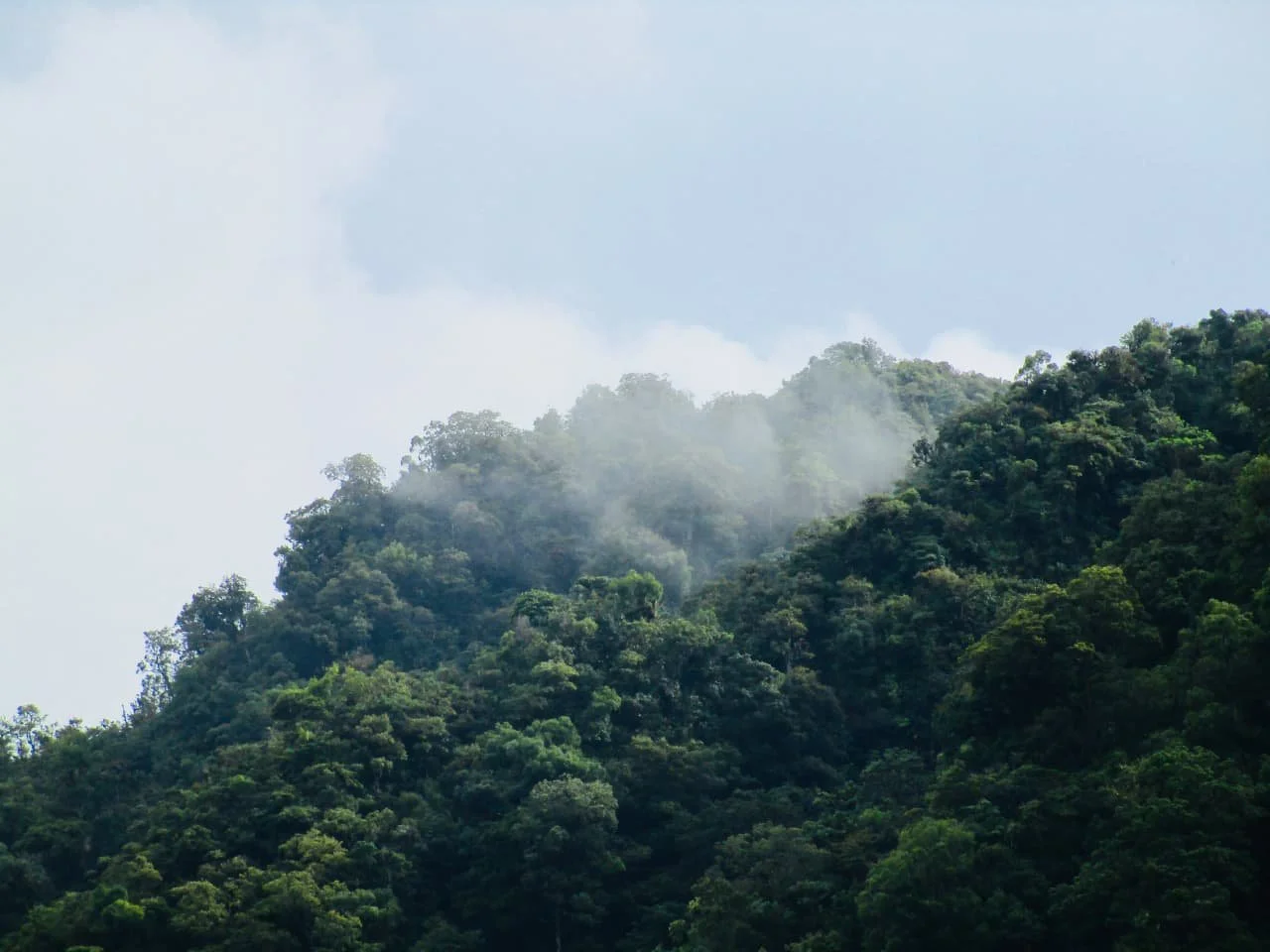
28. Panama is one of the most biodiverse countries on Earth for its size. Its position between North and South America created a biological bridge through which animals and plants moved between continents. The country's mountains, cloud forests, lowland rainforest, mangroves, coral reefs and two coastlines create an extraordinary number of habitats.
29. Panama has an enormous amount of forest. More than half of the country's territory remains forested according to commonly used international estimates. One estimate puts forest cover at about 62.3% of the country. That is one reason a traveler can leave a major city and relatively quickly find themselves surrounded by genuine wilderness.
30. The Darién is one of the wildest parts of Central America. The Darién region contains vast areas of rainforest and difficult terrain. The Darién Gap between Panama and Colombia is the only place where the Pan-American Highway is interrupted. There is no continuous road connecting the two countries through the rainforest.
31. Panama has a tropical climate, but the country is not uniformly hot. Coastal and lowland areas are generally hot and humid, while the mountains of Chiriquí and other highland regions can be dramatically cooler. This is why places such as Boquete, Volcán and Santa Fe can feel completely different from Panama City or the Caribbean coast.
32. Panama has a pronounced dry season and rainy season. In much of the country the dry season generally falls around January through April, while the rainy season dominates much of the remainder of the year. The exact timing and intensity vary considerably by region. The Caribbean side can receive substantial rainfall even when parts of the Pacific side are experiencing relatively dry conditions.
33. Panama is home to eight Indigenous peoples but five major Indigenous comarca territories. This distinction is important. "Eight Indigenous peoples" refers to cultural and ethnic groups, while "five comarcas" refers to legally recognized Indigenous territories. Not every member of an Indigenous group lives inside a comarca, and some Indigenous communities are scattered elsewhere in the country.
34. Panama is religiously diverse, and the religious breakdown is changing. Historically, Roman Catholicism has been the dominant tradition, but Panama has experienced substantial growth in Protestant and Evangelical Christianity. A 2023 survey reported approximately 52.1% Evangelical, 33.4% Catholic, 10.1% with no religion, with smaller percentages belonging to other denominations or declining to answer. These figures should be treated as survey results rather than census figures, because religion is not captured in the same way as population totals.
35. Panama also has Jewish, Muslim, Buddhist, Hindu and other religious communities. Panama City in particular is religiously and culturally diverse because of its long history as an international commercial center. There are also Indigenous spiritual traditions that do not fit neatly into conventional Christian categories, although many Indigenous Panamanians today combine traditional beliefs with Christianity.
36. The Panama Canal is arguably the country's most famous geographical feature, but it is also an economic machine. The canal connects the Atlantic and Pacific oceans and eliminates the need for ships to travel around the southern tip of South America. It transformed global shipping and made Panama one of the world's most strategically important small countries.
37. The Panama Canal officially opened in 1914. Construction was one of the most difficult engineering projects in history. Thousands of workers died during the broader construction era, particularly from diseases such as malaria and yellow fever, before major advances in mosquito control transformed the situation.
38. Panama did not always control the Canal. The United States controlled the Canal Zone for much of the twentieth century. Under the Torrijos-Carter Treaties, control was gradually transferred to Panama, with Panama assuming full control of the Canal on December 31, 1999. Today the Panama Canal is administered by the Panama Canal Authority, making it one of the country's most important national institutions.
39. Panama's road system is highly centralized. The Pan-American Highway forms the backbone of overland transportation through much of the country, connecting many major population centers. But once you travel into remote mountain, jungle or Indigenous areas, transportation can become much more complicated, involving small buses, boats, four-wheel-drive vehicles, dirt roads and hiking trails.
40. Panama has an enormous variety of landscapes for a country of only 75,000 square kilometers. Within a single trip you can experience skyscrapers, tropical islands, Caribbean beaches, Pacific surf beaches, coral reefs, dry tropical forests, cloud forests, coffee plantations, volcanic mountains, cattle ranches, mangrove wetlands and dense rainforest.
41. Panama is an important international banking and financial center. Its economy developed a strong international-services component because of its strategic location, dollarized financial system, shipping industry and history of international commerce. The skyline of Panama City is therefore much more impressive than the country's population might lead you to expect.
42. Panama has one of the world's most strategically located airports. Tocumen International Airport has become a major connecting hub between North America, South America, the Caribbean and Europe. For travelers, this makes Panama unusually easy to reach from many parts of the Americas.
43. Panama has a huge Chinese-Panamanian community. Chinese migration to Panama dates back to the nineteenth century, particularly during the construction of the Panama Railway and later the Canal. Chinese-Panamanian communities have become an important part of Panama's commercial, culinary and cultural landscape.
44. Panama's Caribbean communities have profoundly influenced the country's identity. Afro-Caribbean migration contributed food, music, language, religion and traditions that remain particularly visible in places such as Colón, Bocas del Toro and parts of Panama City. Panamanian culture therefore cannot really be understood simply as "Spanish Central American."
45. Baseball is one of Panama's most popular sports. Panama has produced internationally famous baseball players, including Mariano Rivera, who became one of the greatest relief pitchers in Major League Baseball history. Soccer has also grown enormously in popularity and is now a major part of the country's sporting culture.
46. Panama has one of the world's most famous natural biological corridors. Its location means that animals from North America and South America have historically been able to move through the region. That helps explain why Panama has such an extraordinary mixture of wildlife, including monkeys, sloths, anteaters, big cats, toucans, hummingbirds, poison dart frogs, crocodilians and hundreds of other species.
47. Panama's Indigenous population represents a significant part of the country's population. The 2010 census analysis estimated Indigenous people at approximately 12.3% of the national population, although newer 2023 census data provide updated information and classifications. The Indigenous population is not a single culture: Guna traditions are different from Ngäbe traditions, which are different from Emberá, Wounaan, Naso, Bribri and the other peoples.
48. Panama's population is considerably younger than many developed countries, but it is also aging. Life expectancy is approximately 79 years, with women generally living longer than men. The country is simultaneously dealing with the needs of a growing working-age population and an increasing number of older residents.
49. Panama drives on the right-hand side of the road. Vehicles are generally left-hand drive, making Panama relatively straightforward for visitors from Canada, the United States and much of Latin America. The country uses the international dialing code +507, and unlike many countries, telephone numbers are commonly written as eight digits after the country code.
50. Perhaps the most interesting fact of all is that Panama is much more than the Canal. The Canal is what put the country on the world map, but modern Panama is a complicated combination of international finance, shipping, tourism, agriculture, Indigenous cultures, Caribbean heritage, mountains, islands, rainforest and rapidly expanding cities. You can stand in the middle of Panama City surrounded by glass skyscrapers and international banks and, within a few hours, find yourself in a village where people live beside a river, speak an Indigenous language and farm the surrounding land. That extraordinary contrast is really the defining fact about Panama:
a tiny country geographically, but an enormous mixture of cultures, landscapes, economies and ways of life packed into one narrow strip of Central America.