
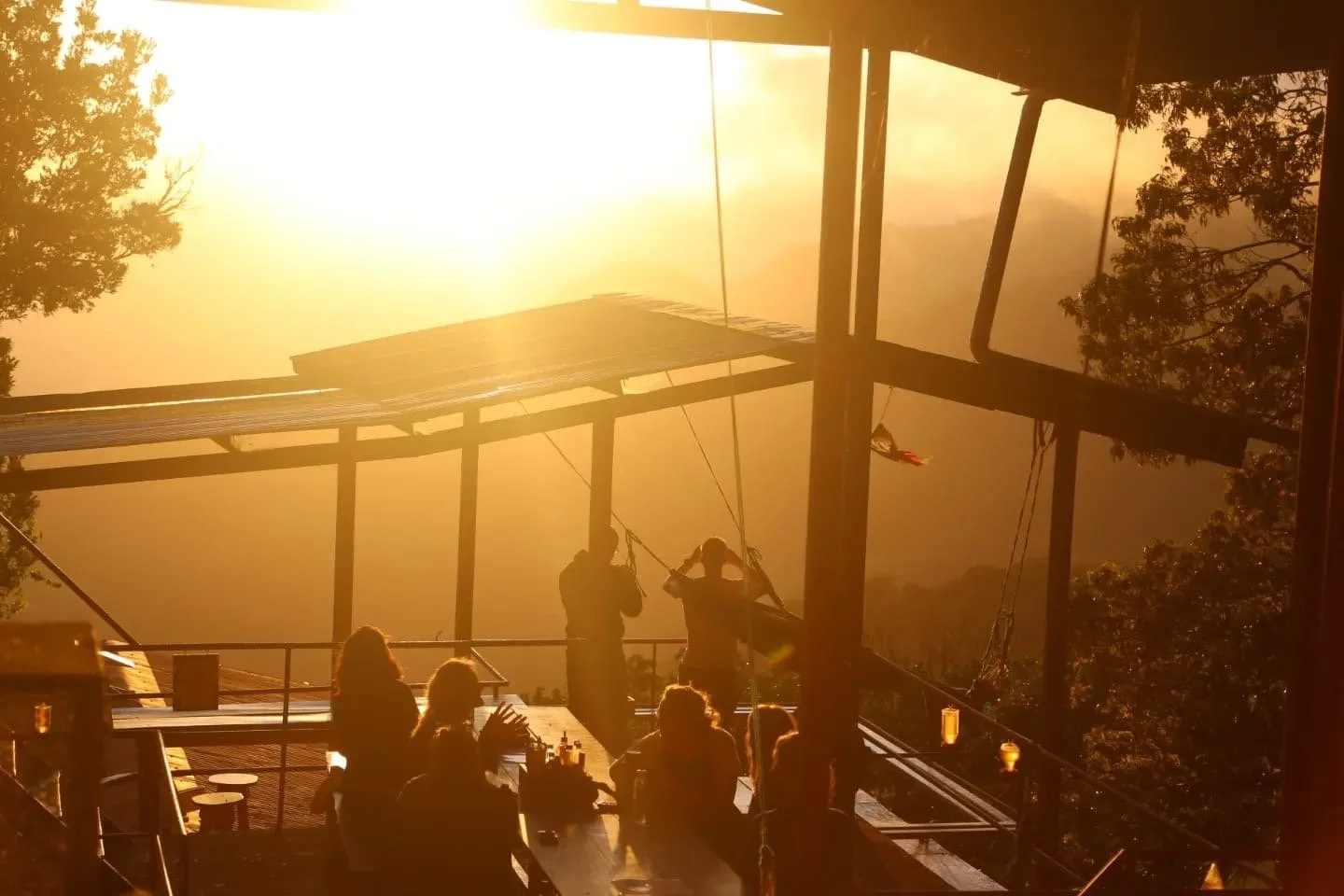
One of the first things many travelers notice when they arrive in Panama is that the sun does not behave the way it does in Canada, the United States or Europe. There are no extremely long summer evenings and no winter afternoons where darkness arrives at 4 p.m. Instead, Panama sits close enough to the equator that daylight remains remarkably consistent throughout the entire year. The sun generally rises somewhere around 6 a.m. and sets somewhere around 6 p.m., with the exact times shifting gradually depending on the date and your location. In Panama City, for example, sunrise and sunset can be around 6:00 to 6:20 in the morning and roughly 6:00 to 6:45 in the evening depending on the time of year. The variation is much smaller than what travelers from northern countries are accustomed to.
That consistency is fantastic for travelers, but it also creates a trap: Panama can go from "plenty of daylight" to "it's basically nighttime" surprisingly quickly. If you're hiking, exploring a waterfall, driving a remote mountain road, taking a boat, walking through jungle or simply exploring somewhere unfamiliar, you need to think about sunset differently than you might at home. In Panama, you cannot count on an extra two or three hours of usable daylight after the sun disappears behind the horizon. Once the sun has set, the tropical darkness arrives quickly, particularly under thick forest canopy or in mountainous areas.
Panama Doesn't Have Four Dramatically Different Daylight Seasons
Panama is located roughly between 7° and 10° north of the equator, which means the difference between the longest and shortest days of the year is relatively small. Instead of the enormous seasonal daylight swings experienced farther north, Panama stays close to approximately 12 hours of daylight and 12 hours of darkness throughout the year. In Panama City, the calculated daylight totals for 2026 show only modest monthly variation.
This is one of the reasons Panama can initially feel strange to travelers from countries with strong seasonal changes. Someone arriving from Canada in June might be accustomed to having daylight until 9 or 10 p.m. In Panama, 6:30 p.m. can already be close to sunset. Conversely, someone arriving from northern Europe in December may be accustomed to darkness beginning in mid-afternoon. In Panama, December still gives you approximately twelve hours of daylight. The country essentially lives on a tropical clock.
Sunrise: Your Day Starts Early in Panama
Sunrise generally occurs around 6 a.m., give or take several minutes depending on the date and location. That makes early mornings particularly valuable for travelers. If you're hiking, birdwatching, photographing wildlife or trying to beat the heat, getting out shortly after sunrise can be one of the best decisions you make.
The morning is often cooler than the afternoon, and wildlife can be considerably more active. Birds are especially noticeable around dawn, while monkeys and other animals may be moving through the forest before temperatures become uncomfortable. For hikers, an early start also provides a significant safety advantage because you have almost the entire daylight period available to complete the route.
There is another interesting feature of Panama's location: the Sun can appear extremely high in the sky. Because Panama lies within the tropics, the Sun passes almost directly overhead at certain times of the year. This means shadows can become remarkably short around midday, and the intensity of the tropical sun can be deceptive. A morning that feels pleasantly cool can turn into a brutally hot afternoon surprisingly quickly.
Sunset Is the Part Travelers Need to Respect
If there is one piece of advice worth remembering, it is this:
Do not plan your Panamanian adventure around sunset. Plan to be finished before sunset.
If your hiking trail takes two hours, don't start a two-hour hike one hour before sunset simply because you think you have enough time. Jungle trails are different from city streets. Once the sun disappears, roots, rocks, mud, streams and steep sections become much harder to see. A trail that seemed incredibly easy at 4 p.m. can feel completely different at 6:30 p.m.
The same applies to waterfalls. Many spectacular waterfalls in Panama are reached by trails that cross streams, climb steep terrain or pass through dense vegetation. If you stay too long swimming and then begin walking back as the light is disappearing, you can quickly find yourself navigating difficult terrain in darkness.
And Panama's jungle becomes a completely different world after dark.
Darkness in the Jungle Is Not the Same as Darkness in the City
In Panama City, sunset doesn't necessarily mean your day is over. Streetlights, buildings, traffic and businesses keep everything illuminated. In a small mountain town, however, the difference can be dramatic. In the countryside, you can sometimes walk a few minutes away from a settlement and encounter almost complete darkness.
In the rainforest, the effect is even stronger. Dense vegetation blocks much of the remaining twilight, so a jungle trail can become dark before the official sunset time. Mountains can also block the low western sun, meaning a valley may lose direct sunlight significantly earlier than an open area at the same latitude.
This is particularly important around places such as Boquete, El Valle, Santa Fe, Bocas del Toro and the mountains of Chiriquí, where terrain and vegetation can make the perceived sunset considerably earlier than the official astronomical sunset.
The Seasons Still Change the Sunrise and Sunset Times
Although Panama doesn't experience dramatic changes in daylight, the sunrise and sunset times still move throughout the year. Around the equinoxes, daylight and nighttime are close to equal. The March and September equinoxes are particularly interesting because the Sun is crossing the equator. In 2026, the March equinox occurs on March 20 and the September equinox on September 22.
The important thing for travelers is not necessarily memorizing the exact astronomical dates. Instead, understand the general pattern: sunrise and sunset gradually move over the course of the year rather than remaining fixed at exactly 6 a.m. and 6 p.m.
Even a change of 20 or 30 minutes can matter when you're trying to catch a bus, finish a hike or reach a remote destination before darkness.
Panama Doesn't Have Daylight Saving Time
Another important detail is that Panama does not change its clocks for daylight saving time. The country remains on UTC−5 throughout the year. This can be confusing for travelers from countries that change their clocks twice a year.
For example, Panama's clock doesn't suddenly move forward in March or backward in November. Instead, the difference between Panama and countries such as Canada and the United States changes when those countries switch their clocks.
For travelers, this matters particularly when booking flights, buses, shuttles and tours. Always check the local Panamanian time rather than assuming the time difference will remain identical throughout the year.
Sunrise and Sunset Aren't Identical Across Panama
Panama is small compared with countries such as Canada or Brazil, but it is still large enough for sunrise and sunset times to vary geographically. The difference can be noticeable between western Panama, eastern Panama and the Caribbean and Pacific coasts.
For example, current astronomical listings show slightly different sunrise and sunset times for Boquete, David, Santiago, Colón and Panama City.
This is particularly important in the mountains. A location might technically have sunset at a certain time, but if you're standing in a valley surrounded by mountains, the direct sunlight can disappear much earlier. Similarly, a dense rainforest can become dark considerably faster than an exposed beach.
So if someone tells you, "Sunset is at 6:40," that doesn't necessarily mean you will still have good hiking light at 6:30.
The Golden Hour Can Be Incredible
The good news is that Panama's relatively consistent daylight makes sunrise and sunset photography incredibly rewarding. The tropical atmosphere, clouds, mountains, ocean and rainforest can produce spectacular colors.
Sunset along the Pacific coast can be especially impressive, while sunrise can be magical along the Caribbean side. In mountainous regions, the sun can illuminate clouds and ridges in ways that make the landscape look completely different from the middle of the day.
But don't confuse golden hour with safe hiking time. Golden hour is beautiful precisely because the Sun is low, which means visibility is already beginning to deteriorate.
If you're hiking, use sunset as a hard deadline rather than an invitation to begin the final part of your journey.
The Biggest Safety Mistake: Starting Too Late
One of the most common mistakes travelers make in tropical countries is underestimating how much time they need.
Someone might think, "It's only a three-hour hike and sunset is at 6:30, so I'll leave at 3:30."
That's a bad calculation.
You need to account for getting lost, stopping for photographs, swimming, taking breaks, crossing streams, climbing steep sections, dealing with mud, encountering wildlife and simply walking slower than expected. If the trail takes three hours under ideal conditions, it might take four hours when conditions change.
A much safer rule is to finish the difficult portion of your hike while there is still plenty of daylight.
Always Carry a Headlamp
If you're going anywhere outside a developed urban area, a small headlamp is one of the most useful things you can carry in Panama.
Not your phone flashlight.
A real headlamp.
It leaves both hands free for climbing, balancing and navigating. It is lightweight, inexpensive and can turn a potentially dangerous situation into a manageable one.
This is particularly important if you're hiking in the mountains or rainforest. Even if you are absolutely certain you'll return before dark, carry a light anyway. A wrong turn, injury, heavy rain or unexpected delay can turn a short afternoon hike into a nighttime adventure.
And if you are traveling through Panama by bus, it is also worth carrying a flashlight because rural bus stops and roads can become extremely dark after sunset.
Rain Makes the Transition to Darkness Even More Dramatic
Panama's rainy season adds another complication. Heavy tropical rain can make an afternoon suddenly feel like evening even before the sun has technically set. Dark clouds, dense forest and heavy rainfall can dramatically reduce visibility.
If you're hiking when a storm approaches, don't assume you can simply continue because there is technically still daylight. Rain can make rocks slippery, rivers rise and trails become difficult to navigate.
In the mountains, conditions can change especially quickly.
A trail that was perfectly manageable at noon can become slippery, muddy and difficult to follow by late afternoon.
Boats Have Their Own Sunset Rules
Travelers exploring Panama's islands should also take sunset seriously.
If you're taking a small boat, kayaking or exploring remote islands, you don't want to discover that your return trip is happening after dark. Navigation becomes more complicated, visibility decreases and weather conditions can change.
This is particularly important when visiting remote beaches or islands without significant infrastructure.
If you're taking an independent boat trip, always know what time you need to leave the destination, not simply what time you want to arrive back.
Wildlife Becomes More Active After Dark
Another reason to respect sunset in Panama is that nighttime brings out an entirely different ecosystem.
The jungle doesn't shut down when the Sun disappears. It wakes up.
Frogs begin calling. Bats emerge. Nocturnal insects become active. Owls and night birds begin moving. Various mammals become more active, and many creatures that are almost impossible to see during the day become easier to encounter at night.
This is one reason guided night walks can be spectacular.
But it is also why wandering alone through unfamiliar jungle trails at night is not a good idea. You don't necessarily need to be terrified of wildlife, but you should understand that the forest changes after dark.
The Best Strategy for Travelers
The simplest strategy is to build your entire day around the sun.
Wake up early.
Do your major hiking and outdoor activities during the morning.
Take advantage of the cooler afternoon when possible.
Know your sunset time before starting an excursion.
Begin returning from remote locations well before sunset.
Carry a headlamp.
Carry enough water.
Don't assume your phone flashlight will be enough.
And if you're unfamiliar with a trail, don't attempt to "squeeze in one last viewpoint" when you're already approaching sunset.
Panama rewards early risers.
The mornings can be cooler, quieter and filled with wildlife, while the evening gives you spectacular sunsets without requiring you to gamble with darkness.
The Golden Rule of Panama
Perhaps the best rule for backpackers is simple:
In Panama, don't ask, "What time does the sun set?" Ask, "What time do I need to be back?"
Those are two completely different questions.
If sunset is at 6:30 p.m., your safe return time might be 5:30. If you're in dense jungle or mountainous terrain, it might be even earlier. The official sunset tells you when the upper edge of the Sun disappears below the horizon. It does not tell you how long you have comfortable visibility on a muddy jungle trail.
Panama's relatively constant daylight is one of the great advantages of traveling here. You never have to deal with the extreme seasonal darkness found in northern countries, and you can generally count on roughly twelve hours of daylight year-round. But that consistency can also make travelers complacent. The Sun comes up around six, the Sun goes down around six, and once it goes down, the tropics can become dark very quickly.
For anyone exploring Panama beyond the city, the best habit is therefore to respect the clock, respect the jungle and give yourself more daylight than you think you need. The sunset may be beautiful, but being safely back at your hostel, hotel, campsite or town before darkness arrives is even better.