
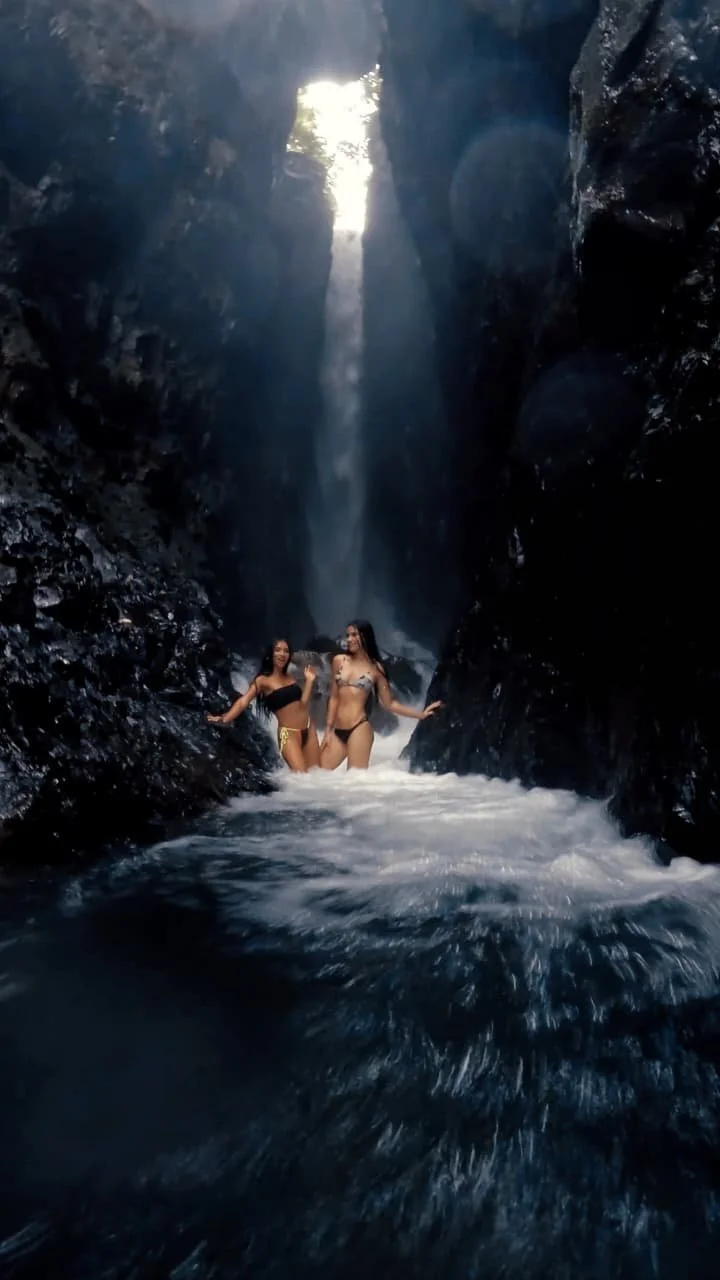
Panama is one of those countries where you can walk into a forest expecting absolutely nothing and come out having seen monkeys, sloths, toucans, hummingbirds, frogs, lizards and enough enormous insects to make you question whether your backpack is really necessary. The incredible thing isn't simply that Panama has lots of wildlife. It's where the wildlife is. You don't always need to travel to some impossibly remote corner of the country. Sometimes the animals are living remarkably close to roads, villages, beaches and even Panama City. Panama's position between North and South America, combined with its mountains, rainforests, rivers, mangroves, Caribbean coastline and Pacific coastline, gives it extraordinary biological variety. For a backpacker, this creates an amazing possibility: you can turn almost any day in Panama into a wildlife expedition.
First Rule: Don't Go Looking for "Animals"
This sounds strange, but it's one of the most important lessons. Don't walk into a jungle expecting animals to stand beside the trail waiting for photographs. Wildlife doesn't work that way. Instead, learn to look for signs. Listen for branches moving above you. Watch the canopy. Look for fruit trees. Check muddy trails for tracks. Listen for unusual bird calls. Look along streams. Search carefully around flowering plants. And most importantly, slow down. A backpacker racing through a trail can walk past an incredible amount of wildlife without seeing anything. A person who sits quietly in the same place for twenty minutes can suddenly discover that the forest is absolutely packed with life.
Soberanía National Park: The Wildlife Jackpot Near Panama City
If you're beginning your Panama adventure in the capital, you don't have to travel across the country to experience serious rainforest. Soberanía National Park is remarkably close to Panama City and protects approximately 22,000 hectares of tropical forest near the Panama Canal. This is one of the country's great wildlife destinations, and birds are the stars. The famous Pipeline Road has produced extraordinary bird counts, with Panama's tourism authority highlighting a record of 357 species observed there in a 24 hour period. You don't need to be a professional birder to appreciate it. Toucans, trogons, motmots, hummingbirds, woodpeckers, flycatchers and tanagers can all become part of the experience, along with countless birds that you may have absolutely no idea how to identify. The first time you walk through tropical rainforest with a good pair of binoculars, you realize something important: birdwatching is basically a treasure hunt where the treasure has wings.
The Monkey Forests
Panama has several species of monkeys, and different environments offer different opportunities to encounter them. Howler monkeys are among the easiest to notice because you often hear them before you see them. And what a sound. A peaceful jungle suddenly erupts with a deep, powerful roar coming from somewhere high in the trees. Your first instinct may be, "What on Earth was that?" Then someone explains that the sound is coming from a monkey, and the forest suddenly makes a lot more sense. White faced capuchins are another fascinating species to watch. They're intelligent, social and highly active, and groups can move through the canopy surprisingly quickly. The trick is to watch the trees rather than staring only at the ground. If branches are shaking for no obvious reason, there's a good chance something is moving above you.
Gamboa and the Canal Zone
The forests around Gamboa are another fantastic area for wildlife watching. The combination of rainforest, waterways and the Panama Canal creates an extraordinary mixture of habitats. Boat trips through the waterways can provide opportunities to see monkeys, birds, reptiles and other animals from a completely different perspective. Instead of walking through the forest, you're quietly moving through it by water. That can be especially effective for animals that live along rivers and forest edges. And there's something wonderfully strange about seeing a monkey in a tree while a massive ship passes through the canal somewhere nearby. Few places combine heavy industry and tropical wilderness quite like Panama.
Barro Colorado Island: A Living Laboratory
Barro Colorado Island sits in Gatun Lake and has become famous among scientists studying tropical ecosystems. The island has been the site of long term wildlife research, including work using camera traps to study animal communities. For wildlife enthusiasts, the fascinating part isn't simply the animals themselves. It's the fact that researchers have been able to study how tropical ecosystems function over long periods. You begin to appreciate that every animal encounter is part of something much bigger. A bird isn't simply a pretty bird. It's eating something, being eaten by something else, dispersing seeds, competing for territory and responding to rainfall. It's interacting with dozens of other species you might never notice. The jungle is essentially one enormous conversation.
Lost and Found: When the Wildlife Comes to You
For backpackers traveling between Boquete and Bocas del Toro, there is another particularly interesting possibility. Instead of treating wildlife as something you need to drive somewhere to find, imagine staying somewhere where the surrounding forest is already the wildlife experience. That's one of the attractions of Lost and Found Hostel, located within the Fortuna Forest Reserve in Chiriquí. The hostel's own trail network passes through cloud forest, and its surroundings can provide encounters with animals including white faced capuchins, agoutis, squirrels, hummingbirds, toucans and other forest birds. This is particularly appealing for backpackers because you don't necessarily have to organize an expensive wildlife expedition. You can simply wake up, put on your shoes, walk outside and start looking. That changes the whole experience. Instead of wildlife being a two hour excursion followed by returning to your accommodation, the forest itself becomes part of where you're staying. And if you are lucky, the most memorable wildlife encounter of the day might happen while you're walking back from breakfast.
The Chiriquí Highlands: Cloud Forest Wildlife
The mountains of Chiriquí are completely different from the lowland rainforest. As you climb, the climate becomes cooler and wetter, and cloud forest vegetation takes over. This is where some of Panama's most famous highland birds become particularly exciting. The resplendent quetzal is the celebrity. Seeing one is a genuine wildlife achievement. They're beautiful, elusive and closely associated with mature mountain forests. But don't make the mistake of visiting the highlands only looking for quetzals. The cloud forest is packed with other life. Hummingbirds, toucans, motmots, tanagers, frogs, lizards, butterflies, orchids and bromeliads all contribute to the experience. Sometimes the animal you remember most isn't the rare bird you spent three hours searching for. It's a tiny frog sitting on a leaf.
Volcán Barú: Wildlife Above the Clouds
Volcán Barú National Park protects some of Panama's most important high altitude ecosystems. The dramatic change in elevation creates completely different habitats. At lower elevations, the forest is warm and intensely tropical. Higher up, the vegetation changes, the air becomes cooler and clouds move through the trees. The wildlife changes with it. This is one of the great things about Panama for nature lovers. You don't have to travel between several countries to experience completely different ecosystems. Sometimes you simply climb a mountain.
Darién: The Wildest Chapter
Then there is Darién. This is where the wildlife story becomes much more serious. Darién National Park protects one of Central America's great remaining wilderness areas and is home to an extraordinary range of species. The region is associated with animals including jaguars, tapirs and harpy eagles, among many others. But this isn't the kind of place where you simply wander off into the forest hoping to encounter a jaguar. Darién is remote and challenging, and responsible travel should involve appropriate local guidance, permissions and respect for conservation and community considerations. For the average backpacker, the important thing isn't necessarily trying to visit the most remote possible jungle. It's understanding that Panama still contains genuinely wild ecosystems. There are places where the forest isn't simply a backdrop for tourism. It is still overwhelmingly the dominant presence.
Coiba: Wildlife Above and Below the Water
Coiba National Park is one of Panama's most extraordinary wildlife destinations because the adventure doesn't stop at the shoreline. The park protects marine, island and coastal ecosystems and is recognized for exceptional biodiversity. Panama's tourism authority highlights more than 148 recorded bird species in Coiba National Park, including scarlet macaws, while the surrounding waters support an enormous range of marine life. This is where wildlife watching becomes three dimensional. You can look into the trees, explore beaches and mangroves, and look beneath the surface of the Pacific. Depending on conditions and the activity, visitors can encounter marine wildlife, seabirds, reptiles and numerous other species. The journey itself is part of the experience. Reaching Coiba generally involves traveling from mainland Panama to the coast and then continuing by boat.
Bocas del Toro: Wildlife in a Caribbean World
The Bocas del Toro region offers another completely different wildlife experience. Here, rainforest meets Caribbean islands, mangroves, beaches and coral ecosystems. You can spend the morning looking for birds in the forest and the afternoon exploring marine environments. The Caribbean side also provides opportunities to encounter sloths, monkeys, tropical birds, reptiles and an incredible variety of marine organisms. And sometimes the wildlife is right in front of you. A sloth hanging in a tree above a road. A hummingbird hovering beside a flower. A frog sitting beside a trail. A pelican diving into the water. A starfish in shallow Caribbean water. The trick is remembering to actually look.
The Pacific Coast Has Its Own Wildlife Story
The Pacific coast shouldn't be forgotten. Mangroves, estuaries, islands, beaches and offshore waters create habitats for completely different animals. Whales can be encountered seasonally in Pacific waters, while seabirds and marine animals are associated with coastal ecosystems. Places such as the Gulf of Chiriquí and Coiba region can be particularly fascinating for travelers interested in marine wildlife. The Pacific also gives you something that the jungle can't: scale. You can stand on a beach and look toward an enormous horizon while realizing that the wildlife isn't only in the forest behind you. It's beneath the waves.
How to Actually Find Animals
This is the part that makes the biggest difference. You don't need expensive equipment. You need patience. Wake up early. This may be the single best piece of advice. Many birds and mammals are most active during the cooler morning hours. The forest can be dramatically different at 6:00 a.m. compared with midday. Birdsong fills the canopy, animals are moving around, the temperature is more comfortable and the light is beautiful. If you're serious about wildlife, don't sleep until noon every day. Panama's jungle has already started its morning shift.
You should also learn to listen. You can often hear an animal before you see it. A branch cracking overhead, leaves moving, a monkey calling, a bird producing an unfamiliar sound or something splashing in a stream can all be clues. The forest has a soundtrack. The more time you spend listening, the better you become at understanding it. Experienced wildlife watchers don't constantly scan every square meter of forest. They listen for something unusual and then investigate.
And look up. This is an embarrassingly simple piece of advice, but it makes a huge difference. Sloths are above you. Monkeys are above you. Toucans are above you. Many birds are above you. Sometimes the most incredible animal in the entire forest is sitting thirty feet overhead while you stare at the ground looking for footprints. The canopy is an entirely different world.
Then look down too. Watch the forest floor. Look along streams. Check fallen logs without disturbing them. Watch for movement in leaf litter. You may find frogs, lizards, insects, spiders, mammals and countless other creatures. But don't touch wildlife or put your hands into holes, vegetation or places you can't see clearly. Panama has venomous snakes and other animals that deserve respect. Wildlife watching is about observation, not interaction.
Nighttime Changes Everything
One of the biggest mistakes travelers make is thinking that the jungle shuts down after sunset. It doesn't. It changes shifts. Some animals become active at night. Frogs begin calling. Nocturnal mammals start moving. Insects become incredibly abundant. Spiders emerge. The forest suddenly sounds completely different. A guided night walk can therefore reveal an entirely different ecosystem from the one you saw during the afternoon. A flashlight becomes your window into another world. Just remember that nighttime wildlife watching is best done responsibly, with appropriate guidance where needed and without handling animals.
Rain Can Actually Help
Many travelers see rain and immediately think, "Well, there goes my wildlife day." Not necessarily. Rain can make the forest incredibly active. Frogs may become easier to hear, some animals may emerge, bird behavior can change, streams become louder and the entire forest takes on a different atmosphere. A rainy jungle isn't necessarily a failed wildlife experience. Sometimes it's the better one.
Don't Chase the Rare Animals
This is perhaps the most important philosophy of wildlife watching. If you spend your entire trip obsessing over seeing one particular animal, you can miss hundreds of incredible experiences. You might spend five hours searching for a quetzal and see nothing. Then on the walk back, you discover a family of monkeys, a spectacular hummingbird, an enormous blue morpho butterfly, a strange frog you've never seen before or a toucan sitting directly above the trail. Wildlife isn't a checklist. It's an experience.
Binoculars Are a Backpacker's Secret Weapon
If you're serious about wildlife, a compact pair of binoculars can completely transform your trip. Suddenly the bird in the distant tree isn't just "some bird." You can see its colors, its beak and its behavior, and maybe even identify it. You don't need enormous professional equipment. Something compact enough to carry comfortably is often far more useful for a backpacker. And your phone can still be incredibly useful for photographing animals from a respectful distance.
Don't Feed the Wildlife
This should be obvious, but it is worth saying. Feeding wild animals can alter their behavior and encourage them to associate humans with food. That can be bad for the animal and potentially dangerous for people. The best wildlife encounter is one where the animal doesn't even know you're there. A wild monkey behaving like a wild monkey is much more interesting than a monkey waiting beside a tourist path for snacks.
The Best Wildlife Experiences Are Often Free
One of the great things about backpacking in Panama is that wildlife watching doesn't always require an expensive tour. You can walk through appropriate public trails, explore protected areas, sit quietly near forest edges, watch birds around your accommodation, walk early in the morning, listen at night, look around rivers and explore beaches. Pay attention. Of course, guides can dramatically improve your chances of finding specific species, particularly if you're interested in birds or difficult to spot mammals. A good local guide knows what calls to listen for, where animals tend to move and what signs to look for. But you don't need to turn every wildlife encounter into an expensive excursion. Sometimes nature is literally outside your door.
Panama's Greatest Wildlife Trick
Perhaps the most remarkable thing about wildlife in Panama is how close it can be to ordinary human life. A rainforest can begin surprisingly close to a city. A monkey can cross through trees near a road. A hummingbird can appear beside a hostel. A sloth can be sleeping above a trail. A toucan can land in a tree while you're eating breakfast. And this is why Panama is such an extraordinary destination for backpackers interested in nature. You don't necessarily have to choose between adventure and convenience. You can have both.
The Perfect Backpacker Wildlife Strategy
If you're traveling around Panama and want to maximize your chances of seeing animals, think about building your trip around different ecosystems rather than simply collecting destinations. Start around Soberanía if you're near Panama City and want accessible rainforest and spectacular birdwatching. Head toward the Chiriquí Highlands for cloud forest, hummingbirds and the possibility of seeing quetzals. Explore the forests around Fortuna if you're traveling between Boquete and Bocas del Toro and want a place where wildlife can become part of your everyday surroundings. Consider Bocas del Toro for Caribbean rainforest and marine ecosystems. Travel toward Santa Catalina and Coiba for one of Panama's great combinations of terrestrial and marine wildlife. And if you have the experience, time and appropriate local guidance, Panama's more remote wilderness areas offer an entirely different level of adventure.
The Place Where You Might See More Than You Expected
This is perhaps the biggest surprise for backpackers. You don't always need to spend hundreds of dollars chasing wildlife. Sometimes you simply need to stay somewhere surrounded by it. A place like Lost and Found is interesting precisely because the forest isn't something you leave behind when you return from an excursion. The property sits within the Fortuna Forest Reserve, and its surrounding trails provide opportunities to encounter a remarkable variety of wildlife. You might wake up to birds, walk down a trail and encounter monkeys, spot a hummingbird near the vegetation, hear something moving through the forest, or take a night walk and discover that the creatures you didn't see during the day have suddenly taken over. That's a completely different way of experiencing wildlife. You're not visiting the jungle. You're staying in it.
Panama Is a Wildlife Treasure Hunt
The most exciting thing about searching for wildlife in Panama is that you never really know what you're going to find. You can go looking for monkeys and discover a toucan. You can go looking for birds and find a sloth. You can go looking for frogs and discover an enormous tarantula. You can go looking for absolutely nothing and find something extraordinary.
That's the magic.
Panama doesn't have to put its wildlife behind fences to make it impressive. The animals are living in forests, mountains, mangroves, islands, rivers and cloud forests across the country. And sometimes they're living astonishingly close to where you're sleeping.
So bring binoculars. Charge your phone. Wake up early. Walk slowly. Listen carefully. Look up. Look down. And most importantly, leave the jungle exactly as you found it.
Because the greatest wildlife experience in Panama isn't simply seeing a rare animal. It's realizing that, for a few minutes, you were standing inside a living ecosystem that had absolutely no idea you were the main character.
And that's when backpacking through Panama becomes something much more than travel.
It becomes a wildlife expedition where the next discovery could be waiting around every corner.