
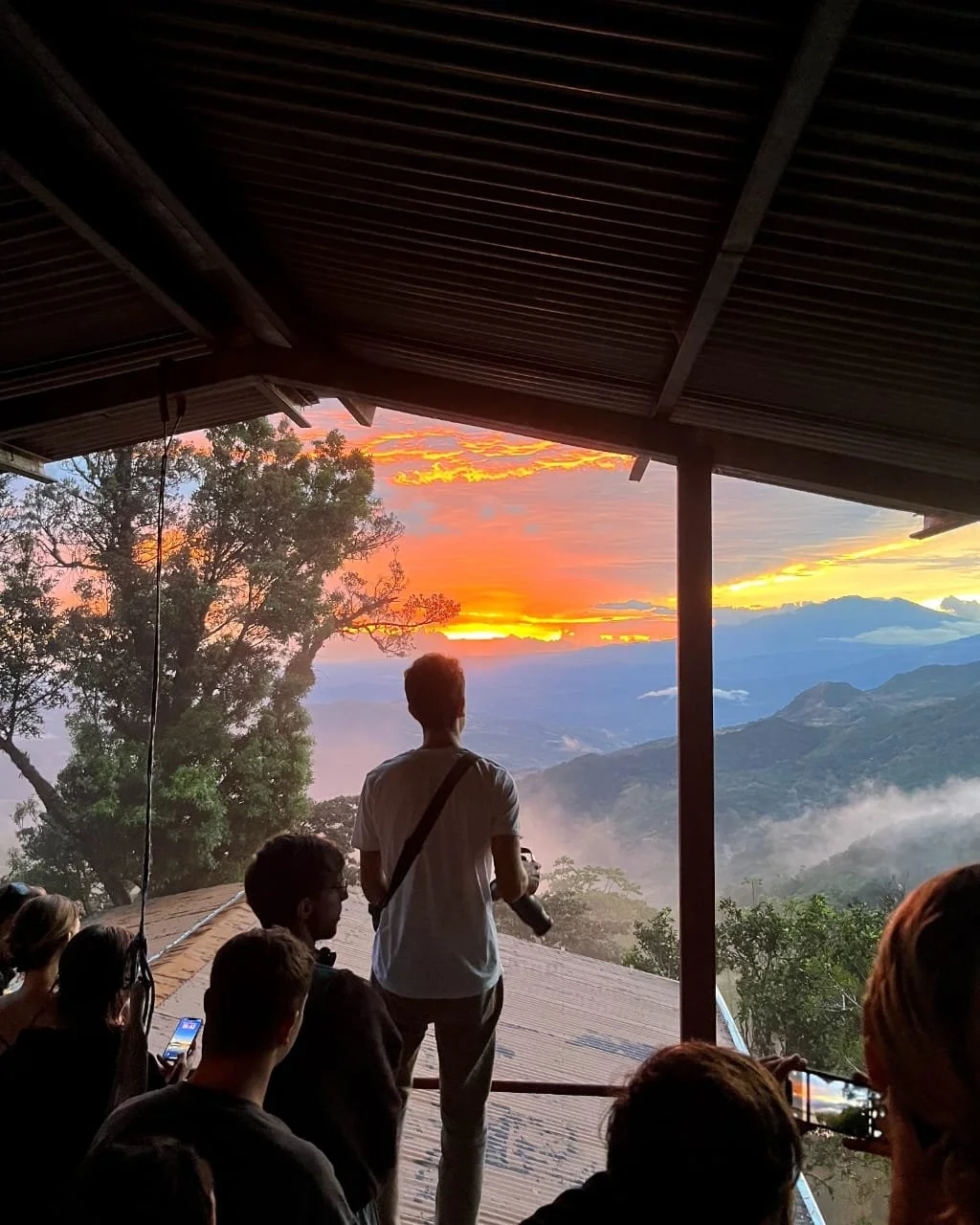
There is a certain mistake that travelers make when exploring Panama: they become so focused on reaching the famous destinations that they forget to experience the country in between them. Boquete is on the itinerary. Bocas del Toro is on the itinerary. The bus ticket is purchased, the backpack is packed, Google Maps is open, and the journey between the two becomes nothing more than a transportation problem. But one of the most spectacular things about traveling through Panama is that the country changes dramatically over surprisingly short distances. The cool mountain landscapes around Boquete gradually transform into dense rainforest before eventually giving way to the Caribbean world of Bocas del Toro. Instead of treating that journey as something you simply have to get through, there is a much better way to travel: break it up, slow down and spend a couple of nights somewhere completely different. That is where Lost and Found comes in. Hidden high in the mountains along the route between Boquete and Bocas, inside the Fortuna Forest Reserve, Lost and Found isn't simply a convenient hostel where you can sleep before continuing your journey. It is an experience in its own right. It gives travelers the chance to step completely away from towns, beaches and conventional accommodation and spend a few days surrounded by cloud forest, jungle trails, wildlife, mountains and other adventurous travelers. Instead of traveling from one destination to another, you suddenly find yourself experiencing three completely different sides of Panama in one journey: the mountains of Boquete, the cloud forest around Fortuna and the Caribbean of Bocas del Toro.
The journey between Boquete and Bocas is part of the adventure
One of the greatest things about backpacking is discovering that the places you didn't originally plan to visit sometimes become the places you remember most. You may have come to Panama because you wanted to hike around Boquete, explore the islands of Bocas del Toro and eventually continue somewhere else in Central America, but the unexpected stop along the way can end up becoming one of the highlights of the entire trip. The route between Boquete and Bocas is perfect for this because the scenery itself is constantly changing. You leave behind the agricultural landscapes and highland atmosphere of Boquete and begin moving deeper into one of Panama's great natural corridors. The mountains rise around you, the vegetation becomes thicker, clouds hang over the forest and the feeling of civilization gradually disappears. Somewhere along that journey, instead of staying on the bus and watching it all disappear through a window, you can get out, put your backpack on your shoulders and walk into the forest. That simple decision completely changes the trip. Suddenly, the journey isn't about how quickly you can get to Bocas. You are actually experiencing the landscape you came all the way to Panama to see.
This is what makes a stop at Lost and Found so different from simply booking a hotel in a town along the way. The entire idea is about immersion. You aren't stopping because you ran out of daylight or because there happened to be a cheap room available. You're stopping because there is an entire world in the mountains that deserves to be explored. Lost and Found is a hike-in jungle hostel inside the Fortuna Forest Reserve, meaning the adventure begins before you even reach your bed. You leave the main road behind and make your way into the forest with your backpack, surrounded by the sounds and smells of the jungle. The experience immediately feels different from arriving at a conventional hostel in a city. There is no feeling that you have simply checked into another building. You have arrived somewhere that feels remote, wild and completely connected to the environment around it.
Three completely different Panamas in one trip
Imagine starting your journey in Boquete. You spend your morning walking through the highlands, drinking coffee, exploring the town or heading out on one of the area's famous hikes. The air is relatively cool, the mountains surround you and the landscape has a distinctly highland character. Then you pack your backpack and begin heading toward Bocas del Toro. Instead of going all the way, you stop in the Fortuna mountains. Suddenly the scenery changes again. You are surrounded by cloud forest, enormous trees, vines, moss, mist and wildlife. You spend a couple of nights exploring jungle trails, looking for animals, swimming in natural pools, enjoying the view and meeting other backpackers. Then you leave the mountains and continue toward Bocas. Before long, the landscape changes yet again. The jungle and mountains eventually give way to the Caribbean, and suddenly you're surrounded by tropical islands, boats, beaches, warm water and the unmistakable atmosphere of Bocas del Toro. In just one trip, you have experienced three dramatically different environments without having to travel enormous distances. Boquete is the highlands. Lost and Found is the cloud forest. Bocas is the Caribbean. That progression makes the entire journey feel like an adventure through different worlds rather than a series of disconnected destinations.
And this is why breaking up the trip can actually make your vacation feel longer without requiring a huge amount of extra travel. Instead of saying, "I spent three days in Boquete and three days in Bocas," you can say that you spent time in the mountains, disappeared into the jungle and then emerged on the Caribbean coast. Every few days the scenery changes dramatically. Every stop feels different. Every part of the journey has its own personality. For backpackers especially, that variety is priceless. You don't want every day to be another hotel, another restaurant and another tourist attraction. You want stories. You want the weird bus ride, the unexpected waterfall, the strange animal you saw at night, the person you met over dinner and the place you almost didn't visit.
Don't make Panama a checklist
There is a temptation when traveling through a country like Panama to turn the experience into a checklist. Boquete: done. Bocas: done. Panama City: done. San Blas: done. Next country. But Panama rewards people who slow down. Some of the most interesting experiences aren't necessarily the ones that appear in every guidebook. They are the places where you have enough time to wander around without a schedule. A place like Lost and Found fits perfectly into that style of travel because you can arrive without needing to fill every minute with activities. You can hike. You can explore. You can sit in a hammock. You can look for wildlife. You can talk to other travelers. You can eat, drink and simply enjoy being somewhere that feels completely removed from the outside world. That is an increasingly rare experience for travelers. So much modern travel is about efficiency: the fastest bus, the cheapest flight, the best-rated restaurant and the shortest route between two attractions. But sometimes the best travel decision is deliberately inefficient. Spend two days somewhere instead of two hours. Take the slower route. Get off the bus. Walk into the jungle. Let the destination surprise you.
And that is especially true for backpackers. The best backpacking stories rarely begin with, "Everything went exactly according to plan." They usually begin with something like, "We weren't even supposed to stay there, but..." You meet someone on a bus who tells you about a hostel. Someone tells you there is a trail behind the property. Someone else says there is a hidden swimming hole. You decide to stay another night. Then you realize you've met ten people who are heading to the same place you are. Those spontaneous moments are what give backpacking its personality. Lost and Found is the kind of environment where those encounters can happen naturally because travelers are all sharing the same unusual experience of being deep in the forest together.
A completely different experience from Bocas
Bocas del Toro is spectacular, but that is exactly why adding a jungle stop before it can make the trip even better. Bocas is hot, tropical and surrounded by water. You spend your days thinking about beaches, boats, snorkeling, swimming, islands, sunsets and Caribbean nightlife. It is easy to spend several days there doing variations of the same thing: wake up, find the water, explore an island, swim, eat, have drinks, watch the sunset and do it all again the next day. There is absolutely nothing wrong with that. In fact, that's one of the reasons people love Bocas. But imagine putting a completely different environment immediately before it. Instead of going directly from one tropical experience to another, you spend a few days in a cool mountain cloud forest. You trade beaches for hiking trails. You trade the sound of waves for birds and insects. You trade boats for muddy trails and jungle paths. You trade the Caribbean heat for a cooler mountain climate. Then, when you finally arrive in Bocas, the ocean feels even more spectacular because you've just spent time somewhere completely different.
That contrast is one of the secrets to creating a great itinerary. If every destination looks similar, they begin to blend together. But when every couple of days you experience a completely different environment, your memories become much sharper. You remember the cold mountain mornings. You remember walking through the forest. You remember the view from the hostel. You remember the people you met. Then you remember arriving in Bocas and seeing the Caribbean for the first time. The destinations become chapters rather than one long blur of tropical scenery.
More than just somewhere to sleep
There is an enormous difference between a place that is conveniently located and a place that is worth traveling to. Lost and Found is valuable precisely because it falls into the second category. Yes, it makes sense geographically for travelers moving between Boquete and Bocas, but its real appeal is that you can actually spend your time there doing things you can't easily do in either destination. The hostel is surrounded by its own network of jungle trails and sits within the Fortuna Forest Reserve, giving travelers direct access to the cloud forest environment. The property has a Pacific Ocean lookout, forest scenery and the kind of wildlife-rich surroundings that make simply walking around feel like an activity. The jungle is not something you have to drive an hour to find. The jungle is your backyard.
That changes the way you spend your day. You can wake up, grab a coffee, step outside and immediately be surrounded by forest. You can head out for a hike without organizing an expensive tour. You can spend the afternoon relaxing after a morning of exploring. You can watch the weather roll through the mountains. At night, the forest becomes an entirely different world. The sounds change, insects appear, and with a little luck you may spot creatures that remain hidden during the day. It becomes the kind of place where you don't necessarily need an itinerary because the environment itself provides the entertainment.
The social side is just as important
There is another reason this kind of stop works so well for backpackers: the people. Some hostels are simply places where travelers sleep. You arrive late, check in, put your bag down and leave early the next morning. Others become temporary communities. Lost and Found has built its identity around the latter. Travelers arrive from different directions, often with different plans, and suddenly find themselves sharing the same jungle environment. Someone has just come from Bocas. Someone else has just arrived from Boquete. Another traveler might be heading toward Costa Rica. Someone else may have been traveling through Central America for months. The hostel becomes a meeting point between different routes and different stories.
That creates a particularly good backpacker atmosphere because everyone is in transition. People are naturally curious about where the others have been and where they are going next. Conversations start easily. Plans change. Groups form for hikes and activities. People who arrived as strangers can end up spending the next few days together. It is one of the great advantages of staying somewhere slightly removed from civilization. When there isn't a shopping mall, chain restaurant or city nightlife immediately outside the door, travelers tend to interact with each other more. You make your own entertainment. You sit together. You explore together. You share stories. Sometimes you leave with a new travel partner or a new destination added to your itinerary simply because somebody you met told you about it.
The perfect place to slow down
One of the biggest advantages of breaking up the Boquete to Bocas journey is psychological. When you travel directly between destinations, your mind stays focused on transportation. You are constantly thinking about departure times, connections, luggage, tickets and arrival. Even when the scenery outside the window is beautiful, you are still mentally somewhere else. At Lost and Found, that mindset disappears. There is nowhere you urgently need to be. The entire point is to slow down.
You can spend an hour doing absolutely nothing and not feel guilty about it. You can sit on a viewpoint and watch clouds move across the mountains. You can take a trail simply because it looks interesting. You can have a drink with other travelers and realize that you have been talking for two hours. You can decide to stay another night because you don't feel ready to leave. Those are the moments that often become the strongest memories from a backpacking trip.
And perhaps that is the biggest argument for stopping here. You aren't losing time by stopping. You're gaining an experience.
One night works, but two nights lets you actually experience it
If your itinerary is tight, one night can still make a huge difference. Arrive during the day, explore the property, enjoy the evening atmosphere, sleep surrounded by the forest and continue toward Bocas the following morning. Even that short break can make the journey feel completely different. But if you have the flexibility, two nights is where the magic really starts to happen. The first day becomes your arrival and exploration day. You get settled, walk around, meet people and get your bearings. The next day can be dedicated entirely to the jungle. You can hike without worrying about catching the next bus. You can take your time. You can return to the hostel exhausted and spend the afternoon relaxing. Then, after another evening in the forest, you can pack your bag and continue toward the Caribbean.
That second morning feels different from the morning you arrived. When you first walk into the forest with your backpack, you're wondering what you've gotten yourself into. When you leave, you feel like you've actually experienced the place. You've spent enough time there for it to become part of your trip rather than simply a stop between two destinations.
The secret is realizing that the road itself is worth exploring
Panama is often sold through its headline attractions, and understandably so. The Panama Canal is extraordinary. Panama City is fascinating. Boquete is beautiful. Bocas del Toro is spectacular. But the country's real character is often found between those places. The mountains, villages, forests, rivers and roads connecting the famous destinations are where you get a sense of how enormous and diverse Panama actually is.
The journey from Boquete toward Bocas is especially impressive because you're crossing a dramatic ecological transition. You start in the highlands and move toward one of Panama's most famous Caribbean regions. Somewhere between those two worlds is the Fortuna area, where the mountains and cloud forest create an environment completely different from either destination. Stopping there allows you to experience the transition instead of simply passing through it.
And that makes Lost and Found more than a hostel along the way. It becomes a bridge between two very different Panama experiences.
This is what makes a great backpacking itinerary
A great itinerary isn't necessarily the one that contains the most destinations. It is the one that contains the most memorable experiences. There is a huge difference between visiting ten places for one night each and visiting five places where you actually had time to become immersed. The temptation to see everything is understandable, especially when you're traveling through a relatively small country. But sometimes the smartest thing you can do is take something off your list and give yourself more time somewhere unexpected.
Lost and Found is the perfect example. You don't need to choose between Boquete and Bocas. You don't need to sacrifice one famous destination to experience something different. You simply change the way you travel between them. Instead of treating the journey as a single transportation day, make it a three-part adventure. Spend time in the mountains, disappear into the jungle and then emerge into the Caribbean.
That is a much more interesting story to tell when you get home.
Don't just pass through
There is something incredibly satisfying about arriving somewhere on foot with your backpack, knowing that you are surrounded by forest and that the road you were just traveling on suddenly feels very far away. For a few days, you aren't thinking about the next destination. You're not worrying about your schedule. You're simply somewhere in the mountains of Panama, surrounded by jungle, wildlife and other travelers.
Then eventually you pack your bag again.
You walk back toward the road.
You catch your ride.
And the journey continues.
But now Bocas isn't simply the next stop. It is the next chapter.
You've already experienced something completely different.
You've gone from the highlands of Boquete into the cloud forest of Fortuna and are now heading toward the Caribbean islands of Bocas del Toro. The transition feels dramatic because you actually experienced the landscape along the way.
That is why Lost and Found should be more than a convenient overnight stop between Boquete and Bocas. It should be a deliberate part of your Panama itinerary.
Don't rush through the mountains just because the Caribbean is waiting.
Stop. Get out. Put your backpack down. Walk into the jungle.
Because sometimes the place you stay between the destinations becomes one of the destinations you remember most.