
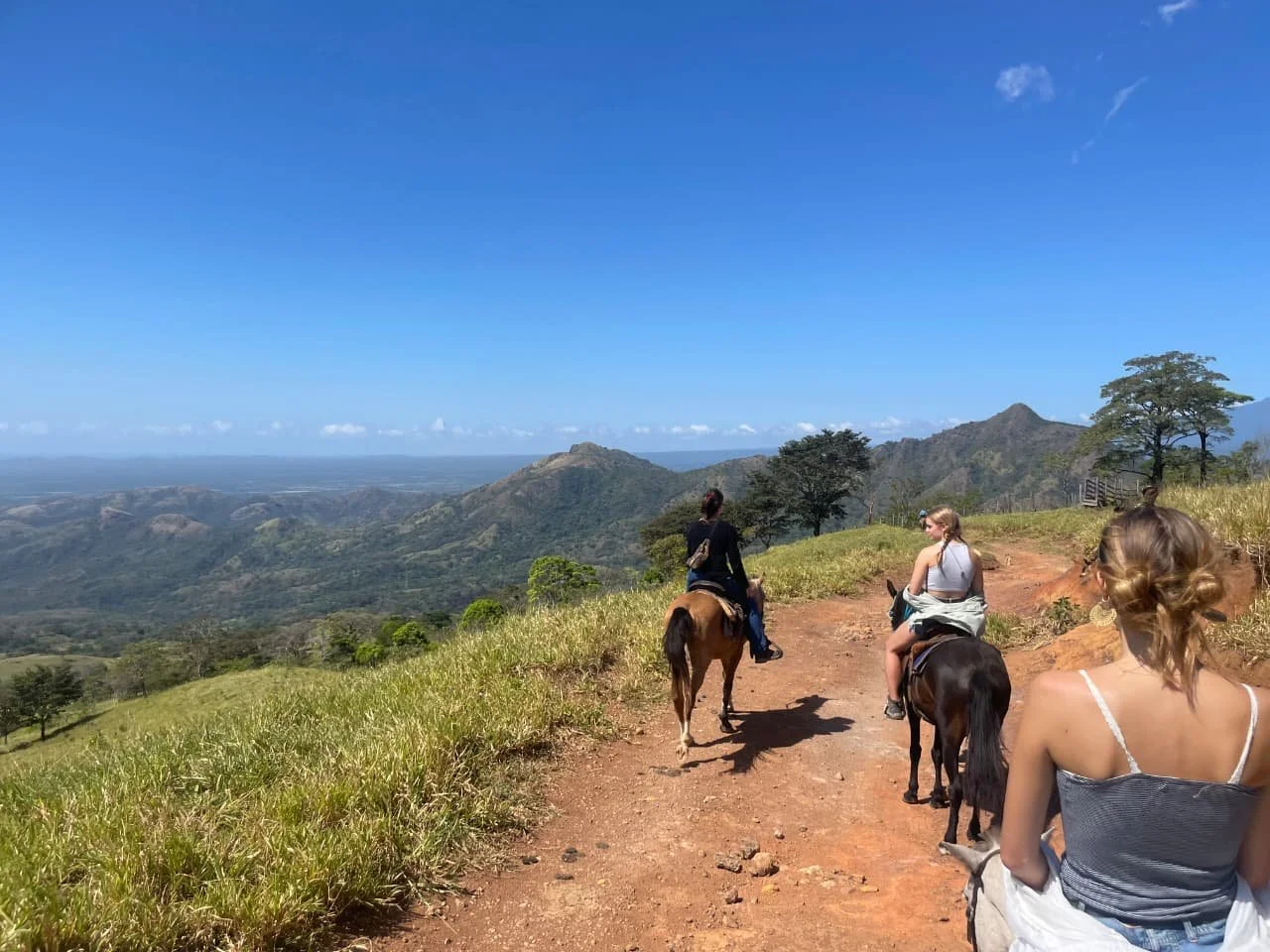
There was a time when backpacking meant something completely different. You arrived in a new country with a backpack, a rough idea of where you were going, maybe a dog-eared map, a few phone numbers scribbled on a piece of paper and absolutely no idea what was going to happen next. You didn't know what the restaurant looked like before walking through the door. You couldn't check twelve reviews before ordering dinner. You couldn't watch a drone video of the waterfall before hiking to it. You couldn't see what everyone else was doing in the town you were visiting. You simply arrived, looked around, listened, smelled the air, talked to people and figured it out.
That kind of backpacking isn't dead. In fact, Panama might be one of the best places in Central America to rediscover it.
Panama has a way of making you slow down without asking permission. It happens when you're sitting on a Caribbean beach watching fishing boats disappear beyond the horizon. It happens when rain suddenly begins hammering the roof of a tiny roadside restaurant and everyone inside simply waits for it to pass. It happens when you're standing on a mountain trail and realize that the loudest thing around you is a bird you've never heard before. It happens when you get on a bus without being entirely sure where you're getting off, and somehow end up having one of the most memorable afternoons of your trip.
And perhaps most importantly, it happens when you put your phone back into your pocket.
Remember What It Feels Like to Actually Be Somewhere
Modern travel can be strangely disconnected from the place you're actually visiting. You can spend an entire day in Panama while experiencing most of it through a six-inch screen.
You wake up and check Instagram. You look at WhatsApp. You check the weather. You photograph breakfast. You Google where to go. You look at reviews. You navigate using GPS. You photograph the waterfall. You upload the waterfall. You check whether anyone has liked the photograph of the waterfall while you're still standing beside the waterfall.
And suddenly you're somewhere beautiful without actually being there.
Old-school backpacking is different.
It means sitting on a bus and looking out the window instead of staring at a screen. It means noticing the mountains appearing through the clouds. It means watching motorcycles weave through small towns, seeing people selling fruit beside the road and noticing how dramatically the landscape changes as you travel from the Pacific side toward the Caribbean.
It means walking into a little restaurant because it looks interesting rather than because it has 4.8 stars.
It means asking someone where you should go tomorrow.
It means getting lost occasionally.
It means letting Panama surprise you.
Because some of the best travel experiences are the ones you couldn't have planned.
Panama Is a Country You Can Experience With Your Senses
Panama is particularly good for this because it is such a sensory country.
Close your eyes in a Panamanian jungle and you can hear dozens of things happening simultaneously. Leaves moving above you. Insects buzzing somewhere in the vegetation. A bird calling from the canopy. Water moving over rocks. A distant howler monkey announcing its existence to the entire forest.
Then open your eyes.
Everything is green.
Not just one shade of green, but hundreds of them. Giant leaves. Moss-covered trees. Vines climbing trunks. Ferns growing beside trails. Flowers hidden beneath the canopy. Sunlight breaking through the clouds.
Then comes the smell.
Wet earth.
Flowers.
Leaves.
Rain.
The unmistakable smell of a tropical forest after a downpour.
This is the kind of environment where you don't need entertainment. The environment is the entertainment.
And Panama doesn't stop with the jungle.
At the coast, the experience changes completely. Salt hangs in the air. Waves crash against rocks. Warm sand sits beneath your feet. Palm trees move in the wind. Boats pass offshore. You hear music drifting from somewhere down the beach.
In the mountains, the air becomes cooler and cleaner. Clouds roll over ridges. Coffee grows on steep slopes. Waterfalls disappear into forests. At night, the temperature drops and suddenly a hoodie becomes one of the most valuable possessions in your backpack.
You don't need an app to tell you how you're feeling.
Your body already knows.
Try the 24-Hour Phone Experiment
If you really want to experience old-school backpacking, try something simple.
Put your phone on airplane mode for 24 hours.
Not forever. Not even for your entire trip.
Just one day.
Keep it in your backpack for emergencies, navigation or taking one photograph if you absolutely have to. But don't scroll. Don't upload. Don't check messages every fifteen minutes. Don't look up what other travelers are doing.
Instead, wake up and ask yourself:
What do I actually feel like doing today?
Maybe the answer is hiking.
Maybe it's swimming.
Maybe it's sitting in a hammock doing absolutely nothing.
Maybe you walk into town.
Maybe you find a tiny local restaurant.
Maybe you get on a bus.
Maybe you spend three hours talking to another traveler you met five minutes ago.
Maybe you watch the sunset.
The strange thing about removing your phone is that the day suddenly becomes much longer.
You notice things.
You notice people.
You notice your own thoughts.
And you begin to remember that you don't need to document every experience for it to matter.
Some memories are better when they're yours alone.
Somewhere Between Boquete and Bocas, Get Lost
One of the great things about traveling through Panama is that you don't have to follow the obvious route.
The journey between Boquete and Bocas del Toro is a perfect example.
Instead of treating it as transportation between two destinations, treat it as part of the adventure.
The mountains, jungle, small communities and winding roads between them are part of Panama that you can easily miss if you're constantly rushing toward the next famous destination.
And tucked away in the mountains is Lost and Found Hostel, a place that almost feels designed for this kind of old-school backpacking. Hidden inside the Fortuna Forest Reserve, the hostel is surrounded by jungle trails, cloud forest and mountain scenery, with a deliberately social, adventurous atmosphere. You hike in, leave the ordinary world behind and spend your time exploring trails, searching for wildlife, swimming in natural pools, playing games, meeting other travelers and sitting around together rather than spending the entire evening staring at screens. It's the sort of stop where the journey itself becomes the destination.
And that's exactly what old-school backpacking is supposed to feel like.
You don't necessarily need another attraction.
You need somewhere that gives you permission to slow down.
Talk to Strangers Again
One of the greatest casualties of smartphone travel is spontaneous conversation.
Years ago, backpackers had to talk to each other.
You couldn't simply look up the answer.
You couldn't check someone's profile before deciding whether they seemed interesting.
You couldn't research the hostel before arriving and know exactly what the common room looked like, who was staying there and what activities were happening that night.
You arrived.
You said hello.
And then something happened.
Maybe you discovered that the person sitting beside you was traveling around Central America for six months. Maybe someone had just returned from Colombia and had a ridiculous story. Maybe a local told you about a waterfall that wasn't in any guidebook. Maybe someone invited you to join a group heading to the beach.
Those random conversations are often the moments people remember years later.
So talk to people.
Ask the bartender where they're from.
Ask the person beside you on the bus where they're headed.
Ask a local what they recommend.
Ask another backpacker what their favorite place in Panama has been.
You might get an answer Google never would have given you.
Let Yourself Get Lost
There is something incredibly liberating about not knowing exactly where you are.
Obviously, you should use common sense and stay safe. But within reasonable limits, getting slightly lost can be one of the best parts of traveling.
Take the wrong road.
Walk through the little town.
Follow the smell of food.
Sit in the plaza.
Find the river.
Watch the locals.
Listen.
You begin discovering the tiny details that never make it onto travel websites.
The old man sitting outside his house.
The family having lunch together.
The fruit stand on the corner.
The dog sleeping beneath a table.
The child riding a bicycle down the road.
The woman selling something you've never seen before.
The sound of music coming from a house.
These aren't attractions.
They're life.
And when you stop searching for the next attraction, you begin seeing them.
Eat With Your Eyes Closed
Okay, maybe don't literally eat with your eyes closed.
But stop photographing everything before you experience it.
Try local food because it smells good.
Drink something you've never tried.
Buy fruit you've never seen.
Sit somewhere busy and simply watch.
Panama is a country where food can become part of the adventure. Fresh tropical fruit, seafood, rice dishes, plantains, local soups, roadside snacks and countless little variations of familiar foods appear as you move around the country.
Don't always ask, "Where is the best restaurant?"
Sometimes ask:
"Where do people actually eat?"
There is a difference.
Swim Without Taking a Picture
Find a river.
Find the ocean.
Find a waterfall.
Go swimming.
And leave the phone in your bag.
Don't spend twenty minutes finding the perfect angle.
Don't climb out of the water to check whether the photograph looks good.
Just float.
Listen to the water.
Look at the trees.
Feel the temperature.
Notice how good it feels to be somewhere completely different from home.
Because you don't actually need proof that you were there.
You were there.
That's the point.
Watch a Sunset Without Recording It
Panama has some spectacular sunsets, but there's something strange about watching an entire sunset through a phone screen.
The sky changes every few minutes.
Blue becomes orange.
Orange becomes pink.
Pink becomes purple.
The clouds catch fire.
The water reflects everything.
And then it's gone.
That's what makes it beautiful.
You don't need to record it.
You don't need to post it.
You don't even need to tell anyone about it.
Sit down.
Watch it disappear.
Let your brain be quiet for five minutes.
You might be surprised how powerful that feels.
The Real Luxury Is Being Present
Backpacking is often associated with cheap buses, dorm rooms, worn-out backpacks and questionable decisions.
But there is another kind of luxury hidden inside it.
The luxury of having nowhere to be.
The luxury of waking up without an alarm.
The luxury of spending an afternoon in a hammock.
The luxury of talking to someone for two hours without checking the time.
The luxury of walking through a forest without headphones.
The luxury of watching rain fall without immediately trying to escape it.
The luxury of being completely present.
And Panama gives you endless opportunities for it.
You can hike through cloud forest in the morning, swim in a river in the afternoon and sit beneath a tropical sky at night. You can travel from mountains to jungle to Caribbean islands within the same journey. You can wake up somewhere cool and misty and end the day surrounded by warm tropical air.
It is difficult to stay mentally glued to your phone when the real world is constantly competing for your attention.
And the real world usually wins.
Bring the Phone. Just Don't Let It Bring You
This isn't an argument that smartphones are bad.
They're incredibly useful.
They help you navigate. They translate languages. They help you communicate. They can keep you safe. They let you photograph people and places you'll never forget.
The problem isn't having a phone.
The problem is never putting it down.
Use it when you need it.
Then put it away.
Let your camera become your eyes.
Let your microphone become your ears.
Let your feet become your navigation system.
Let curiosity become your search engine.
And let the person sitting across from you become your social media.
Because Panama isn't a country you should only look at.
It's a country you should feel.
Feel the humidity when you step off the bus.
Feel cold mountain air on your skin.
Feel warm sand beneath your feet.
Feel rain hit your shoulders.
Feel the spray from a waterfall.
Feel the vibration of music coming from a little bar.
Feel your legs burning halfway up a mountain.
Feel the exhaustion after a long hike.
Feel the first cold drink afterward.
Those sensations are what you'll remember.
Go Back to Being Curious
Perhaps that's the real secret of old-school backpacking.
It's not about refusing technology.
It's about becoming curious again.
Curious about what's around the corner.
Curious about the person sitting beside you.
Curious about the strange fruit at the market.
Curious about the trail disappearing into the jungle.
Curious about the sound coming from the trees.
Curious about where the next bus goes.
Curious about what happens if you say yes.
And Panama rewards curiosity.
So put the phone down.
Not forever.
Just long enough to notice where you are.
Look around.
Listen.
Breathe deeply.
Taste something new.
Talk to someone.
Walk somewhere without taking a photograph.
Sit beside a river.
Watch the clouds move across the mountains.
Swim in the ocean.
Get rained on.
Laugh with strangers.
Take the wrong bus once.
Stay somewhere an extra night because you like it.
And when you finally pull your phone out again, you may realize something wonderful:
you weren't missing anything while you were offline.
You were finally experiencing the thing you came all this way to find.
You were here.