
There are few animals in Panama that receive less respect than the dung beetle.
They spend their lives around animal poop. They roll it, bury it, eat it and sometimes fight over it. To the casual observer, they might seem like one of the least glamorous creatures in the rainforest.
But spend a little time watching one in the Panamanian jungle and you begin to realize something extraordinary:
Dung beetles are some of the hardest-working animals in the entire ecosystem.
Panama's tropical forests are home to an impressive diversity of dung beetles. A study of Darién National Park documented 40 species belonging to 16 genera of dung beetles in the subfamily Scarabaeinae alone. And these are not simply different versions of the same insect. They have radically different shapes, sizes, behaviors and strategies for dealing with one of the forest's most important resources.
The strange thing is that their entire world revolves around something most humans try very hard to avoid.
Dung.
Why would an insect want poop?
For a dung beetle, dung is food, nursery, shelter and building material all rolled into one.
Adult dung beetles generally feed on the nutrient-rich components of animal dung, while the dung itself is also used to provision their young. Different species specialize in different ways of collecting and processing it.
And Panama is an almost perfect place for them.
The country has an enormous diversity of mammals, from monkeys and sloths to peccaries, tapirs, rodents and bats. Every one of those animals is potentially contributing something to the dung beetle economy.
In a healthy tropical forest, animals are constantly eating, moving, digesting and depositing.
The dung beetles are waiting.
The three great strategies
Watch dung beetles for long enough and you'll notice that they don't all behave the same way.
Scientists generally divide many dung beetles into three broad behavioral groups: rollers, tunnelers and dwellers.
The rollers
These are probably the dung beetles people imagine when they hear the name.
A roller finds a pile of dung, cuts off a piece and begins forming it into a ball.
Then comes the remarkable part.
It rolls the ball away.
Sometimes the beetle is dramatically smaller than the ball it is pushing. It may navigate across uneven ground, around roots and through leaf litter while desperately trying to protect its prize from competitors.
Once it finds a suitable location, it buries the ball underground.
That ball can become food for its developing offspring.
And yes, the beetle may sometimes roll a ball considerably farther than you would expect an insect of its size to be capable of moving something.
The tunnelers
Tunnelers take a different approach.
Instead of rolling dung away, they dig underneath or beside the dung and transport portions downward into underground chambers.
This can turn the area beneath a dung pile into a miniature construction site.
The beetle excavates soil, moves dung underground and creates chambers where food can be stored and larvae can develop.
In the process, the beetle is doing something extraordinarily important for the forest:
It is moving organic material into the soil.
The dwellers
Then there are the lazy-looking specialists.
Dwellers don't necessarily go through the elaborate process of rolling or burying large balls. They may simply live and reproduce within the dung itself.
From a human perspective, this sounds like the least glamorous lifestyle imaginable.
From a dung beetle's perspective, it is perfectly logical.
Why move the food when you can move into the food?
The incredible strength of a dung beetle
Dung beetles have become famous for their strength, although the popular claim that they can pull thousands of times their body weight needs some qualification depending on how it is measured.
Still, some species possess remarkable strength relative to their size.
And you can actually watch the engineering in action.
A beetle may use its legs and horned head to cut pieces from a dung pile. It then manipulates the material into a roughly spherical ball and begins pushing.
The ball isn't just random waste.
It is an investment.
The beetle is essentially carrying its future meal or its offspring's food supply across the forest floor.
Panama's jungle turns poop into new forest
Here's where the story becomes much more fascinating.
Dung beetles aren't merely cleaning up after mammals.
They can influence plants.
When a monkey or other fruit-eating mammal consumes fruit, some of the seeds eventually pass through its digestive system and end up inside its feces.
Then the dung beetles arrive.
As they move and bury the dung, they can accidentally move those seeds as well.
Scientists call this secondary seed dispersal.
The mammal performs the first stage of transportation.
The beetle performs the second.
In other words, a seed can travel from a tree, into a monkey, out onto the forest floor and then into a dung beetle's underground chamber.
The beetle wasn't trying to plant a tree.
It just happened to move the seed while looking for lunch.
Research in tropical forests has shown that dung beetles can bury seeds and move them both vertically and horizontally. In some circumstances, burial can reduce seed predation and influence the eventual fate of the plant.
So that little beetle rolling a ball across the forest floor could unknowingly be participating in the regeneration of the rainforest.
They're tiny gardeners
This is one of the best ways to appreciate dung beetles.
Think of them as accidental gardeners.
They don't plant seeds because they care about forests.
They don't fertilize plants because they're trying to help.
They simply do what dung beetles have evolved to do.
But their behavior moves organic matter and seeds around the ecosystem.
Their digging also disturbs the soil, and dung burial can alter the conditions around seeds and plants. Researchers studying tropical ecosystems have found that dung beetle activity can influence seed burial, seedling recruitment and soil-related processes.
The rainforest is full of these hidden relationships.
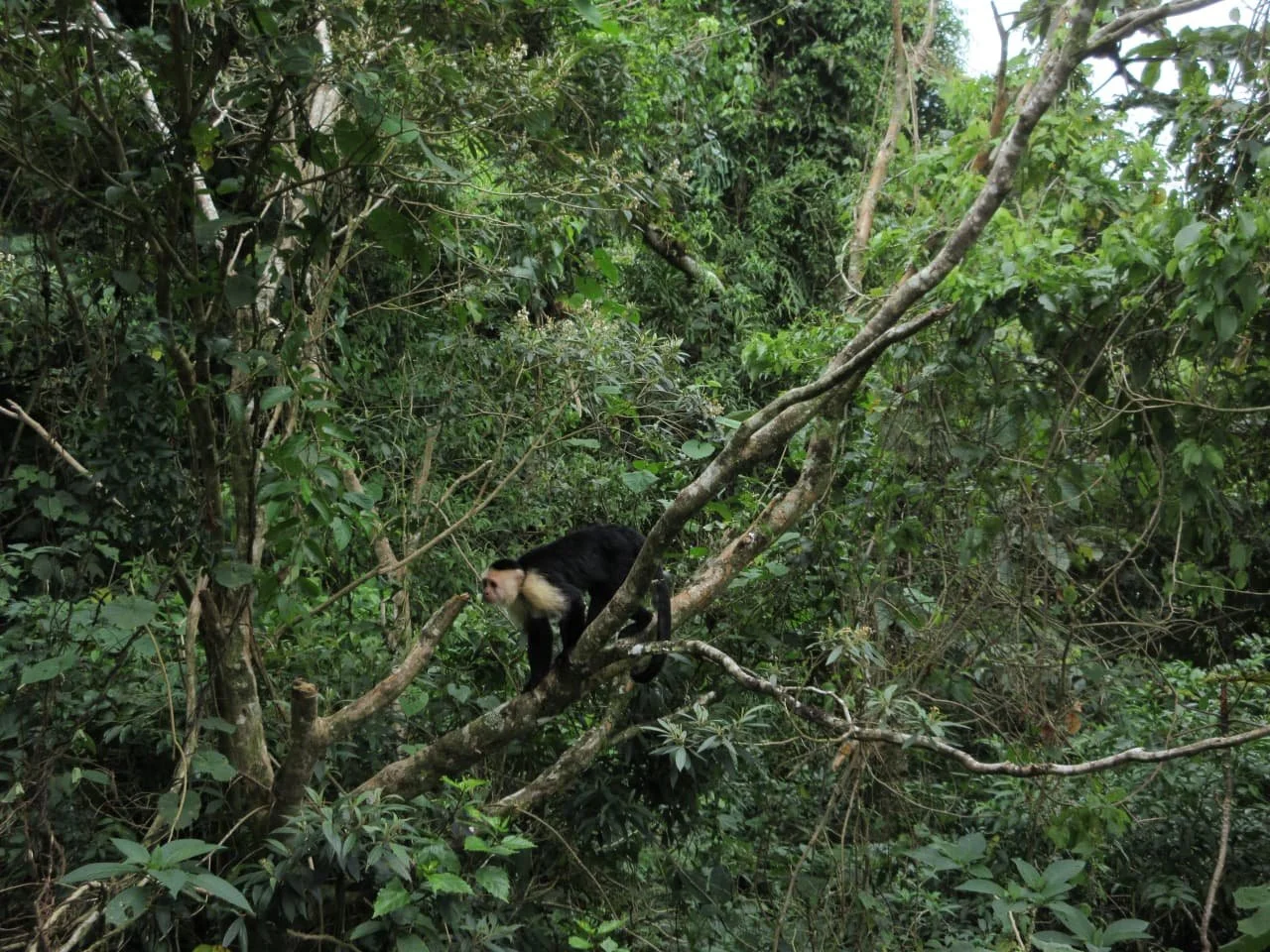
Monkey eats fruit.
Monkey travels.
Monkey leaves dung.
Dung beetle arrives.
Dung beetle moves the dung.
Seed gets buried.
Seedling eventually emerges.
Tree grows.
And somewhere in that tree, another monkey eventually eats another fruit.
The cycle continues.
Dung beetles can tell us about the forest
This makes dung beetles surprisingly useful to scientists.
Because many dung beetles depend heavily on animal dung, their communities are closely connected to the mammals living around them. Dung beetle research can therefore provide information about changes in ecosystems and wildlife communities.
A forest with abundant mammals can provide an enormous variety of dung resources.
A forest that has lost many of its large animals can look very different.
And that can affect the beetles.
This creates a fascinating ecological chain:
Mammals and dung, dung beetles to soil and seeds to plants.
Remove one part of the system and the consequences can travel much farther than you might expect.
Some dung beetles are absolutely beautiful
Here's another reason not to underestimate them.
Not all dung beetles are dull brown insects.
Some species are spectacular.
They can have metallic greens, blues, blacks and other striking colors. Some are shiny enough to look almost like polished jewelry.
Others have impressive horns and bizarre body shapes.
Some are tiny.
Others are surprisingly large.
And because Panama has such incredible insect diversity, walking through the forest with an interest in beetles can reveal an entirely different side of the country.
The animals most tourists notice are usually the large ones.
A monkey swings overhead.
A toucan flies across the trail.
A sloth hangs in a tree.
But down below, hundreds of tiny creatures are performing jobs that are just as important.
Why night walks can be especially interesting
Panama's rainforest changes dramatically after sunset.
During the day, the forest can feel dominated by birds and monkeys.
At night, the insect world becomes much more obvious.
Many dung beetles are active at night, and research has found differences in dung beetle abundance and size between day and night in tropical forests.
That makes a nighttime walk an excellent opportunity to discover them.
Bring a flashlight.
Look around animal trails.
Check areas where mammals have been active.
Watch the forest floor.
And occasionally, stop and examine that strange little ball being pushed through the darkness.
You may be watching one of the rainforest's most important recyclers at work.
The dung ball isn't just dinner
Perhaps the strangest part of dung beetle biology is how much effort goes into making the perfect ball.
The beetle has to find the dung.
Cut off an appropriate amount.
Shape it.
Protect it.
Transport it.
Find somewhere suitable.
And then bury it.
For some species, this is effectively the equivalent of building a tiny underground pantry.
The female may eventually lay an egg with the prepared food resource, giving the developing larva everything it needs.
The larva doesn't need to go hunting.
The food has already been delivered.
It's an extraordinarily efficient system.
They're competing with each other too
Dung is a limited resource.
If a fresh pile appears in the forest, the smell can attract multiple beetles.
And that creates competition.
A beetle that spends several minutes carefully constructing a dung ball may have another beetle attempt to steal it.
Suddenly, the peaceful-looking dung pile becomes the site of a miniature battle.
Some beetles fight.
Some try to steal.
Some simply grab what they can and escape.
And the bigger beetles can have an advantage because they can manipulate larger quantities of dung.
This competition is one reason dung beetle communities can contain such an astonishing variety of body sizes and behaviors.
What happens when the beetles disappear?
This is where dung beetles become much more than an amusing rainforest curiosity.
Their disappearance can have consequences.
Without dung beetles, animal waste remains on the surface for longer.
Nutrients aren't moved into the soil in the same way.
Seeds contained in dung may not be buried or transported as effectively.
And the complex relationships between mammals, insects and plants can be disrupted.
Scientists have found that changes in dung beetle communities can influence seed burial and aspects of plant recruitment in tropical forests.
The beetle may be tiny.
The consequences of losing it don't necessarily have to be.
Panama's dung beetles are part of something much bigger
The next time you walk through a Panamanian rainforest and see animal dung on the trail, don't immediately think of it as something unpleasant.
Think of it as a biological delivery package.
It contains nutrients.
It can contain seeds.
It attracts insects.
It feeds larvae.
It returns material to the soil.
And within minutes or hours, a small army of beetles can begin taking it apart.
Some roll it.
Some bury it.
Some live inside it.
Some steal it.
Some fight over it.
And eventually, almost all of that material becomes part of the forest again.
That is the genius of the tropical ecosystem.
Nothing is really wasted.
The monkey eats the fruit.
The monkey produces the dung.
The dung beetle takes the dung.
The beetle buries it.
The seed goes underground.
The soil receives nutrients.
The tree grows.
And years later, another animal eats the fruit.
So the next time you see a dung beetle in Panama, don't just see a beetle pushing a ball of poop.
You're looking at a recycler, soil engineer, seed transporter, underground architect and tiny forest gardener all at the same time.
And somehow, one of the strangest jobs in nature turns out to be one of the most important.