
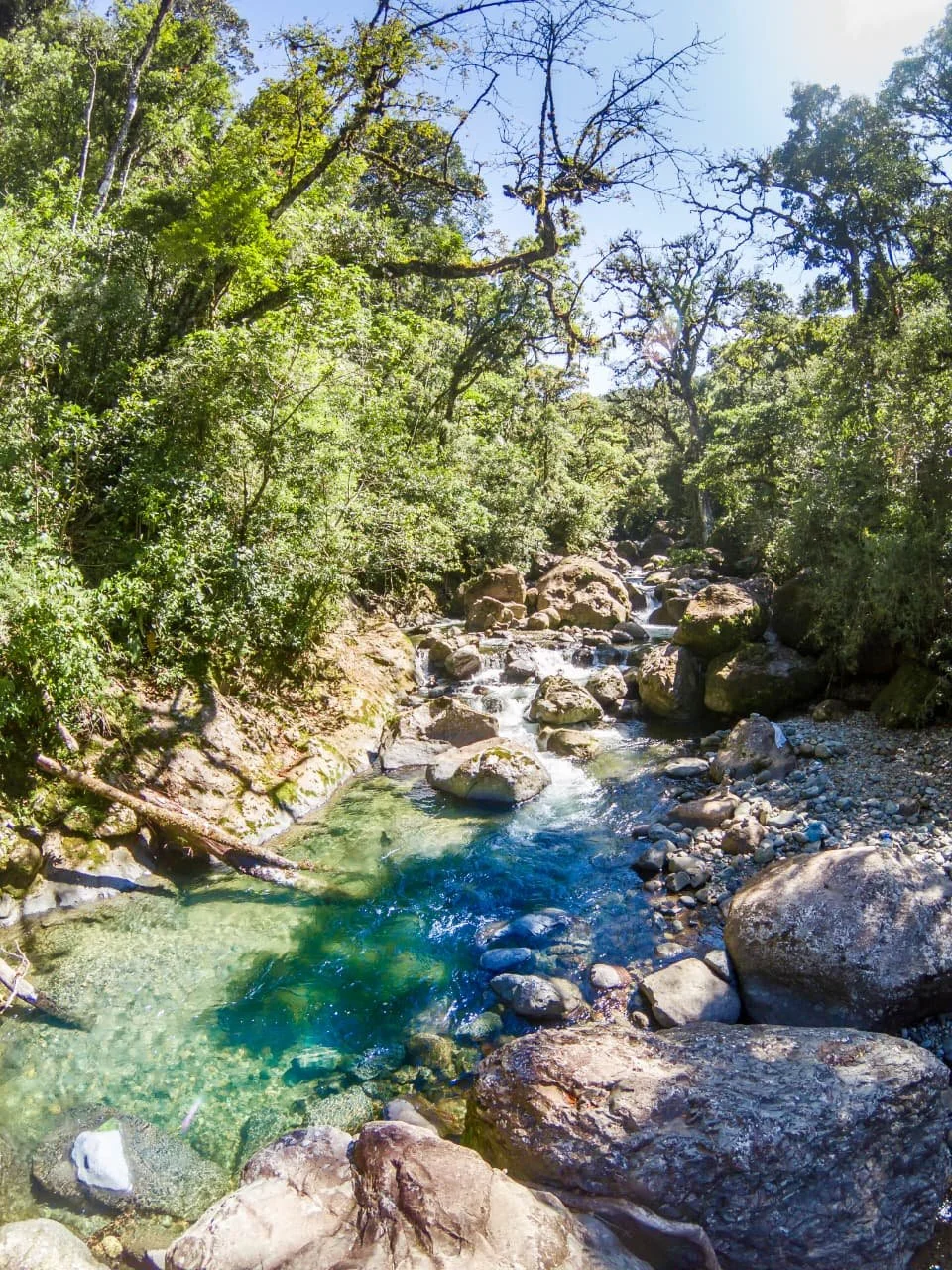
Panama is one of those countries that can leave travelers with a strange feeling after they leave. You can spend two weeks here and visit the Panama Canal, wander through Casco Viejo, swim in the Caribbean, explore Bocas del Toro, hike around Boquete, see waterfalls, sleep in a jungle hostel, eat at restaurants recommended by every travel website and take hundreds of photographs, yet still feel like you somehow haven't completely experienced Panama. You have seen the country, but perhaps you haven't really experienced it. And that distinction is important. Panama is incredibly easy to visit in many ways. It has a modern international airport, good transportation connections, a sophisticated capital, established tourist destinations, beautiful hotels, adventure companies and a tourism industry that knows exactly how to sell the country's most spectacular attractions. But if what you are searching for is something deeper, something that feels less polished and more connected to everyday life, Panama can actually be surprisingly difficult. The authentic experiences are absolutely there, but they are often hidden behind the tourist infrastructure. The most interesting Panama is frequently not the Panama that is being advertised to you. It is found in small towns, rural communities, local restaurants, buses, markets, farms, fishing villages, neighborhood football games, family homes, mountain communities and conversations with people who never expected to become part of your vacation. Panama's tourism authorities have increasingly recognized the importance of community based tourism, Indigenous tourism and experiences that connect travelers directly with local communities, which is a sign that there is a much deeper side of Panama waiting to be explored.
One of the biggest reasons authentic travel can be difficult in Panama is that tourism is concentrated in certain places. There is nothing wrong with the famous destinations. The Panama Canal is genuinely extraordinary. Casco Viejo is beautiful. Bocas del Toro is spectacular. Boquete has an incredible climate and landscape. The islands are gorgeous. The beaches deserve their reputation. But once a destination becomes popular, an invisible tourist bubble starts to form around it. Hotels, restaurants, tour operators, transportation companies and attractions develop around what visitors want to see, and eventually thousands of travelers begin following almost identical routes. One person photographs a beautiful beach, another person sees the photograph online, another person reads about it in a travel guide, and eventually everyone is standing on the same beach taking almost exactly the same photograph. You can have an absolutely fantastic vacation while still experiencing a highly standardized version of Panama. The question therefore shouldn't necessarily be whether somewhere is "authentic" or "inauthentic," because that distinction is far too simplistic. A popular restaurant can still be genuinely Panamanian. A well organized tour can still provide a meaningful cultural experience. A village doesn't suddenly become fake because tourists visit it. A better question is how connected your experience is to the people, culture, history and environment around you. That is where authentic travel really begins.
There is also a huge misconception that authentic travel means finding somewhere nobody else knows about. It doesn't. You don't need to discover a secret village in the mountains that has never seen another foreigner. You don't need to sleep on a wooden floor, eat food you don't like or deliberately make your trip difficult simply so you can tell people that you went "off the beaten path." Authenticity isn't a competition. It isn't a badge that you earn by suffering more than other travelers. A community isn't more authentic because there are no tourists there. In fact, some of the most meaningful experiences can happen in places that have deliberately chosen to welcome visitors. Panama has been developing community tourism initiatives designed to put local communities at the center of tourism while connecting visitors with local culture, conservation and livelihoods. That can actually be more meaningful than wandering randomly into a community with no understanding of what you're seeing. The important question is not whether an experience is organized. The important questions are who organizes it, who benefits from it, who is telling the story and whether local people have a meaningful role in the experience. If a local community is guiding visitors, preparing food, operating accommodation, sharing traditions and receiving the economic benefits, you can have an experience that is both organized and deeply authentic.
Perhaps the most powerful thing you can do to experience Panama differently is simply to slow down. Modern travel has become obsessed with efficiency. Travelers want to know how many destinations they can fit into ten days, how quickly they can get from one beach to another and how many attractions they can check off a list. But authentic experiences rarely happen on a schedule. If you spend one night somewhere, you are passing through. If you spend five days somewhere, something begins to change. The restaurant owner starts recognizing you. The person working at your hostel remembers your name. The taxi driver knows where you're staying. Someone tells you about a swimming hole that isn't in the guidebook. You discover that there is a football game on Sunday. Someone invites you to a local event. You learn where people actually go to eat rather than where tourists are told to eat. This is how authenticity develops. It is not something you necessarily book online. It is something that grows through repeated contact. The longer you stay, the more opportunities you create for Panama to stop being a backdrop to your vacation and start becoming a place where you actually have relationships.
Another major mistake travelers make is planning every minute of their trip. There is nothing wrong with having an itinerary, especially in a country where transportation and logistics can sometimes require planning, but if every hour of every day is already assigned, there is no space for discovery. Give yourself an afternoon with absolutely nothing planned. Walk around a town without knowing exactly where you're going. Sit in a plaza. Take a local bus somewhere and explore the area around the destination. Ask someone where they eat. Follow a recommendation. Stop at a small roadside restaurant. Talk to someone at a market. You might waste three hours and discover absolutely nothing. That's okay. You might also stumble into something you'll remember for the rest of your life. Many of the best travel stories begin with the sentence, "We weren't even planning to go there." You can't schedule those experiences. You can only create the conditions for them to happen.
Food is another enormous doorway into authentic Panama, but travelers often approach food in the wrong way. Instead of asking for the "best restaurant," ask people where they actually eat. There is a difference between a restaurant that receives excellent reviews from tourists and a restaurant where a local family might go for lunch. Look for small family businesses, local restaurants, markets, bakeries, roadside stands and places that don't appear to have been designed specifically for foreigners. Try things you don't recognize. Ask what people recommend. Ask how something is prepared. Ask whether it is traditional to the area. Ask when people normally eat it. Don't immediately compare everything with food from home. Panama's food culture has been influenced by Indigenous, Spanish, African, Caribbean and other traditions, and those influences are part of what makes the country's cuisine so interesting. When you stop treating food as something you simply consume and instead use it as a conversation starter, it becomes a completely different experience. A plate of food can introduce you to a family history, a regional tradition, an agricultural product or a story about how a town changed over generations.
Learning even a little Spanish can completely transform this process. You don't have to become fluent, and you don't need perfect grammar. But there is a huge difference between being able to ask, "Where is the bus?" and being able to ask, "Where do people from here normally go to eat?" One gets you transportation. The other can open a door. Simple phrases such as "¿Dónde comen ustedes?", "¿Qué me recomienda?", "¿Qué hay para hacer por aquí?" or "¿Dónde van los locales?" can lead to conversations that you would never have in English. More importantly, the effort matters. When someone sees that you are genuinely trying to communicate in their language, the interaction often becomes more personal. You don't have to speak perfect Spanish to show curiosity. Sometimes ten badly pronounced words and a genuine smile will take you further than perfect English and a demanding attitude.
Public transportation can also provide a completely different perspective of Panama. Again, this isn't about deliberately making your trip uncomfortable or taking unnecessary risks. If a particular route is unsafe or impractical, don't take it simply because someone told you that the "real travelers" use it. Authenticity isn't suffering. But when it is practical and appropriate, taking local buses, shared transportation or local boats can put you into the same physical environment as people who actually live in Panama. You see schoolchildren going to school, workers commuting, families carrying groceries, people traveling between towns and businesses that you would never notice from the window of a private tourist shuttle. You begin seeing Panama as a functioning country rather than a collection of attractions connected by tourist transportation. Sometimes the journey becomes more interesting than the destination.
Getting out of the major tourist centers is another powerful strategy. You don't necessarily have to travel hundreds of kilometers into the wilderness. Sometimes the difference is only a short drive away. A famous destination can exist alongside ordinary communities that receive very few international visitors. You can spend two days in a famous tourist area and then spend two days somewhere nearby that is not heavily promoted. Suddenly the experience changes. People may not be trying to sell you anything. They may simply be curious about you. You become a foreign person rather than a customer. And that distinction can completely change the way people interact with you. You start having conversations instead of transactions.
Rural Panama is especially interesting for this reason. International travelers often see only a tiny fraction of the country's rural life. They move between major destinations without realizing how much of Panama's identity is connected to agriculture, fishing, cattle farming, coffee, local markets, family businesses and traditional communities. Panama's tourism strategy increasingly includes rural and agrotourism experiences, particularly in places such as the highlands where coffee and agricultural production are deeply connected to local life. Instead of simply visiting a coffee plantation for a quick photograph, try talking to the people who actually work there. Ask how the climate affects the crops. Ask what changes during the rainy season. Ask how many generations of the family have worked the land. Suddenly you're not just looking at a plantation. You're learning how a part of Panama works.
One of the greatest travel tricks is to talk to older people. Older residents often have an enormous amount of local knowledge. They remember how towns looked before tourism developed. They remember old roads, old traditions, old restaurants, old festivals and how people used to travel before modern infrastructure changed everything. They know stories that aren't written on websites. They may know why a particular place has its name or why a certain part of town looks the way it does. Of course, you should approach people respectfully and never treat someone like a living tourist attraction, but a genuine conversation can be incredibly rewarding. Sometimes the person sitting quietly in a plaza has a much better understanding of the place than the person standing behind a tourist information desk.
Another important part of authentic travel is learning to recognize the tourist bubble without automatically judging it. A restaurant with menus in several languages isn't necessarily bad. A popular hostel isn't necessarily inauthentic. A tour operator isn't automatically exploiting tourists. A famous beach isn't less beautiful because it appears on Instagram. These are simply signals that you're in a well developed tourism area. If you want something different, walk a little farther. Look down a side street. Ask someone where they go. Find out what people do on their day off. The question shouldn't be, "How do I avoid tourists?" The question should be, "How do I experience more than the tourist version of this place?"
This is particularly important when visiting Indigenous communities in Panama. Panama is home to several distinct Indigenous peoples, including the Guna, Emberá-Wounaan, Ngäbe-Buglé and Naso Tjër Di, each with their own histories, traditions and territories. These communities can offer some of the most meaningful cultural experiences available to travelers, but they should never be treated like a human theme park. Don't arrive expecting people to perform "authenticity" for you. Don't assume someone wearing traditional clothing is there for your photograph. Don't treat a community as if it exists for the purpose of providing travelers with an interesting story. Seek experiences where the community itself has chosen to participate in tourism and where local people are guiding, hosting, cooking, creating and telling their own stories. Panama has increasingly emphasized community based and Indigenous tourism precisely because it can allow visitors to connect with culture while creating economic opportunities for the communities themselves.
Spending your money locally is one of the simplest ways to make your travel more meaningful. If every dollar you spend goes to large international businesses, you can physically be in Panama without contributing much to the communities you're visiting. Whenever possible, consider locally owned accommodation, independent restaurants, local guides, family businesses, markets and artisans. Buy something directly from the person who made it. Hire someone who actually lives in the community you're visiting. Eat at the little restaurant rather than always choosing the international chain. And don't obsess over getting everything as cheaply as possible. If someone spends hours making something by hand, saving a tiny amount of money through aggressive bargaining isn't necessarily a victory. Your vacation budget may be significant compared with someone's daily income. Paying fairly is one of the simplest ways to ensure that tourism actually benefits the people who make the destination what it is.
Where you stay also matters enormously. A large international hotel can be comfortable, safe and perfectly enjoyable, but a family guesthouse, small lodge, locally owned hostel or rural accommodation can create a completely different experience. The owner may eat breakfast with you. Someone working there might recommend a local swimming hole. You might hear stories about the region. You might be introduced to someone who runs a farm or operates a boat. One relationship leads to another, and suddenly your trip begins developing its own network of connections. This is why good hostels can be such powerful places for authentic travel. The staff often know the area far beyond what appears in tourist brochures, and other travelers can provide recommendations based on things they actually experienced rather than simply things they read online.
Don't underestimate the value of following local events either. A football game, local festival, market day, community celebration, music event or regional gathering can reveal an entirely different side of Panama. These aren't necessarily experiences designed for tourists, and that's exactly what makes them interesting. If you encounter something like this, observe first. Be respectful. Don't assume that because you have a camera you have permission to photograph everyone. If you're welcomed into the experience, participate naturally. Sometimes the most memorable evening of a trip can come from something you didn't even know was happening when you woke up that morning.
Music is another doorway that travelers often overlook. Panama has a rich musical history shaped by different cultural influences, and listening to what people actually enjoy can teach you a great deal about the country. Ask locals about artists. Ask what music they grew up with. Find out where people go when they want to listen to music or dance. Don't assume that whatever appears in a tourist venue represents the entirety of Panamanian culture. Music isn't simply entertainment. People attach memories, family experiences, relationships and identity to it. When someone recommends an artist and explains why they love that music, you're learning something personal rather than simply consuming another tourist attraction.
Perhaps one of the biggest mistakes modern travelers make is trying too hard to be "off the beaten path." There is an entire culture of travel built around proving that you discovered somewhere nobody else knows about. But that can become another form of tourism performance. You don't have to find an undiscovered village. You don't need to reject every famous attraction. You don't need to prove that you're a better traveler because you took a bus instead of a taxi. You can visit the Panama Canal in the morning and eat at a tiny local restaurant that afternoon. You can stay at a popular hostel and spend the following day exploring a rural community. You can visit Bocas del Toro and then deliberately slow down somewhere else. You don't have to reject tourism to experience authenticity. You simply need to go deeper than the surface.
The questions you ask people can completely change the experiences you have. Instead of asking, "What's the best beach?" ask, "Where do people here go when they want to swim?" Instead of asking, "What's the most authentic restaurant?" ask, "Where do you eat with your family?" Instead of asking, "What's the hidden gem?" ask, "What do tourists usually miss here?" Instead of asking, "Where should I take photographs?" ask, "What is special about this place to you?" These questions don't simply produce better recommendations. They produce conversations. And conversations are often the real doorway into authentic travel.
You also have to become comfortable with being bored. This sounds strange in an article about finding exciting experiences, but boredom is actually one of the great tools of travel. Sit in a plaza. Drink coffee. Watch people. Walk around without a destination. Don't photograph everything. Don't immediately reach for your phone when nothing is happening. Allow yourself to simply exist somewhere. Modern travelers often move through countries like they're collecting evidence. Photograph the beach. Check. Photograph the waterfall. Check. Visit the famous restaurant. Check. Take the sunset picture. Check. Move to the next destination. But travel isn't a scavenger hunt. Sometimes the memory you carry home for years will be sitting on a plastic chair for two hours talking to someone you met completely by accident.
And that's where the real secret of authentic travel in Panama lies. You cannot force it. You can only create the conditions for it to happen. You can slow down. You can learn some Spanish. You can eat locally. You can stay longer. You can use local transportation when appropriate. You can support local businesses. You can explore rural communities. You can talk to people. You can hire local guides. You can leave gaps in your itinerary. You can ask better questions. You can be respectful. You can stop trying to photograph every moment and actually experience some of them.
Panama is not lacking authentic experiences. If anything, the country has an enormous surplus of them. The difficulty is that the most authentic experiences are often the least obvious ones. They don't always have huge signs. They aren't necessarily the first result on Google. They may not have professional photographs. They may not be listed in every backpacker itinerary. Sometimes they don't even look particularly interesting at first. A small restaurant. A local bus. A conversation. A farm. A football match. A mountain road. A village. A market. A family owned hostel. A fisherman. A coffee farmer. A person sitting outside their house. A place someone tells you about because they think you might enjoy it.
That is the Panama that many travelers miss.
And perhaps the biggest lesson is that authentic travel isn't about finding a version of Panama that tourists haven't touched. It is about finding a version of Panama that tourism hasn't completely filtered for you. You don't need to escape every tourist. You need to escape the idea that your entire experience should be predetermined by what other travelers have already decided is worth seeing.
Come to Panama with curiosity rather than a checklist. Stay longer than you originally planned if you can. Take the occasional wrong turn. Eat something unfamiliar. Learn the names of people you meet. Ask questions. Listen more than you speak. Spend your money with people who live here. Let a local recommendation change your itinerary. Don't be afraid to have an afternoon where nothing happens. And most importantly, don't treat people, cultures or communities as attractions that exist for your vacation.
Because the Panama you came to photograph may not be the Panama you remember.
You may remember the woman who told you where her family goes swimming. You may remember the farmer who explained why the coffee tastes different at altitude. You may remember the bus ride where you ended up talking to a stranger for two hours. You may remember the tiny restaurant where you couldn't understand half the menu but ordered something anyway. You may remember the old man who told you what the town looked like fifty years ago. You may remember the night you followed a recommendation and ended up somewhere you had never heard of.
Those moments aren't usually found by following the perfect itinerary.
They happen when you leave enough space for Panama to surprise you.
Because authentic travel isn't about discovering a Panama that nobody else has seen. It's about allowing yourself to see the Panama that exists when you stop looking at the country through a tourist's checklist.