
There is a persistent idea among travellers that if you really want to explore Panama, you absolutely need to rent a 4x4. It sounds convincing. Panama has jungles, mountains, remote beaches, muddy tracks, rivers and rough roads, so it is easy to imagine that a big four wheel drive vehicle is the only way to reach the country's hidden gems. But the reality is much simpler. For the vast majority of travellers, a normal sedan will get you to almost all of the places you are actually going to want to visit. Saying that a sedan can reach roughly 95 percent of the places a typical traveller wants to see isn't an official statistic, but it is a useful way of understanding the difference between exploring Panama and deliberately searching for extreme off road terrain.
Panama has plenty of rough roads, but most tourists aren't actually travelling on them. The country's main transportation corridors connect the major cities, towns, beaches and mountain destinations, and the Pan American Highway forms the backbone of travel across much of the country. From these main routes, travellers can branch off toward many of Panama's most interesting destinations. The important thing to remember is that jungle does not automatically mean off road. You can be surrounded by enormous tropical vegetation, mountains and rainforest while still driving on a perfectly normal paved road.
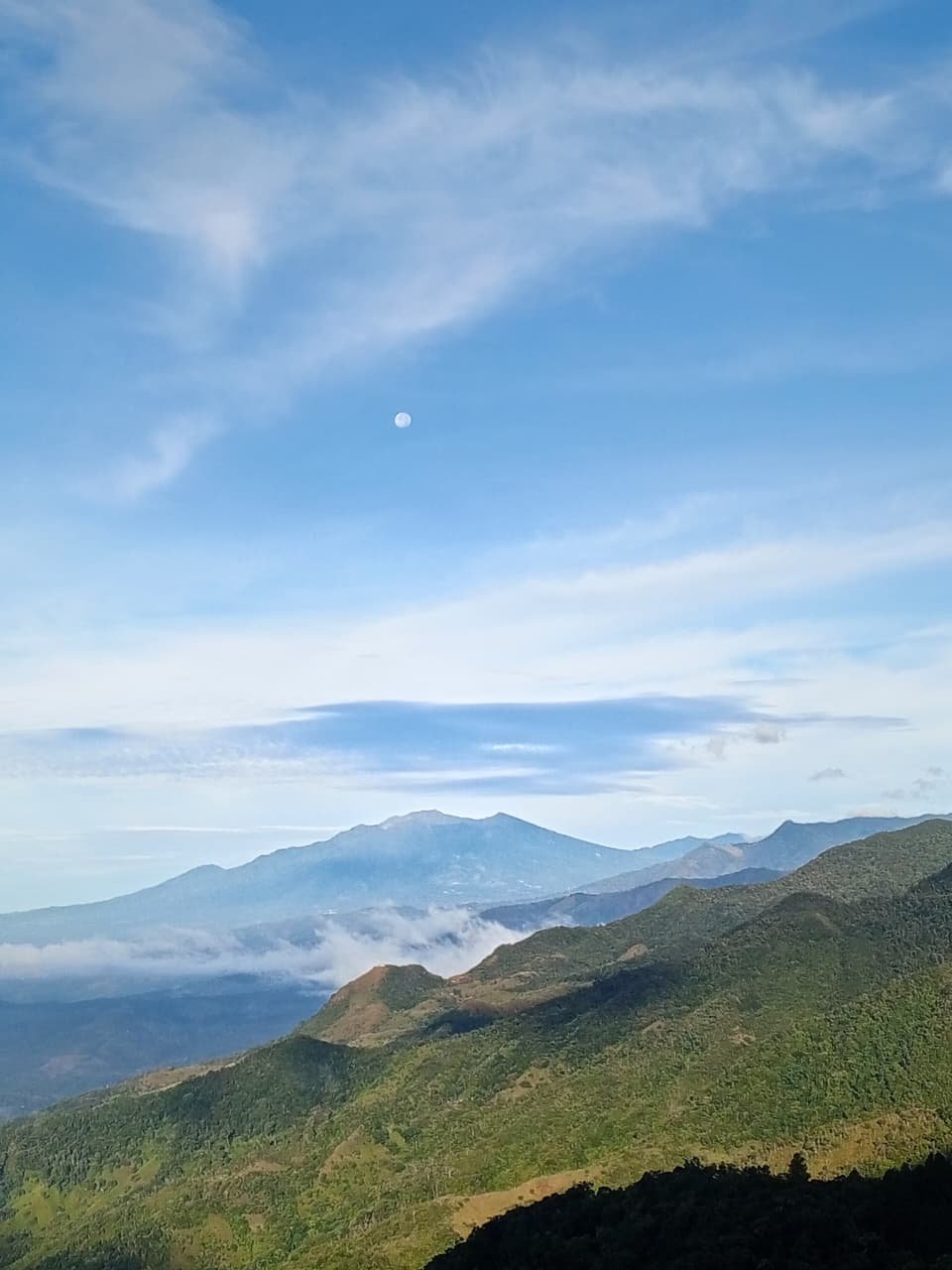
Boquete is probably one of the best examples. It is a mountain destination surrounded by spectacular scenery, coffee plantations, hiking trails and cloud forest, but you don't need a 4x4 simply because you're driving into the mountains. A normal car can reach Boquete. The road climbs, there are curves and the landscape becomes increasingly mountainous, but a paved mountain road is still a road. Travellers sometimes confuse mountain driving with off road driving, when they are actually two completely different things. A modern sedan is perfectly capable of climbing a normal paved mountain road.
El Valle de Antón is another excellent example. The town sits inside the crater of an ancient volcano and is surrounded by dramatic mountains, but it is a developed destination that is easily accessible by normal road. Once you're there, you might encounter rougher secondary roads depending on where you are going, but that doesn't mean you need a four wheel drive for your entire trip. In many cases you can simply drive as far as the road reasonably allows, park somewhere appropriate and continue on foot. In Panama, sometimes the last part of the adventure is supposed to be a hike.
The Pacific coast also demonstrates why the 4x4 obsession can be exaggerated. Panama has an enormous number of beaches, surf towns and coastal communities, and many can be reached using ordinary vehicles. Places such as Playa Venao, Santa Catalina and numerous destinations throughout the Azuero Peninsula are accessible without automatically requiring four wheel drive. You may encounter potholes, gravel or rough sections, particularly on secondary roads, but rough does not necessarily mean impossible. Sometimes you simply slow down and drive carefully.
This is particularly important because some travellers think that if a road has potholes, they need a 4x4. They don't. A pothole is a reason to slow down, not necessarily a reason to buy an expedition vehicle. The same applies to gravel. A gravel road can be perfectly manageable in a sedan if conditions are good and the vehicle has reasonable clearance. The question should always be what the actual road conditions are, rather than whether the destination is described as "remote."
In fact, one of the greatest advantages of renting a sedan in Panama is that it gives you almost all the freedom of a 4x4 without the extra expense. You can leave the main tourist routes whenever you want, explore small towns, stop at roadside restaurants, visit viewpoints, search for waterfalls, find local markets and investigate beaches that aren't heavily promoted online. The vehicle itself isn't the adventure. The freedom to make your own decisions is the adventure.
Imagine travelling Panama by bus. You reach a town, walk around, find a taxi, organize transportation, wait for the driver, figure out how you're getting back and then worry about the last bus of the day. Now imagine having a small rental car. You see a sign for a waterfall and turn. You notice a busy local restaurant and pull over. You spot a viewpoint and stop. Someone tells you about a beach you've never heard of, so you put it into your GPS and go. Suddenly the entire country feels more accessible. That is the real advantage of having a rental car.
And this is where the idea of "hidden gems" becomes important. Many of Panama's hidden gems aren't hidden because the roads are impossible. They're hidden because most tourists don't know about them. A little restaurant doesn't need a 4x4. A local market doesn't need a 4x4. A mountain viewpoint doesn't necessarily need a 4x4. A small village doesn't need a 4x4. A coffee farm doesn't need a 4x4. A quiet beach doesn't necessarily need a 4x4. Often, the hardest part isn't getting there. It's simply knowing that the place exists.
There are, of course, exceptions. Panama absolutely has roads where a 4x4 or high clearance vehicle makes sense. There are remote rural tracks, muddy mountain roads, unpaved roads and areas that become considerably more difficult after heavy rainfall. If your specific itinerary involves deliberately exploring these kinds of roads, then paying extra for a suitable vehicle can be a very good decision. But that is a different type of trip. You are choosing to go looking for difficult terrain rather than simply travelling around Panama.
The rainy season is another important consideration. Panama receives enormous amounts of rain in many regions, and heavy rainfall can cause flooding, landslides, washouts and deteriorating road conditions. A road that is perfectly manageable during a dry period can become much more difficult after several days of heavy rain. This doesn't mean that every traveller should immediately rent a 4x4. It means you should check conditions, ask locals about the road ahead and use common sense. If a road looks terrible, don't drive it just because your GPS says you can.
There is also an important distinction between four wheel drive and ground clearance. When travellers say they want a 4x4, what they often really want is a vehicle that sits higher off the ground. If you're driving over rough gravel, potholes and uneven surfaces, clearance can sometimes be more important than having power delivered to all four wheels. A high clearance vehicle can be useful on rough roads, while a low sports car, even if it has four wheel drive, may still be a terrible choice. Think about the road rather than the badge on the back of the vehicle.
Your rental agreement is equally important. Just because a car can physically travel somewhere doesn't mean that the rental company allows you to take it there. Some rental agreements restrict unpaved roads or particularly remote areas, and damage to tires, wheels or the undercarriage can potentially create problems with insurance coverage. Before leaving the rental office, ask about unpaved roads, remote destinations, insurance exclusions and any particular areas they recommend avoiding. A five minute conversation before your trip can save you a very expensive headache later.
Navigation apps also deserve some caution. Google Maps is incredibly useful in Panama, but you shouldn't blindly follow every road it recommends. A navigation app sees a road on a map. It doesn't necessarily understand whether that road is currently muddy, flooded, washed out, privately controlled or suitable for your vehicle. If a perfectly good highway suddenly turns into a tiny dirt track disappearing into the jungle, stop and think. Ask someone locally. Check the conditions. If necessary, turn around. There is no prize for following your GPS into a place where your rental car becomes permanently attached to the landscape.
One of the best examples of this philosophy is Lost and Found Hostel in the mountains of Chiriquí. The hostel is surrounded by cloud forest and jungle and sits along the road between David and Bocas del Toro. Once you're there, the environment feels wonderfully remote, but the adventure doesn't require you to drive a giant 4x4 into the jungle. You reach the area by road, leave your vehicle in the appropriate location and then hike into the forest. That's often the better way to experience Panama anyway. Your vehicle gets you close, and your feet take you into the wilderness.
This idea applies all over the country. You don't need to make your rental car do everything. Let the car get you to the region, then use hiking trails, boats, local guides, taxis or organized tours for the parts that require them. If you're visiting Bocas del Toro, for example, you can drive to the mainland transportation point and then leave the vehicle behind while boats take you into the islands. There is no reason to insist on driving a 4x4 somewhere that doesn't even have roads.
The money saved by renting a sedan can also be put toward the things that actually make your Panama trip memorable. Instead of spending extra on a huge SUV that you may never need, you could use that money for a coffee tour in Chiriquí, a boat trip, diving, surfing, hiking, accommodation, good meals or another couple of nights somewhere beautiful. For most travellers, experiences are a much better investment than unnecessary horsepower.
There is also something psychologically useful about driving a normal car. You tend to pay attention. You slow down for potholes. You don't attack muddy roads as though you're competing in a rally. You think carefully before driving somewhere questionable. A 4x4 can create a false sense of invincibility, but four wheel drive doesn't make flooding safe, doesn't make a washed out bridge safe and doesn't make a dangerous road suddenly safe. Sometimes the smartest vehicle is simply the one that encourages you to drive carefully.
The great thing about a Panama road trip is that you don't have to see the country as a series of attractions connected by highways. You can experience the spaces between them. You can stop at roadside fruit stands, eat at small restaurants, explore villages, watch farmers working in the fields, pull over for mountain views and discover places that were never on your original itinerary. That is where having a car becomes so valuable. You are no longer simply being transported between tourist destinations. You are actually moving through Panama.
So when should you rent a 4x4? If you have a specific destination that requires one, if you're deliberately exploring remote unpaved roads, if you're travelling into areas where road conditions are known to be difficult or if you simply enjoy off road driving, then go for it. There is nothing wrong with wanting a bigger vehicle. But don't rent one simply because somebody told you that Panama is a jungle country.
For the typical traveller, a sedan is going to be enough for almost everything. Panama City, the Canal, Casco Viejo, El Valle, the Pacific coast, David, Boquete, many coffee farms, many beaches, major towns and countless smaller destinations can all be incorporated into a road trip without turning your holiday into an off road expedition.
The most important thing isn't whether you have four wheel drive. It's whether you have freedom. A rental car lets you leave when you want, stop when you want, change your plans, explore side roads, discover small towns and stay longer when you find somewhere you love. That's far more valuable than having a giant vehicle capable of climbing a road you're never going to drive.
Panama rewards curiosity more than horsepower. You need some patience, a decent map, a full tank of gas, good judgment and the willingness to occasionally turn off the main road. You don't need to drive through a river to prove that you've experienced the real Panama.
In fact, some of the country's greatest adventures happen after you park the car.
You hike into the cloud forest. You take a boat to an island. You walk down a beach. You climb to a waterfall. You explore a village. You sit in a local restaurant and order something you've never eaten before. The car has already done its job. It got you there.
That's why, for most travellers, a sedan can take you to roughly 95 percent of the Panama you actually want to experience. You don't need a 4x4 to find the hidden Panama. You simply need the curiosity to look for it.