
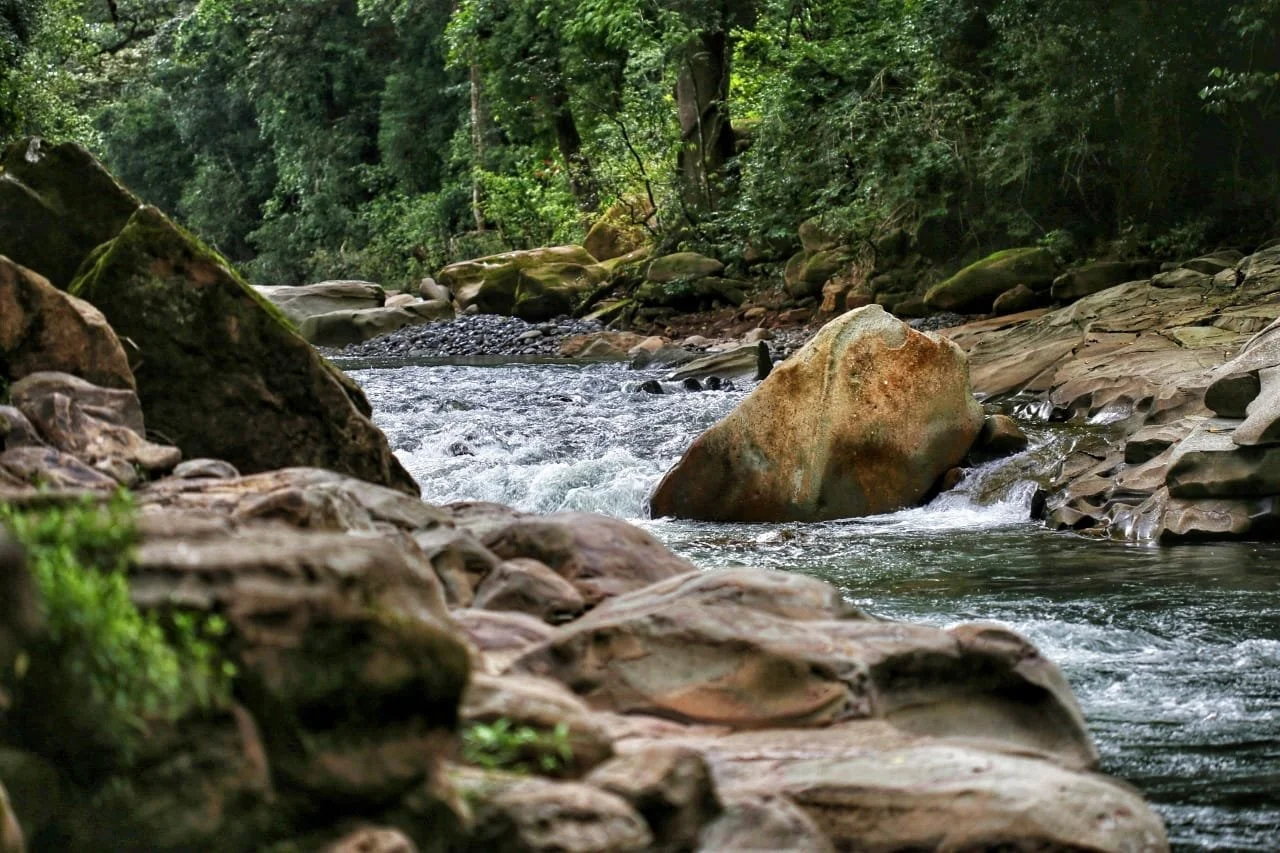
Panama is one of those countries that looks deceptively small on a map. A backpacker can cross it relatively quickly, but rushing through Panama is one of the easiest ways to miss what makes the country special. Within a few hours of traveling, the scenery, climate, culture and even the atmosphere can completely change. You can start in a modern capital surrounded by skyscrapers, be hiking through cloud forest the next day, spend a few nights in the mountains, cross into the Caribbean and eventually find yourself sitting on a tiny tropical island with nothing but jungle, sand and turquoise water around you. Panama isn't a country that needs to be conquered in a week. It rewards travelers who slow down.
Panama City: Don't Just Use It as an Airport
Almost every backpacker will pass through Panama City, and many make the mistake of treating it as a place to sleep before catching the next bus. Give it a little more time. Panama City is one of the most unusual capitals in Central America because the old and new versions of Panama exist almost side by side. The skyscrapers, shopping districts and modern infrastructure make it feel surprisingly international, while Casco Viejo, the Panama Canal and the nearby rainforest reveal a completely different side of the country.
Spend some time wandering Casco Viejo without a strict plan. Eat somewhere local, walk along the waterfront and watch the skyline light up after sunset. Visit the Panama Canal, but also make time for one of the nearby national parks. Seeing monkeys, tropical birds and rainforest while still being within reach of one of the biggest cities in Central America is one of the things that makes Panama City unusual.
For backpackers, Panama City is also where the journey begins socially. Hostels are full of people heading in completely different directions, and conversations about where to go next are often how travelers discover the places they hadn't originally planned to visit.
San Blas: The Panama You Imagined Before You Arrived
San Blas, officially Guna Yala, is probably the place that most closely resembles the Panama that exists in people's imaginations. Tiny islands sit in clear Caribbean water, palm trees lean over white beaches and traditional boats move between islands.
But San Blas is much more than a beautiful beach destination. It is the territory of the Guna people, and the indigenous culture is an important part of the experience. Accommodation can be simple, transportation can occasionally be unpredictable and you shouldn't arrive expecting a polished resort. That's precisely why many backpackers love it.
San Blas is somewhere to put the phone down for a while. Swim, snorkel, eat fresh seafood, talk to other travelers and watch the sun disappear over the Caribbean. It can feel wonderfully disconnected from the rest of the world.
El Valle de Antón: A Different Kind of Panama
El Valle de Antón is one of those places that surprises people. The town sits inside the enormous crater of an ancient volcano and is surrounded by lush mountains. The climate is cooler than the lowlands, and the landscape is perfect for hiking and exploring.
It's also conveniently located close enough to Panama City to make a relatively easy escape from the capital. You don't need a week here. A couple of days can be enough to hike, visit waterfalls, explore the town and enjoy a completely different environment.
For backpackers who don't want their entire Panama trip to revolve around beaches, El Valle makes an excellent stop.
Santa Catalina: Go Where the Road Gets Smaller
Santa Catalina feels like somewhere you have to earn.
The journey takes longer, the town is small and there isn't a huge collection of conventional tourist attractions. But that's exactly what makes it appealing. Santa Catalina is about surfing, diving, fishing, beaches, sunsets and spending time with other travelers.
The real prize is the access to Coiba National Park. Diving and snorkeling around Coiba can be one of the biggest experiences of a Panama trip, with incredible marine life and some of the country's most spectacular underwater scenery.
Santa Catalina is particularly good for backpackers who don't need a destination to constantly entertain them. You can surf in the morning, spend the afternoon swimming, eat dinner, meet people at your hostel and do exactly the same thing the following day.
Nobody will judge you.
Boquete: The Backpacker's Mountain Escape
Eventually, most backpackers who travel through Panama end up discovering Boquete.
The change from the coast is dramatic. The temperature drops, the mountains appear and the air becomes noticeably cooler. The landscape around Boquete is incredibly green, and the region is famous for coffee, hiking, waterfalls, wildlife and outdoor adventures.
This is the place to slow down.
Go hiking in the morning, visit a coffee farm in the afternoon and spend the evening talking to other travelers over food or drinks. Boquete is also a fantastic base for people who want to attempt Volcán Barú, Panama's highest mountain.
The surrounding region is particularly rewarding for travelers interested in birds and wildlife. You don't necessarily need an expensive tour to appreciate it. Sometimes simply walking along a road or trail with your eyes open can produce encounters with animals that you would never see back home.
Fortuna and Lost and Found: The Stop You Didn't Know You Needed
For backpackers traveling between Boquete and Bocas del Toro, the Fortuna region offers something that is becoming increasingly difficult to find on a well-traveled backpacking route: a genuine feeling of being in the jungle.
This is where Lost and Found Hostel comes into its own.
Hidden in the Fortuna Forest Reserve in Chiriquí, Lost and Found isn't a conventional hostel where you simply arrive, check into a dorm and leave the next morning. It is a hike-in jungle hostel surrounded by its own trails and forest, with the kind of location that makes the accommodation itself part of the adventure.
You literally hike into the property.
Once you're there, the experience revolves around the forest. There are trails to explore, viewpoints, waterfalls, river areas and opportunities to encounter Panama's wildlife. The hostel has developed a particularly strong reputation among backpackers because it combines something that can be surprisingly difficult to find: a genuinely wild location with a social backpacker atmosphere.
It is also perfectly positioned for travelers moving between the Boquete and Bocas del Toro areas. Instead of treating the journey between those destinations as a transportation day, you can turn it into one of the highlights of your trip.
The atmosphere is deliberately different from a conventional hotel. People arrive with backpacks, meet strangers, explore the trails together, play games, have drinks, join activities and often end up staying longer than planned.
For travelers who love hiking and nature, this can be the Panama experience that sticks in their memory long after the beaches have started to blur together.
And there is something particularly satisfying about waking up in a jungle rather than simply visiting one on a three-hour tour.
Bocas del Toro: Where Backpackers Come to Socialize
Eventually, the jungle gives way to the Caribbean.
Bocas del Toro is one of Panama's great backpacker destinations and probably the easiest place in the country to meet other travelers. Bocas Town has hostels, restaurants, bars, water taxis and travelers heading in every possible direction.
The atmosphere is young, social and sometimes chaotic in exactly the way a backpacker destination should be.
Spend a day exploring the islands, go snorkeling, find a beach and then return to town in time to meet people at your hostel. Bocas is one of those places where you can arrive knowing nobody and have plans with five people by the end of the evening.
But don't spend your entire time in Bocas Town. The surrounding islands are where the real beauty is. Bastimentos and the other islands offer a much quieter experience, with jungle, beaches and clear Caribbean water.
Bocas is the destination where many backpackers discover that their carefully planned itinerary has suddenly become irrelevant.
Volcán and Cerro Punta: For People Who Want Something Quieter
If Boquete feels a little too established for you, keep going into the highlands.
Volcán and Cerro Punta offer a different version of mountain Panama. The scenery becomes increasingly agricultural and rural, and the tourist infrastructure becomes thinner.
This is a great area for people who prefer hiking, landscapes, farms and quiet mornings to nightlife.
It also provides access to some of the country's most important highland ecosystems and the wider La Amistad region.
For backpackers, the attraction is partly the absence of things. There aren't endless tourist attractions demanding your attention. Sometimes you simply walk, explore, eat and enjoy the mountains.
Playa Venao: Surf, Sand and Backpacker Life
On the Pacific side, Playa Venao has become one of Panama's best-known backpacker and surf destinations.
The lifestyle is simple: surf, eat, relax, meet people, watch the sunset and repeat.
There is enough of a backpacker scene that solo travelers can easily meet people, but the beach and surrounding landscape prevent it from feeling like a city that happens to have a beach attached.
Venao is particularly good if you want to spend a week somewhere rather than moving every couple of days. It has the sort of atmosphere where travelers frequently arrive with one plan and then extend their stay.
Portobelo: The History Most Backpackers Miss
Not every must-see destination needs a beautiful beach.
Portobelo offers something different: history.
The old Spanish fortifications and ruins are reminders of how important this Caribbean port once was to the Spanish Empire. But Portobelo is also important because of the cultural influences that have shaped Panama's Caribbean coast.
It is an excellent place to see a side of Panama that doesn't always appear in the standard backpacker itinerary.
If you've spent two weeks hiking, swimming and partying, a few days exploring the history and culture of the Caribbean coast can be a welcome change.
Santa Fe: Get Off the Route
Santa Fe is for the backpacker who looks at the standard itinerary and thinks, "Where can I go that isn't on everybody else's list?"
The answer is Santa Fe.
The mountain town in Veraguas is surrounded by forests, rivers and waterfalls. It doesn't have the same developed backpacker infrastructure as Bocas or Boquete, and that is precisely the appeal.
You have to put in more effort here.
But the reward is a quieter and more independent experience. You aren't simply following the same route as thousands of other travelers.
Soberanía: Jungle Near the Capital
One of Panama's great advantages is that you don't have to travel for days to see rainforest.
Soberanía National Park is close to Panama City and offers an opportunity to walk through genuine tropical forest without completely abandoning civilization.
For backpackers with limited time, this is important. You can spend a morning exploring the jungle and be back in the city later that day.
It is also an excellent place for birdwatching and wildlife.
Don't Turn Panama Into a Checklist
The biggest mistake you can make backpacking Panama is trying to see everything.
Panama rewards slow travel.
A backpacker who spends one night in Panama City, one night in El Valle, two nights in Santa Catalina, two nights in Boquete, one night in Fortuna, two nights in Bocas and then immediately leaves the country has technically seen a lot.
But they may not have actually experienced much.
Some of the best memories come from the unplanned moments. The bus that takes longer than expected. The tiny restaurant you discover by accident. The local person who recommends a waterfall. The hostel roommate who becomes a travel companion. The extra night you decide to stay because you simply don't want to leave.
That's why places like Lost and Found are particularly valuable on a Panama backpacking trip. They're not simply another dot on a map. They can become a pause in the journey, where travelers stop rushing, meet people, explore the jungle and actually experience the place they're staying.
The Ultimate Panama Backpacker Route
For a first trip, a fantastic route could be Panama City → San Blas → El Valle → Santa Catalina → Boquete → Fortuna/Lost and Found → Bocas del Toro.
That gives you an incredible cross-section of the country.
Modern city.
Indigenous Caribbean.
Volcanic mountains.
Pacific surf.
Cloud forest.
Jungle.
Caribbean islands.
And if you have more time, don't simply add more destinations. Slow the route down.
Spend longer in the places you like.
Take detours.
Explore somewhere that isn't famous.
Talk to locals.
Stay in hostels rather than constantly moving between anonymous hotels.
Panama is at its best when you stop treating it as a list of attractions and start treating it as an adventure.
Because the real magic of backpacking here isn't that you can see a ridiculous number of places in a short amount of time.
It's that you can experience several completely different worlds without ever having to leave the country.