
Panama is a strange country to backpack through because it doesn't immediately reveal how much it has to offer. At first glance, it can look like a relatively small Central American country sitting between Costa Rica and Colombia, with a famous canal, a modern capital and a handful of beaches. Then you actually start traveling through it and realize that Panama is almost ridiculously diverse. You can wake up on a Caribbean island, spend the afternoon crossing mountains, hike through cloud forest before sunset and be sitting beside the Pacific Ocean a day later. Few countries this compact can throw so many completely different environments at a backpacker.
The magic of backpacking in Panama is that you don't have to choose between beaches, jungle, mountains, wildlife, adventure and nightlife. You can have all of them. The country naturally creates a route that pulls travelers from one experience to the next. Panama City introduces you to the enormous contrast between modern Latin America and the country's wilder side. Then you can head toward the Caribbean, disappear among the islands of Bocas del Toro, climb into the mountains around Boquete, venture into the cloud forests of Chiriquí, surf around Santa Catalina and explore the extraordinary marine world surrounding Coiba. Somewhere along the way, your original itinerary will probably become irrelevant.
Panama City: Where the Backpacking Adventure Begins
For many travelers, Panama City is their first taste of the country, and it is an unusual introduction. One minute you're surrounded by skyscrapers, shopping malls and international restaurants, and the next you're wandering through the colonial streets of Casco Viejo with tropical vegetation creeping between old buildings.
The city deserves more than a rushed overnight stop. Walk through Casco Viejo, watch the ships moving toward the Canal, explore local markets and experience the strange contrast between modern Panama and the country's much older history. Then, when you've had enough concrete, start heading west.
That's when the Panama backpacking adventure really begins.
Bocas del Toro: Where Backpackers Go to Forget Their Itinerary
If Panama has a destination capable of destroying a carefully planned itinerary, it's Bocas del Toro.
People arrive intending to stay three nights and suddenly discover that they're still there a week later. The Caribbean atmosphere is infectious. Boats bounce between islands, travelers gather around hostels, beaches appear around seemingly every corner and the distinction between "today" and "tomorrow" becomes increasingly meaningless.
You can spend the day snorkeling, exploring beaches, surfing, kayaking, swimming or simply doing absolutely nothing. Then the sun goes down and the backpacker scene comes alive.
Bocas is one of those places where strangers become travel companions remarkably quickly. Someone mentions they're going to a particular beach tomorrow and suddenly six people are going together. Someone needs a fourth person for a boat trip. Someone else knows a restaurant. Within hours, your plans have changed.
And that's exactly what backpacking is supposed to feel like.
Then Come the Mountains
Eventually, however, the Caribbean heat starts making you dream about cooler air.
That's when you head toward Panama's mountains.
Boquete is famous for its coffee, hiking, waterfalls, flowers and spectacular mountain scenery. It's a completely different experience from Bocas. Instead of waking up beside tropical water, you wake up surrounded by green mountains.
This is where Panama begins demonstrating one of its greatest advantages for backpackers: geographical variety. You don't need to travel thousands of kilometers to experience completely different environments.
You just need a bus ticket.
And Then There Is Lost and Found
Somewhere between the Caribbean and the highlands, however, there is one stop that backpackers should not skip.
Lost and Found Hostel sits inside the La Fortuna Nature Reserve in the cloud forests of Chiriquí, between the Bocas del Toro and Boquete routes. Unlike an ordinary hostel beside a road, it is a hike in destination surrounded by forest, trails and mountain scenery. Its own site describes it as Panama's only hike in jungle hostel located inside a cloud forest reserve.
This is the kind of place that makes you wonder why anyone would build a hostel there in the first place.
Then you arrive.
The road disappears below you, the temperature drops, clouds move through the mountains and suddenly your idea of what a hostel can be changes completely. Instead of opening the door and finding traffic outside, you find jungle.
There are more than 10 kilometers of trails through the reserve, with opportunities to encounter birds, monkeys, orchids, bromeliads and other wildlife. The hostel also offers experiences including waterfall trips, river swimming, horseback riding, yoga and its Indiana Jones style treasure hunt.
But the most memorable part may actually be the people.
Lost and Found has developed a particularly social backpacker atmosphere because there simply isn't much else around. People hike together. They eat together. They explore together. They sit in hammocks together. By evening, strangers who arrived that morning can already be discussing their next adventure together.
The hostel itself describes the experience as a combination of nature, social travel and adventure, and that combination is precisely why it has become such a recognizable stop on the western Panama backpacker route.
It also happens to be extremely convenient. Travelers moving between Bocas del Toro and Boquete pass through the region, making Lost and Found a natural place to break up the journey instead of spending several hours simply staring through a bus window.
In other words, don't treat Lost and Found as merely somewhere to sleep between destinations. Treat it as one of the destinations.
Santa Catalina: Where Panama Gets Wild Again
After the mountains, you can head toward Santa Catalina, where Panama changes personality once again.
The landscape becomes Pacific rather than Caribbean. Surfers arrive for the waves, divers head toward Coiba and travelers settle into the slower rhythm of a small coastal town.
Santa Catalina is particularly special because it is a gateway to Coiba National Park, one of the most extraordinary marine environments in Panama. The waters around Coiba can offer incredible snorkeling and diving, with coral reefs, fish, rays, turtles and other marine life.
This is where backpacking Panama starts to feel almost unfair. You have already had Caribbean beaches and cloud forests, and now you're suddenly exploring one of the country's most spectacular underwater environments.
The Jungle Is Never Far Away
One of the most enjoyable things about Panama is that wildlife isn't restricted to a single national park where you have to spend three hours searching for something that may or may not appear.
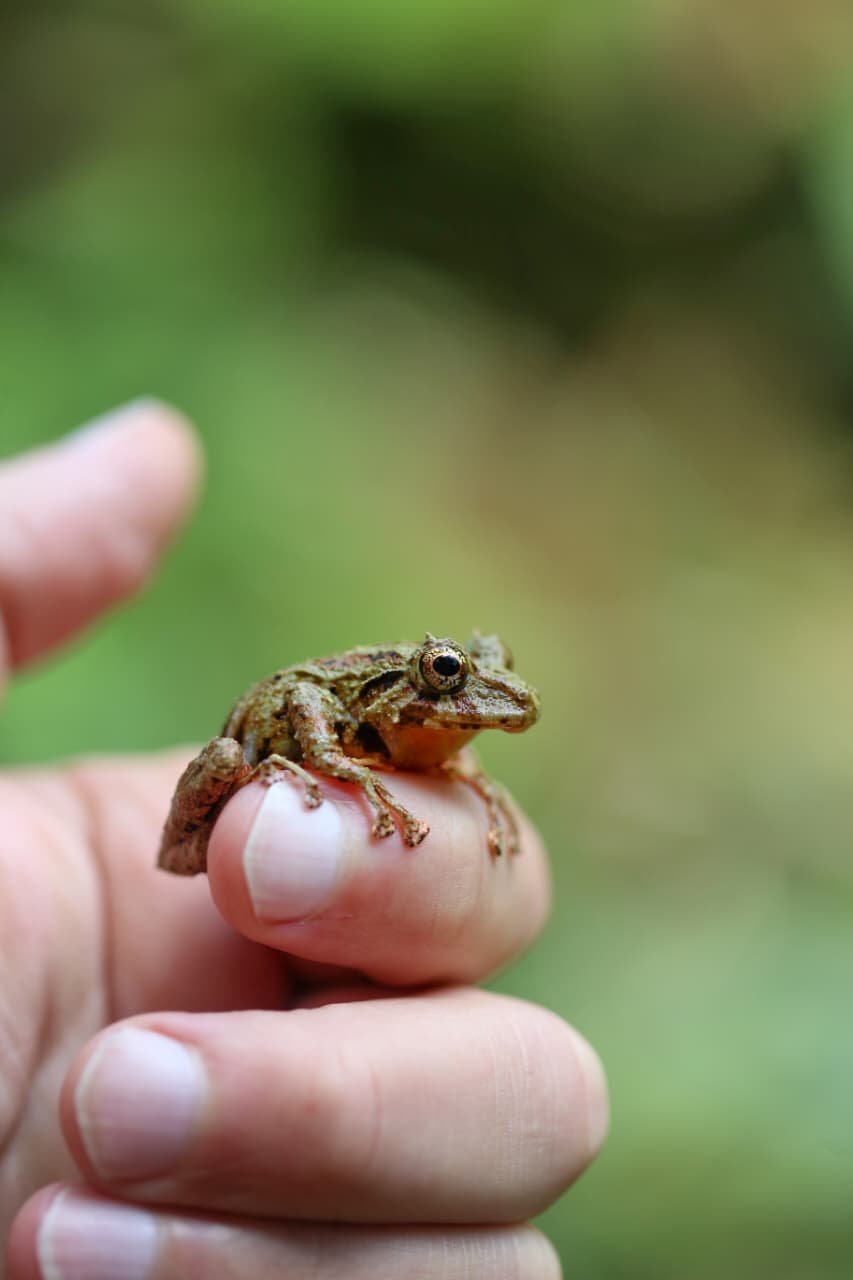
Depending on where you travel, you can encounter monkeys, sloths, toucans, hummingbirds, frogs, butterflies, snakes, lizards and an almost ridiculous variety of insects.
And sometimes the wildlife comes looking for you.
A backpacker walking through a rainforest at night may discover that Panama's definition of "wildlife encounter" includes something with eight legs standing directly beside the trail.
That's part of the deal.
Panama isn't a zoo.
It's a tropical country where the forest is very much alive.
The Best Experiences Aren't Always the Most Expensive
Another reason Panama works so well for backpackers is that you don't need to spend your entire budget on organized tours.
Some of the most memorable experiences are remarkably simple. Walk a forest trail. Swim in a river. Find a waterfall. Watch birds. Sit on a beach. Talk to someone in a local restaurant. Take a bus through the mountains. Buy fruit from a market. Watch the sunset.
Then occasionally spend the money on something extraordinary.
Dive Coiba.
Take a great boat trip.
Go canyoning.
Climb a mountain.
Try surfing.
The trick is not trying to make everything cheap. It's deciding what deserves your money.
The Backpacker Route Becomes the Experience
Eventually, something funny happens when you travel through Panama.
You start recognizing people.
You meet someone in Bocas.
A few days later you see them again in the mountains.
Someone you met at Lost and Found appears in Boquete.
Then someone from Santa Catalina turns up somewhere else.
Panama is small enough that backpackers naturally funnel through the same destinations, hostels and transportation routes. That creates an unusual sense of community. You aren't simply traveling through a country. You're moving through a constantly changing international group of people who are all following roughly the same trail.
Someone always knows where you're going next.
Someone has just come from there.
Someone knows a cheaper way to get there.
Someone knows a waterfall.
Someone knows a hostel.
Someone knows where the party is.
And someone will inevitably say, "You have to go here."
That's how backpacking Panama works.
Why Panama Is So Good for First Time Backpackers
Panama is particularly good for travelers who want adventure without feeling completely disconnected from civilization.
You can have jungle and remote beaches, but you can also get decent internet. You can eat cheaply or splurge. You can use public transportation or take a shuttle. You can sleep in a hammock, a dorm or a luxury hotel.
You choose how hardcore you want the backpacking experience to be.
And if one day you are exhausted from sleeping in dorms, carrying your backpack and sweating through your clothes, you can simply find somewhere comfortable, take a shower and remember that civilization isn't necessarily a bad invention.
Then go back into the jungle.
Don't Rush Panama
Perhaps the biggest mistake is trying to see everything.
Panama rewards travelers who slow down.
Stay an extra day in Bocas.
Spend a few days in the mountains.
Don't rush through Lost and Found.
Give yourself time in Santa Catalina.
Explore rather than simply checking destinations off a list.
The most memorable moments often happen on the day when you weren't supposed to do anything special.
Maybe you meet someone at breakfast who convinces you to go hiking.
Maybe a local recommends a waterfall.
Maybe the bus journey turns into an unexpected adventure.
Maybe you sit on a beach until sunset because nobody has anywhere else to be.
Those are the moments that eventually become the stories.
Panama Is More Than a Stop Between Countries
For travelers moving through Central America, Panama can sometimes be treated as the country between Costa Rica and Colombia.
That's a mistake.
Panama deserves to be explored on its own terms.
It has Caribbean islands, Pacific surf, enormous rainforests, cloud forests, mountains, volcanic landscapes, indigenous cultures, archaeological sites, coral reefs and one of the most important engineering projects in human history.
And sitting right in the middle of the western backpacker route is a hostel where you can leave the road behind and walk directly into the jungle.
Lost and Found isn't just a convenient stop between Bocas del Toro and Boquete. It's one of those places that gives backpacking through Panama its character. You arrive expecting a bed and a night's rest and instead find hiking trails, waterfalls, wildlife, mountain views, hammocks, a bar full of travelers and the possibility that the person you met that afternoon will become your adventure partner for the next three days.
And that's ultimately why backpacking in Panama is so addictive.
You're never quite sure what comes next.
A Caribbean island.
A mountain trail.
A hidden waterfall.
A jungle hostel.
A Pacific wave.
A coral reef.
A strange animal in the darkness.
A bus ride you didn't expect.
A person you didn't know yesterday who suddenly becomes part of your story.
That's Panama.
And if you're backpacking through the country, skipping Lost and Found would mean skipping one of the experiences that makes the journey itself as memorable as the destinations.