
Panama has a funny reputation among backpackers. It is one of the richest and most developed countries in Central America, home to the Panama Canal, shiny skyscrapers, international banks, luxury apartments and shopping malls large enough to make your wallet start sweating. You can stay in a beautiful hotel, eat imported food, drink cocktails overlooking the Pacific and somehow spend more money in one afternoon than you expected to spend in an entire week.
And then something strange happens.
You leave the polished part of Panama behind.
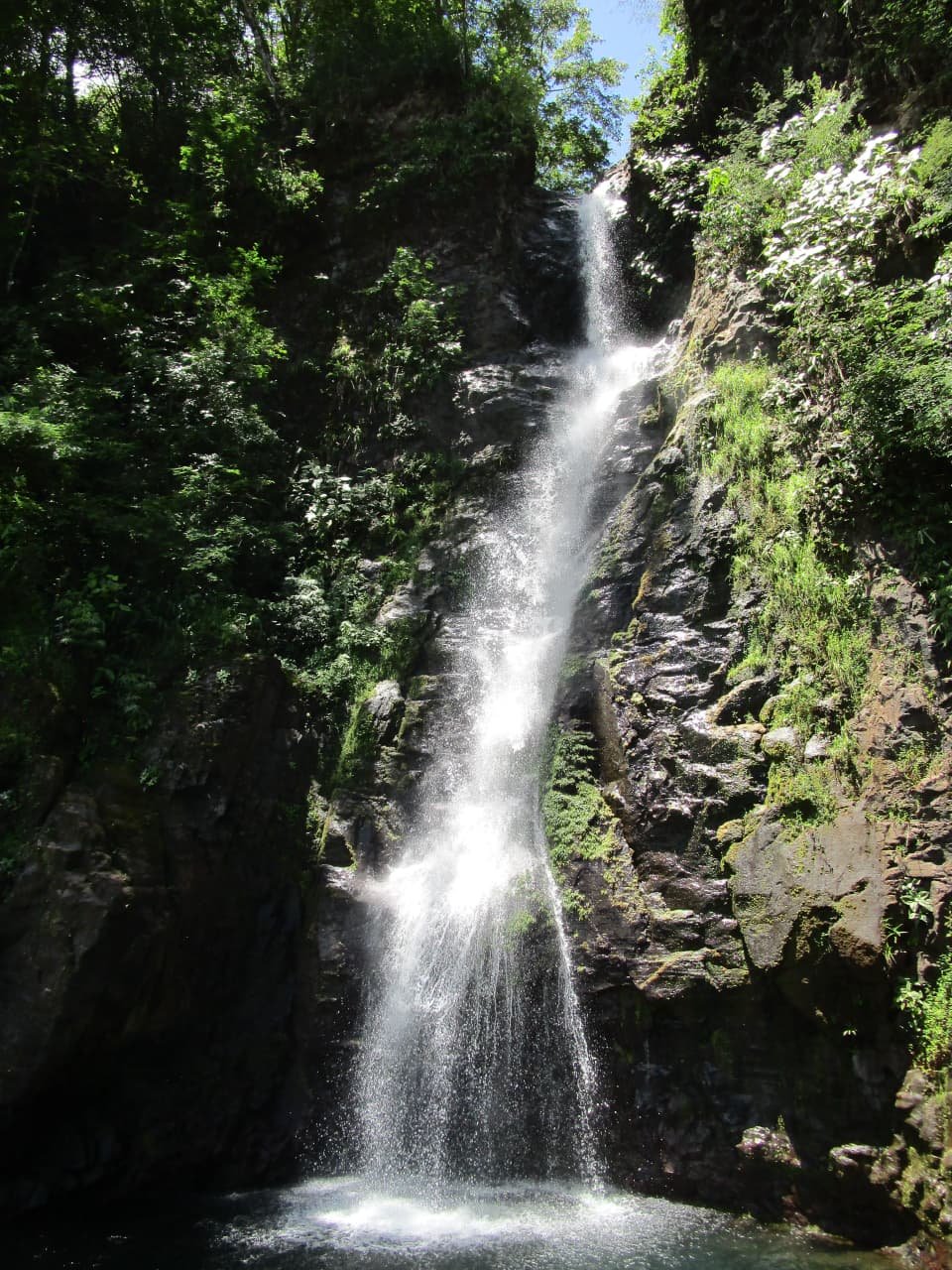
Suddenly you're sitting in a local fonda eating a huge plate of food for a few dollars. You're squeezed into a bus with twelve other people and discover that the journey you were quoted $40 for can be done for a fraction of that price. You find a simple hostel surrounded by jungle. You buy fruit from a roadside stand. You take a local bus instead of an expensive shuttle. You discover that the waterfall you're standing beside didn't require a $100 tour package and a professional photographer.
This is where backpacking in Panama gets interesting.
Panama can be expensive if you travel like a tourist. It can be surprisingly affordable if you travel like a backpacker.
And the difference between those two lifestyles can be enormous.
Panama's Biggest Backpacking Secret
The biggest trick isn't discovering some secret website offering $7 flights.
It's understanding that Panama has two completely different price systems operating at the same time.
There is the Panama that caters to people who want convenience.
Airport transfers.
Private drivers.
International restaurants.
Luxury hotels.
Organized excursions.
Fancy beach resorts.
Imported products.
Tourist shuttles.
And then there is the Panama that operates every day for ordinary people.
Local buses.
Small restaurants.
Markets.
Neighborhood bakeries.
Public beaches.
Cheap accommodation.
Local ferries.
Roadside fruit stands.
Simple guesthouses.
And cheap domestic transportation.
If you learn how to move between these two worlds, you can dramatically reduce your costs without necessarily having a worse trip.
In fact, sometimes the cheaper option is more interesting.
The Great Backpacker Rule: Don't Pay Someone to Do Something You Can Do Yourself
This is probably the most important rule.
Tourism businesses make money by selling convenience.
And convenience is fantastic.
But convenience is expensive.
A tourist shuttle might pick you up directly from your hostel, put your luggage underneath the vehicle, drive you directly to your destination and drop you at the door.
Wonderful.
But Panama also has buses.
They might involve walking to a terminal.
You might have to figure out which bus you need.
Someone might tell you the bus leaves at 10:15 and then you discover that "10:15" is more of a philosophical concept than an exact departure time.
But the price difference can be dramatic.
And there's another advantage.
You get to see Panama.
You see towns you would otherwise fly past.
You see people going to work.
You see roadside shops.
You see landscapes.
You experience the country rather than simply being transported through it.
Backpacking is supposed to contain at least a little uncertainty.
Otherwise you're just on a budget package holiday.
The Local Bus Is Your Friend
Panama's bus system can be one of the backpacker's greatest weapons.
The country has an extensive network of buses connecting cities, towns and rural areas.
And while the experience may not always be glamorous, it can be extraordinarily cheap compared with private transportation.
You may find yourself sitting next to someone carrying an enormous bag of something you cannot identify while a reggaeton song plays at a volume that appears medically unnecessary.
That's not a problem.
That's the experience.
The person in the private shuttle is getting to the same destination.
You're getting a story.
And you're paying less.
Eat Where the Workers Eat
Food is another area where travelers can accidentally destroy their budget.
You walk around Panama City.
You see a beautiful restaurant.
The menu is familiar.
The chairs are comfortable.
The air conditioning is aggressive.
The burger costs $18.
You think:
"Well, that's Panama."
No.
That's that restaurant.
Walk a few blocks away and look for a local fonda.
Suddenly you may find a plate with rice, beans, meat, salad, plantains and something else you weren't expecting for a fraction of the price.
And here's the great backpacker trick:
Look for where local workers are eating.
If a tiny restaurant is packed with construction workers, taxi drivers, office employees and other people who actually live there, that's usually a much better sign than an empty restaurant with a beautifully designed Instagram wall.
Local food isn't just cheaper.
It's often more interesting.
Panama's Markets Are Backpacker Gold
Markets are another way to keep costs under control.
Fruit can be dramatically cheaper when purchased locally rather than from an expensive supermarket or convenience store.
And Panama has an incredible selection of tropical fruit.
You can turn breakfast into an adventure.
Buy bananas.
Pineapple.
Papaya.
Watermelon.
Mango.
Passion fruit.
Whatever looks good.
Suddenly your breakfast costs very little.
Meanwhile, the person staying in the hotel next door has paid $17 for a plate of eggs and is wondering why their coffee costs the same as a bus ticket.
Hostels Change Everything
Accommodation is where backpacking economics can really come alive.
If you don't need a private room, hostels can dramatically reduce the cost of traveling through Panama.
A dorm bed can cost a fraction of a hotel room, especially outside the most expensive tourist areas.
And there is another hidden advantage.
You meet other backpackers.
That means you can share taxis.
Split transportation.
Find travel partners.
Share information.
Discover cheaper tours.
And occasionally discover that the person in the bunk above you has already figured out how to get somewhere for $4 that you were about to pay $35 to reach.
Backpackers are basically a decentralized information network powered by instant noodles.
Use them.
The Secret Weapon: Talk to Other Travelers
This may be one of the most valuable pieces of advice in Panama.
Ask people who have just been where you're going.
If someone walks into your hostel carrying a backpack and says:
"We just came from Santa Catalina."
Talk to them.
Ask how they got there.
Ask what they paid.
Ask where they stayed.
Ask whether the tour was worth it.
Ask whether the bus actually exists.
Ask whether the "easy hike" nearly killed them.
Backpackers exchange information constantly.
One person discovers the cheap way.
Another discovers the beautiful way.
Someone else discovers the bus schedule.
Eventually the hostel becomes an informal intelligence agency.
Don't Book Everything Before You Arrive
This is another classic backpacker mistake.
You plan everything months in advance.
Hotel.
Airport transfer.
Tour.
Shuttle.
Restaurant.
Excursion.
Boat.
Guide.
Everything.
By the time you arrive, you've already paid for the most expensive version of your trip.
Panama often rewards flexibility.
Not always, of course. Flights, popular accommodation and certain activities can require advance planning.
But if you're flexible, you can sometimes compare options after arriving and discover much cheaper alternatives.
You may also discover that the place you thought you needed to visit for two nights is actually somewhere you want to stay for five.
That's one of the great freedoms of backpacking.
Your itinerary isn't a prison sentence.
Panama Is Full of Cheap Experiences
The biggest mistake travelers make is assuming that the best experiences have to be expensive.
They don't.
You can hike.
Swim.
Explore towns.
Visit markets.
Walk through neighborhoods.
Watch wildlife.
Visit beaches.
Explore waterfalls.
Watch sunsets.
Take local buses.
Walk through forests.
Talk to locals.
Meet other travelers.
And many of these experiences cost little or nothing.
The expensive tour isn't automatically the better experience.
Sometimes the best story of your trip will come from following a muddy trail that someone at the hostel told you about.
The Jungle Is Often Cheaper Than the Resort
This is one of Panama's great contradictions.
Luxury tourism can be extremely expensive.
But the country's natural environment is often accessible without spending a fortune.
You don't necessarily need a private guide and a luxury eco lodge to experience the rainforest.
Sometimes you need hiking shoes, water, mosquito repellent and the willingness to sweat like you're being punished by the climate gods.
The reward can be enormous.
Panama's forests contain monkeys, sloths, birds, frogs, reptiles, insects and countless plants.
And the forest doesn't charge admission every time you look at something interesting.
Learn the Difference Between "Tourist Price" and "Panama Price"
This doesn't mean every local business is trying to rip you off.
It simply means that prices vary enormously depending on how you purchase something.
A private transfer costs more than a bus.
A beachfront restaurant costs more than a neighborhood fonda.
A luxury island hotel costs more than a hostel.
A private boat costs more than shared transportation.
A guided excursion costs more than hiking independently where appropriate.
Once you understand this, you stop being shocked by Panama's prices.
You simply choose which version of Panama you want.
Don't Try to Backpack Like You're on Vacation
This sounds ridiculous, but it's incredibly important.
A backpacking trip is not a cheap luxury vacation.
If you want daily cocktails, private rooms, expensive restaurants, private drivers and organized excursions, Panama can become expensive very quickly.
But if you're happy with dorms, local food, buses, walking and occasional splurges, you can stretch your money dramatically further.
And honestly, the occasional splurge becomes much more enjoyable when you know you saved money for it.
Spend five days eating cheap local food.
Then have one ridiculous dinner.
That dinner suddenly feels like an event.
The $20 Mistake
Backpackers often don't lose their money through one enormous purchase.
They lose it through dozens of tiny ones.
$4 coffee.
$7 breakfast.
$5 Uber.
$8 snack.
$12 cocktail.
$10 unnecessary taxi.
$6 convenience-store meal.
$15 tourist attraction.
None of these individually seems disastrous.
Add them together for three weeks and suddenly your bank account is looking at you like:
"We need to talk."
The solution isn't never spending money.
It's knowing what is actually worth spending money on.
Spend Money on Experiences, Not Convenience
This is probably the best philosophy.
Don't be afraid to spend money.
Just spend it intelligently.
If there's an incredible diving trip you really want to do, pay for it.
If you want to surf Santa Catalina, rent the board.
If you want to explore Coiba, spend the money.
If you want to stay somewhere spectacular for a couple of nights, do it.
But don't spend $30 on something simply because you didn't want to spend ten minutes figuring out the bus.
That's not an experience.
That's laziness with a receipt.
The Backpacker Economy Is Real
There is another reason backpacking in Panama can be affordable.
Backpackers talk.
Constantly.
One person finds the cheap bus.
Someone else finds the affordable hostel.
Someone discovers a local restaurant.
Another person knows someone renting surfboards.
Someone else knows which island has cheaper accommodation.
This information spreads through hostels, WhatsApp groups, social media and conversations over breakfast.
You can arrive in Panama knowing almost nothing and, within a week, have a completely different understanding of how to travel cheaply.
That's the beauty of backpacking.
Your fellow travelers become part of your information network.
Panama Doesn't Have to Be a Luxury Destination
Panama certainly can be luxurious.
You can spend extraordinary amounts of money here.
But that's only one version of the country.
There is another Panama where breakfast is cheap, buses are packed, fruit comes from roadside stands, hostels are full of travelers, beaches are public, trails lead into forests and dinner comes from a tiny restaurant with plastic chairs.
And for many backpackers, that's the better Panama.
Because you aren't just seeing the country.
You're participating in it.
You're navigating it.
You're getting lost in it.
You're occasionally getting ripped off.
You're occasionally finding an incredible bargain.
You're asking strangers which bus to take.
You're discovering restaurants you never would have found on Google.
You're walking farther than you intended.
You're sweating through your shirt.
You're carrying your backpack through a rainstorm.
And eventually you look back and realize that those annoying moments are the ones you remember.
The Ultimate Backpacker Formula
If you want to keep Panama affordable, the formula isn't complicated.
Sleep cheaply. Eat locally. Use public transportation. Walk whenever possible. Travel slowly. Share costs. Ask other travelers. Buy local. Avoid unnecessary convenience. Choose experiences carefully. And don't be afraid to get a little uncomfortable.
The last part is important.
Backpacking has always been about trading some convenience for experience.
You aren't supposed to have everything perfectly arranged.
You're supposed to figure things out.
And Panama rewards that mentality.
The traveler who insists on having everything delivered to the hotel will spend considerably more.
The traveler who is willing to take the bus, eat at the little restaurant, stay in a dorm, walk down the road and ask someone where the locals go can experience an entirely different country.
And probably spend a lot less doing it.
Panama's Best Trick
The funniest thing about backpacking in Panama is that the country doesn't actually require you to be rich to have an incredible time.
You can stand in a rainforest.
Swim in the Caribbean.
Watch monkeys.
Hike through mountains.
Explore islands.
Eat tropical fruit.
Meet travelers from around the world.
Watch spectacular sunsets.
Jump into waterfalls.
And have experiences you'll remember for years.
You just have to resist the temptation to pay someone $47 to make your life slightly more convenient.
Because ultimately, Panama isn't necessarily expensive. Convenience is expensive.
And backpackers have been beating the convenience economy for decades.
Take the bus.
Eat the cheap food.
Sleep in the hostel.
Talk to strangers.
Walk down the road.
Get slightly lost.
Find the hidden place.
Spend your money on the things that actually matter.
And when you eventually return home and someone asks how you managed to travel around Panama without spending a fortune, you can give them the real secret:
You stopped traveling like a tourist and started traveling like a backpacker.